Categories
Lapido Media Middle East Published Articles

Christian’s Sexual Harassment Campaign Endorsed by Government

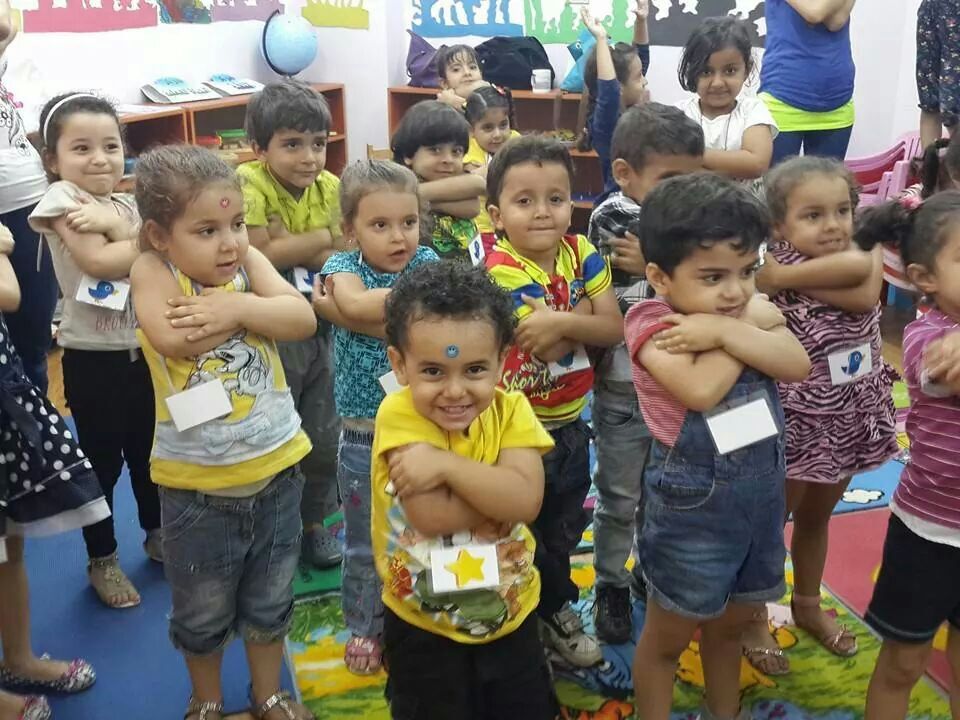
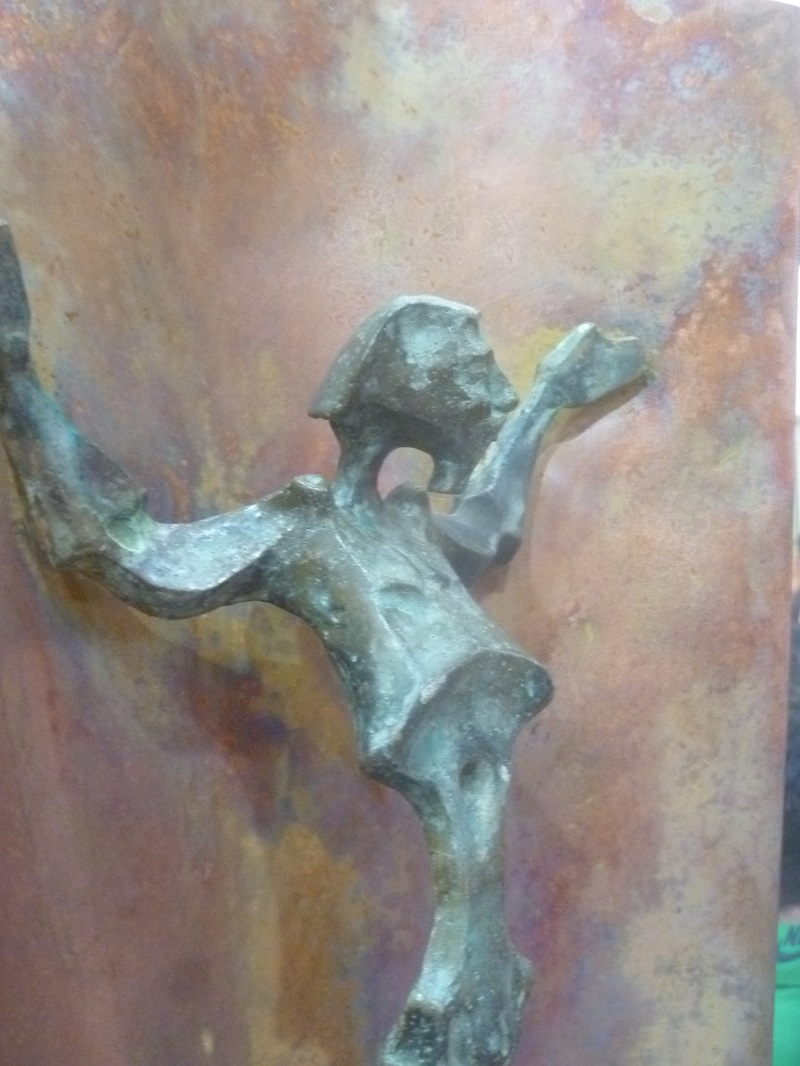
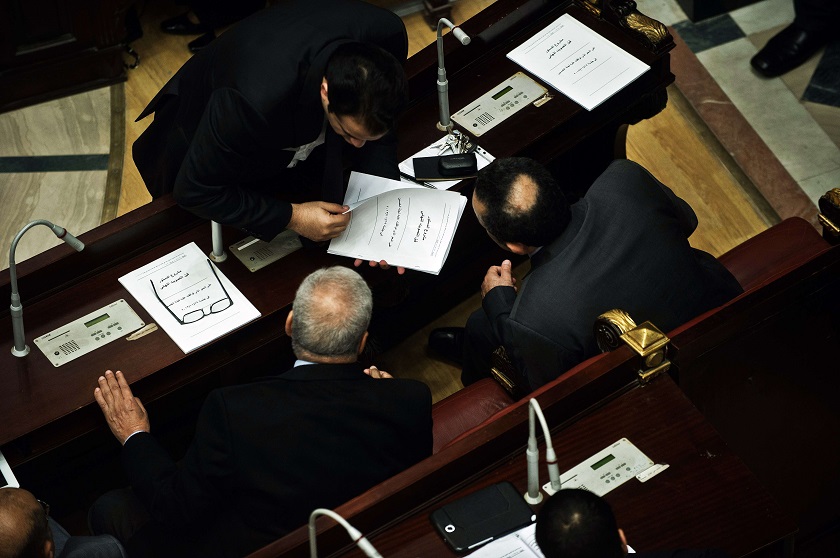
Props used in the children's awareness campaign. The Arabic reads: Bad Touch (L), Good Touch (R)
Props used in the children’s awareness campaign. The Arabic reads: Bad Touch (L), Good Touch (R)

It is not often a Sunday school teacher gets a call from the Egyptian government. But in a time of rampant sexual harassment, as highlighted by an assault in Tahrir Square posted and widely viewed on YouTube, creativity in protecting the rights of the most vulnerable attracts attention.

The video of the naked and bloodied women, which was taken during Abdel Fattah al-Sisi’s presidential victory celebrations, has been a wake-up call for a society where sexual assault of women seems to be culturally acceptable.

But one woman has been tirelessly working away at the root causes.
Eman Ezat
Eman Ezat

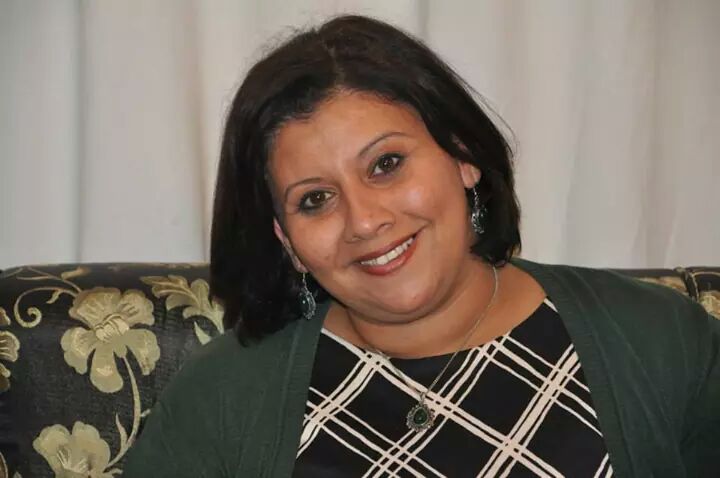
Eman Ezat is a children’s worship leader in Cairo who has worked with thousands of children to raise awareness about sexual harassment.

She and her team of 25 volunteers – both Muslim and Christian – have presented to over 10,000 students through skit and song. They have visited seven Egyptian governorates, working in churches, Islamic agencies, and government centers.

Training

In addition they have given adult training to over 1,500 parents and 500 teachers in ten different schools, both public and private. Their work has been featured on five different Egyptian TV stations, including the government’s Channel One.

The result of which was a phone call from Ghada Wali, recently reappointed as Minister of Social Solidarity in Sisi’s cabinet. She has invited Ezat to cooperate in the training of all government-supervised nurseries.

‘Our first song, which is written in the Arabic language, is about teaching sexual awareness to children,’ says Ezat.

‘Don’t let anyone touch you, here,’ the song says, to the tune of If You’re Happy and You Know it, Clap Your Hands. ‘It’s your body, no one has the right to do so.’

But Ezat is far more than a Sunday school teacher. A professor in the Faculty of Education at Cairo University, she has also been trained in the counseling of sexually abused children, and has worked with hundreds of cases.

In her unofficial tally, 70 per cent of sexual abuse cases originate from within the immediate family. A further 20 per cent are the victims of relatives.

In such a context, her song is revolutionary.

Shame

‘Our sexual culture is based on shame,’ Ezat told Lapido Media. ‘This creates pressure on everyone which then explodes into harassment on the street.’

According to a survey published by the United Nations Entity for Gender Equality and the Empowerment of Women, more than 99 percent of Egyptian women have been subjected to sexual harassment.

This goes far beyond playful catcalls, with 96 percent reporting their bodies have been touched and 55 percent of these having had their breasts groped.

The problem, Ezat believes, is that social taboos result in families leaving their children sexually unaware. As kids mature they pick up the worst attitudes from their peers as the sexual harassment culture reinforces itself.

Dignity without Borders recently produced video testimonies of attitudes towards harassment by male and female schoolchildren. Many of the children justified it as normal while others blamed the woman.

According to the UN survey, 37 per cent of adult women also held women primarily responsible.
Hemaya Arabic

Despite such cultural constraints, Ezat decided to educate children herself. In June 2013 she created Hemaya, Arabic for ‘protection’, to teach kids that their body belongs to them alone.

Political will

Government attention to sexual harassment is on the rise. In one of his first acts as president, Sisi visited the assaulted woman in the hospital, and gave her a rose.

‘This has never happened before,’ said Mona Salem, a researcher with the National Council for Women (NCW). ‘Before this they always blamed the woman. The political will is now present to address the issue.’

The State is beginning to address the issue culturally. The educational curriculum will be amended to raise awareness about harassment. An award will be given to the television series that best promotes women’s rights.

Salem also described recent NCW successes in opening a ‘Violence against Women’ unit in the Interior Ministry, helping police better deal with harassment reports. Specialised personnel will be present in every district.

But the best indication of government intention is Egypt’s first ever law specifically addressing sexual harassment. Punishments range from six months to five years imprisonment, in addition to hefty fines.

But there remains concern whether such amendments will be effective.

‘Egypt’s position has traditionally been dreadful in terms of lack of implementation of the law, victim blaming and a lack of reporting due to shame,’ says Mandy Marshall, director of Restored, an international charity campaigning to end violence against women.

‘There is clearly now a drive to do something about this but cultural attitudes take a long time to change and need to be consistently modeled by those in leadership and with power.’


This article was originally published on Lapido Media. I became aware of them when they came to Sunday School at our local church. Here are some more photos via
Hemaya.

Translation: It's my body, no one has the right to touch it.
Translation: It’s my body, no one has the right to touch it.

Hemaya Children

Hemaya Children Group

Categories
Arab West Report Middle East Published Articles

Anticipating Transitional Justice and National Reconciliation

Adel Maged
Adel Maged

President Sisi has been elected, and everyone wonders what will be next. Will he continue the crackdown on the Muslim Brotherhood, as indicated? What does it mean that the Salafi Nour Party is backing him? Is Sisi an Islamist-of-sorts himself? Is he a dictator in the making? Does his presidency herald a coming liberal era?

For these answers one must wait and see. But beyond the obvious divide that exists in Egypt lies one reality: The constitution obliges parliament to issue a law on transitional justice in its first session. Having suffered – or celebrated – the fall of two presidents in three years, political frustrations exist among many. Far beyond frustrations, many are dead due to political violence. Few have been held accountable.

Transitional justice promises much; in theory and often in international practice it leads to national reconciliation. Will it in Egypt?

Again, one must wait and see. But ‘Adil Mājid, vice-president of the Egyptian Court of Cassation and an honorary professor of law at the UK’s Durham University, is one with a vision. In July 2013 he wrote an article putting forward the requirements of national reconciliation at a time the concept was first discussed after the fall of Mursī.

I have translated his article here, published at Arab West Report.

A year later, Mājid is very critical of early efforts, but is hopeful that with a new president and coming parliament, the groundwork is better laid. Though obstacles remain, in an interview he described his hope for transitional justice given current realities, in the framework of his earlier article.

This vision is given here, also at Arab West Report.

Of course, even worthy endeavors like transitional justice and national reconciliation can be employed for less than worthy ends. Mājid is well aware of this possibility. But in answering the questions posed above about the Muslim Brotherhood, Islamism, dictatorship, and a liberal era, a key indicator to watch will be how it is used, worthily or otherwise. Will it heal the nation, or hurt it further?

Please read the linked reports for indications from a respected expert. Then watch carefully, and judge accordingly. Justice and reconciliation are concepts to be respected, necessary for the well-being of any nation. May they be pursued with truth and transparency.

Categories
Arab West Report Middle East Published Articles

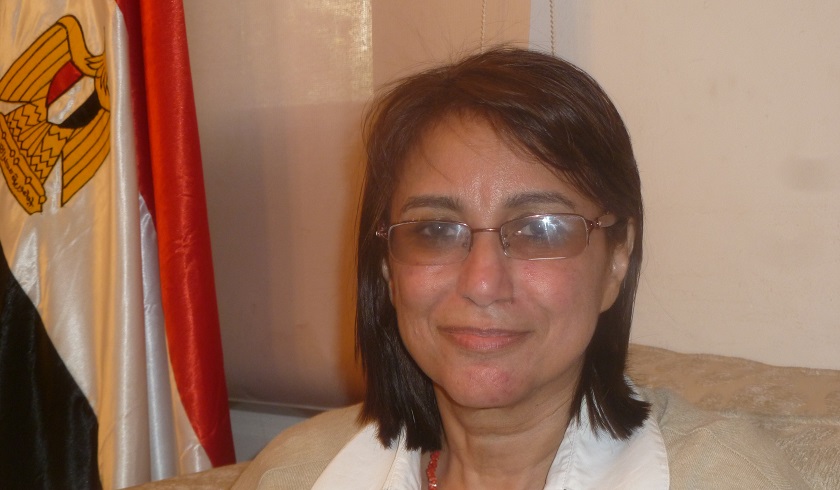
Hala Shukrallah: The First Coptic and First Female Head of a Political Party in Egypt

Hala Shukralla

From my recent article at Arab West Report, an interview with Hala Shukrallah of the Constitution (Dostour) Party:

Congratulations on your election as party leader, which as a Copt and as a woman is historic and unprecedented in Egypt. What does it mean both for the party and the country?

It represents a definite step forward, for at a conscious level people have not seen it as significant. A few years back this would not have been possible. The divide was not only visible, but vocalized. It would have created a backlash and instigated an attack, especially utilizing these two factors – woman and Copt.

That this was a non-issue within the party was very significant. It was not a focus at all during elections, showing that the party itself stopped perceiving these elements as a divide between people.

In society, it is another issue altogether. When we are speaking about our party we are speaking about a majority of young people. They have gone through a revolution – two revolutions – and have really changed so much of their thinking. You can understand why these things have stopped meaning so much to them.

But if you look at the way society has accepted this, and even celebrated it, this also is very significant. It shows there is a majority within society that wants to see change.

Your election was also celebrated by the Coptic community at large, which itself has gone through two revolutions and witnesses a divide between its youth and elders. How do you describe the Coptic electorate? As a citizen and voter, what is the average Copt like?

Especially since the 1970s, the Coptic sector in Egypt has been very aware there is a growing conservative element that perceives them as ‘the other’. What they have done is take a step backwards and basically hide in their own community. They have ghettoized, in a way, in the arms of the church, which has been speaking on their behalf.

From my point of view this is dangerous. I understand why they have done it, but they perceive themselves as a bloc, allowing the church to speak on their behalf, and therefore society continues to see them as a bloc, and not as individuals or citizens.

We have gone through this cycle over and over again, but it was broken on the 25th of January, when for the first time they went out into the streets and joined demonstrations. They began to protest as citizens. This was a turning point, very visible and vocal, with Muslims and Christians in Tahrir Square holding hands as citizens.

Pictures of the cross and crescent together became very important symbolism that became ingrained in the minds of Egyptians over the last three years. This has made a difference and left its mark on us.

But with the advent of the Muslim Brotherhood there was an effort to roll back this progress made in the first year of the revolution. Citizenship was debated, whether we can give minorities rights, but maybe not all rights, and so on. The discourse excluded some sectors from being full-fledged citizens. But with their growth and that of the fundamentalist movements there has been a withdrawal, once more, of Copts into the church. And the church is again speaking on their behalf.

Please click here to read the full interview at Arab West Report.


Categories
Arab West Report Middle East Published Articles

Sharia in the Supreme Constitutional Court

Islamist protests at the Supreme Constitutional Court, December 2012

From my recent article at Arab West Report, in the series on Egypt’s constitution. This text opens with a consideration of Salafi participation in both the 2012 and 2014 charters, and proceeds then to examine their chief triumph:

This article [219 in the 2012 constitution] was quickly scrapped by the new committee, but the [Salafi] Nūr Party representative continued to press. His lone leverage was in the desire of the transitional government to frame its discourse as anti-Muslim Brotherhood, in response to a popular revolution, rather than as anti-Islamist per se, and certainly not as anti-Islam. The presence of Nūr legitimized greatly.

For their troubles, they received a small reference in the preamble of the constitution. It was agreed upon at the very close of proceedings, and states:

‘We are drafting a Constitution that affirms that the principles of Islamic Sharī‘ah are the principal source of legislation, and that the reference for the interpretation of such principles lies in the body of the relevant Supreme Constitutional Court Rulings.’

But what does this mean for future legal interpretation? Is it only a means for them to save face, or will it have real impact on future constitutional rulings? A partial answer is to examine one of these relevant rulings, from 1996, and see what it says. Two girls were expelled from school for wearing the niqab, a garment that covers all but the eyes. The court ruled against them, as they appealed to sharia law and freedom of religion:

Sharī‘ah establishes the necessity of morality, the judge argued, even quoting the Qur’an. But sharī‘ah nowhere establishes that a woman must wear a niqab. On the contrary, and in dismissive wording, it compared such a woman as kept from interacting with society and going around as a covered ghost.

The constitutional guarantees of belief and individual freedom, the judge explained, are to follow and practice a religion in the manner the religion instructs. Since scholars differ about the nature of a woman’s dress, there is no firm principle on this matter in sharī‘ah. Therefore, the government is within its rights to establish a dress code as it sees fit, while staying within the principle of modesty as is clearly required by Islam.

Sharī‘ah, the judge wrote, is principally about truth and justice, and is naturally progressive to change with the time and place. This guarantees it flexibility and vitality, so as to guard its purposes (maqāsid) in preserving religion, life, reason, honor, and property. No one scholar’s view should be made holy over another’s, and even the Companions of the Prophet made their rulings based on the benefit of the people. There is no reason to either consider or cancel them, but to judge independently based on the benefit of today.

Salafis originally wanted to tie sharia interpretation to traditional rulings, not just purposes, as interpreted by senior scholars from the Azhar. These provisions were written into the 2012 constitution but lost in its 2014 amendments. Seeing such a ruling as this, it is clear they do not trust the court.

But maybe they got what they wanted, through the court, even in what evaded them in 2012:

In order to replace the sharī‘ah-escaping word ‘principles’, the Nūr Party sought to change it in Article 2 with the more strict ‘rulings’ (ahkām). They did not gain consensus, and even in Article 219 the words translated as ‘rulings’ do not reflect the strictures of the Arabic ahkām.

But the SCC states in its May 18 judgment that Article 2 is based on the ahkām of sharī‘ah, in its foundations and general principles, using language reminiscent of Article 219. Furthermore, these ahkām may not be violated where they are maqtū’ bi thubūtiha au bi dallālitiha. This phrase means that the rulings are clear and proven, either by the Qur’an directly (thubūt) or through jurisprudential reasoning (dallālah).

But this is not restricted only to hukm qata’i, where there is one accepted meaning only. It includes also hukm zanni, where many meanings and interpretations have been suggested. The point is that sharī‘ah encompasses the historic work of scholarship, and legislation must not transgress its bounds. Within this sharī‘ah heritage, no voice is sacred and new voices may emerge with the times. But as the parliament creates law, the judiciary judges within the hedge of sharī‘ah. This is not the language of a judge seeking to ignore it.

But perhaps this is all legal semantics, and what really matters is who is in charge. From the conclusion:

It may not be the language of the constitution that is of paramount importance, but who writes it. The 2012 constitution signaled a transition to a new Islamist order; the 2014 signaled a reversal. The reversal, however, includes preamble language authored by the Salafis, and the terms of debate bound by Article 2.

If correct, this interpretation suggests the forces of reversal remain in control, and less-than-Islamist rulings are likely to issue from the SCC. But it also suggests that Salafis have a place at the table, and may through this constitutional nod win either legislation or rulings that reflect conservative religion.

In this sense, does their defense of sharī‘ah mean also the defense of their existence? It is too early to tell, but it has resulted, at least, in a public constitutional reminder that sharī‘ah remains the basis of legislation.

That this reminder can be interpreted flexibly fits well the overall ambiguity of the political situation, Nūr included.

Please click here to read the full article at Arab West Report.

Categories
Arab West Report Middle East Published Articles

Saad al-Din al-Hilali: An Azhari Rails against Religion in the Constitution

Saad al-Din al-Hilali

From my recentarticle at Arab West Report, continuing a series on the people who wrote the constitution:

Sa’d al-Dīn al-Hilālī is a professor of comparative jurisprudence at Azhar University, where he is acknowledged as an expert in both sharī‘ah and international legal systems. Perhaps for this acumen he was selected as a member of the Committee of Fifty tasked to amend the Egyptian constitution. But he does not know, because he was not one of the three members chosen to represent the Azhar officially as an institution. Instead he was picked in the category of ‘general personalities’, learned of his selection via the television, and has never received an explanation why. He is quite happy not knowing, as he can express his appreciation to God alone.

The Azhar is the premier religious institution in Egypt, perhaps in the Arab world. Many consider it to be a ‘moderate’ body; if so, Hilali is a radical in the opposite direction:

Though Hilālī preferred not to characterize the internal workings behind either the disagreements or consensus, he spoke frankly about how he communicated to his colleagues on the topic of sharī‘ah. Most accepted what will be described below, he said. Some, who prefer to rule the street by claiming they ‘protect’ sharī‘ah, taking advantage of illiterates in doing so, were less pleased.

Article 2, for example, was previously inserted in the constitution only to satisfy these illiterates. They believe such a clause is necessary for them to go to heaven, and all the while they are laughed at by those who exploit them in pursuit of power. What does it mean that Islam is the religion of the state? Nothing. What are the principles of sharī‘ah that must be the main source of legislation? Only the concepts of mercy, justice, and equality, over which no one disagrees. If the United States were to draft sharī‘ah into its constitution, would that make everyone a Muslim? If Egypt were to make Christianity the religion of the state, would he become one? No, these are personal matters between the individual and God, each of whom interprets religion in his own way.

If this sounds like the general understanding of religion in the West, read on:

Fair enough, perhaps, but does not Islam as a religion demand some measure of public enforcement, based on the will of God? Muslims are tasked with the role of ‘commanding right and forbidding wrong’, so what is involved in doing so?

Correct interpretation, Hilālī argued, is that right and wrong are calculated for all, not by the individual, and can be equated well with the principles of sharī‘ah as the constitution states. He listed as examples helping parents and neighbors, working rather than unemployment, and refusing terrorism and killing, and said the rest is to be worked out by the judiciary and the police. As for the famous hadith that instructs the Muslim to correct a wrong with his hand if he is able, with his tongue if he is not, and with his heart as the least requirement of faith, Hilālī accepted it. The hand is the hand of the state, the tongue is the voice of the preachers giving enlightenment, and heart is for everyone else outside of these contexts. In this he is in line with much historic interpretation of sharī‘ah, but not all.

But this is fine, he might say. After all, sharī‘ah is meant for guidance and knowledge. Once its details are sought to be enforced in the public square one Muslim will clash with another over what is allowed and what is forbidden. This is in fact what happened to Egypt, and remains in the current struggle. Europe eventually rid itself of religious authority, he said, and this was Egypt’s trial now. America has achieved this light in its constitution, he believed, but now seeks (through support for the Brotherhood) to deny it to us.

Please click here to read the full article at Arab West Report.

Categories
Arab West Report Middle East Published Articles

Ehab el-Kharrat: A Protestant Political Leader in Egypt

Ehab el-Kharrat

I met with Ehab el-Kharrat in his office just off Tahrir Square on March 15, 2014, shortly before the presidential elections. Kharrat is one of the founding members of the Egyptian Social Democratic Party, and though the party remained neutral, he endorsed Hamdeen Sabbahi, one of the few high profile Coptic leaders to do so.

As we know now, it turned out to be a losing proposition, as he was crushed by Abdel Fattah al-Sisi. But as Kharrat explains, it was a principled vote more than one to back a likely winner. Being principled is important to Kharrat, and the interview explores this theme in relation to his Christian faith and deep involvement in politics.

The following is an excerpt from the transcript published at Arab West Report.

You grew up in a leftist home and had a personal conversion. Perhaps this is not the normal story of Christians in Egypt?

My father is one of the most prominent intellectuals in Egypt. He is old now at 88. He is a novelist, literary critic, and short story writer who has been acclaimed and received the most prominent awards in Egypt and the Arab region. He was even nominated by Naguib Mahfouz to be the second Nobel Prize winner from Egypt.

He used to be a Communist Party leader as a young man though he moderated as he became older. He was imprisoned two years under King Farouk. I read Marx and Freud and Sartre before I read the Bible, actually. I had a personal experience with the Lord when I was 18 with the youth of Kasr el-Dobara Church, and it was an intense spiritual experience.

I became very active in the church and I had to struggle with the question of should I still be politically active or not. I had been an active member of leftist groups at Cairo University, though never a member of secret organizations.

I became a preacher, a youth leader, and an assistant pastor at Kasr el-Dobara and was instrumental in our phenomenal growth from a couple of hundreds to our current count of five or six thousand. I was the interpreter for Billy Graham and Louis Palau, and for a number of years I was an evangelist. I think I got thirty or forty thousand professions of faith. I was counting at that time.

Most American evangelical Christians tend to lean toward the right rather than the left. Why do you find the left is a better fulfillment of your Christian faith?

If you study the Bible carefully and its emphasis on justice, the rights of the poor, anti-exploitation, and protection of the weak and vulnerable, you cannot escape that this is the brunt of the political position of the Biblical writers.

Of course there is the aspect of creation of wealth and this is a social democratic position too. I am not against personal entrepreneurship, being creative, or being rich. Many evangelicals in America are not giving enough attention to justice or the poor, but if you can find a political tendency in the Bible this is it.

It is not ‘name it and claim it,’ ‘be as rich as you can,’ or ‘trickle down policies.’ You cannot find these in the Bible. Even ‘compassionate capitalism’ as Francis Schaeffer says. When the Bible talks about the rights of the poor it is clear it is not about mercy or compassion. It is about justice.

Please click here to read the full transcript at Arab West Report, including extensive comments about his participation in the January 25 and June 30 revolutions. Here is a sample:

You don’t want to over-spiritualize the situation, but here is a spiritual question. In recent days some of the leaders of the popular opposition against Morsi have said there was police and military involvement. This suggests it was not just a grassroots movement, it was also a state manipulated movement.

Look, the movement started from our ranks, young people from the National Salvation Front. They gathered many signatures against Morsi and it was clear they had popularity. They were approached by the police and the military intelligence, and they talked to them. It is not like they became their agents, they cooperated, which is legitimate because we made clear we did not want to destroy state institutions only topple Morsi.

The signature campaign started the first of May, and I signed publicly the 10th of May with all our leaders. By early June it was clear the police and military intelligence were not going to oppose us. We made friends with the institutions, yes, but the movement was not manipulated by the government.

So this is my question, then: A Christian in politics must be straight in all he does, but politics can be about maneuvering, even manipulation. I don’t know if or where the line is crossed, but as a Christian, were lines crossed in the movement against Morsi?

I did not do any under the table negotiations and I think politics should be a clean game. The Brotherhood said that politics is a dirty game, and they played it dirty and paid the price. Whoever is not of integrity will lose. I believe politics should be straightforward whether you are a Christian or not. If you play by principles at the end you will prevail.

If the police or military intelligence dealt with us fair and square, it was ok. If they want to manipulate us we will not be manipulated. If they want to intimidate us we will not be intimidated. But if they ask if we will burn buildings and attack the Ministry of the Interior and we give them our word we will not, this is clear politics, it is clean.


Categories
Lapido Media Middle East Published Articles

Coptic Activist Dissolves Movement ahead of Sisi’s Electoral Triumph

Hany al-Gaziri
Hany el-Gezery, on the streets of Shubra, a Cairo neighborhood with a high percentage of Copts

From my recent article in Lapido Media:

The founding father of modern Coptic activism retires a happy man.

Egyptian Christians celebrate the election of a new president in hope of a new dawn of equality.

Two days before the vote, Hany el-Gezery, the sixty year old founder of Copts for Egypt, announced the dissolution of his pioneering movement.

‘In light of our great confidence in the noble knight that will govern, whatever his name,’ he wrote in his final statement, ‘we call on all revolutionary and Coptic movements to follow our lead and stand as one to build the future of Egypt.’

Gezery began his activism in 2005 as one of the few Christians in the Kefaya movement opposed to then-President Hosni Mubarak. Throughout his activism he labored to involve Copts in the secular political struggle.

But in 2009 Gezery made a more direct religious appeal, partnering with an Orthodox priest to found Copts for Egypt. Fr. Mattias Nasr published a popular newspaper detailing cases of discrimination, but distributed it only within the church.

The alliance aimed to shift an emerging Coptic activism from church to street.

‘We were the first Coptic movement to work in the streets,’ Gezery told Lapido Media. ‘At that time no Christian was bold enough to even open his mouth, and any demonstration would be held inside the cathedral.’

Copts for Egypt differed by coordinating with opposition political parties to recognize and oppose discrimination within the Mubarak regime.

On February 14, 2010, they led the first Coptic protest outside church walls. On January 7, 2011 they concluded a week-long rally against the bombing of a church in Alexandria.

Eighteen days later the January 25 revolution erupted. Youth activists from Copts for Egypt were active throughout, going on to found or join many other diverse movements.

Gezery now calls for them also to end this stage of the struggle. ‘All Egyptians must dissolve back into society,’ he wrote, ‘which after June 30 is free from religious factionalism.’

On June 30, 2013 the popular revolt began against President Mohamed Morsi of the Muslim Brotherhood. After one year in office he was ousted by now president-elect Abdel Fattah al-Sisi, the landslide winner in last week’s elections.

In declining to name ‘the noble knight’ of his statement, Gezery was keen to emphasis his respect for both candidates, and rest his confidence on the era, not the man.

But the man causes worry among other Coptic activists, including his own disciples.

One of these activists is now the general-coordinator of the Maspero Youth Union. Another is an advocate for missing underage Coptic girls. Please click here to read their objections and the rest of the article at Lapido Media.


Categories
Atlantic Council Middle East Published Articles

Egypt, the Election, and Sectarian Analysis

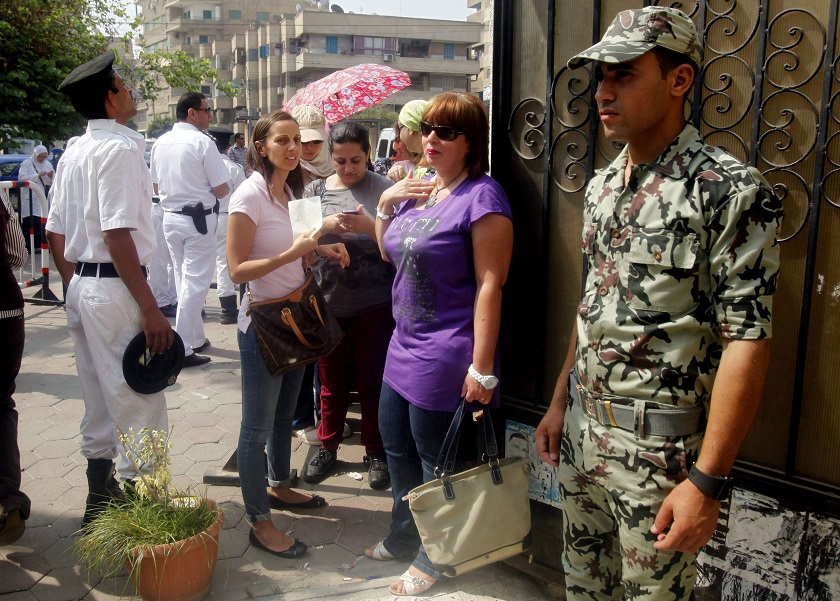
Uncovered, presumably Coptic women stand in line to vote

From my latest article at Egypt Source, exploring the controversial presidential election turnout:

One day before the beginning of presidential elections, the Egyptian Center for Media Studies and Public Opinion (ECMSPO) published the results of a counterintuitive poll. Based on personal interviews with 10,524 citizens throughout Egypt’s governorates, they predicted a turnout of only 10 percent.

More shocking, and controversial, was their estimate that 48 percent of presumed winner Abdel Fattah al-Sisi’s votes would come from Christians.

On the first day of voting the webpage of the Freedom and Justice Party (FJP), the political arm of the Muslim Brotherhood, seized on this survey. Publishing pictures of old men, smiling ladies, and assortments of priests and nuns, they featured the sectarian-laden headline: “Elderly, Women, Christians … the Trinity of Election Theater Today.”

But as reports streamed in of otherwise empty polling stations, this headline gained credibility. As the Presidential Elections Commission (PEC) decided to make the second day a public holiday, and then extend voting to a third, it cemented the impression even more.

The article takes a closer look at the polling organization, which doesn’t seem quite right. But the official totals of 47 percent turnout don’t quite seem right either. A closer look is given to the size of the Coptic electorate, but also, like Saturday’s post on Pope Tawadros, wonders about their behavior too. From the conclusion:

But cynical also is Muslim Brotherhood use of this demographic reality. To call the elderly, women, and Christians part of a ‘Trinity’ is to use theological language instinctively repulsive to Muslim sensibilities. That they call elections a ‘theater’ is reasonable given their organizational viewpoint; that they play games with religious minorities, gender, and age – as if these did not have the rights of citizenship to choose freely – is not.

Of course, the Muslim Brotherhood is not the only group making sectarian usage of the Copts. Lamis al-Hadidi, a pro-government media personality on the private CBC channel, urged them to vote reminding of their sixty churches burnt by terrorists. She, like the FJP, has crossed a line.

Perhaps individuals within the church are privately backing Sisi behind the scenes, and directing Copts to vote for him through internal discourse. If so, they too are crossing a line. But the church has had good sense to avoid this distinction publicly, officially instructing priests not to directly support a candidate.

Whether turnout is high or low, it may well prove that together, this Trinity elected Sisi. The Brotherhood may be right to fume, but they are wrong to do so with such sectarian language. Unfortunately, it is only one more example of the morass into which Egyptian politics has descended, and the mud slung by many.

But mud is slung in advanced democracies as well, and generally speaking it does not hinder straightforward readings of electoral results. The election of Sisi was supposed to be simple, though Egypt’s democracy is far from mature. Contested turnout figures are just one more bump in a very long road.

Please click here to read the full article at Egypt Source.

Categories
Arab West Report Middle East Published Articles

Church and Politics Under Pope Tawadros

Sisi, flanked by Bishop Bishoy (L) and Pope Tawadros (R)

Yesterday I linked to my article on Christianity Today about the role of Copts in the current presidential elections season. It is a true article, but space limits the ability to probe the full issue of how they have been involved, particularly through leadership in the Coptic Orthodox Church. Here is a longer treatment, excerpted from my article at Arab West Report:

By appearances, the Coptic Orthodox Church is doing everything wrong. But appearances can be deceiving; officially, they are doing everything right.

But there is a messy in-between which casts doubt on it all. As convoluted as Egypt’s post-June 30 transition has been following the popular deposing of President Muhammad Mursī, the church has matched it step-by-step.

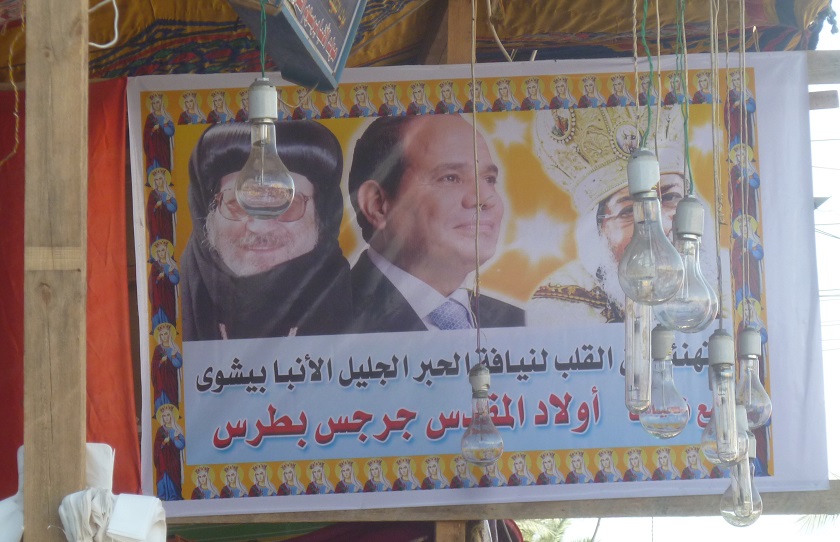
The appearances are obvious. Posters are seen throughout Cairo bearing pictures of Pope Tawadros alongside the front running military candidate. Some call out to the faithful: “The Lord Jesus calls you to support Field Marshal ‘Abd al-Fattāh al-Sīsī to preserve national unity.” Others give the reason “to stamp out terrorism,” and a third, “to stamp out the Brotherhood.”

Text messages have also been sent bearing similar slogans, calling on Christians to give their vote to Sīsī. This is confirmed by Ihāb al-Kharrāt, a Coptic founding member of the Egyptian Social Democratic Party, who in an interview with the author on May 15, 2014 called it “an abuse.”

The question is, by whom? The identity of sponsors is unknown, and the church has publicly denied any relation to the campaign on its Facebook page. Instead, as early as January 28, 2014 Pope Tawadros was rebutting rumors he was supporting a presidential candidate, and on May 4, 2014 he reiterated the church’s stance of neutrality. The church has no political role, he said on May 13, 2014 and his presence in Mursī’s removal on stage with al-Sīsī and Sheikh Ahmad al-Tayyib of the Azhar reflected national institutional backing for the pulse of the street. Thereafter, priests are instructed not to directly support any candidates.

If this official position is clear and correct enough, there is a convoluted undercurrent. On March 23, 2014 Pope Tawadros was quoted by Kuwait’s al-Watan TV channel saying al-Sīsī had a national duty to run for president. Tawadros praised him as having the discipline necessary to run the country, though everyone was free to choose the one deemed most suitable. During the interview he also disparaged the Arab Spring, describing it as a conspiracy to break up the region into smaller states.

The next day the pope backtracked, telling al-Shurūq newspaper that he had not made any official statements or given any interviews over the past 10-14 days. Notably, he did not deny the content of the interview, though this was implied. But the video of his interview was later released stating the opinions in question, though the footage is not of great quality and appears edited, possibly doctored. Even so, it appears the church made a misstep in revealing its private convictions.

But even its public stance is open to interpretation. The Facebook page which denied relation to the posters called on Egyptians to participate in the presidential elections. This itself is a political step, though perhaps legitimate in terms of fulfilling national obligations. But to what end is this participation designed?

It is these national obligations Pope Tawadros once again emphasized on May 27, 2014 the last day of voting before polls were unexpectedly extended to a third day. In the face of a Muslim Brotherhood-backed boycott campaign joined at least passively by many youth, he declared this to be unacceptable negativity and urged people to vote.

But the government campaign begs interpretation that this election is less a contest between candidates than a quest for the legitimacy of turnout. 51 percent of the eligible electorate participated in the 2012 second round vote that installed Mursī over Ahmad Shafīq as president. Mursī received roughly 13 million votes. In his presumed victory al-Sīsī would want to at least match these numbers to validate officially his popular support beyond the many substantial street rallies which buttressed the popular overthrow.

Having given many signals of favor toward al-Sīsī, official or otherwise, is church neutrality now only a superficial position? In calling for participation, is it simply echoing the state call to support, in effect, a referendum on al-Sīsī? If his opponent Hamdīn Sabbāhī stands little chance of winning, should the church position be interpreted otherwise?

It is useful to look back at Pope Tawadros’ papacy to judge the fine line he has walked between involvement in and abstention from politics.

The article continues by examining the pope’s statements about and within the political arena, since his selection in November 2012. Judging from this history, the conclusion tries to examine the current situation:

The pattern that emerges gives an indication of what it means. Despite earlier stated intention to remove the church from politics and allow civil society to speak on behalf of Copts, Pope Tawadros was quickly drawn in. His remarks largely, though not exclusively, pertained to issues that affect the Coptic community. The 2012 constitution opened space for a threatening Islamism, and the attack on the cathedral in April 2013 was unprecedented and largely ignored by Mursī, despite initial condemnation. Statements of allowance for Coptic citizens to protest suggested an effort to stay within church matters, in the spirit of the January 25 revolution in which Copts acted without church direction, even if he earlier discouraged demonstrations.

But in endorsing the protest against Mursī a day before military action against him, Pope Tawadros took a political stand. It was not necessary, and it compromises his interpretation of appearing with al-Sīsī a day later. Yes, his appearance was a national statement of unity, but he appears an eager participant. It was a full endorsement of the order to come, and a condemnation of what came before.

But fair enough, it was a national action. Subsequent reception of al-Sīsī can be seen as honoring a national hero. And endorsement of the constitution can be seen as in line with support for the national roadmap and overall stability. They can also be seen otherwise, but this is the fine line he is walking.

Therefore, urging participation in presidential elections can be seen as more of the same. It is a national measure to rebuild the state, and it can be imagined he will do similarly with coming parliamentary elections. What will be tested then will be his opinion of candidates, as there is likely to be significant Islamist participation through the Salafi Nour Party. They are currently allies against Mursī; will the church be similarly neutral between candidates then, officially?

But this narrative is complicated by the controversial statements to al-Watan, along with the semi-denial. Having tightrope-walked for so long on the borders of political-religious legitimacy, it is not surprising to see such a mistake. But it is not enough to undue his official rhetoric. The church is neutral toward all political candidates; it simply plays its role as a national institution to support the state and encourage popular participation in governance.

To say otherwise requires descending into a conspiracy that may well be present but must be proven. But even without the conspiracy, it is possible to criticize the church for playing this national political role. This can be on the basis of principle – that religion should stay out of politics altogether. It can be on the basis of wisdom – that if there is a reversal in favor of the Islamists the church now has an entrenched enemy. Or it can be on the basis of the common good – that Egypt and her Christians are served better by active Coptic citizenry, not clergy.

But this calls for a vocal Coptic lay leadership that is emerging, but not yet mature. This is unsurprising given the decades of church paternalism under Pope Shenouda, encouraged by the long authoritarianism of Mubārak. Perhaps Pope Tawadros is being pushed back into the old paradigm; perhaps he is willing and eager. Perhaps there is little alternative yet and he acts against his better principles. Noteworthy also is that Pope Shenouda began his papacy as a vocal critic of Islamist policies, under President Sādāt. Banished for 40 months in a desert monastery, he returned much more subdued and cooperative under President Mubārak. It can be estimated that contrary to his predecessor, Pope Tawadros was victorious in his criticism; how will he now conduct himself under President al-Sīsī?

Like the meaning of the church’s call to vote in presidential elections, these questions are matters of his intentions, which cannot be known fully. Appearances are not good, but official stances are reasonable. It is the in-between that rightly confuses observers.

Within a still messy revolution, anything other would be surprising. The church and its pope are fully Egyptian, and Egypt is still convoluted.

Please click here to read the full article at Arab West Report.

Categories
Christianity Today Middle East Published Articles

As Egypt Picks Next President, Christians Play Biggest Political Role in Decades

EGYPT-VOTE-COPTS

From my article at Christianity Today, published May 27, 2014:

For Egyptian Christians, today’s presidential election is not much of a contest.

Most support General Abdel Fattah al-Sisi in appreciation for his role in deposing previous president Mohamed Morsi and ending the rule of the Muslim Brotherhood. A smaller, younger contingent leans toward leftist politician Hamdeen Sabbahi out of appreciation for the revolution and skepticism of another military leader. But most on both sides expect Sisi will win handily, and most welcome the new era to come.

“This election [brings] great expectations to welcome a new Egypt with Muslims and Christians as equal citizens,” said Fawzi Khalil, a pastor at Cairo’s Kasr el-Dobara Church, the largest evangelical congregation in the Middle East.

But while most Christians are solidly in the camp of Sisi, many are taking advantage of the opening of political space after the January 2011 revolution to win leadership positions in a variety of political parties.

The article highlights one Christian woman who has become the first to head a political party in Egypt, supporting Sabbahi, and a man who is a founding member of another, supporting Sisi. A third figure is a human rights advocate seeking fair treatment for the Muslim Brotherhood, standing against the tide.

Please click here to read the full article at Christianity Today.

Categories
Atlantic Council Middle East Published Articles

Ideological Distinction in the Coming Parliament

Kharrat (L) and Abadir (R), which is ideologically appropriate if currently politically muddled in their parties.
Kharrat (L) and Abadir (R), which is ideologically appropriate though politically muddled in their current party rivalry.

From my latest article in Egypt Source:

Many have argued that Abdel Fattah al-Sisi’s likely election as Egypt’s next president is an indication of a return to Hosni Mubarak-era policies. However apt the comparison may or may not be, the analysis overlooks one key advantage Sisi lacks. There is no longer a National Democratic Party (NDP), the party faithful to ousted president Mubarak, through which the presumed President Sisi can enact policy. He is on the record to neither form nor join a party through which to govern.

In its place exist a large number of smaller parties, which are in one sense a result of the revolution and its aim to diffuse presidential power. Sisi will need to work closely with these elected representatives; according to Article 146 of the constitution his choice of prime minister and the cabinet he is tasked to form must meet with legislative approval. Otherwise, the majority party will form the government.

The old NDP did not threaten Mubarak’s choices, for it was less an ideological vehicle than a means of access to executive favor. The coming parliament stands to be different, for most parties have already staked out distinct positions in electoral competition. But the phenomenal pull of Sisi is exposing fault-lines within these parties, blurring the lines of ideological distinction.

This is the joint explanation of the recent defection of thirty-one members of the Egyptian Social Democratic Party (ESDP) to the Free Egyptians Party (FEP). Both parties were created after the 2011 revolution. They ran together as the Egyptian Bloc in the first post-Mubarak parliamentary elections, and were equal partners in the National Salvation Front to overthrow former President Mohamed Morsi.

The article continues to analyze why the defection occurred and what it means for political life and the coming parliament. It quotes extensively from a founding member in each party, and touches also on the Salafi challenge.

From the conclusion:

But until the political situation stabilizes, there is little likelihood of ideology coming to the forefront of campaigns. With the Brotherhood sidelined, the question of religion is largely replaced by the question of Sisi, and his discourse of security and stability. Should he win, the interplay between him parliament may determine whether or not the decay of ideological distinction continues.

Please click here to read the full article at Egypt Source.

Categories
Arab West Report Middle East Published Articles

Bring Back our Coptic Girls

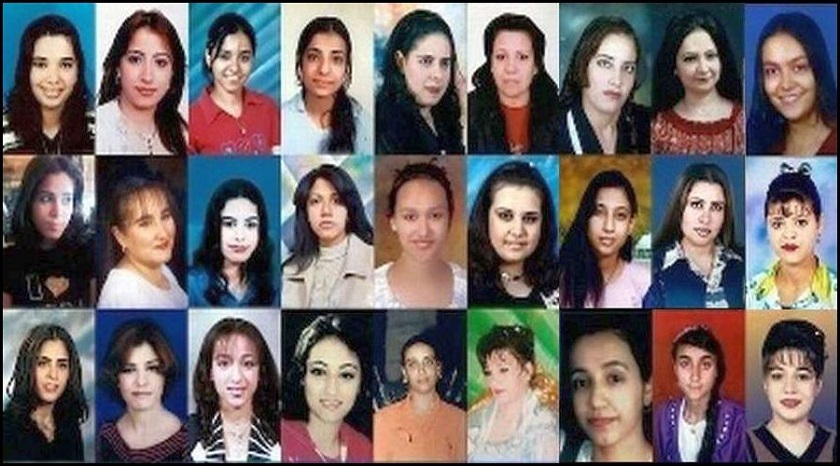
Coptic Kidnapping

Seeking commonality with the outrage over the schoolgirls kidnapped in Nigeria by Boko Haram, Ebram Louis and the Association of Victims of Abductions and Enforced Disapperances (AVAED) is launching a hashtag of his own. #BringBackOurCopticGirlsEgypt.

I might advise to remove the ‘Egypt’ from the hashtag, thinking ‘Coptic’ builds sufficiently on the now viral #BringBackOurGirls. But Ebram is a dedicated advocate and researcher, and the issue of kidnapped Coptic women is longstanding.

Here I share some recent reflections on the issue, from an article in Arab West Report, excerpting my reflection on the difficulty of this research:

One of the greatest horrors that can befall a family is the sudden disappearance of their child. No country in the world could doubt such tragedy. Why then does controversy surround Coptic minors?

There are two prominent reasons, and both relate to the contested sectarian nature of Egyptian society. While Muslims and Christians live side by side as neighbors, colleagues, and often friends, there is an undercurrent of tension among many, stemming from religious identity. During a moment of crisis or a community dispute, sides can be drawn along religious lines.

Many Christians harbor suspicions that the Islam in a Muslim will push an otherwise friendly neighbor to discrimination, or worse. Many Muslims harbor criticisms that Christians are actually treated better than the average Muslim in society, yet complain constantly. While this tension is generally unspoken a disappearance can shatter the peace.

The first reason is due to an often heard accusation: The girl was kidnapped, with blame assigned to extremist Salafi Muslims. Salafis are understood to be very traditional, and though not necessarily anti-Coptic in essence, often hold a viewpoint assigning non-Muslims a secondary status as if in the historical Islamic caliphate. They also believe in early marriage for women, often below the Egyptian legal age of consent of eighteen. Combining these two characteristics it is posited that some Salafis will kidnap Coptic minors and convert them to Islam to weaken their community, and then marry them off within the Muslim fold.

Setting aside for now the legitimacy of this accusation, it is easy to comprehend its inflammatory nature within a sectarian-laced society. Muslims would be horrified to imagine that such a crime is committed, but furthermore, that it is committed on a religious rationale. But at the same time the alleged crime touches the nerve points of Coptic consciousness, molded over centuries of living within that historical secondary status. Raising the accusation offends Muslims, denying it embitters Christians.

The second reason is due to the social setting surrounding the accusation of kidnapping. Much of Egypt maintains a patriarchal attachment to women, attaching their purity to the family or community’s status of honor and shame. If a woman loses her virginity outside of marriage the offense is felt by the community. A woman who disappears puts their honor at risk, no matter the reason for her absence.

This charged setting is amplified if the suspected disappearance crosses religious lines, in any direction. But first imagine the situation is not one of forced disappearance, but simply of individual choice. The decision of a female to attach herself in relationship outside of family approval is a scandal; it is even greater if the relationship is with a man of a different religion. The reasons can be many and are essentially human: Often they are of love, money, or the desire to escape a difficult home situation. The temptation can therefore be very strong for a family to defend its damaged honor by claiming their daughter has been kidnapped.

These two reasons help explain the controversy, but there is a third factor that may or may not be equally sectarian. The Egyptian state, especially outside of the major population centers, is notoriously weak. Police investigations are often feeble, and the judicial system takes years to process a case. Community transgressions are often left to be solved by the community – with security looking on – and if the crime takes place across religious lines the two sides are encouraged-cum-compelled to ‘reconcile’.

What is more difficult to say is if there is an additional sectarian aspect in police conduct. Christians often accuse security of paying even less attention to crimes against their community. In cases of disappearance of minors, sometimes they fail to investigate at all. Is this due to individual fanaticism, institutional bias, or simply a common indifference?

But the end result for many families is they may have no idea if their daughter was kidnapped or not. She is simply gone. It could be she ran away from home to join her boyfriend. It could be she ran away, but then is met with a host of barriers denying her ability to return. Among these, it is claimed, is the pressure placed on her by the Muslim family, implying the horrors of what will happen to her if she goes back, having violated her family’s honor. Whatever violence she might face, she knows the shame she brought them.

Or, perhaps she was outright kidnapped. Especially following the revolution kidnapping has become a potentially lucrative career given the security vacuum. But if the police do not give due diligence to the cries of a distraught family, what conclusions can they draw? Even if she wishes to marry freely, even if she wishes to convert to Islam freely, the law prohibits these actions until she is eighteen. As a minor, she must be returned to her family. Very often, the law fails.

And also the fact that in a country of more than 85 million people, any one person’s individual problem is drowned in a sea of difficulty and inequity. In order to get the attention of authorities, one must yell louder than everyone else. ‘Kidnapping’ makes for a very loud scream.

Given all the above, this is why proper research into a disappearance is essential. Without it, not only can religious and social taboos be violated, but far worse, the girl may never return home.

But when research must take place independent of the properly invested authorities, it also acquires an air of advocacy. But what can be more appropriate? The task is to put right a wrong, not study sociology.

As such, Ebram Louis is both a researcher and an activist.

The rest of the article profiles his work through the Association for Victims of Abductions and Forced Disappearances. I have written about him earlier, and you can additionally click here for more information.

Ebram Louis
Ebram Louis

But the article closes with his idea for solving the issue. One of his colleagues proposed going through the newly formed Ministry of Transitional Justice, to right past wrongs. Louis, however, wishes to resurrect an old practice:

One possible solution can help sort through the vagary, and is endorsed thoroughly by AVAED. In 2004 in a case similar to that of Camīliah Shihātah, Wafā’ Constantine, another wife of a priest, sparked rumors and demonstrations when she disappeared. Eventually she was returned to the church, but the antagonism that developed between the church and security led to canceling the then-mandatory ‘counseling sessions’ for anyone wishing to convert to Islam.

These sessions were instituted in order to make certain that anyone expressing interest in Islam did so from their full and free will. The would-be convert would meet with a priest under supervision of security, and express his or her desire. The priest had the opportunity to counsel the individual back to the faith, and the presence of security ostensibly ensured an atmosphere of non-coercion.

Reinstituting these counseling sessions would not eliminate the problem of disappearances, but it would carve out space to explore the argument that these young Coptic women are converting to Islam freely. Of course, this only applies when they are of age; otherwise, the law must rule and return all minors to their families. But in the controversial cases where an initial love relationship becomes complicated, a formal procedure to evaluate and process a conversion to Islam would remove much ambiguity from the controversy of disappearances.

Of course, rule of law and freedom of religion are much more basic solutions, but given the nature of Egyptian reality, they are unfortunately not simple solutions. Except for the basic fact that families do not know where their children are, little about this issue is simple.

Please click here to read the full article at Arab West Report.

Categories
Christianity Today Middle East Published Articles

175 Leaders Urge US Support in Christianity’s Historical Heartland; Egyptian Churches Not So Sure

From the Ethics and Religious Liberty Commission

From my latest article in Christianity Today, published May 9, 2014:

More than 175 Christian leaders crossed denominational and political divides this week to urge the United States government to do more to help the rapidly diminishing, historic Christian populations of Syria, Iraq, and Egypt.

The solidarity pledge—signed by National Association of Evangelicals (NAE) president Leith Anderson, Focus on the Family founder James Dobson, Southern Baptist Theological Seminary president Al Mohler, and Samaritan’s Purse president Franklin Graham, among other prominent names—presented on Capitol Hill asks for the appointment of a special envoy on Middle East Religious Minorities, a review of foreign aid, and refugee and reconstruction assistance.

“These defenseless religious communities are facing an existential crisis, which threatens their very survival in the lands they have inhabited for centuries,” said Rep. Frank Wolf (R-VA), a longtime religious freedom advocate who helped create the U.S. Commission on International Religious Freedom (USCIRF) in 1998. “The faith leaders … recognize that unless the American church begins to champion this cause, the foreign policy establishment will hardly lead the way. They are committing to be their ‘brother’s keeper,’ whether in Nineveh, Cairo or Homs.”

But Egyptian Christians have a longstanding reticence about outside help:

“We value so much the prayers and concerns of our Christian brethren around the world, and in the U.S. especially,” said Fawzi Khalil, pastor at Kasr el-Dobara Church in Cairo, the largest evangelical congregation in the Middle East. “But we don’t believe outside pressure would be best for our daily life with our Muslim friends. The government of Egypt with local Christian leaders are best suited to fix our problems.”

Please click here to read the full article at Christianity Today, including testimony from other Egyptian Christians and one US Copt who is a signatory.

Categories
Arab West Report Middle East Published Articles

Kamal Helbawi: Wording Rightly the Constitutional Text

Kamal Helbawi
Kamal Helbawi

From my recent article at Arab West Report, continuing a series of interviews with members of the Committee of Fifty which wrote the constitution:

Seeking to represent all sectors of Egyptian society, the Egyptian Committee of Fifty to amend the constitution of 2012 was light on political parties. Only four seats were assigned, two for liberals and two for Islamists. This was in contrast to the Committee of One Hundred that wrote the 2012 constitution, which was heavily populated by political figures from the Islamist Freedom and Justice and Nour Parties.

After the fall of Morsi, however, few Islamists remained on the formal political scene. The Nour Party was the most prominent, representing the Salafi trend. One seat went to them, but who could represent the Brotherhood trend, with the Brotherhood boycotting the process? Announced as a representative of the Islamist trend was Kamal Hilbāwī, a former Brotherhood member who resigned in 2012 in protest of the group’s decision to field a candidate for president.

Helbawi was a member of the drafting subcommittee which was responsible to merge all articles into one contiguous text. To do so they changed articles according to language and syntax, but did not hesitate to also adapt the meanings.

But one of the most interesting points of his testimony concerns the negotiations with the Nour Party that resulted in the former Article 219, defining the principles of the sharia, moved in essence into the preamble and made subject to the Supreme Constitutional Court:

But in a compromise agreement the definition of the principles of sharī‘ah was moved to the preamble, with the term of reference being the collected rulings of the Supreme Constitutional Court. These are about 4-5 cases, he estimated, involving sharī‘ah interpretation issued by the highest court in the land since 1985. Having a definition makes sense, Hilbāwī believed, for someone might want to know what the principles of sharī‘ah are. These cases were entered into the official transcript of the constitutional proceedings, and the preamble of the constitution has equal weight with its articles, according to Article 227.

But reference to the rulings of the SCC raised the issue of why Article 219 was necessary in the first place, if the court already defined the principles of sharī‘ah. Perhaps the legislature did not adhere adequately to these rulings, but if the legal basis was there, what was the big deal? And in any case, if the language of 219 was in the SCC rulings, does this explain why the Nour Party was satisfied?

Hilbāwī dismissed the criticism by liberals of Article 219 that it would have opened up the entire corpus of sharī‘ah legal history to implementation in legislation or in court rulings. But in referring to the charge of Safwat al-Bayādī, confirmed in his testimony of the response of Sa’d al-Dīn al-Hilālī, that the testimony of Christians might not be given equal weight to Muslims, as was once in Islamic history, Hilbāwī said ‘perhaps’, in recognition of Hilālī’s rejection of 219 and his status as a very good scholar. There are still shaykhs in Egypt, mentioning Abū Islām and Mahmūd Shabān in particular, who advocate very retrograde rulings. But given the firm guarantees on equality present throughout the constitution, Hilbāwī does not expect any sharī‘ah-based impingement on general freedom.

The article also contains a first effort to understand what the religious language of sharia interpretation means. Please click here to read this and the whole article at Arab West Report.

Categories
Lapido Media Middle East Published Articles

Divided Society Drives ‘Preacher of the Revolution’ to Lonely Hunger Strike

Hanny Hanna
Hanny Hanna

Sixteen thousand Muslim Brotherhood prisoners launched a mass hunger strike yesterday, protesting against torture and other human rights abuses, according to local sources. Haitham Abu Khalil, the movement spokesman, says many more individuals are unlawfully detained.

The same day a lone Coptic hunger striker, unaffiliated and unsympathetic to the Brotherhood, ended his own hunger strike after twenty two days.

Unlike the others, he did so as a free man.

‘People are dying, hatred is increasing, justice is absent, and prices are rising,’ said Dr Hanny Hanna, an archaeologist and general director in the Egyptian Ministry of Antiquities. ‘We have had no revolutionary government, the same regime is with us until now.’

Three years ago Hanna had more hope. As the world celebrated images of Christians protecting Muslims at prayer in Tahrir Square, less known was the reverse. One of the first Copts to join the revolution of 25 January, Hanna became known as ‘the preacher of the revolution’ for leading protestors in Christian prayers and songs.

Polarized

But these days of unity are long gone. ‘Everyone is tearing down the other no matter what side you are on,’ Hanna told Lapido Media. ‘The polarisation has become so high.’

And with it the body count.

According to figures reported by the Carnegie Endowment for International Peace last month, over three thousand Egyptians have been killed in political violence since 3 July, the day former president Mohamed Morsi was deposed.

Over 2500 of these deaths have been the result of protests and clashes, while over 500 have died from terrorism and other militant actions, according to government statements.

Seventeen thousand have been injured in these events, and nearly 19,000 have been arrested. Of these, several hundred have already been on hunger strike to protest their ill treatment in prison.


Hanna, during a brief hospitalization

Hanna, who while drinking only water continued his normal responsibilities, criticized the violence of many protestors which has landed them in detention. But he also condemned the government and its protest law which has imprisoned many innocents beside them.

As the revolution appeared to be slipping away with resurgent autocracy first under the Brotherhood and now more severely against them, the preacher in him grappled with a response.

‘Should I go to the media and just say, “Love each other?” he asked. ‘It is easy to talk but it is stronger to take an action.’

Hunger strikes have largely been an individual action in Egypt since the 1970s, said Osama el-Ghazoly, a senior Egyptian journalist. The mass prison protest is a more recent development, but few have done so outside of jail.

Unlike most, Hanna’s hunger strike had no demands. Instead, it was his chosen action to communicate a message that all is not well and the revolution has not succeeded.

He even takes aim at Egyptian icon General Abdel Fattah al-Sisi, the front running presidential candidate. Hanna resurrects the memory of the Maspero massacre when 28 Coptic protestors were killed, either shot or crushed under military vehicles in October 2011. Sisi was the director of military intelligence at the time.

‘If Sisi wants my support he should make it clear what was his role in these events,’ said Hanna. ‘If he is clean, then fine. If not, he can go to hell.’

Critisism

But these messages do not sit well with his fellow Copts. Most are overjoyed at Sisi’s popularly endorsed removal of Morsi’s Muslim Brotherhood government, and anticipate the new constitution will usher in a democratic order.

Even Hanna’s personal Facebook page, filled with good wishes about his intentions, drew criticism. Comments lamenting the timing, method, and relevance of his protest mirrored the responses of political, religious, and revolutionary Coptic leaders.

‘I wish he would be more patient,’ said Naguib Abadir, a Coptic founding member of the Free Egyptians Party, one of the leading liberal flag bearers. ‘We are in a very difficult period with people trying to hijack our roadmap before it can be achieved.’

‘The body is not our own, it is the temple of God and we are responsible to protect it,’ said Revd Fawzi Khalil of Kasr el-Dobara Church, located just behind Tahrir Square, who demonstrated with Hanna from the early days of the revolution.

‘We are able to express our views in ways that do not threaten our life.’

Abadir and Khalil both told Lapido Media that Hanna should save his strength and take up politics, criticising him for picturing everything as negative. But even revolutionary colleagues see him as an idealist, who is harming himself in vain.

Mina Magdy
Mina Magdy

‘He is a good person working for peace,’ said Mina Magdy, general coordinator of the mostly Coptic Maspero Youth Union, which suffered heavily in the massacre. ‘But he is giving slogans and this does not work, we need specific demands.

‘Hanna’s message will reach neither the regime nor the people,’ he said. ‘No one cares about him.’

But this unhappy critique is categorically untrue. His wife and three daughters have stood by his side, and over ten friends have promised to join him on a future hunger strike, if necessary, in exchange for stopping now.

Hanna believes most of his critics misunderstand him and have succumbed to a culture that neither values the individual nor believes one person can make a difference.

‘In the beginning no one listens,’ he said. ‘But as you continue more people start to pay attention.

‘The fruit is seen as they change toward the good.’

Still a preacher, but now with his body, this is Hanna’s contribution to continue the revolution.


This article was originally published at Lapido Media.

Categories
Diocese of Egypt (Anglican) Middle East Published Articles

Pope Tawadros Opens Art Exhibition at Anglican Cathedral

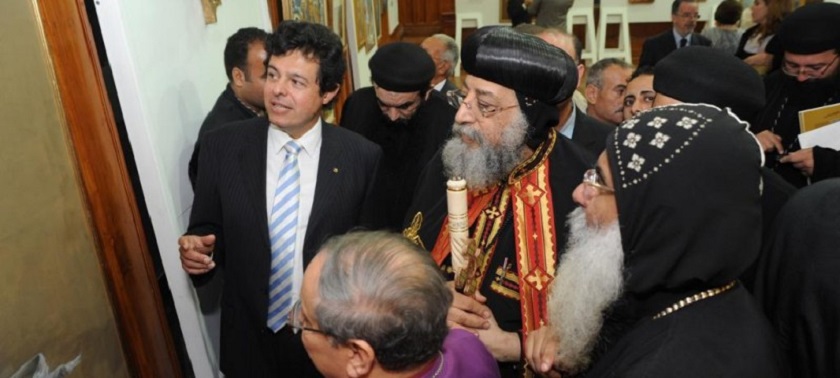
Tawadros and Fadel

In a historic visit, Pope Tawadros II of the Coptic Orthodox Church inaugurated ‘The Way of Salvation: Exhibition of Christian Art,’ organized by the Anglican Church of Egypt as part of the celebrations of 75th anniversary of All Saints Cathedral. Eleven artists submitted 28 works of painting, sculpture, and relief to express the Christian message of salvation culminating in the death and resurrection of Jesus.

‘I truly appreciate the role played by art in spiritual meditation and inspiration of acts of good will,’ wrote Tawadros in the official program. ‘For this reason the church through the ages has encouraged all fields of art as an important tool to illustrate the stories of the Bible and the life of the saints.’

In his opening remarks, Bishop Mouneer Hanna of the Anglican Church honored the Orthodox as the ‘mother church’ of Egypt, and expressed his appreciation for the pope’s visit.

‘The pope believes in the unity of the churches, which Jesus prayed for,’ he said. ‘With his presence he emphasizes the spiritual work and the love between the churches.’

Since his consecration as pope in November 2012, Tawadros has sought to lessen tensions between Egyptian Christian denominations and publicly esteem their common faith. This was his first visit to the Anglican cathedral, and in March 2013 he attended the inauguration of Bishop Ibrahim Isaac as the new Coptic Catholic patriarch.

Rarely in history has the Coptic Orthodox pope visited other churches in Egypt, confirmed Fr. Bishouy Helmy, secretary-general of the Egypt Council of Churches.

‘This visit carries the values of an open mind and faith in ecumenical work with other churches,’ he said. ‘It also expresses appreciation and honor for the arts.’

Pope Tawadros spent over an hour in the exhibition, studying each piece and communicating with the artists.

‘Selecting the ten participating artists was done through a lot of prayer,’ wrote Dr. Farid Fadel, the exhibition’s curator and eleventh participant. Care was taken to ensure each artist would submit works that expressed the message of salvation, he said, as some artists belong to schools which desecrate holy subjects.

‘What you see today is the collective outcome of their labor of love.’

All Saint’s Cathedral in Zamalek will display the exhibition until 8 May 2014, 10:30am to 8pm


This article was originally published at the Anglican website. The opening photo is credited to the diocese.


These were my favorite pieces from the show:

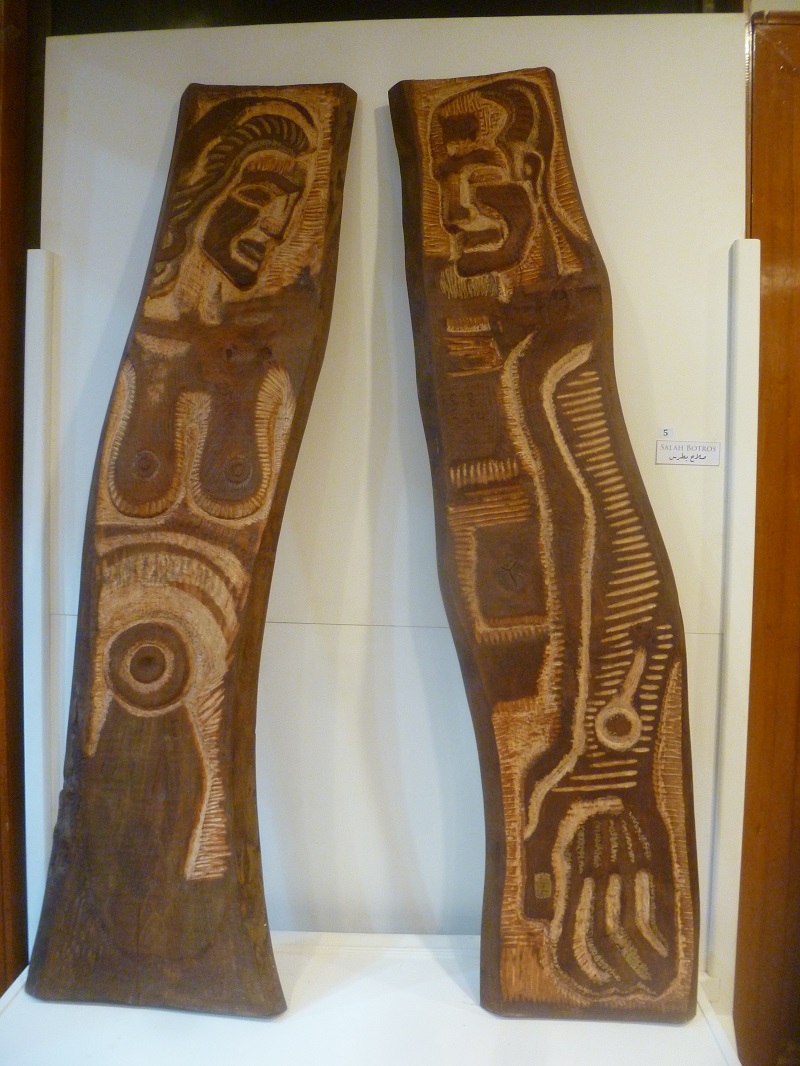
'The Fall of Adam and Eve', by Salah Botros
‘The Fall of Adam and Eve’, by Salah Botros
'Sinai, Holy Land', by Gamal Lamie
‘Sinai, Holy Land’, by Gamal Lamie
'Born to be Crucified', by Wagdy Habashy
‘Born to be Crucified’, by Wagdy Habashy
'Cross of Shame', by Nathan Doss
‘Cross of Shame’, by Nathan Doss
Categories
Arab West Report Middle East Published Articles

How Salafis Supported the Constitution in Upper Egypt

Hamdi Abdel Fattah of the Nour Party

Post-Morsi, some say, the Salafi Nour Party was pushed into a corner. Others say they played their cards perfectly. In any case they supported the 2014 constitution despite its removal of religious provisions they largely orchestrated only two years earlier. While the Muslim Brotherhood and most other non-Nour Salafis railed against what they called the ‘coup and its constitution’, the Nour Party nimbly tried to navigate the landscape.

So what did they do, and what was their rhetoric? In an interview with Arab West Report Sheikh Hamdi ‘Abd al-Fattah provided perspective from Maghagha, a city in the governorate of Minya.

The party held one large mass conference in Minya, in which Mohamed Ibrahim Mansour, Nour’s representative on the Committee of Fifty which wrote the constitution, joined Sheikh Sharif al-Hiwari from Alexandria, and the local deputy of the Endowments Ministry formed a panel. The party’s approach to the constitution was explained by Mansour and others; Mansour himself spoke for an hour and answered questions for an hour and a half more. Everything was done in full transparency, ‘Abd al-Fattah stated.

From the government to the district level, such as in Maghagha and Beni Mazar, the Nour Party organized marches and had small four-to-five delegations circulate in the streets. Both were meant to give opportunity for people to speak face-to-face with party leaders and have their concerns answered.

For more details, and to discover the reasoning behind their controversial support, please click here to read the full article.

Categories
Arab West Report Middle East Published Articles

Nadia Mostafa: The Hypocrisy of the Coup and its Constitution

Nadia Mustafa
Nadia Mustafa

From my recent article at Arab West Report, continuing a series on the composition of Egypt’s constitution. Nadia Mostafa is the former director of the Program for Dialogue and Civilizational Studies at Cairo University. She is also an Islamist, though not a formal supporter of the Muslim Brotherhood. But she is a severe critic of the events which removed him from power.

She did not want to even discuss the content of the constitution, unfortunately, deeming it illegal. But she was very willing to express her displeasure with several contributing forces:

Chief among them are the very Salafis the Brotherhood cooperated with, in error. In supporting their demand for Article 4, giving the Azhar a role in legislation, and Article 219, defining the principles of sharī‘ah, the Brotherhood gave into unnecessary, non-historical, and ultimately fear-inducing intimations of a religious state. But when the Salafis sided with the coup leaders, Mustafá notes, look how quickly they dropped these two articles. All the Nour Party desired, it seems, is to take the place of the Brotherhood in the political spectrum.

Next she takes aim at the liberals:

Early in the transitional period these same liberals bemoaned the extremism of the Salafis and the interference of their Saudi Arabian backers. Now, they speak of the Salafis as possessing political acumen and of the Saudis as important financial backers for Egypt.

Similarly, liberals rejected the constitution of 2012 because it was an unrepresentative document crafted by an Islamist majority. But this did not prevent them from orchestrating an unrepresentative majority of their own, which all but excludes political Islamists, except for those who play by the measure of the coup. And as for their rhetoric saying the Muslim Brotherhood was invited but refused, what sort of invitation can be accepted when the president and his aides are held incommunicado, and the organization brandished as terrorists? Their goal, Mustafá believes, is to eliminate political Islam, or at the least any political Islam that has leverage.

Finally, she criticizes the church:

Excited by the possibility of gains in the constitution, some Coptic groups threatened to boycott or urge a ‘no’ vote if they did not win a special parliamentary quota. But when this failed to materialize, Pope Tawadros stepped in to support a ‘yes’ vote in the referendum. Christians, Mustafá believes, are not seeking their rights but to limit the rights of political Islamists, allied with seculars against the Islamic identity of the country.

But she also has critical words for the Brotherhood:

She and others of similar mind advised the presidency that Mursī was leaning too heavily on the support of Salafis rather than maintaining unity with liberals and other moderates. She believes there should be a separation between the preaching of a religious organization and the rhetoric of its political spinoff. A civil system must allow for religion in the public square, but politicians should not play with religion for political gain. When many call for the leadership of the Brotherhood to leave, she agrees, provided the same be true for current leadership across the board. The old guard, everywhere, must yield to the youth.

Please click here to read the full article at Arab West Report.

Categories
Atlantic Council Middle East Published Articles

Anti-Coup Terrorism: License and Reluctance

Street Terrorism

From my recent article on Egypt Source. Here is the license:

Recently on the Istanbul-based pro-Brotherhood channel named Raba’a Sheikh Afifi called on Muslims to resist the coup, but not with weapons. “This will enable them to commit their crimes against us with full freedom,” he said.

It is not that the use of weapons is wrong, however. Afifi quotes the 10th Century jurist Ibn Hazm to say that such fighting is prohibited if it will not prove victorious. Since the security forces are better armed, this strategy will backfire, he explains.

“All we can try to do is terrorize them,” Afifi continues, “by burning their cars, threatening them, burning their homes, and other such efforts.” He says this is consistent with peaceful resistance and alleges it is legitimate under sharia law.

And here is the reluctance:

Even so, the idea is uncertain to at least one of the sheikh’s followers. “It is a way among many ways to resist the coup,” said Hani Fawzi, general-secretary of the Asala Party, very hesitantly. “But maybe it will work only five or ten percent.”

Please click here to read the full article at Egypt Source.

Categories
Arab West Report Middle East Published Articles

How to Amend the Egyptian Constitution

During final discussions over the constitutional text

From my recent article at Arab West Report, continuing a series on the development of Egypt’s constitution:

Following the passage of the 2012 Egyptian constitution in a disputed and divisive referendum, Muslim Brotherhood leader Muhammad al-Biltājī praised the text and tried to assuage opponents of any flaws it might contain.

Calling it a human effort, and therefore not without errors, he said, “I hope we all seek to implement what is good for the people of this homeland. Certainly, we will amend whatever future days will prove needs amendment.”

Shortly before passage of the 2014 Egyptian constitution in a largely uncontested referendum due to opposing boycotts, supporters praised the text and tried to assuage those unconvinced due to a few controversial articles.

Lamīs al-Hadīdī, a prominent television news anchor, rallied for a yes vote and said, “This is not a divine document, and by the way, this document can be amended. If you are fine with 80 percent of the constitution, or even 60 percent, then you have to go and vote yes.”

Apart from their propagandist intent, these statements beg the question: What is the process for amending the constitution? Both documents are remarkably similar, drawing on the 1971 constitution, but with one key difference added in 2014.

The article seeks to describe the procedure, but this excerpt from the conclusion will simplify and describe the difference in question, the key difference in both 2012 and 2014 from the 1971 text, and why both might be there:

To summarize, then, with basic context, it appears the authors of the two constitutions following the January 25 revolution recognized the necessity of giving hope to popular opposition to certain articles in their proposed charters. By lowering the initiation process from one-third to one-fifth, both constitutions allowed a minority presence in the parliament to stimulate constitutional change.

It is unclear why two discussion periods of debate are necessary, but in preserving the general process of constitutional amendment, the authors of both texts maintained the overall difficulty of securing an amendment, as is reasonable.

On the other hand, without an established tradition of a balanced parliament it may be argued that passing an amendment is a relatively easy process. Given the dominant Islamist makeup of the first post-revolution parliament, perhaps they intended the ability to further Islamize the constitution beyond what was negotiated among political forces. Similarly, given the popular turn against the Muslim Brotherhood, perhaps civil forces anticipated reducing further the tinge of religion negotiated with the Islamist Nour Party. In either case, no public referendum in Egypt has ever been defeated [and requires only 50 percent approval].

Any discussion of intentions is purely speculative, but it appears the authors of the 2014 constitution were cognizant of the possibility of Nour Party or old regime electoral domination, either of which might chip away at their constitutional text. Perhaps aware of their own to-date failings to mobilize politically, these liberal authors added the clause to prevent any circumscribing of freedom and equality. It is unclear, however, the manner in which this clause will be interpreted.

Analysis aside, the process of amending the Egyptian constitution remains remarkably consistent over time. Securing the stability of the constitutional order will require the development of a diverse parliament, from which all future changes will need to find substantial cross-party agreement. This assessment, however, may be overly optimistic given that neither post-revolutionary constitution was passed with widespread societal consensus.

Please click here to read the whole article at Arab West Report.