From the Jakarta Post: President Joko “Jokowi” Widodo (center), accompanied by State Secretary Pratikno (second right), talks with Nahdlatul Ulama (NU) advisory board chairman Maruf Amin (second left) at the State Palace on March 31, during the International Summit of The Moslem Moderate Leader.(ANTARA FOTO/Yudhi Mahatma)
Secretary of State John Kerry recently confirmed what most already knew: ISIS is committing genocide against Christians and other religious minorities in the Middle East.
Many Islamic leaders knew it too. In January, 200 Muslim religious leaders, heads of state, and scholars gathered in Morocco. They released the Marrakesh Declaration, a 750-word document calling for majority-Muslim countries to protect the freedom of religious minorities, including Christians.
Last week, another 300 Muslim religious leaders from about 30 countries did much the same. Gathering in Jakarta, Indonesia, the country with the largest Muslim populus and historically known for its religious peace, the leaders denounced extremism and addressed its causes.
Texas pastor Bob Roberts, who has been actively building relationships with Muslims, thinks this is a sign of things to come. Roberts was present at the Morocco conference but not Indonesia.
“Muslim majority nations are now making statements globally and nationally to push back on extremism, and you will see more of it,” the evangelical interfaith leader told CT. “This is sending signals to their citizens and the world that the tide is turning.”
The Indonesian conference was hosted by Nahdlatul Ulama (NU), the largest Muslim organization in the world, and was opened by the vice president of the officially secular country.
Please click here to read the full article at Christianity Today.
The Holy Family came to Egypt, says the Biblical text. But it is silent on what they did once there. Coptic Orthodox tradition has filled in the details… And now they have one detail more.
The article describes our visit to Gebl al-Tayr, or Mountain of the Bird, which is a Holy Family site recognized by Coptic tradition. The article explores some of this history, which includes an alleged reference to Empress Helena, mother of Constantine.
If some of these details strike the reader as legendary, it must also be remarked that the existence of many Holy Family sites is mentioned in the writings of antiquity. As Egypt became majority Christian prior to the arrival of Islam, these became locations of renown. This does not provide historical confirmation of the Holy Family itinerary, but it does testify to very early narratives upon which ancient churches were naturally constructed.
But other sites are much less certain. Coptic tradition designates the Patriarch of Alexandria, Theophilus, who presided from 384-412 AD, as source for many locations, which he was believed to have received in a vision from the Virgin Mary. Without impugning the character of clergy or church historians, it is not difficult to imagine the benefit – spiritual or commercial – that a diocese would draw from connection to the ancient tradition. In any case, in Be Thou There, Dr. Stephen Davis chronicles the numerical increase of Holy Family Sites from the fourth century onward.
The article then describes a modern example of this phenomena, in the duelings Asyut monasteries at Deir al-Muharraq and Durunka. But then it returns to Gebal al-Tayr:
The 166 step ascent from the river below
Though this location is part of the ancient Holy Family tradition, on this visit Hulsman noticed an oddity. Approximately 500 meters down the road from the Church of the Holy Virgin, now semi-accessible from above for modern transportation, is excavation work at another part of the mountain.
A Muslim policeman-turned-impromptu-tour guide proudly described it as a recent discovery, understood to be the lodging of the Holy Family upon their return from Upper Egypt. Work had been underway for the last year, he said. Hulsman, a frequent visitor to the area, had neither heard nor seen of this before.
After a simple stairwell decline of around ten meters from the mountain plateau there is a gradual descent into the mouth of what opens into a long, narrow cave. Inside has the beginnings of a rudimentary altar along with icons and candles, and already there is the graffiti of visiting pilgrims. Outside a new church building has been established.
Hulsman remarked that the identification of a cave with the Holy Family fits within longstanding Coptic themes. Being so close to the ancient church, it would be natural for ecclesiastic authorities to imagine Jesus taking refuge there, as tradition indicates he did in caves throughout Egypt.
Walking back to the main site, a local priest standing with villagers stated the discovery was made around five years ago, and that Bishop Paphnotius of Samalut had done the investigations and research to ascertain its antiquity.
The new cave, recently discovered and renovated
Inside there is now an altar, icons, and modern graffiti
The article next moves to describe the modern miracle tradition at the Virgin Mary Church in Maadi, itself a Holy Family site where a Bible is said to have floated down the river and rested at its Nile descent.
It also introduces the character of Dr. Otto Meinardus, a theologian-scholar who once told Hulsman a fascinating anecdote directly related to the topic:
Perhaps in the end it does not matter to local believers. In personal discussions, Hulsman said, Meinardus would use the term ‘pious fraud’ to describe the legendary in Coptic history. In his writings he was more careful to avoid offending church hierarchy, but imagined the process like this.
Somewhere at some time a bishop’s sermon employed an illustration drawn from history, creatively illustrating a Biblical moral. Once popularized, it lodged into local consciousness and became commemorated.
But beyond imagining, Meinardus was also a one-time practitioner. He was the first to narrate the story of St. Bishoy carrying Jesus disguised as an elderly pilgrim up a mountain, only afterwards to enjoy his epiphany.
The story first appeared in his 1961 book, Monks and Monasteries of the Egyptian Desert, published in Egypt with AUC Press. All texts and icons of this event post-date his book, Hulsman said, and can be seen across Egypt including at the Monastery of St. Bishoy. According to Bishop Marcos of Shubra al-Khayma, the story was not known to the monks of Egypt until they read it in Meinardus’ book, wrote Paul Perry in Jesus in Egypt.
Perry also quotes Meinardus, saying, “That’s how tradition is, Once a story leaves someone’s mouth, it spreads like wildfire.” Though not recorded in the book he told Perry and Hulsman, “Many stories are based on dreams. Why should I not also have dreams?”
The article concludes with a story from Hulsman’s own history, how a heroic uncle morphed in memory into a family saint. Tying all the themes together, it ends with a necessary reflection:
Therefore, let the reader consider the real-time development of tradition in Jabl al-Tayr. For half a century later in Asyut, the church recognizes officially the Monastery of Muharraq as a Holy Family site, while Durunka remains disputed. Even so the latter continues to attract the faithful and is an ever-expanding site of pilgrimage. But more is at stake than simple religious commerce. Only a few verses earlier in the same chapter celebrated in Maadi, Isaiah prophesies there will one day be an altar to the Lord in the middle of Egypt. Asyut roughly qualifies, and only 70 kilometers separate the two sites. Where is the epicenter of God’s promised blessing?
Perhaps to God the details are not important. But to man, the interactions of God in human history are worthy of record. And now in Egypt, there is one more.
Please click here to read the full article at Arab West Report.
From my new article for Christianity Today’s Behemoth publication:
The Pyramids of Giza used to be in the middle of the desert. Eventually Cairo’s urban sprawl pushed right up to the Sphinx. The Citadel of Saladin towers over the city. The southern approach requires an overpass straddling the City of the Dead. In Tahrir Square, the Egyptian Museum and its famed mummies were overrun with the bedlam of a revolution.
Tourism has dropped dramatically since then, but intrepid travelers can hardly help notice the encroachment of squalor on the glories of antiquity.
What most miss is the reversal: A glory rising out of the garbage. To create it, 40 years ago one man had to literally trudge through a pigsty. Today it is simpler to reach the massive cave church complex in the Muqattam Mountains on the eastern edge of Cairo. But the journey still requires a pungent assault on the senses.
Women and children pick through 15,000 tons of the city’s collected refuse, sorting out recyclable waste from the biodegradables useful for wandering livestock. Men haul burlap trash bags twice their size into garbage trucks poised to tip from overfill…
The article tells the story of how a Coptic Orthodox priest inhabited this world and gave birth to one of Egypt’s most beautiful sites.
Please click here to read the full article and see the photos at The Behemoth.
‘Zionism is a big tent’: Settler Rabbi Hanan Schlesinger
Palestinian Christian jaws dropped in shock.
Gathered to promote their narrative to international evangelicals largely supportive of Israel, a bespectacled, long-bearded, Yarmulke-wearing Jewish settler appeared on screen.
He spoke, and their surprise deepened.
‘I am a passionate defender of Palestinian rights,’ Rabbi Hanan Schlesinger told the audience. ‘Zionism is a big tent, and there are many I disagree with.’
A New York City native, Schlesinger immigrated to Israel in 1977. He lives in the settlement of Gush Etzion, between Bethlehem and Hebron.
Many Palestinians consider Jewish settlers to be the source of all evil, he admitted. Not until two years ago had he spoken to a Palestinian as an equal.
Serving in the army, he had arrested them. For general housework, he had employed them. But after a US-based pastor encouraged him to listen to them, he had worked to be reconciled ever since.
Many attended the Bethlehem conference last week from UK. Photo: CATC
In this capacity Schlesinger was invited to the fourth biennial Christ at the Checkpoint (CATC) conference, held 7-10 March in Bethlehem. Operating at the heart of the Arab-Israeli conflict, these conferences provoke much controversy.
Provoke
This year, they chose to provoke themselves.
Fifty UK citizens joined roughly five hundred people from 24 countries to attend the conference, including 150 Palestinian Christians from Israel and the West Bank.
Interviewed on screen, Schlesinger also expressed great appreciation for those the conference aimed to challenge: Christian Zionists who prioritize Jewish Israel.
‘The Christian nation is turning over a new leaf, it is a miracle,’ he said. ‘Christian Zionism defends Israel against its many enemies, so we need all the friends we can get.’
Afterwards he mingled in the crowd. Some even approached to shake his hand.
‘It was hard for many here to see Rabbi Hanan in our audience, let alone on the screen,’ said Sami Awad, executive director of the Holy Land Trust, and a conference organiser.
‘But some came to me and said, you are challenging us in our faith.’
Like many Palestinians, Awad, who has conducted nonviolent trainings for Hamas, had found it difficult to befriend those with whom he had deep political disagreements.
Additional screened interviews with his friends in Hamas also challenged the conference towards a similar transformation.
Awad told Lapido that Jews have a basic need to live and worship in the land of their ancestors.
The fear that kept Jews, Muslim, and Christians apart, he said, came less from ‘the other’ than from those one considers on one’s own side.
‘Make uncomfortable’: Awad. Photo: University of Bristol
‘People are not afraid of Rabbi Hanan, they know he will not come here and hurt us,’ he said. ‘But we are afraid of being labeled a traitor by our own community.’
Awad and Schlesinger jointly host a study to discuss their holy texts. Muslims, Christians, and Jews all suffer generational trauma, Awad says. So the Holy Land Trust sponsors ‘healing hatred’ groups to help them overcome it together.
Transform
Likewise, Schlesinger has co-founded ‘Roots’, a Palestinian-Israeli initiative for understanding, non-violence, and transformation.
Of three thousand local Israelis and Palestinians attending his training, around two-thirds have been Jews. Of these up to forty percent have been settlers, and up to 15 percent have been soldiers sent by the army.
Ninety-nine percent of all participants, he said, are meeting ‘the other’ for the first time.
‘Something is wrong,’ Rabbi Schlesinger told Lapido Media. ‘We are living out our truth in a way that causes injustice to other people.
‘I don’t know if the land is occupied, but the people are occupied.’
This theme was echoed by another prominent Jewish critic of Israeli policy invited to CATC, Arik Ascherman, president and senior rabbi of Rabbis for Human Rights. His remarks were introduced by a video from October 2015 showing him resisting a knife-wielding Jewish settler.
‘The creation of the state of Israel—and we know it is a catastrophe for Palestinians—was the beginning of our redemption, and we want it to be a blessing shared by all,’ he said.
‘But it may be that in God’s eyes, the very things we do to hold on to the entire land make us unworthy to keep all of it.’
Criticism
CATC has been subject to much criticism, some of it theological, some of it political.
‘Israel is the only country in the Middle East where Christians enjoy religious liberty,’ Rabbi Yechiel Eckstein, founder and president of the International Fellowship of Christians and Jews, told Lapido. Last year they raised over £872 million to support Israel.
‘Even as I decry the anti-Israel rhetoric that has taken place [at CATC], I give thanks for the many, many Christians who truly know Israel and continue to support the land and her people in prayer.’
But for Awad, though resistance to the occupation is crucial, so is the befriending of an enemy.
‘I cannot be a voice to the other side in nearly the same way one of their own can,’ he said.
‘We are communal beings who only trust our own kind, so we need to make our own communities uncomfortable.’
Translation: Martin Luther King and the Montgomery Story; how 5000 black men found a way to end racial discrimination
Egypt’s centre-left secularist party has an unlikely mascot: America’s most famous Baptist preacher, Dr Martin Luther King.
King is the inspiration behind a revival of liberalism in a country where prison awaits street protest of almost any kind.
Selma was the surprise choice of film to launch a new cultural moment in post-revolution Egypt.
The 2014 film chronicles King’s march from a backwater hamlet to the statehouse in Alabama.
‘We chose Selma because it shows how civil rights movements can proceed peacefully,’ said Islam Amin, founder of the Egyptian Cinema Club.
‘We also have suffered crackdowns and violence in the streets. The situation of Selma is like Egypt today.’
[Turning to culture: President of the centre-left ESDP AbulGhar (R), with the father of Egyptian cinema’s ‘new realism’ school, Daoud Abdel Sayed. Photo: ESDP]
Leading politicians attended the screening. One – Mohammed Abul Ghar – believes that as in King’s America only the President can make a difference to Egypt’s oppressive politics, as thinkers, writers, and ‘blasphemers’ find themselves facing lengthy prison sentences.
‘We are clearly against these laws, but the situation is very dangerous,’ said Ghar, president of the Egyptian Social Democratic Party (ESDP).
‘It must be the president who will take the step to change them; it is the only way.’
Martin Luther King suffered abuse from citizens and police alike, but his efforts mobilized a nation and culminated in the passing of the Voting Rights Act of 1965.
The ESDP, which won only four seats in the 596-member parliament, is frustrated with the path politics is taking.
Following the ouster of Muslim Brotherhood-affiliated President Mohamed Morsi, ESDP members occupied top posts in government, including prime minister.
But now, says Ghar, there is no government, only ministry heads he calls ‘secretaries to the president’.
So instead politicians are turning to culture.
‘It is hard to play politics these days, but we can still play culture,’ Amin, the ECC founder, said. ‘Culture, philosophy, and art spread tolerance and justice, where fascists and Islamists spread only lies and hate.’
[Logo of the Egyptian Cinema Club. Photo: ESDP]
But coming off the back of Egypt’s experience of political Islam, what chance is there for a Baptist preacher’s example?
Bassem Kamel, head of the political training department in the ESDP, drew three lessons from Selma and the life of King: change requires a long and sustained effort; violence is counter-productive, and to win you must win the people.
Selma also highlights King’s deftness with the media – something the new wave of liberals emulates. They invite popular culture-makers to maximize the attention they get, launching the film club cannily on the UN-designated World Day of Social Justice.
‘Culture and politics have a clear influence on each other,’ said Daoud Abdel Sayed, whose 40-year career in Egyptian cinema was honoured at the screening.
His school of ‘new realism’ emphasizes the modern struggles of ordinary Egyptians. ‘But the problem is the state has transformed culture into something only for élites,’ he says.
Translation
The ESDP’s film club is not the only Egyptian effort to use the memory of Dr King. In 2009, activist Dalia Ziada translated the obscure, 1958 comic book Martin Luther King and the Montgomery Story into Arabic.
Two years later in 2011 she found herself distributing thousands of copies in Tahrir Square.
‘The book was being smuggled like drugs,’ she told Lapido. ‘The real challenge we are facing now is how to keep the momentum going.
‘But there is no Selma in Muslim Egypt.’
The problem has been a 40-year process of importing a foreign Wahhabi ideology, says Ziada. A moderate, Sufi-style Islam had declined as culture and state turned conservative.
Earlier sheikhs had looked to Europe for inspiration, she said, now they looked to Arabia.
[‘No Selma in Muslim Egypt’: Dalia Ziada. Photo: Andres Alonso Photography]
‘God knows how many years we will have to wait until a 2011 revolutionary comes to power,’ said Ziada, now director of the Liberal Democracy Institute of Egypt.
‘But even if it takes forty years, I am sure this day will come,’ she adds, recalling the four-decade interlude between Selma and the election of US President Barack Obama.
Comic
Beyond the comic book there are only eight books in Arabic on the life of Martin Luther King, according to University of Michigan professor Juan Cole. But in 2012 he added another: a translation of King’s biography, published by the London-Beirut-based company Dar al-Saqi.
Others agree with Ziada that there is no comparable figure to King in contemporary Egypt. American University in Cairo professor of Arab and Islamic Civilization Mohamed Serag cites nineteenth-century Al Azhar scholar Muhammad Abduh as a possible model.
One of the founding fathers of Islamic Modernism, Abduh’s students pioneered reforms in politics, economy, and gender equality.
But today, Serag said, poor education and state policy combine to keep another Abduh, let alone a King, from emerging. ‘Despotism is the reason,’ he said. ‘Since 1952 our régimes have controlled society and do not let it prosper.’
ESDP president Abul Ghar cannot envision a change until the collapse of Saudi Arabia and its petrodollar sponsorship of religious conservatism.
‘Egypt is completely polarized,’ he added, ‘and with Islam as a religion it is very difficult. Either you become a radical salafi or you separate Islam from politics completely.’
But pushing pessimism aside, the secular party highlights a Christian minister and continues the grassroots work.
‘Yes, Martin Luther King was a pastor, and we do not have this type of figure in Egypt,’ said Kamel, the political trainer.
The plot to Ave Maria is as improbable as it is provocative. A Jewish settler family crashes their car into a statue of the Virgin Mary at a Palestinian Carmelite monastery in the West Bank.
Bound by the onset of Sabbath, the Jews can do little to get home. Bound by a vow of silence, the nuns can do little to help. Bound by mutual distrust and annoyance, the odd couple pairing can do little but bicker. Fortunately, spellbound by the comedic touch of 34-year-old producer Basil Khalil, critics around the world can do little but laugh.
This 14-minute short already won top prizes at film festivals in Grenoble, Montpelier, and Dubai before securing a nomination for best live-action short film at this year’s 88th Academy Awards.
Ave Maria is Khalil’s second comedic venture into the deeply divisive and often somber portrayal of the Arab-Israeli conflict…
Please click here to read the full article at Christianity Today. Here’s a sample question, followed by the trailer:
You were raised by a Palestinian Christian father and a British mother, were you comfortable in both settings?
You don’t really choose where or how you’re born, so you just live with it and make the most of it. I do believe being of both worlds did give me a more critical perspective. I know how the West sees us, and I’m able to give them something fresh, yet at the same time I know our stories and culture from Palestine so I’m able to portray accurate stories from there.
As Christians involve themselves – for good and for bad – in the divisive politics and cultural struggles of our nation, it is assumed they do so to preserve and advance a moral ethic consistent with Scripture.
Unfortunately, it can be easy to forget one of the central marks of this morality: ‘Do unto others, as you would have others do unto you.’
This command, and it is necessary to remember it is an active imperative, concerns many issues of the day. I would submit that current Muslim-Christian relations illustrate this selective memory, and the Middle East provides a useful mirror.
In the Arab world it is Christians who are the great minority. How do they describe their situation? Much like in America, there is considerable nuance.
It must be said at the outset that the comparison will not be exact. The US enshrines religious freedom for the individual and forbids a religious test for public office. While these concepts are not absent from the Arab world, they are mixed in with many constitutions that enshrine Islam as the religion of the state and sharia law as the basis of legislation. At the official level these articles can complicate matters considerably.
But what about the popular level?
To be certain there is a spirit that, while tolerating Christianity, strives to preserve and advance the Islamization of society. Some conservative Muslims argue that Christians should not be greeted on their holidays, lest it imply endorsement of false theology. Others warn their children against playing with Christians at school. And many Christians complain of discrimination that is mixed in with a general culture of nepotism.
But Christians the region over also speak of neighborly relations with normal people who happen to be Muslims. Post-Arab spring, many Arab governments are going out of their way to combat extremism that has crept into society. And as reflected in my recent article in Christianity Today, many Arab Christians are comfortable saying they and their fellow Muslim citizens worship the same God.
Yet the article also described an undercurrent of frustration, that Christians feel internally compelled to seek common theological ground in order to secure common societal acceptance. The more some push the distinctiveness of Christianity, the more they fear either government or popular response.
Within the diversity of these Arab responses there is also advice for America and the West: Limit the presence of Muslims in your midst.
The complaint is not so much against Muslims as a people, but of Islam as a religion. The more devout the practice, they say, the greater the enthusiasm to enact its superiority – not just in the afterlife, but to bring this world into conformity as well. As evidence, they simply point to their own societies.
Whatever is made of the ‘same God’ debate, Islam and Christianity are different religions. But different also is the historical fusion between these religions and their respective societies. It is good to learn from our Arab brothers and sisters in Christ about their experience with Islam where they are the minority. But the point here is not so much to arm with argument but to invite readers to flip the script and see within it a mirror to their own society.
How might American Muslims feel about our current social and political climate? Would they say most neighbors treat them well? Would they complain they have to accommodate their faith to a dominant culture? Would they state a concern over discrimination or a fear of rejection?
Many Arab Christians have responded to their challenges by withdrawing into their own communities. Are American Muslims tempted to do the same?
And what of the warning some Arab Christians issue about Islam? How similar is it to some Muslim warnings about decadent Western society and the Christianity that is powerless to arrest it? Or, others argue, the Christianity that is in league with colonialism or Zionism or consumer capitalism to radically alter the fabric of Muslim society?
Let every charge be answered, and every religious ideology be examined. But let every American Christian return to the imperative of Christ:
“Do unto others as you would have others do unto you.“
Consider the situation in which Middle Eastern Christians live and ask, how would you like this ‘you’ to be treated?
It is not argued that treating American Muslims well will necessarily make any difference to the Egyptian Copt, the Lebanese Maronite, or the Iraqi Assyrian. But any mistreatment of Western Muslims is often reported in the regional press, and gives fuel to those with an axe to grind.
The Golden Rule is not about quid pro quo. It is fulfillment of the law of Christ, who served those who loved him not. Please be mindful, for concerning Muslims it is often we who so rarely love.
Early Saturday morning, with a heavy heart Mohamed Abla traced his whimsical silhouettes with only a few looking on. Everywhere along his stretch of the 150 foot wall surrounding the famed Khan Market in New Delhi, folk art inspired images of children, animals, and birds burst into life. Previously drab and barren, the wall previously served as a garbage dump and public urinal. Over the past three years the Delhi Street Art group has been transforming similar locations of urban blight into monuments of community pride. But on this occasion their 62-year-old Egyptian guest felt compelled to add a sullen reminder.
He drew a stick figure of the Eiffel Tower, and enclosed it in a circle.
Paying homage to Paris through Jean Jullien’s image, Abla could have thought of Egypt. Five thousand kilometers from home, his native land has also witnessed terrorist atrocities hammering away at the effort to regain stability. For the past five years revolution has jolted the street and national psyche alike. But instead of lamenting Cairo, Abla ached for India.
“I felt that Indians were worried about terrorism,” he said, “having experienced it themselves in the past. Paris was a stark reminder.”
It can sometimes take the soft heart of an artist to commiserate with a people not one’s own. But Abla’s attachment to India runs deeper than just creative sentimentality. For the past seven years he has visited frequently, dazzled by the assortment of colour and smell, bewildered by the proximity of tradition and technology. His eyes and his canvas soaked in both big city and ancient village. He noted the simplicity of people and the grandeur of temples.
And his memories poured through his paintbrush.
“The eyes through which an artist sees another culture are always fascinating,” said Sanjay Bhattacharyya, India’s Ambassador in Egypt, opening the resulting exhibition at the Maulana Azad Center for Indian Culture, in Cairo. “Abla has shown us things we haven’t seen.”
Please click here to read the full article at The Media Project, including more paintings and the artist’s history.
Umm Peter stood with dignity in the corner of her simple, cinderblock home. With an appearance weathered over the years, in grandmotherly fashion she spoke of the men of the village and the difficulties of life.
Half, she estimated, work in the Red Sea resorts of Sharm el-Sheikh or Hurghada. There is little opportunity in her all-Christian village of 200 families, a three hour drive south of Cairo in the governorate of Minya.
Umm Peter was speaking to a group of six expats, visiting from Maadi Community Church (MCC). Gathered around were her ten-year-old son, Peter, and his only slightly looking older married sister. Peter is a sponsored child of Healing Grace, a ministry of Kasr el-Dobara, the largest Protestant church in the Middle East, situated at Tahrir Square.
MCC is a partner organization, supporting one of the villages within Healing Grace.
Umm Peter’s own husband is away only half the year, and currently. There is not enough work in the Red Sea either, and he is too old for the rigors of construction.
His age, she was asked. ‘Forty-eight,’ she replied, as if he was already elderly. In village years he might be.
But there is hope Peter might not age as quickly, supported widely through the generosity of donors and the community it helps create.
‘I want Westerners who come here, who live in an expat bubble, to see another side of Egypt and how people live,’ said Rev. Steve Flora, pastor of MCC. ‘Though they barely have electricity or water they are happy, and their lives are being changed for good by the Gospel.’
Flora, who has sponsored a child in the village for the past four years, appreciates Healing Grace for the opportunity to develop a relationship with him. The church arranges visits twice a year; on this occasion twenty expats split into three groups to visit only some of the 49 families who benefit from sponsorship.
Bassel, the sponsorship coordinator for Healing Grace, said the program focuses on three components: Jesus, education, and health.
Every sponsored child is visited weekly by village staff members, who disciples him or her in an age appropriate manner. Healing Grace works with local churches to host an AWANA Club, and sends each child to a weekend retreat once a year. Peter’s favorite Bible story is Joseph and his brothers.
The program pays all school fees, including uniform and supplies, and helps provide private tutoring if necessary. Peter’s ambition is to be a doctor.
Perhaps he has been inspired during his medical checkups, provided free of charge with all necessary medicines. Healing Grace also supplies a monthly package of basic foodstuffs and twice a year outfits Peter and his siblings with new clothes.
‘These kids are different now, the sponsorship gives them health, education, and Christian community,’ said Bassel. ‘Every child deserves a chance, and we want to help transform their lives.’
Since 2009, this has been a reality for 1,275 children in 21 villages. In some Healing Grace has also installed water filtration units in a local church, open to all.
Flora remarked that within Christian denominations Healing Grace is an example and catalyst for unity. In Umm Peter’s village the sponsored children are supported equally through the Orthodox, Evangelical, and Pentecostal churches.
‘We thank you for this ministry that provides spiritual and educational needs in this village,’ said Rev. Emil of the Evangelical church, built in 1917. ‘Christianity is not about preaching only, but also serving and helping others.’
Umm Peter served tea to her guests, extending hospitality to those far better off. After praying together the group bid farewell, ready to visit the next family just down the earthen path.
Sponsorship costs $30 a month, all of which goes to support the children. Healing Grace’s overhead costs are raised separately, supporting a staff of 60 with an additional 100 volunteers. For more information about children available for sponsorship, visit healinggraceministry.org or email healinggrace@kdec.net.
‘The ministry of Healing Grace is transformative for the villages, and for us who go and see,’ said Flora. ‘We hope the comparatively wealthy expats in our own church can experience even a portion of the life change that goes on in the village.’
This article was first published in Maadi Messenger.
Humble St George’s Church in Belhasa south of Cairo became a home for dogs and goats after its destruction by pro-Morsi supporters during Egypt’s 2011 revolution.
Now it’s been reopened better than ever – thanks to a surprise announcement by Egypt’s President.
‘This is a beautiful gesture for a new age,’ said Bishop Biemen, Head of Crisis Management for the Coptic Orthodox Church. ‘We have been pampered.’
President Abdel Fattah al-Sisi visited the Coptic Cathedral in Cairo on 6 January – Coptic Christmas Eve – for the second year running. Amid raucous applause he did the most un-presidential thing: he apologized
‘We have taken too long to fix and renovate the churches that were burned,’ the President told Copts, one of the oldest Christian communities in the world. ‘God willing, by next year there won’t be a single house or church that is not restored.’
On 14 August, 2013, six weeks after then Defense Minister Sisi deposed President Morsi, military and police units violently dispersed his supporters as they staged two sit-in protests in Cairo.
Over the next three days angry Islamists ransacked dozens of Christian establishments across the country.
In Belhasa, 240 kilometers south of Cairo, youths climbed the roof of the neighbouring school and hurled firecrackers and Molotov cocktails into the church.
‘We prayed, we cried, we were in a difficult situation,’ Malak Ishak, a 40-year-old middle school teacher, told Lapido. ‘God, why did you let your house burn?’
The tiny community of Christian farmers and labourers abandoned the building which was charred beyond recognition, and lamented its fate.
And for the next three Christmases they trudged country roads to worship in Kom al-Akhdar village four kilometers away.
Top-of-the-line construction in Belhasa
After the initial attacks Sisi immediately promised that the military would cover the costs of all reconstruction.
But progress was slow-going and some Copts began to complain. Local media also questioned if the job would get done.
But on 14 January, one week after the President’s apology, St George’s Church was reopened. Refurbished with top-of-the-line construction material and additional floors, engineers also included a sprinkler system and fire alarm.
Fr Yuannis (R) inside Belhasa’s restored church
Fr Yuannis Anton from nearby village Qufada had helped Belhasa church get its licence in 1999, after it was converted from a simple village home.
Now drawing on his biblical heritage, he praised the generosity of the military, which covered the £270,000 cost of restoration.
‘We were very sad when the church was burned,’ he said. ‘But we held to what Jesus once said, “You do not realize what I am doing now, but later you will understand.”’
Village relations with Muslims were now much better than in the time of Morsi, teacher Malak Ishak said.
Priority
Bishop Biemen echoed this theme about the country as a whole.
Consecrated in 1961 and an engineer by background, the Bishop was chosen to coordinate the nationwide effort with the Army Corps of Engineers.
Priority was given to churches that were the only ones to serve a given area.
Consideration was also given to the security situation, with the army not being placed in situations where confrontation with still-angry pockets of Morsi supporters might occur.
Stage one involved ten locations and was originally scheduled to be completed by the anniversary of Morsi’s ouster, he said. But there were delays until the end of 2014.
Stage two incorporated the remaining 33 locations, ten of which were made a priority. But these few took all of 2015.
Reports circulated in the press about materials being dumped. Other reports cited local priests saying their burned churches had not been registered.
‘As the army procrastinated there was grumbling from Copts that the job was not getting done,’ said Ishak Ibrahim, Religious Liberty Officer for the Egyptian Initiative for Personal Rights.
‘But since Sisi’s announcement there has been a renewed push on the part of the armed forces.’
‘Our country appreciates us’: Bishop Biemen
Bishop Biemen agreed, but took the blame for the delays.
‘We have the responsibility to plan and redesign the churches, not the army,’ he said. ‘Before God and my conscience, we were working the whole time.’
Popular confusion came from two misunderstandings, he explained. The project only involved locations damaged during the three-day melée. And after supplying initial materials, the army then paid upon completion.
But since Christmas the final phase has begun in earnest. It even includes the church in Arish, in troubled northern Sinai where the army remains in conflict with an ISIS affiliate, he said.
In total the army will pay out £16.5 million on 65 locations including 52 churches and 21 additional religious buildings.
But though he said it had not been needed, Bishop Biemen is most encouraged by an apology that runs counter to much of Egyptian culture.
‘Many people view saying sorry as an act of weakness,’ he said. ‘That the President did so is a big deal, and shows us our country appreciates us and is worth defending.
‘As the Egyptian proverb says, “We have been patient, but then received everything we need.”’
Three years ago I met Ahmed Ashoush at a demonstration in Cairo. He and his fellow Salafi-Jihadis gathered outside the French Embassy to protest against French military intervention in Mali, where an Islamic insurgency was pressing toward the capital. It was a calm but angry affair, with many pictures of Osama bin Laden and chants for the worldwide supremacy of Islam.
A little later Ashoush agreed to an interview. We and three of his colleagues met with Cornelis Hulsman at the Arab West Report office in Maadi, Cairo, and discussed the philosophy behind their movement, their dreams for the future, and the activism to help them get there.
I have previously written about this encounter and the Salafi-Jihadis here, here, here, and here, but for the first time a full transcript of the interview is available. AWR is preparing a book on the post-Arab Spring Islamist movements of Egypt, post-Arab Spring but pre-fall of Morsi. In support of the chapter on Salafi-Jihadism, Jeanne Rizkallah has provided a full translation.
Ahmed Ashoush is currently in prison, convicted for attacking a satellite telecom facility in Maadi.
It was a fascinating interview, and very strange. Almost the entire time Ashoush directed his answers toward his colleagues, and avoided eye contact. This was neither evasive nor shy, but it felt as if he wished to address a friendly audience. But in terms of interaction he was most often direct in providing clear answers to challenging issues, however much resemblance they bore to common Salafi or jihadi themes.
Here is an excerpt, and please click here to read the full transcript at Arab West Report.
JC: With regard to the aspect of administration, would you define Al-Salafiyia al-Jihādiyia as an organization?
AA- No, we do not define ourselves in terms of organizational structures. We are concerned with matters of our faith and religious doctrines. We are now a Da`wa, an open call that invites to all what is good, enjoining to face the psychological warfare that the United States of America and the western colonialism is raiding against us, to rectify wrong and erroneous terminologies like the words ‘terrorism’ and ‘moderate Islam’.
In fact, the term ‘moderate’ has been used to distort the religious concepts of Islam, and to distort the concepts of real facts, such as the treason practiced by Arab rulers. These terms have been distorted to serve the interests and gains acquired through the American psychological warfare.
Let me cite an example: the number of car types, of airplanes you produce in your country, America if compared with the production in Arab countries, or in Egypt. Who is responsible for the state of underdevelopment the Arab countries are in? Not the peoples but the governments; the politicians, not the common people, are to be held accountable. This state of backwardness is unbearable.
When we in the Muslim world want to defend our nations, we import arms and ammunition from the West; when we want to cure illnesses, we have to import medication; when we need medical treatment, we seek a medical doctor from Europe. Who is to be held accountable for all these detrimental situations? A serious crime of betrayal of this nation has been committed, and the Arab rulers should be punished now on the ground, and in the process of history.
Our peoples are not aware of these facts. We will place these realities before them.
JC: How do you perceive the change of Egypt from within?
AA – Our major concern now is to achieve a change in thought and mentality. Our struggle as Salafi Jihādis is to first change the Egyptian mentality that has been strongly afflicted by the corrupt media structure, the treacherous liberal politics that had succeeded to systematically distort the people’s thought.
Our goal is to bring back the authenticity of [Islamic] thought to the people, to disclose the truth, to revive in them the power of their belief. The Egyptian common people need to identify and define what is good for them, and around who they want to coalesce; with Islam, or with America, or with Russia? With the rulers or with the non-ruling?
This dynamic battle is crucial for us. We are fighting the mentality of colonization, of abduction that has been imposed by both the American and European occupations. We are combating Muslims, Arabs, and Egyptians that had linked their existence and interests to the European oppressor.
JC: How would you classify your activities?
AA – We have a number of activities. We also publish books and articles; we organize lectures, meetings, and mass appearances. We are active on a number of levels, however, we work under oppression, and we are still forced into a position of weakness, and after so many years spent in prisons, we do not have the financial means.
All our resources, the financial as well as the physical ones, have been destroyed. But we do not succumb. The Salafi Jihādi is a warrior who rather dies on the battlefield rather than on his bed deprived of self-determination. To die in striving to raise the banner of Allah until victory is much better than to live in submissive compliance.
For many Christians in Egypt, customary reconciliation sessions (CRS) represent one of the most visceral symbols of discrimination against their community. Existing outside the scope of formal law and justice, CRS offer a quick alternative to the lengthy judicial process as village elders and religious leaders decide matters of guilt, innocence, and punishment.
In some cases, however, punishment against Copts has been collective. In others, the only guilt is in breaking local custom, not law. At times, Muslims guilty of crimes have been ‘reconciled’. And often the CRS is conducted in the presence of police, lending the appearance of state legitimacy to proceedings.
But does this description characterize the CRS in its entirety?
In 2010 Arab West Report conducted a major study into the practice, entitled Social Reconciliation: Pre- and Post-Conflict in the Egyptian Setting. Using a case study from Izbat Bushra, it examined the factors behind and efficacy of this common practice.
In July 2015, AWR investigated a CRS with Georgetown University PhD candidate Matthew Anderson which drove a Christian family from their village in Kafr Darwish. Matthew’s report was published on January 14 and can be found here. In November, 2015 AWR translated a document supplied by a CRS practitioner, Sheikh Hamdi Abd al-Fattah of Maghagha, detailing the proscribed penalties for various offenses.
And on January 16, 2016, AWR returned to Maghagha to allow Sheikh Hamdi to field questions from a collection of interested Egyptians and foreign residents. The session was held in a church in the village of Qufada, where Fr. Yu’annis maintains a strong friendship and CRS cooperation with Sheikh Hamdi.
The following is a summary of the questions asked of the sheikh and the answers he provided.
CRS can be compared to the origins of English common law. Do you find it to be widely practiced in Egypt because of social and cultural acceptance?
Yes, this is correct. CRS is completely different from the judiciary system in terms of speed, but it is like it in terms of Muslims and Christians being equal before the law. But in Upper Egypt people respect our traditional customs more than the law, and fear the punishment of the CRS more than the judiciary. Our proceedings help contain problems before they spread, whether they are between Muslims, Christians, or one of each party.
What is your background as a CRS practitioner?
I have studied Shari’a, obtained a diploma in international arbitration from Cairo University, and am a consultant with the International Arbitration Association and a member in the Egyptian Committee for Customary Arbitration.
How did the rulings in the translated document come to be agreed upon?
Most were the judgments given in actual cases, but others were decided by local sheikhs in order to help prevent these cases from occurring in reality.
Why are all the penalties given in terms of specified fines?
The formal law system can prescribe either a fine or a jail sentence, but not the CRS. But in three cases the CRS is sometimes able to authorize a greater punishment and kick the offending party out of the village, with security implementing the terms. These involve murder, sectarian conflict, or sexual assault.
Do both parties have to agree in order to enter a CRS?
Yes, usually the victim comes to us first, and then we try to get the accused to come also. [At this Sheikh Hamdi showed an official CRS document with the signatures of both parties.]
If the accused does not present himself there are two methods to gain his assent for the CRS. First, we can threaten to involve the police. Or second, we bring the issue to the elders of the village, who are generally greatly respected. They then know how to get all parties to comply.
Are witnesses needed in the proceedings?
Yes. If there is conflicting testimony both sides present their witnesses and we decide between them. But if there are no witness both parties are put on oath by swearing on the Qur’an or the Bible, and then we evaluate the case by what they say. Sometimes police are present, but they do not interfere and lend only their legitimacy.
Some of the penalties demand a very high fine. What if they person cannot pay?
Customary law does not judge the person alone, but his family as well. If the person cannot pay on his own the family must assume the responsibility, or someone else on their behalf.
In the case of murder and if the accused admits to the crime, he will take a symbolic burial shroud to the victim’s family. This signifies him saying to them, ‘My life is yours, you can kill me or not as you choose.’ But always the custom is to forgive and accept the shroud in place of his life.
What about domestic disputes between husband and wife? Can they be part of CRS?
Marriage relations have their own set of regulations, as do other inter-family relationships.
How are the people educated in customary laws?
This is the responsibility of parents, who assume it naturally as part of society. But one important aspect of the CRS is that it is public. A lesson is always stronger if it is both seen and heard.
How can your example of cooperation with Fr. Yu’annis spread throughout Egypt?
We are not a backwards people; we have values and a heritage of civilization. The type of relationship I have with Fr. Yu’annis is not unique, it is found nationwide. Western media is not just, for it shows you only what will reinforce the image it wants to present, and misrepresents our reality of cooperation.
In Kafr Darwish, I blame our local media, for when the Christians were kicked out of their village, it failed to report that in another location a Muslim was kicked out of his village for similar circumstances.
A man was insulting women on social media in Ishneen al-Nasara, both Muslims and a few Christians. I presided over the session and banned him from the village for a period of five years. This penalty was proscribed regardless of his religion, and resembles the circumstances found in Kafr Darwish.
What I want now is for you to return to your countries and speak about us correctly. Will you do that?
Among the many battlegrounds between liberal and conservative visions for Egypt is the blasphemy law, with Islam al-Beheiry and Fatima Naoot its latest victims.
Naoot was recently sentenced to three years and fined 20,000 Egyptian pounds ($2,500) for statements critical of the Eid al-Adha ritual of slaughtering animals. Beheiry’s very public spat with Al-Azhar, meanwhile, concerns the right of the citizen to question, research, and promulgate revisionist interpretations of Islamic heritage.
That his one year prison sentence for contempt of religion followed an acquittal from another court on similar charges reveals a society and judiciary not yet settled on the proper balance between freedom of belief and expression and the protection of religion, both demanded by the nation’s constitution.
Public figures criticized both the Beheiry and Naoot verdicts. In Beheiry’s case, one prominent politician penned an op-ed in the national daily, Al-Ahram, calling the blasphemy law “disgraceful to Egypt.” Many have expressed alarm over what appears to be a recent increase in formal accusations. The Egyptian Initiative for Personal Rights (EIPR) noted in a 2014 report that blasphemy cases increased from three in 2011 to 13 in 2013, averaging about one per month since the revolution. EIPR lead researcher Ishak Ibrahim told EgyptSource that another 17 cases were filed last year.
While local and international rights groups have called for the law to be amended or repealed, Ibrahim favors the strategy of referring a case to the Supreme Constitutional Court (SCC). He fears that kind of legislative push might backfire and result in an increase in punishments. There is greater hope, he thinks, that the SCC might rule the blasphemy law to be unconstitutional. This would be on the basis of Articles 64 and 65, which to Ibrahim are clear. They state that freedom of belief is “absolute” and freedom of thought and opinion is “guaranteed,” inclusive of the right to express and publish.
But in an interview with EgyptSource one of Egypt’s senior judges described his understanding of the legal context of blasphemy law, more formally known as contempt of religions. He requested anonymity due to the fact that Beheiry’s file is still working its way through the judicial system, and made clear his comments do not refer to any specific case. In principle, he believes the law in current form to be just and in accordance with the constitution.
The SCC, he said, has already settled the issue. Case 44 of 1988 on the organization of political parties confirmed that “freedom of expression is a fundamental right, inherent in the very nature of a democratic regime and essential to the free formation of the public will.” Meanwhile, Case 8 of 1996, which addressed the question of wearing the veil in schools, described the relation of the right of expression to religious belief. “Freedom of belief, in principle, means for the individual not to be forced to adopt a belief he does not believe in,” the judge related from the court brief. But it also prohibited one “to side with one belief in a manner that would be prejudicial to another by denying, belittling, or ridiculing it.”
According to Khaled Hassan, a liberal Muslim researcher with the Center for Arab-West Understanding, this what Beheiry has done. It is not the content of his argument that is inappropriate, but the presentation. Beheiry’s style on television, he says, is provocative, on occasion offensive, and belittles the belief of millions of Muslims.
EIPR’s Ibrahim explains thatin the court verdict that saw Beheiry sentenced, he was found guilty of “insulting Islamic sanctities, the Sunnah, and the four imams [referring to the founders of the four principle Islamic schools of jurisprudence], considered a tearing down of the constants of Islam.” But the judge who acquitted Beheiry, Ibrahim related, ruled that nothing he said was in violation of the law. The case demonstrates that determining the boundaries of ridicule is left in the hands of the individual judge, who issues a verdict according to his own judgement.
Lawyer Hamdy al-Assyouti has defended many accused on a pro bono basis, and is the author of Blasphemy in Egypt which details 23 cases. He told EgyptSource that he tries to keep the judge’s focus on the law, not religion. Too often, he said, either mob pressure or a judge’s personal conservatism will cause him to ignore legitimate reasons to dismiss a case.
Beheiry was prosecuted on the basis of Article 98(f) of the Penal Code, passed in 1981 following sectarian riots in the Cairo neighborhood of al-Zawiya al-Hamra. Originally meant for protection against sectarian violence, it has become a tool exploited for oppression, Assyouti said. But this article, the judge explained, is not in the blasphemy section at all. Rather, it is included under the section dealing with crimes against the state. The text of the law designates a fine or jail term “against any person who exploits religion to propagate … extremist thoughts with intent to enflame civil strife, defame or show contempt for a revealed religion … or harm national unity.” In the judge’s opinion it only applies when one intends to cause disorder in society.
The formal contempt of religion laws are Articles 160 and 161, which prohibit the disturbance of religious rituals, printing and publishing distorted religious texts, and the public mocking of religious ceremonies. These, along with Article 98(f), do allow prosecution against those who attack religion, such as Abu Islam who was sentenced to five years in prison, after appeal, for tearing a copy of the Bible while protesting the anti-Islam film, The Innocence of Muslims. The judge believes a “sarcastic manner” that attacks the “core of religious belief” is necessary to establish guilt. This, he says, is required to protect society from instability, especially societies like Egypt which show great respect toward religion. He quoted former UN secretary-general Kofi Annan, saying, “Freedom of speech is not a license. It does entail exercising responsibility and judgment.”
But he is clear this does not represent a curb on freedom of expression. “The mere propagation of non-belief in the revealed religions or of Islam,” he told EgyptSource, “does not in itself violate the provision of the Penal Code.”
For this reason there is no need to change the legislation, he believes, and in any case such efforts will not be successful. He explained that the legal process is long, involving review by the Ministry of Justice, the State Council, and the High Committee for Legal Reform, and in this case likely also Al-Azhar, which he expects will never accept diminishing the protection of religion. Legislation must also reflect social realities, he added, as necessary public dialogue would reveal non-acceptance by the great majority of a religious society.
So despite the controversies—and perhaps injustices—witnessed in recent cases, the judge’s opinion is firm. “The blasphemy law will never change,” he said. “It secures the faith of Egyptians and is not in conflict with the constitution.” Meanwhile in defense of individuals like Beheiry, Naoot, and many others, activists labor on, fully aware of all the challenges. “I believe in the freedom of belief,” said Assyouti. “But in the climate we are living in, expanding this freedom will be very difficult.”
Please click here for my earlier article that provides an alternate take on the blasphemy law.
Amr Saleh, a 33-year-old lecturer in Islam in English had never met a Christian until he moved to Cairo. He believed monasteries were places of torture and black magic.
Now the respected scholar who is based at al-Azhar, the Sunni Muslim world’s most prestigious seat of learning, enthusiastically studies liberation theology.
He also wants to transform the traditional approach to comparative religion.
Saleh’s change of heart was sparked by an unlikely friendship with a French priest. It prepared him for a groundbreaking decision by al-Azhar to allow its students to learn about Christianity in Rome.
‘We should understand people as they want to be understood,’ he told Lapido. ‘To teach Christianity you should start with Christians and learn from their perspective.’
Saleh was the first al-Azhar lecturer to go to Rome for the inaugural Summer School for Christian Sciences at Urbaniana Pontifical University.
Now, after five long years, full-fledged relations between the Vatican and al-Azhar are set to resume ‘very soon.’
Dr Kamal Boraiqa of al-Azhar’s Centre for Interfaith Dialogue (formed in February 2015) told Lapido new efforts are underway to rebuild ties between the leading institutions of the Christian and Muslim world.
He praised the groundbreaking educational partnership, which graduated the first ever Azhar scholar with a Vatican-certified diploma in Christianity.
Boraiqa described it as a step to ‘pave the way’ to restoring cooperation that had ground to a halt.
In 1998 Pope John Paul II and Grand Imam Mohamed Tantawi created the Joint Committee for Dialogue. In 2000 he became the first ever pontiff to visit al-Azhar.
But relations soured in 2006 when his successor, Pope Benedict, quoted a Byzantine emperor who criticized Islam.
And in January 2011 al-Azhar astounded the world by officially suspending dialogue following the Pope’s call for protection of Middle East Christians after the New Year’s Eve bombing of a church in Alexandria.
Thaw
A thaw came in 2013 as Grand Imam Ahmed al-Tayyeb sent a message of congratulations to newly elected Pope Francis.
Six months later the pope sent a letter expressing his respect for Islam and a desire to build ‘mutual understanding.’
A further boost came in November 2014, when Egyptian President Abdel Fattah al-Sisi visited the Vatican and agreed with the Pope to renew dialogue.
It has been mostly quiet since. Boraiqa met with Cardinal Jean-Louis Tauran of the Joint Committee at high level interfaith meetings in Jordan in 2015, and conveyed to Tayyeb his wish to resume dialogue.
‘It proves we don’t mind our sons studying at the Vatican,’ Boraiqa said. ‘It is a message that we trust you.’
Saleh was the only Egyptian in the group of three Turks and two Chinese in the inaugural class. He said academics were eager to build good relations.
Originally from Fayoum, 100 kilometers south of Cairo, Saleh first came to al-Azhar as a student.
Dominican priest Fr John Jacques Perenes, from France, who was director of the Dominican Institute for Oriental Studies in Cairo (IDEO), stumbled upon him struggling through a book on Christianity, and their eventual friendship ‘completely altered’ his outlook.
Now he is the one altering others. Most of his students at al-Azhar are from Indonesia and Malaysia, and never even heard of the Vatican.
The month-long intensive Urbaniana programme includes courses in theology, Old and New Testament, ethics, and church history.
But it also provides students an opportunity to witness the darker side of interfaith relations.
In the northern city of Padua, the authorities passed a law requiring immigrant kebab shops to close earlier than other restaurants, Saleh said. In Rome, he visited a Bangladeshi mosque marked by stark poverty.
But it was his visit to the Jewish ghetto and the stories of Jewish eviction to death camps in Germany that left the strongest impression.
‘I was deeply moved. Look what we can do to each other,’ he said. ‘And this was only a hundred years ago.’
Network
The programme director is one Fr Roberto Cherubini. He told Lapido the school is meant to create a network of relations in the non-Christian world.
‘Often their perceptions are not correct,’ he said. ‘It is important to help them get information from the source.’
Cherubini blamed the media, and described the school as an effort to help Christian minorities by helping the majority religion better understand the Catholic faith.
To do so he interacts with reputed academic institutions. Saleh’s participation had been secured via direct conversation with al-Azhar’s Grand Imam.
Cherubini has requested five Egyptian scholars for next year, with plans to draw also from India and Indonesia.
Boraiqa also blamed the media for misrepresenting Muslims. He has travelled in the West, describing first-hand experience of Muslim stereotyping as potential terrorists.
But in the UK his experiences were better, owing, he said, to its multiculturalism. Once a visiting scholar at Birmingham University, he now joins al-Azhar’s Centre for Interfaith Dialogue in official discussions with the Anglican Communion.
Al-Azhar hosted the Bishops of Bradford, Southampton, and the Archbishop of Canterbury’s secretary of interreligious affairs, arranged through Archbishop Mouneer Hanna Anis of Egypt. Together they examined how religious texts could be used to justify violence.
‘Extremists take a verse out of context, and use it as a pretext,’ he said. ‘If you clarify issues for religious leaders, they will foster better understanding, promoting respect and cooperation.’
Anglican dialogue will with al-Azhar will resume in the UK in autumn 2016, mirroring a pattern that used to exist with the Vatican.
Meanwhile, all the signs for imminent resumption of relations with the Roman Catholic Church are there, aided by a joint effort to transcend religion with the most basic of human interactions.
‘We are warming the relations that have recently cooled,’ said Saleh. ‘What al-Azhar and the Vatican need is mutual friendship.’
STOP PRESS: We have just learned today that al-Azhar has approved a scholarship from Urbaniana for Amr Saleh to read for a PhD in Christianity and Comparative Religions.
Theresa, the nine-months-pregnant wife of a Coptic Orthodox juice stand owner, could not hide her admiration when told how a Christian professor had donned a hijab in solidarity with Muslims facing prejudice in America.
“It is a beautiful thing she has done, going beyond the norm to better approach others,” she said.
“But it would not work here.”
Her comment came on the heels of her husband Hani’s discomfort. He called the symbolic act “extreme.”
In doing so, the humble man mixing mango and strawberry mirrored the reactions of most regional evangelical and Orthodox theologians to the core question of the Wheaton College dispute: not Hawkins’s hijab, but her “same God” explanation for it. All commended her intentions, but only one—the Palestinian head of a seminary—praised it as a stand for justice.
One pastor called it “excessive.” A bishop, “unnecessary.” And therein lies the rub. Whether considering donning the hijab in solidarity or debating if Muslims and Christians worship the same God, Arab Christians operate in a vastly different religious context.
Only recently have American Christians had to deal with issues raised by Muslims in their midst. The 9/11 tragedy birthed a political culture that seeks unity through theological terms, said Salim Munayer, head of the lauded Musalaha reconciliation ministry in Jerusalem.
“But among Muslims and Christians in the Middle East, the discussion is not over whether we worship the same God,” he said, “but rather Muslims challenging us that we worship one God at all.”
Please click here to read the full article at Christianity Today, and here for CT’s op-ed on the controversy so far.
Egypt’s Secular Party has called on President Abdel Fattah al-Sisi to support legislation which cancels the blasphemy law, because, in the words of lawyer Hamdi al-Assyouti, it has “become a tool in the hands of extremists against minorities, thinkers, and the creative impulse”. And, in his experience as a defence lawyer, 90% of charges are filed against Christians. The first session of Egypt’s new parliament is due to open on 10 January.
“There has been a case each month,” he said at the launch of his new book, Blasphemy in Egypt. “If I have gotten any detail wrong, let me be judged accordingly, but everything is taken from judicial rulings.”
The research confirms the Egyptian lawyer’s claim. World Watch Monitor readers might have read the cases of Gamal Abdou, Gad Younan, and Bishoy Garas, each a Christian who has been tried for insulting Islam. But Muslims who question traditional interpretations of Islam are also targeted, as seen in the recent one-year prison sentence given to Islam al-Beheiry.
According to the Egyptian Initiative for Personal Rights (EIPR), alleged blasphemy cases increased from three in 2011 to 12 in 2012. Thirteen cases were recorded in 2013, and of 42 defendants during that time, 27 were convicted. EIPR lead researcher Ishak Ibrahim told World Watch Monitor that 17 new cases were filed in 2015.
Egyptian lawyer Hamdi al-Assyouti, author of ‘Blasphemy in Egypt’
Assyouti’s book, which he believes is the first Arabic language book of its kind to be published in Egypt, details 23 cases. But in only two cases did he say the defendants expressed actual contempt for Islam. Oftentimes social media postings provided an excuse for extremists to file charges against local Christians. Then either mob pressure in court, or a judge’s own religious conservatism, resulted in a guilty verdict.
“I try to turn the judge’s focus from religion to the law,” Assyouti told World Watch Monitor, “or else he will bypass legitimate reasons to dismiss the case.”
Law 98(f) of the penal code, he said, was originally passed by parliament in 1981 following deadly riots between Muslims and Christians at al-Zawiya al-Hamra in Cairo. The text of the law designates a fine or jail term “against any person who exploits religion to propagate … extremist thoughts with intent to inflame civil strife, defame or show contempt for a revealed religion … or harm national unity”.
But since then, he said, “it has reversed application and become a tool in the hands of extremists against minorities, thinkers, and the creative impulse”.
Articles 64 and 65 of the constitution declare freedom of belief to be “absolute” and freedom of thought and opinion to be “guaranteed”, inclusive of the right to express and publish. In their legal representation, both Assyouti and EIPR’s Ibrahim aim to convince a judge to refer a blasphemy case to the Supreme Constitutional Court.
But because of the difficulty in persuading a judge to do so, some rights advocates argue for a change in the law itself, if not its outright cancellation. In advance of the first session of Egypt’s new parliament, the Secular Party called on President Sisi to support such legislation.
‘Blasphemy in Egypt’, by Hamdi al-Assyouti
Assyouti expressed hope his book might result in the issue being tackled in parliament, but gradually: first the law should be amended to lessen the penalties, and only thereafter should cancellation be discussed. “Otherwise it will shock the population,” he said. “Even those who are not overly religious will cling to their religion during a controversy.”
But Ibrahim was cautious, wishing to focus on freedom of expression in general, with blasphemy included under the umbrella. “If we request this article be cancelled, it will result in an increase of the punishment,” he said, fearing a reversal. “No parliamentarians have the courage to raise this issue in parliament.”
Perhaps Anwar Esmat al-Sadat, nephew of the late president, will prove him wrong. Last year, during an open session in the upscale Cairo suburb of Maadi, he spoke boldly to the gathered assembly of foreigners and upper-class Egyptians.
“We are not in agreement with the blasphemy law,” said the president of the Reform and Development Party, recently elected from his district of Menoufiya in the Nile Delta. “Everyone has the right of expression, but it has to be organised. We will work on these laws in the coming parliament.”
But will he? Mahmoud Farouk, head of one of Egypt’s leading liberal lobby groups, is doubtful the new parliament will take on the challenge. His Egyptian Centre for Public Policy Studies advocates not only to cancel Article 98(f), but also to remove the religion marker from national ID cards.
In 2014, Farouk presented his centre’s paper on freedom of belief to most of Egypt’s leading political parties. At the time he estimated that 30 per cent of party members believe in cancelling the blasphemy law. But in a follow-up conversation with World Watch Monitor, he said he thought only five per cent of the elected parliament would be brave enough to speak on this issue.
Mahmoud Farouk, head of the Egyptian Centre for Public Policy Studies
The problem lies in his estimate of only 10 per cent of the population being in favour of such a change. To spread the message, he invited Paul Marshall, author of Silenced: How Apostasy and Blasphemy Codes are Choking Freedom Worldwide, to a public lecture, and promoted the Arabic version of his book online. But similar translation efforts, such as Brian Whitaker’s Arabs without God, can reach only a limited segment of Egypt’s population.
For this reason, Farouk wants to lobby directly, but quietly. Of the major political parties, he sees the Free Egyptians Party (FEP) as one of the few ideologically inclined to support changes to the blasphemy law. Osama al-Ghazali Harb, one of their leading figures, who only recently resigned, penned an article in Egypt’s largest daily calling the law a “disgrace”. But though the FEP is the largest party in parliament, with 65 seats, they are dwarfed by the non-ideological independents that make up just over half of the 596-member body.
But even among these, Farouk sees possibility. Given the current depoliticised playing field, many might not actively stand in the way of greater religious freedom if it does not cost them.
“The majority of people are not politically aware,” he said, “and if the atmosphere is right, legal reforms can be enacted without causing offense.”
Given President Sisi’s many statements about the need to reform religious discourse, rights advocates wonder if the atmosphere has ever been better. Farouk said the issue must be kept before parliamentarians in committee, urging them to take a stand, but like William Wilberforce, who won his fight against slavery in the early 1800s by slowly cobbling together a coalition, Farouk knows the challenges ahead.
“We have to find people who will work with us while keeping good relationships with the parties and their leaders,” he said.
“But to change the climate of ideas in Egypt, we need a politician who will stand and lead the charge, and right now we don’t have him.”
Until one emerges, Farouk, Ibrahim, and Assyouti labour on through each challenge. Even Blasphemy in Egypt has to fight to win a hearing, having been apparentlysubjected to an informal ban. Nevertheless, its back cover makes clear the stakes: Freedom of religion and belief is the first freedom, from which every other freedom emanates – speech, assembly, press, and the supreme right to life.
Please click here for my later article that provides an alternate take on the blasphemy law.
Myriam (L) and her friend Sandra reunite at school (via SAT-7)
Last spring, a 10-year-old Christian girl famously forgave ISIS for driving her family from their home in Mosul, Iraq’s second-largest city. Myriam’s video interview with Christian broadcaster SAT-7 went viral, witnessed by more than 3 million people on television and social media.
When Myriam fled from ISIS, so did her friend Sandra. Sandra’s family first took refuge in Lebanon, while Myriam’s family headed for Erbil, the capital of the Kurdish region of Iraq. Eventually, both families settled into a refugee camp at Mar Elias Catholic Church in Erbil.
Myriam previously told SAT-7 she had three wishes. The first: For her message of forgiveness to reach the world.
Now her second and third wishes have also been fulfilled. She has returned to school, and Sandra has joined her. She now shares a desk with her childhood friend.
“I can’t describe the joy that I felt,” Myriam told SAT-7.
But the joy of school is unknown to most of the approximately 3.5 million internally displaced children of Syria and Iraq. World Vision estimates that 2.5 million Syrian children—including both the internally displaced and refugees—are not attending school.
Terry Ascott, CEO of SAT-7, told CT that without school, money, or dignity, these children are at great risk.
Please click here to read the full article at Christianity Today.
Gathered at Cairo’s prestigious Dar al-Mudarra’at military complex in early December, 150 imams and priests heard some of Egypt’s highest religious authorities praise their participation in a three-year programme to deepen religious unity.
“Working together for the sake of Egypt – we are in great need of this slogan,” said Grand Mufti Shawki Allam, in reference to the Imam-Priest Exchange, an initiative of the Egyptian Family House. “But it is also the reality in which we live.”
The Egyptian Family House was created shortly after the 25 January, 2011 revolution against President Mubarak – in partnership between al-Azhar (Sunni Islam’s leading authority), the Coptic Orthodox Church, and Egypt’s Protestant, Catholic, and Anglican denominations. The Imam-Priest Exchange began in February 2013, as popular opposition to the Muslim Brotherhood and then-President Mohamed Morsi was coalescing throughout the country.
According to Abdel Rahman Moussa, an advisor to Grand Imam Ahmed al-Tayyib and speaking on his behalf for al-Azhar, “This scene is what we have dreamed of – a sincere expression of what Egypt is, the Egypt that God has preserved.”
“We were all wondering where Egypt was going,” said Bishop Mouneer Hanna Anis, whose Anglican church sponsored the training. “But now we celebrate the return of love and the brotherly spirit.”
Each year the Exchange brought together around 70 imams and priests from across the country. Four trainings of three days each had them live and eat together as they were encouraged towards a gradual but escalating partnership.
The themes? “Let us know each other. Let us coexist. Let us cooperate. Let us work together for the good of Egypt.”
Participants not only listened to academic lectures, but also actively toured the country. Egyptian citizens looked on astonished, but proud, taking selfies with imams and priests as they walked hand-in-hand down busy streets.
Their distinguished long robes, caps, and beards added to the gravity of ancient mosques, churches, and monasteries. Together they joined fellow citizens in celebrating the opening of the Suez Canal expansion. They rediscovered a shared heritage while exploring the Coptic, Islamic, and National Egyptian museums. And in the final session they visited practical examples of interfaith development work.
“We want to go where people have done things,” said Saleem Wassef, project manager for the Exchange. “The idea is to help them think out of the box, and consider how they can repeat these experiences back in their own communities.”
Moving from remedy to prevention
Religious leaders from the two different faiths visited each others’ places of worship.
This last marker is an important departure from the previous model of imam-priest cooperation, said Nady Labib, representing the Protestant Churches of Egypt. He criticised the “hugs and kisses” displayed in the media after incidents of sectarian tension, to present an image that “all is fine” between Muslims and Christians.
The Family House has been active in quelling sectarian tension, said Fr. Augustinos Elia, assistant head of the branch in Mallawi. But the focus now is on prevention, not remedy.
“We are removing walls and building bridges,” he said. “A certain extremism still persists in society, and we are working to educate and spread awareness.”
One of the best examples is found in Ismailia, where Sheikh Abdel Rahman and Fr. Surial have visited four schools a week for the past two years. Having never before seen such respect and friendship between an imam and a priest, the girls often cry when they see the two together, they said.
Consider also the work of Sheikh Ahmed and Fr. Boula in Menoufiya, where the “My Church, My Mosque” campaign collected money from Muslims to build a church, and from Christians to build a mosque.
Even in Delga, a community whose church was destroyed following the removal of Morsi from power, Sheikh Fayed and Fr. Ayoub have worked to bring Muslims and Christians together. Medical and sport outreaches have tried to unite the people, with youths brought to Cairo to witness the Family House in action.
Wassef said the local branches of the Family House are one of the best successes of the Imam-Priest Exchange. And those trained have gone on to help establish branches in Port Said, Alexandria, and Luxor.
“At first the participants were afraid to be involved,” he said. “But once they knew about the goals, they were convinced about the need to work together for the benefit of their communities.”
Bishop Armia, assistant general secretary for the Family House, related the story of an imam who told him he used to cross to the other side of the street if he saw a priest coming his way. Now, after spending a year together in the Exchange, he has become friends with a priest from his town.
Sheikh Muhi al-Din al-Afifi related a similar experience. Head of the Islamic Research Academy, as well as the Family House committee for religious discourse, he told those gathered of his first visit to a monastery, where he was pleasantly surprised to see such faith and activity mix for the good of Egypt.
“This project works to change the inherited teachings that have sown hatred among us,” he said. “It is the tip of the spear that confronts all manner of civil strife.”
Sincerity and continuity questioned
But not all participants were totally convinced by the project, with one Sheikh saying there was ‘not enough connection between words and actions’.
Not all participants, however, were as convinced. Some grumbled that the “religious other” was present only from obligation. Others complained that there was little contact between them once they left the training.
One leader in one branch confirmed this impression. Only 20 per cent of the roughly 100 members acted from full and sincere conviction, he said. Forty per cent came because they were assigned by their religious institution, and another 40 per cent were active for personal or political gain.
Another issue is that the Family House has not yet been able to win wide national media attention. “We are here, but no one sees us,” said Sheikh Said Shoman, a participant from the Sohag branch, who encouraged much more open mixing of imams and priests in the streets. “The problem is there is not enough connection between words and actions.”
The work is slow going, the branch leader admitted, but he is not discouraged. Their branch has held 10 seminars about national unity, and smaller meetings in youth centres and villages throughout the area. As a leader, he is frequently invited to government and civil society events as a Family House representative. But he considers it natural that cooperation between religious leaders takes time.
“Progress develops as someone first sees you, then later will talk to you, and only later might work with you,” he said. “There is a will to make the Family House work but it still needs more interaction.”
Wassef estimated that around 50 per cent of Exchange imams and priests have been active in pursuing the goals of the training. But if engaging men of religion has been hard work, convincing a sceptical public has been harder.
“Some of my colleagues in the ministry used to laugh at me, and some Christians say I am wasting my time,” he said. “But you meet some people who are ready to change. The progress is slow but sure.”
Bishop Mouneer echoed this long-term perspective, telling Exchange graduates that Egypt deserves their effort to rebuild.
“We must look not to what Egypt can give us, but what we can give Egypt and the future generations,” he said. Adding a word to their slogan, he urged them, “Always, together for the sake of Egypt. This is a beginning, not an end.”
UAE Deputy Prime Minister Sheikh Saif bin Zayed and his sons at the inauguration of Oasis Hospital’s new maternity centre. Photo: Peddle Thorp
The ruling family in the United Arab Emirates have transformed the country’s maternity facilities, thanks to a multi-million pound investment in Christian medical care.
Oasis Hospital in al-Ain, once just a mud-brick affair built at a date-palmed caravan crossing point before oil wealth modernized the area, will become the top childbirth facility in this former Trucial State.
Four members of the royal family inaugurated the new facility on 15 November this year, with hospital staff old and new.
‘This hospital may be better equipped and integrated than ninety per cent of the hospitals in the United States,’ said Dr Daryl Erickson, a missionary surgeon who served at Oasis from 1976-1985.
The expanded complex now includes 98 rooms over three floors and a state-of-the-art neo-natal intensive care unit. There are twelve delivery rooms – doubled from six – and more specialist staff.
Still present throughout the hospital are Arabic translations of the Gospel of Luke, the physician.
American missionary doctors Pat and Marian Kennedy founded the hospital in 1961, coming at the invitation of the nation’s founder, Sheikh Zayed bin Sultan Al Nahyan.
They scaled sand dunes by Land Rover in a rugged two-day trek to arrive at the desert oasis, tasked with developing modern medical care.
‘Before the hospital, thirty per cent of women died in childbirth and sixty per cent of children died before they were six years old,’ said Erickson, after whom the new surgical wing is named.
‘Immediately after delivery women had their vaginas packed with rock salt. As a result the post-partum period was incredibly painful and any subsequent labour could last up to four days because of severe scarring,’ he explained.
Honour
Among the Kennedys’ first births was Crown Prince Sheikh Mohamed bin Zayed, younger brother of Sheikh Khalid, President of the UAE.
Gertrude Dyke, author of the definitive history of Oasis Hospital, delivered babies for twenty-six years. She related to the National that Sheikh Mohamed told her, ‘If you had not come, we would not be here.’
From the beginning, Erickson said, the Kennedys were up front about their desire to share their Christian faith. The tolerance – even honour – afforded to them and the hospital by the royal family continues to this day.
Hulsey: Free care for poor migrant workers. Photo: Oasis Hospital
‘The founding doctors came as missionaries, which was allowed and accepted by the rulers of that time,’ Oasis President Dr Trey Hulsey told Lapido.
‘Because we have kept to the spirit of treating everyone and turning no one away, we are allowed to keep Bibles out for people to take if they choose.’
Oasis is part of CURE, a network of Christian hospitals in thirty countries that has assisted more than 2.5 million patients, performed more than 180,000 surgeries, and trained over 7,200 medical professionals.
The hospital provides free care worth almost £1.8 million per year, mostly to migrant workers from Pakistan and Afghanistan.
Dignity
Equal dignity to the poor, said Hulsey, is integral to the CURE slogan: Healing the sick and proclaiming the kingdom of God.
But so too is top-notch professional service to wealthy Emiratis. The hospital has twenty VIP suites fitted out with floor cushions and carpet: Emiratis prefer to sit on the floor.
‘We want people to understand they are cared for, both by us and by God,’ said Hulsey, ‘because God has cared for us first through Christ.’
Oasis hospital employs sixty doctors, about half of whom are Muslim. One-quarter are Christians of traditional missionary spirit.
They deliver three thousand babies a year, but are in need of more staff. The hospital is operating at only two-thirds capacity following the expansion.
Oasis Hospital: Better equipped than most US hospitals. Photo: CURE International
At the grand opening UAE Deputy Prime Minister and Minister of Interior Sheikh Saif bin Zayed especially honoured the Kennedys’ two daughters, Kathleen and Nancy, thanking them publicly for their parents’ service, the nature of which he said he highlighted to all his international visitors.
Saif also acknowledged their faith, saying whether Muslim, Christian, or Jew, everyone must follow God in their own way.
Freedom
Christians represent 13 per cent of the UAE’s population, according to the Pew Research Center, drawn entirely from the migrant worker community.
The UAE constitution forbids discrimination on the basis of religion, and guarantees freedom of worship if consistent with public morals.
But according to the US Commission on International Religious Freedom, the UAE is among a number of Muslim-majority countries that make insufficient provision for individual religious freedom.
Open Doors ranks the UAE at number 49 on its list of countries showing degrees of Christian persecution. Though persecution is ‘scarce’, and there is wide freedom for non-Muslims to worship, evangelism is prohibited and the law does not recognize conversion from Islam to Christianity.
Preaching at the hospital had to cease in 1978, and the Christian bookstore was forced to close. In the 1980s, Bibles were banned from patient rooms.
But today they are available again, while the church adjacent to the hospital hosts a Bible Society of the Gulf kiosk.
Oasis Hospital recently delivered its one-hundred-thousandth baby, and certainly enjoys the favour of both citizens and government.
Coordination is now underway with a national charitable foundation to provide medical and surgical aid in Syria and Yemen.
Erickson muses: ‘I wonder if the UAE is as peaceful as it is today as a result of God’s blessing on the local people—citizens and leaders alike—because of their long-term interest in and tolerance of the Gospel.
‘I don’t know how you prove this, but just look at what the rest of the Middle East is like.’
List of Churches within the Evangelical Church of Abu Dhabi
Christianity Today recently interviewed me about my September article on the churches of the Persian/Arabian Gulf.
There are about 2.3 million Christians in the Arabian Peninsula—more than nearly 100 countries can claim. What does that look like on the ground? Christianity Today‘s Middle East correspondent Jayson Casper recently spoke with assistant editor Morgan Lee on his fascinating story on why Christianity is surging in the heart of Islam. In the interview, Casper explains why Gulf States want churches, how globalization affects religious freedom in the region, and what most surprises him about the region’s Christianity.
As judged by the Facebook shares (over 6,000), this story surprised many of our readers. To what extent did you “stumble” on this story?
The story was suggested by CT’s News Editor Jeremy Weber, but I was eager to take it on. I was aware that there were churches in the region for a long time, but always curious about what local Christianity looked like.
Would the number of churches come as a surprise to those who live in the Gulf?
As far as the Gulf is concerned, the presence of churches is well known. If one is nonreligious, they would not necessarily be spotted, but anyone looking can find them easily. Many churches have an active web presence.
Christian leaders in the United Arab Emirates, as well as a high ranking member of the royal family, told me the government wants to do all it can to facilitate the worship of Christian foreign workers. They value the wholeness the church can provide.
Otherwise they deal with the normal vices found in Western society but out of place in the Gulf, and on top of it suffer from loss of productivity when workers suffer loneliness and depression.
What was hard about doing the reporting for this piece?
Balancing the good news—foreign Christians have been largely welcome to the country—with the reality that this freedom does not extend to Gulf citizens. Overwhelmingly, Christian leaders wanted to accentuate their appreciation to the authorities.
But there was also a tenor among some — off the record — that a glowing portrayal would not be right. The focus of the story is to help correct the wide assumption among many Western Christians that the Islam of the Arabian Peninsula is intolerant to Christianity in general. But getting the right tone of ‘yes-but’ was not easy.
What did you find most surprising in your own reporting?
The physical size of the church buildings, how they are part of the landscape of the community and not hidden away as eyesores. There is money in the Gulf, so everything is big. But while I knew that Christianity existed within a level of tolerance, I had no idea about the level of normalcy these buildings imply. (See pictures here.)
What’s something you wish you could have included in the final draft that didn’t make its way in?
There were several charming stories of interactions normal Christians had with their neighbors. A Sunday School teacher. A military instructor. An IT manager. Each one came for a job, but was living their Christian life—and often speaking of it—in winsome ways.
I also heard about churches organizing service trips into the migrant labor camps, and some of the difficulties experienced by the majority Asian population. Not all of these stories made it into the article, but they served to confirm what leading sources conveyed.
In the article you write, “Thanks also to global capitalism, that freedom is not going away.” To what extent do you think this freedom will expand?
It is difficult to say. Because the nations of the Gulf are so young and their economies are expanding so rapidly, many sources told me that the authorities sort of make it up as they go along.
Concerning the churches, this means there is often no set of regulations that can be followed in a clear cut manner. So much depends upon decisions of higher-ups that come through relationship more than bureaucracy. They prefer to deal with a head of denomination and let them regulate affairs internally. So one measure of expanding freedom can be seen if this freedom simply gets written down into law.
Another measure of freedom, perhaps, exists in comparison between the Gulf States and Europe, both of which have received many migrants over the past decades. Europe has extended citizen rights to many, while the Gulf does not. Will the Gulf ever offer a similar opportunity? If so, can they accept Christians as citizens as opposed to guest workers?
Globalization and multicultural realities often produce a liberalizing effect, even as they can spark backlash. Over time will these realities fundamentally change Gulf attitudes? It is a fascinating possibility to observe.
[Note: Both Bahrain and Kuwait have a tiny number of Christian citizens originally from other Arab countries.]
In the article you write “that Gulf churches exist at all stems from relationships, not economics or law.” Who are those relationships open to? In other words, is it only between Arab men and Western white men? Or are these accessible regardless of ethnic background or gender?
In the article, that sentence meant the origin and continuance of the churches is due to the very specific relationship between Christian leaders and the ruling authorities. In terms of relations between guest workers and Gulf citizens, I think the general culture does not facilitate mixing.
In many settings the migrant workers are the majority, and many citizens do not work except in management at the level of “boss.” This would include the vast sector of domestic labor, which I did not sufficiently encounter. Non-Western migrants also complained about a level of hierarchy, with increasing discrimination felt by the darker of skin and the lower of economic level.
In your observation, how has the Western Protestant church been affected by Gulf State culture?
Most leaders celebrated a far greater level of diversity than would be experienced by most Christians in America. They would say that our congregation is a ‘taste of heaven’ as they listed the number of nationalities and languages worshiping together. This is certainly part of Gulf culture stemming from economic realities—not necessarily the Arab Muslim culture they maintain among themselves, though in some settings it is also seen here.
Morgan Lee is assistant editor of Christianity Today.
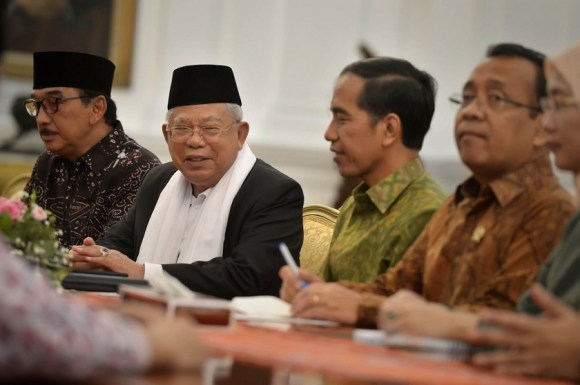
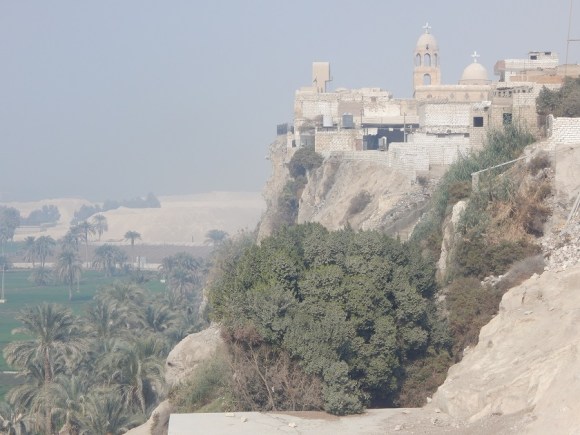
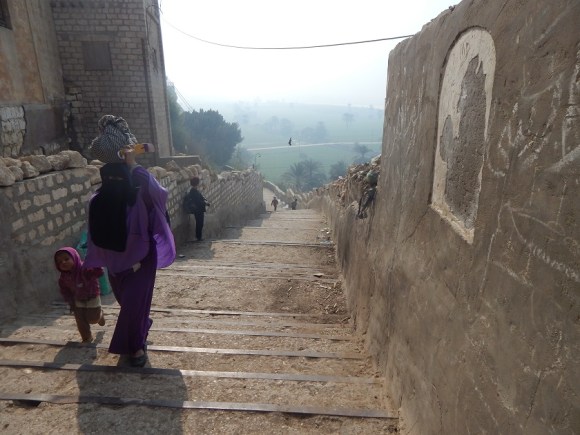

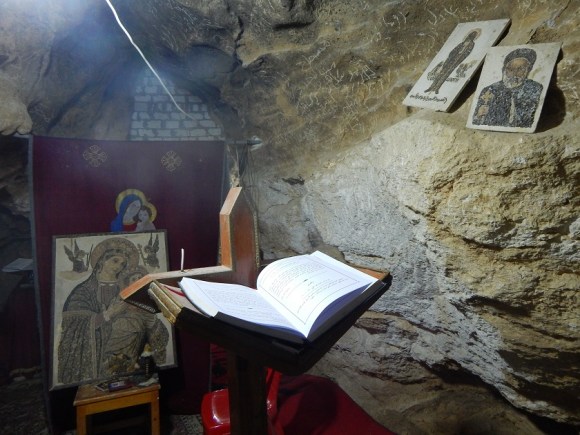

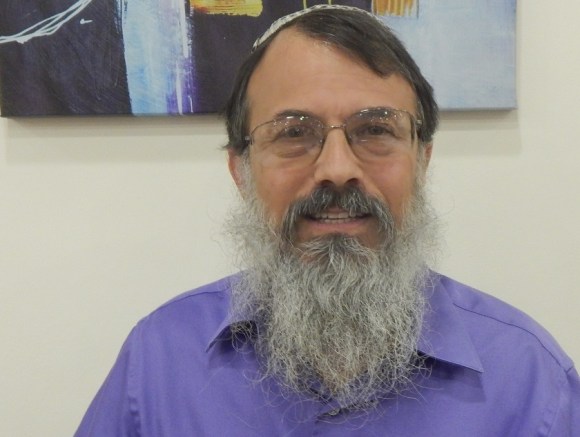


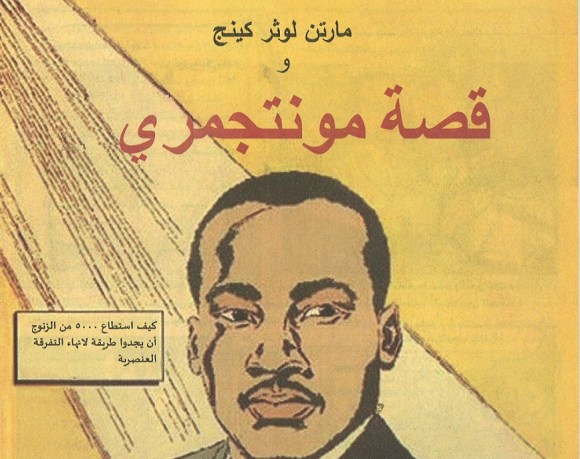


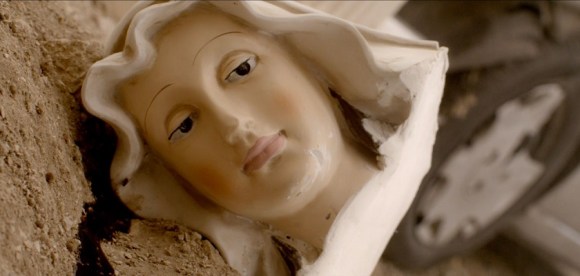


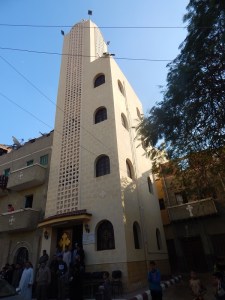





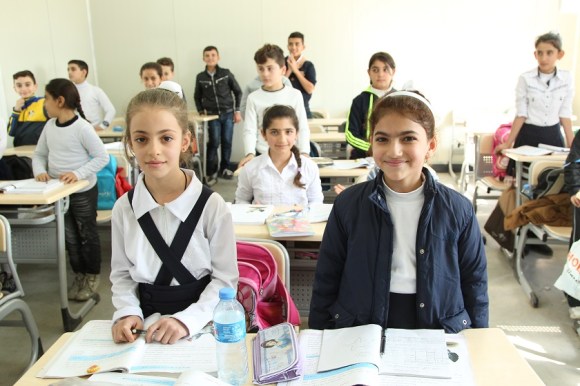


 Jayson Casper