This older interview, from August 2012, reflects a very different reality than the one Islamists experience in Egypt today. At the time they were in the ascendency; now, many of them scurry for cover. In preparation for a larger project on Islamist movements in general, however, Arab West Report only now is publishing this interview. Selected excerpts are below.
On his activity with the group in giving public lectures:
J: What is your history with the Jamā’ah al-Islāmīyah?
S: I joined the Jamā’ah al-Islāmīyah in 1979. I was at college during that time and thank God I worked with the Group and I used to preach on Fridays and give lessons. I was arrested in 1981. I am a member of the Guidance Council in Cairo, but regardless of my position, I serve as a Friday preacher and as a lecturer in conferences.
J: In a certain mosque?
S: Nowadays, I preach in many mosques. Of course before the revolution, we were totally prevented from preaching. There are two mosques here in al-Ma’ādi and another one in ‘Atabah, and on the fourth Friday of each month, I go to any mosque, for example in Helwan or sometimes outside Cairo, like in Suez or Alexandria, according to the desires of the people who want me to preach.
J: Are these mosques related to the Jamā’ah al-Islāmīyah? When you were prevented from preaching before the revolution, how could you have such relations with those mosques?
S: We have had relations for a very long time. I was prevented from preaching but not prevented from moving freely in society or from interacting with people. They would come to us to help them with their problems whether family issues or feuds between families and things like that. Instructions can be given to mosques not to let me preach in them, but I have great relations with society.
J: Are these mosques registered at the Endowments Ministry?
S: No, they are not. They are civil associations which house mosques. These associations resemble the Association of Religious Legitimacy [a longstanding Salafī non-governmental organization registered officially in Egypt and active since the early 20th Century].
J: Are they small, neighborhoodmosques?
S: No, they are large, but it depends on the civil association. There are many that have up to four mosques. They have permission from the Ministry of Social Affairs and they run their activities through associated mosques.
J: So they are legal?
S: Yes, but they are not supervised by the Endowments Ministry, which has no authority over them. The association and its administrative board supervises them and their expenses are submitted to the Ministry of Social Affairs.
Now, the government has reestablished (or, is reestablishing) its supervision and tight control of all mosques, allowing only approved speakers to appear. It is unlikely al-Gama’a al-Islamiya is finding official favor, though there is no campaign against them publicly as like with the Muslim Brotherhood.
But should their members wind up in jail, Salamony has been there before:
J: You said that you had been arrested for a while. When was that?
S: I have been arrested more than once. The first time was during Sādāt’s September decisions in 1981. It lasted a year and a half. Then there were other arrest periods that lasted between two months to a year up until 1990. In October 1990, I was arrested and stayed in prison for 15 years until January 2006, during Mubārak’s time.
J: What was the reason for that last long arrest?
S: There were many arrests during that time. I was arrested because I was a suspect in the case of the assassination of Rif’āt al-Mahjūb, the head of the parliament. But the judge gave amnesty to all the suspects and he said about me, “I have found one suspect in this case with no charges at all; that is ‘Izzat al-Salamunī,” and then I was set free.
We left the court to go back to prison with an arrest warrant. During that period my administrative arrest was open, which means that I could go to the court and present a grievance, and then receive amnesty. After that I would have to go to the state security, stay there for a night or two, only to be arrested again with a new arrest warrant.
At the prison in Damanhour there was a fountain in the center of the village, so the prison vehicle used to take the prisoners – who supposedly had be given amnesty – and go around the fountain once or twice, then send them back to prison.
But the main reason for that arrest concerned my preaching. I was preaching freely in mosques and conferences and criticizing the former regime, the tyranny and the injustice that have been unmasked since the January 25 Revolution.
Salamony says the campaigns against al-Gama’a al-Islamiya were all politically motivated, and that he personally was not involved in any illegal activity or assassination attempts. Instead, as above, he equates his group’s efforts to those of the January 25 Revolution, and the efforts of the state to prevent such an outbreak:
J: When it comes to preaching, did you call for the revolution or for any illegal movements?
S: No, I only preached about stopping injustice and corruption, and also about giving Egyptians all their rights so that no one would be enslaved or prevented from having a respectable life.
J: Did you use any means that you regret using, or perhaps you say they was suitable at that time but not nowadays?
S: No, the means I used did not go beyond words and preaching. We also called for demonstrating against any act of injustice, but all of our practices were peaceful. But starting a demonstration during that time worried the former regime, because people were submissive to oppression. If people who had influence went to the streets it was a very dangerous thing for them.
Once when I was arrested and blindfolded, in 1989, I asked one of the policemen, “Why are you doing all of this: torturing, arrests, breaking into mosques, and people get killed, why?”
He answered, “Honestly, if we let you carrying on all your social activities, and your Islamic preaching for one year, you will reach out to people and win them over to your side. Then you will overpower us and will strike us fatally, with no weapons at all. I will not give you the chance. When I arrest some of you, beat you up, and when you go on demonstrations against us, you only scratch us, which we can handle. But we cannot let you strike us.”
This has been their philosophy: to prevent anyone other than them from having influence over people, or to break the barriers of fear and terror that people had within themselves. That is why they thought that the Jamā’ah al-Islāmīyah was dangerous.
But it was not just political activism that al-Gama’a al-Islamiya was engaged in. It was social and moral activism as well:
J: What is Hisbah?
S: Hisbah, according to Islamic Law, is the promotion of virtue and the prevention of vice. The image of this concept has been distorted to many people. Islamic law states that promoting virtue can only happen through virtue, and preventing vice can never be through vice. Although it is a very beautiful image, people try to deform it. If it is applied correctly, its great fruits would be seen clearly in society.
We have to warn people that some of the things they do are wrong and harmful such as smoking and drinking alcohol. I tell them that these things are bad for their health. But some acts require intervention, like if I am walking around and see some guys trying to kidnap a girl. Here, religion tells me to protect her, and that is exactly the prevention of vice.
The Jamā’ah al-Islāmīyah practiced that guidance part within the limits of the Islamic law, and of course there were some mistakes as we are all human beings. Sometimes one may lose one’s temper, but we cannot blame our personal mistakes on the religious concepts.
He is keen to explain the ‘mistakes’. Elsewhere in the interview he describes how many occurred when the political leadership was in prison and could neither guide nor contain their youth. Escalation of attacks between the group and the police also contributed, he said.
J: What were your mistakes? You said you are just human beings who make mistakes.
S: Some of the youth misunderstood the concept of Hisbah and exceeded the limits. For example, if I saw someone committing a vice, I would go to that person and ask him politely to stop. But if I yelled at that person, I have committed vice. Religion only allows me to do what it takes to remove that vice.
J: To give an advice, for example.
S: Yes. I may only grab that person’s hand if it will remove the vice, but I am not allowed to slap that person on the face. So there are rules. Some youth would simply hit the person without giving him advice at all, which is religiously wrong. We have always warned our youth in mosques not to do such things. We have to confess these violations as we cannot prevent others from doing vice while we ourselves do it.
J: So now you know those mistakes, but during the 1970s and before your non-violent initiative, was Hisbah applied with few restrictions?
S: As leaders in the Jamā’ah al-Islāmīyah, we tried to put limits, but we could not following each and every member working here or there. But whenever we knew that a member of the Jamā’ah al-Islāmīyah did something wrong, we told him that was wrong, from the beginning.
But as I said before they were young, and youth were the majority of our members. With all of their excitement and with their little knowledge about religion, some incidents happened frequently. But as soon as we knew about them, we always acted and stated what was wrong. If a member hit someone, which is religiously wrong, we would go to that person and apologize to him and even give him the right to avenge himself by hitting that person if he wanted to do so.
J: I have read that in public gatherings, some youth used chains to disband meetings of mixed genders. These things really happened, but you see them as violations?
S: Those violations happened indeed, but some of them were done by people who do not belong to the Jamā’ah al-Islāmīyah, but their mistakes were blamed on us. Others were done by us and we stated that, before the initiative, but we were trying to settle things down. Now, thanks to age, experience, and increased religious knowledge, there are almost no violations among our members.
J: I have also read about attacks on liquor stores owned by Copts.
S: It happened once or twice.
But this was not a policy, nor was it permitted, Salamony said. But note how in his explanation he includes terminology that is very offensive to Copts, yet still has a sense of toleration about it:
J: The author quoted from Shaykh ‘Umar ‘Abd al-Rahmān stating that it is permitted to loot the Copt’s money. He issued a fatwa about that. Do you know anything about that?
S: This is totally untrue, and I heard Dr. ‘Umar ‘Abd al-Rahmān with my own ears once – as I accompanied him in many of his tours and lectures, and been with him around the whole country – saying that Christians’ and Dhimmis’ blood is prohibited to be shed, and that our religious laws state that their money is forbidden to be looted.
Even if I think that someone is infidel, not a Muslim, this does not give me the right to loot his money or shed his blood. Doctrines should be totally separated from practical life. For example, some Christians think of others as non-believers and infidels, like the Orthodox who believe that if someone does not take communion in their church, then he is a non-believer. To them I am a non-believer.
Belief issues have to do with people’s hearts. When it comes to the practical side, in the Qur’ān, God says: “God does not forbid you from those who fight you not for religion nor drove your homes, from dealing kindly and justly with them.”
From that we get that belief is one thing and how to treat people is something else. The money or blood of any human being living in the same country with me, or anywhere else in the world, is prohibited to looted or shed, as long as that person did not attack me or my religion.
in the late 1990s and early 2000s, al-Gama’a al-Islamiya began a non-violent initiative and published their change in policy along theological lines in The Revisions. This allowed many, but not all leaders to leave prison. Since then they have not called for violence, though some return to their social activism has been evidenced. But having assassinated President Sadat in 1981, and with several attempts on President Mubarak, the absolute nature of the rejection of violence is not clear:
J: I understand what you say and I sympathize with that explanation, but a couple of days ago I read that Tāriq al-Zumur commented on Sādāt’s assassin and said that he is a martyr. But how can he be a martyr, especially after your peaceful initiative and declaring that assassination is unacceptable?
S: Here, we have more than one side of the story. As I told you, to judge an issue, I have to consider its surrounding circumstances. Sādāt arrested people and criticized religious leaders like Hāfiz Salāmah that he was Suez’s lunatic. Sādāt said politics and religion should not be combined. The treaty of Camp David was also signed at that time. The general evaluation of the situation was that Sādāt was an enemy of religion and of Egypt.
That atmosphere pushed people like Khālid al-Islāmbulī and his followers to take an action. When I regard that issue now, it is not like when I regarded it at the time it happened. They were motivated by patriotism and religion with good intuition.
So when Tāriq al-Zumur said he was a martyr, he judged them according to their circumstances, which are different from ours. All the circumstances at that time showed that Sādāt was an enemy of religion. In order not to falsely accuse al-Islāmbulī, I must evaluate his situation according to the circumstances which led him to do so.
J: Why do you not just praise him and explain what he did without calling him a martyr as if it is a kind of justification?
S: In Islam, no one has the right to call someone a martyr or not, because only God knows who is a martyr and who is not. What we say is that we consider him to be a martyr, or pray for him to be one of the martyrs, according to his good intention. We pray for our brothers who have been murdered so that God would accept them as martyrs. But we cannot insure that a certain person is a martyr, because God is the only one who decides that.
Interesting to recall is that al-Gama’a al-Islamiya did not initially favor Mohamed Morsi for the presidency. After describing similarities and differences among the Islamist groups, he explained why:
J: I understand that there is a unity among you and that there is no competition among you as you have the same purpose. But the Jamā’ah al-Islāmīyah supported Abu al-Futuh during the presidential elections instead of supporting al-Shater and Muhammad Mursī, especially Mursī. Why was this?
S: It was the result of a certain view of reality. The leadership of the Jamā’ah al-Islāmīyah at that time formed a general assembly to gather our 300 members, and over the course of the day we listened to the programs of Dr. Mursī, Dr. Al Awa, and Dr. ‘Abd al-Mun’im Abū al-Futūh. The discussion lasted for nearly 15 hours and the majority supported Dr. Abū al-Futūh’s program in the first round in a democratic way, though some supported others.
J: What were the most important points that made the majority choose Abū al-Futūh rather than Mursī?
S: The majority chose Abū al-Futūh because he was independent and was a part of the Jamā’ah al-Islāmīyah in the past. He was thought to be friends with the liberals, unlike the Brotherhood as some people dislike them. We though he could gather the people around him better than any other candidate. The main point was to have unity within society. But in the second round, the Jamā’ah al-Islāmīyah chose Muhammad Mursī because at that time, the people categorized the candidates as representing the previous regime or the revolution. So the whole group chose Dr. Muhammad Mursī and their choice was based on a realistic study of the current situation at that time.
Even at the time of Islamist success, Salamony expressed doubts about the democratic outcome. But he was certain the people would not rise against them. Looking backwards his comments are poignant:
J: As a Muslim, you will do your best to deepen the roots of Islamic law in Egypt, but my question is what if the society is against you, you will continue your struggle against the people’s will?
S: That controversial assumption has no place in Egypt because the society has a religious nature, whether Muslim or Christian. If someone wants to change the identity or the nature of that society, we will face that change in a democratic way. Unfortunately, the Islamists are being judged in an unfair way.
They are accused of not accepting the other, which is not true. We accept the other but there is a difference between accepting the other and the other forcing himself upon us and that we must follow him or totally agree with him. I accept you when you stick to your opinion and I stick to mine. We can argue together and express our opinions to society. But what happens with Islamists is that they are being prevented from expressing themselves and even from speaking.
Now, when they have recently gained control, restrictions that are not forced upon anyone else are being forced upon them. So in that case, the democracy is not complete. They are talking about democracy but when it comes to us, it is being prohibited.
Please click here to read the full interview at Arab West Report.
Muhammad Hijāzī, born in Port Said in 1982, converted to Christianity in 1998 at the age of 16. Now 31, he was arrested on December 4, 2013 in the governorate of Minya on charges of espionage, inciting sectarian tension through evangelism, and unlicensed photography and journalism.
In 2007 Hijāzī became the first Egyptian convert to Christianity to petition the state to change the religion field on his ID card, and has changed his name to Bishoy Armia Boulos. According to his former lawyer, Mamdūh Nakhlah, had anyone else but Hijāzī been working in Minya, no charges would have been filed.
Nakhlah agreed to represent Hijāzī in his 2007 lawsuit, but later withdrew due to pressure from the church. His information now comes from overall familiarity with the current case, as well as contact with those in the area where he was arrested. Nakhlah believes the main charge of espionage is fabricated, but that there are enough convenient details surrounding the case to give the prosecutor a pretext to arrest Hijāzī.
Please click here to read the full article, speaking of these pretexts – including a media relationship with one of the figures involved in the production of the ‘Innocence of Muslims’ film that sparked protests throughout the region. The article also goes through the history of his efforts to register his religious change, which are still pending on appeal.
From a recent article on Arab West Report, to which I contributed a section reporting from a conference held by Egyptian liberals on the ideal constitution. Somewhat surprisingly, there was a good deal of sentiment against the military council:
Essam al-Din Hassan next spoke about the principle of freedom and the encroachments against it in negotiations over the new constitution. One feature of these negotiations is the efforts of the Ministry of Defense and al-Azhar to entrench their independence from the rest of the state. In terms of the military, standing apart from the rest of the executive authority – essentially two heads of state – would be terrible for the civil state and allow Egypt to again become a military, police state.
It is not unreasonable to think, he stated, that the military might trade this status with religious forces that are also looking for gains in the constitution, especially the Salafīs. They are arguing to keep Article 219 somewhere in the text, providing a conservative, Sunni-specific interpretation to the clause in Article 2 saying sharia is the primary source of legislation. But even Article 2, he argued, designating a religion for the state, has no place in a civil state. Article 3, similarly, guaranteeing special religious rights for the Copts, only reinforces the idea of a religious state. To curb such sectarian advances, firm consensus must be gathered in the committee of fifty which is rewriting the Constitution, so that civil state principles are protected, even from the tools of democracy which might undo them.
Ahmad Raghib spoke less about the necessary constitutional provisions for human dignity than the danger of their constant undermining. He noted that previous Egyptian constitutions, such as the 1971 version which governed up until the January 25 Revolution, provided guarantees for human dignity. This did not, however, stop the state from ignoring them, or even trampling upon them as was visible in the police torture cases against Khalid Saeed and Ahmad Bilal.
Raghib expanded Hassan’s warning about the military saying most institutions of state are seeking to enshrine their independence in the Constitution. This is expressly against the will of the people, however, who should have their elected officials administratively responsible for all these institutions. Unfortunately, in the previous Constitution, the Muslim Brotherhood collaborated with these institutions to preserve Mubarak’s state and keep it and the military council immune from their crimes. He closed with the expectation that a third wave of the Revolution might be necessary to put things right and secure a true modern civil constitution.
Please click here to read the full article at Arab West Report, which contains further reporting from the conference as well as observations from an interview with Rev. Safwat al-Baiady, president of the Protestant churches of Egypt and a member in the constitutional committee.
Polemics are poison to interfaith relations. Unfortunately the salve of dialogue and cooperation often fails to make as wide an impression, leaving wary religious communities under the assumption of mutual opposition. Polemics reduces ambiguity and nuance, allowing the non-specialist citizen to appreciate his or her own heritage when challenged by ideologies of a foreign ‘other’. Yet this reduction is achieved in a manner often repulsive to the ‘other’, no matter how much it may be reflective of part of the ideology. The specialist in interfaith relations deals with the complexity, but the audience is often limited. By speaking to the street the polemicist simultaneously comforts and infuriates.
This is very much the situation currently governing the Mediterranean world. Arab Muslims widely believe Europe is dominated by ‘Islamophobia’ – a rejectionist attitude which dismisses their faith. For example, Johannes Jansen, whom I wrote about here concerning his book, ‘Religious Roots of Muslim Violence’, writes concerning their prophet:
Muhammad, the prophet of Islam, may have been born around 570 AD in Mecca and if he existed, he died in Medina around 632 (italics mine).
Questions of historicity in the academic world are proper and legitimate, but Jansen, though a scholar, writes popularly. After first undermining the religion of Islam at its source, he reinforces its oppositional nature through irresponsible generalization:
Also printed testimonies from within the Muslim world abundantly illustrate that in general Muslims (with individual exceptions, one hopes) distrust and hate the West. They see the West as an enemy, and it is their religious background that encourages such judgements.
Critique of such ideas may be found elsewhere, but suffice it to say that when attitudes such as these reach the shores of North Africa and the Middle East, let alone communities of Muslims resident in Europe, interfaith coexistence and cooperation receives a setback.
Jan Slomp
This is why the example of European Christian leaders necessitates wider dissemination, especially as concerns their response toward the Muslim minorities in their midst. Jan Slomp is a member of the Advisory Editorial Board of the Journal of Muslim Minority Affairs, and together with Hans Voecking summarized the history of this interaction. This article is a summary of their essay, ‘The Churches and Islam in Europe’, published in Studies in Interreligious Dialogue, vol. 21, 2011.
Worthy to note is that Christian leaders did not consider the wave of Muslim immigration to be a religious issue at all, in the beginning. Instead, it was a socio-economic challenge, and churches organized to assist. In 1964 Protestant and Orthodox churches founded the Committee for Migrant Workers in Europe, while Roman Catholics formed the International Catholic Migration Committee shortly thereafter. Though these services had a religious subsection, the churches deliberately put priority on service and love before issues of doctrine and belief. They believed the Gospel called them to do so.
It soon became clear to both groups, however, that the presence of Muslim immigrants in particular placed challenges in front of local Christian congregations. In 1976 Christian leaders organized a conference to directly consider the needs of Muslim communities in Europe along with those of traditional Christians vis-à-vis their new neighbors. Ali Merad, an Algerian professor resident in France detailed the Muslim position. They needed in particular:
Proper housing
Job security
Children’s schooling
Religious education in public schools
Facilities to worship and practice Islamic festivals
Merad argued that by fulfilling these needs the Muslim world would receive a positive view of Christianity and promote reconciliation between Christian Europe and the Muslim Third World. Indigenous Arab Christians, especially, would be indispensable mediators between East and West.
Slomp relates that thirty-five years later, to a large degree, these needs have been largely addressed. Yet the conference also spelled out principles to be implemented in the churches, including:
Respect for Muslims requires greater knowledge of their religion
Islam and Christianity to be presented correctly
Churches establish offices to meet with Muslim representatives
In 1978 Christian leaders recognized many churches were still slow to relate to their Muslim neighbors in witness and service, and thus another conference was held. It tasked three committees to produce reports through which to guide Christian response. The first concerned working together with Muslims to protect and further their basic human rights as a minority community. The second envisioned positive cooperation between the two faiths in confronting secularism as a dominant ideology. The third, however, dealt with theological questions, and failed to reach consensus.
The difficulty in theology led Protestants, Catholics, and Orthodox leaders to establish a new organization in 1979, the Consultative Committee on Islam in Europe. A conference held was again motivated to encourage witness and service to Muslim neighbors, but emphasized this was especially in light of their religious freedom and the necessity of social integration. Work was established to create literature for local churches to educate properly about Islam, as well as to highlight instances in which Muslims suffered discrimination. Issues of theology, however, continued to be contentious.
Most Christian leaders in these meetings were challenging themselves to respond positively to the message of Islam as a partner in monotheism. Though keen not to water down the distinctives of Christian theology, many urged Muhammad to be accepted as a prophet within the continuing Old Testament tradition. Leaders emphasized common positions on ethics and urged cooperation in promoting spirituality. Hope was expressed that Muslims might continue to honor Jesus and be attracted to him, within an eschatological position where God would ‘restore all things (also all things Islamic transformed by him) in heaven and on earth into a unity in Christ’.
Such positions made many local churches uncomfortable, as they felt Islam was being made too akin to Christianity, which might lower the barriers for conversion away from the faith. No firm positions were taken, but in 1987 the Islam in Europe Committee was formed between Roman Catholics, Orthodox and Protestants to improve Islamic studies in all seminaries and theological faculties in Europe for the benefit of ordinary congregations, among others, by inviting Muslim teachers. In particular they wished to move beyond studies of comparative religion by allowing space for Quranic studies into the curriculum for Biblical studies, by which Islam might integrate into every aspect of theological inquiry.
However much the committee influenced local congregations, it was disbanded in 2009 in light of two encouraging developments. First, it was noticed that many churches by this time had incorporated an Islam desk to engage their congregants and communities. Second, the formal work of local churches in regional conferences was honored, as local leaders gathered to consult and exchange experiences. Across the continent churches had become aware of the peculiarities of these now Muslim citizens, and were engaging with them for the common good.
The differences in approach are apparent. Polemicists begin by viewing these newcomers to Europe as a religious other, make generalizations about their faith, emphasize points of departure, and establish a foundation of fear and opposition. While undoubtedly Christian people have engaged in such polemics, the Christian leadership of Europe has taken a different approach. They began by serving the humanity of these immigrants, subsequently recognizing the implications of their religious differences. Yet instead of opposition they sought understanding, integration, support for human rights, and even pushed the boundaries of Christian theology to find common ground.
In brief evaluation, if there were faults in the efforts of Christian leaders, it lies in the level of popular engagement. Polemicists have enough academic study to be accredited as experts, but their strength lies in simplification and mass appeal. Their message is also easily translatable through the media. European Christian leaders, on the other hand, hosted conferences, formed committees, and issued recommendations. These are not the avenues to reach the common man. Furthermore, in accepting the challenge to engage theology with Islam, they threatened the simple faith of the local believer. This can well aid the polemicist who reinforces popular belief through fear, now also of ‘compromising’ leadership.
Yet these Christian leaders are no ivory tower theoreticians. Each and every step was calculated to form wide councils of all denominational leadership, with an eye toward speaking toward the common man. Such broad consultation and engagement is done to build a network that can withstand media-driven and politicized polemicists. They printed literature and nurtured regional networks of pastors and priests. They assured the predominant message from the pulpit was one of engagement and respect. This is slow work which does not command attention. Yet despite the popularity of polemicists, it was noted that nearly all Muslim essential needs as a minority community have been met. Where this is lacking, especially as regards full integration, there may be indication the Christian message has fallen on the deaf ears of a secular population still Christian in heritage. This is a fertile ground for polemicism.
Unfortunately, there are polemicists in the Muslim world also. Despite the successes of Christian leaders in welcoming the Muslim ‘other’, many are quick to highlight Jansen or others as typical of a dominant European rejectionism. Yet the reasoned attitude in the Muslim world regards Europe as a place of freedom and equality, where Muslims have largely shared in a better life. Economics above all determine voting by the feet – immigrants continue to pour into Europe – but without the foundation of welcome labored for by Christian leaders over many decades, they might not be so eager to come.
Yet it is France’s niqab ban or Switzerland’s forbiddance of minarets that pervades common Muslim perception of Europe, aided by local polemicists. Has Murad’s prediction failed, that European attention to Muslim immigrant needs would reflect positively on Christianity and foster reconciliation? Slomp demurs that over this same time period the position of indigenous Christians in the Middle East has not improved. He takes no position on Muslim world reciprocity towards Europe, at least in this essay.
Yet this question highlights the seductive danger of polemics. ‘We’ are better than ‘they’ is the lens through which it is asked. The superiority of self and kin is inherent to human nature; Christian leaders have demonstrated the spirit of their faith is to overcome it.
Service, welcome, equality, and love – this is what the Europe Christian leaders have sought to build. In dialogue with Muslims, they may just find the ‘other’ intends the same. Jansen may doubt, but it is only through engagement that truth is discovered. Faith demands such risk; it is the salve that undoes the poison.
This essay was first published in Arab West Report in February 2012.
The following is from the newsletter of Arab West Report. Unfortunately, it is not available at its website due to its recent hacking.
————————
On May 31, 2012, Jayson Casper wrote about the controversial preacher Dr. Safwat Hegazy (Safwāt Hijāzī) for Arab-West Report (AWR) on the basis of what he had found in media reporting and on the internet. Please click here to read this report.
Hegazy is controversial for statements through which he has been accused of inciting violence. On August 21 he was arrested in Siwa Oasis. He is demanded by the prosecution. The Cairo Appellate Court has scheduled a session on the 7th of September to start his trial. He has been recorded on the stage at Rāba’ah protests on July 28 saying, “if a person throws on Morsi water (figuratively: if someone approaches Morsi), we shall throw on him blood (figuratively: kill him).”
We met with Dr. Safwat Hegazy on Thursday, July 25, one day before the military initiated efforts to end the Rāba’ah protests. He made a very pleasant appearance and seemed secure.
Dr. Safwat Hegazy explained when, in his view, violence can be used: anyone can kill President Bashar al-Assad (Bashār al-Asad) because of his crimes against humanity. Also Israeli soldiers can be targeted since they are at war with Palestinians. By the same token, one can imagine what he could have said after the army used force to end the sit-ins—we are attacked and thus have the right to defend ourselves by force. He did not say this in this interview, but we have heard people expressing the opinion that violence is allowed to be used if attacked.
Several of his statements were different from what we had expected from the reporting about him. “Anyone has the right to insult Islam, oppose it or criticize it,” he says, but not the Prophet Muhammad. Safwat Hegazy has no problems with Coptic Christians in leading positions. He would not object to a Coptic governor or a Coptic president. He also stated that he helped to find an end of tensions in areas where churches had been attacked. But he also stated publicly that he believed that 60% of those who demonstrated against Mursi are Christians: “and this is the truth that we know and the Churches were calling for people to march and participate in these demonstrations, and the Churches and the priests and the chaplains, announced in many videos that they are against an Islamic president and against an Islamic parliament and that they refuse this system and that this system must change.” That sentiment explains, but does NOT justify, the massive violence we have witnessed against churches and Christian institutions on August 15 and 16.
Dr. Safwat Hegazy also explained the Islamist point of view on what they call the coup d’état on July 3. He agreed with us that there should have been parliamentary elections, but blames the Egyptian judiciary and liberals for creating obstacles to holding elections. He demanded President Muhammad Morsi’s (Mursī) return—a view that we have also heard from many others we have met at Rābaʽah al-‘Adawīyyah. One notices from Safwat Hegazy and many others a strong feeling that they were wronged.
Dr. Safwat Hegazy did not object to any question being asked. As a basis for our questions we used Jayson Casper’s previous article that was based on a media research since at that time he was not accessible for an interview.
There are noted differences between what we knew from Safwat Hegazy through media reporting and this interview with him. He is a conservative Muslim scholar, a man with strong beliefs and ideals who appears not to have been very strong in documenting his own work (references to videos, but texts are much weaker. He gave one statement to the military but did not keep a copy).
Safwat Hegazy was presented as the firebrand who wanted the Coptic governor of Qena to be removed, but from Hegazy’s story one learns that he was asked by the SCAF to go to Qena and quell the unrest by telling the people that the governor would be removed.
On the church burning in Sūl (2011), he said he was opposed to the burning and asked for rebuilding the church. Church building “should be solved by law and that the law should be enforced on who is wrong and who is right, and investigate the issue and judge the guilty. If a Muslim is wrong he should be judged according to the law, and if a Christian is wrong he should be judged according to the law. That was our recommendation to the Prime Minister and to the Military Council and they didn’t take it into consideration.”
From Safwat Hegazy story one can ask about the relations between Islamists, security, and the military. It appears that the security and military have been using Hegazy to end unrest in the streets, but neglected several of his recommendations that, from hearing his side of the story, do not seem to be unreasonable.
Dr. Wafaa Hefny, granddaughter of Hassan al-Banna, the founder of the Brotherhood, was also at the Rāba’ah al-‘Adawīyyah and told us after the interview (that she did not attend) that Safwat Hegazy is not a member of the Muslim Brotherhood. Hegazy also did not claim this. He is an independent Islamist with sympathies for both Salafīs and Muslim Brothers.
Dr. Safwat Hegazy was arrested on August 21 for his fiery preaching against the sacking of Morsi and it seems he will not be accessible for some time to come for interviews. It is sad that obvious political differences could not be addressed in dialogue.
The interview took place in Arabic. Questions were asked by Cornelis Hulsman. It was recorded and later, in our office, translated by Daniela De Maria and Ahmed Deiab.
Cornelis Hulsman: I would like to know about your background. You are a member of the Association of Sunnah Scholars. What organization is this?
Safwat Hegazy (Safwāt Hijāzī): The members of this association are only ulamāʾ(scholars), and must be Sunnī ulamāʾ, from the Four Schools of Islamic Jurisprudence: Hanafite, Malikite, Shafi’ite, and Hanbalite. This is what the association is in brief.
CH: You are the Secretary-General of the Revolution’s Board of Trustees. What organization is this? You said that you are focused on preaching but this is politics.
SH: No, it’s revolutionary. I have no relation with politics. I am not a member of any party or any group, but I was elected as a member of the Revolution’s Board of Trustees because I participated in the January 25, 2011 Revolution as one of the leaders and main figures. The Revolution’s Board of Trustees in Mīdān al-Tahrīr (Tahrir Square) was responsible for organization at the square; responsible for its safety, food, night-camping, cleaning, and for everything that is related to Mīdān al-Tahrīr and it’s made of a big group of revolutionaries and they chose me to be their general secretary. It is not a political entity, but a revolutionary entity to protect…
CH: But isn’t revolution politics?
SH: Maybe.
CH: A revolution is a part of politics.
SH: A revolution is a political action, but [the board] only deals with the revolutionary operations and actions, so the Revolution’s Board of Trustees was the one that organized most of the actions going on in Mīdān al- Tahrīr before the 2012 parliamentary elections. The Revolution’s Board of Trustees was the one to make counter-propaganda to the members of the old regime’s National Democratic Party in the parliamentary elections or any election. The Revolution’s Board of Trustees is the one is the first revolutionary entities to announce its support to the candidacy of Dr. Muhammad Morsi [for the presidential elections] and it was the first revolutionary entity to reject the current coup d’état and to call for this sit-in and to participate to it.
CH: You were the first to reject the July 3 coup [explanation: Hulsman was not at all intending to go in a debate here on whether this was coup d’état or revolution. For Safwat Hegazy there was no question about this, this was a coup d’état.
SH: Yes.
CH: Ok. So, what about the Islamic Legitimate Body of Rights and Reformation that you are a member off?
SH: It is an Egyptian association, legitimate, also made by ulamāʾ[Muslim religious scholars], but it is only Egyptian, and it is local, inside Egypt. There is an Association of Sunnah Scholars, but the Islamic Legitimate Body of Rights and Reformation is only in Egypt. It is made of ulamāʾ and established during the Egyptian Revolution. In the January 25 Egyptian Revolution there were ulamāʾ who refused the Revolution and refused to take part in it and ulamāʾ who supported the Revolution and took part in it. This association is made by the ulamāʾ who supported the Revolution and took part in it. The association cares about the Islamic [sharī’ah] side and the scientific side of political rights and rights in general. And I am a founding member of it.
CH: About your membership of the last association, well-known in the West… you are a member of the National Council for Human Rights.
SH: The National Council for Human Rights is a council present in Egypt and founded by Hosni Mubarak (Husnī Mubārak), who set its rules and system, and at the time of Hosni Mubarak it had a basic task which was to make Hosni Mubarak regime look better in front of the world in the context of human rights. And its members were selected, and the rules and regulations were set for this purpose.
After the election of President Muhammad Morsi, there was a reforming of this council, and I was elected as a member. In this phase it had a main objective, which was changing the old laws of the old National Council for Human Rights and to make the council an effective entity that controls and monitors human rights in Egypt. And indeed it became effective, but then this coup came and everything stopped.
CH: What is exactly your role in the National Council for Human Rights?
SH: I did mainly three things. The first one is participating in creating the new law and the new organization for the council. Secondly, I presented to the council a project for an Egyptian Charter for Human Rights. The council has the project in which I mainly addressed the laws for Egyptian human rights. The third point is developing of the project for an Egyptian Court for Human Rights. The laws for its organization are complete, but the decision was being studied, until then came the coup. These are the three main things that I did. There was a fourth thing for which I was responsible, which is the Council for the Rights of Palestinian Refugees. Thank God we were able to do many things for the rights of the Palestinian Refugees in Egypt.
CH: Thank you. Are all your activities documented and would you be willing to share this with us?
SH: Yes, of course, everything is documented, but I don’t have it with me right now.
CH: No, I don’t mean now, but I am looking for documentation because we make a lot of studies.
SH: Yes, the laws of the council are documented, and hopefully we will be able to e-mail them to you. The project for the Egyptian charter is documented, as well as the project for the Egyptian Court for Human Rights.
CH: So maybe can you send them to me?
SH: Yes, I will.
CH: Thank you.
About Syria: Western journalists wrote about the fatwá that you pronounced on President Bashar al-Assad (Bashār al-Asad), saying that anybody can kill him. What do you mean exactly by this? Because people keep on mentioning this about you.
SH: Yes, I pronounced this fatwá. Bashar al-Assad, according to human rights laws, is a war criminal. According to the Hague Court…
CH: In the Netherlands.
SH: Yes. According to their classification, Bashar is a war criminal. In Islam war criminals must be executed.
CH: But who decides he can be executed?
SH: It is not Safwat Hegazy who says that. I’m not the only person to make this fatwá, many Islamic associations made it.
CH: Who?
SH: Like the International Union for Muslim Scholars, the Association of Sunnī Scholars, Islamic Legitimate Body of Rights and Reformation, the Syrian Association of Sunnī Scholars… many.
CH: Did they make the same fatwá or this is only from you?
SH: The same fatwá.
CH: In the news was also written that any Muslim could kill any Israeli walking in the street.
SH: No, this is not true. This dates back to 2007… they refer to the war of 2007, the war between Hezbollah (Hizb’allah) and Israel…
CH: Yes, in Gaza.
SH: Yes, Operation Cast Lead. And it was after the war of Hezbollah in Lebanon against Israel. And I said it about the Israeli army.
CH: The army. So, not civilians?
SH: Not any Jews (civilians), I said “the Israeli army”, because they are militants and kill our brothers and our sons and they have no right to take our land.
CH: But, we all know that most Israelis served in their army, so what about civilians who are in the reserve?
SH: As long as he is still a soldier in the Israeli army and can carry weapons at any moment and kill an Arab civilian, he is an enemy. And it’s the same in Israel: Meir Kahane, and other Rabbis in Israel, they made a religious decree saying that any Arab should be killed.
CH: And anyone who talks against Islam should be killed? The American film against Islam, “Innocence of Muslims”. There were protests in front of the American embassy in Cairo last year because of this movie. Your idea is that anyone involved in producing such a film should be killed?
SH: No, no, no. Anyone has the right to insult Islam, oppose it or criticize it. I can never say that he should be killed for it, never. It is anyone’s right: your right, this girl’s right [pointing to one of our interns], to say that Islam is bad, that it is terrorism, that it is an extremist religion, that you don’t like Islam, it is your right. I will not judge you, or punish you, or beat you, or kill you—it is not my right.
CH: Because this was in the news and also a Coptic youth in Asyūt was sentenced for blasphemy, he wrote something on Facebook and it attracted a lot of media attention.
SH: No, no, no, I refuse these talks about killing a Copt or a Christian because he wrote something about Islam that I don’t like. No way, I refuse this. But there is a very crucial point and it is if a person says that [Prophet] Muhammad (peace be upon him) is crazy.
You have to respect me and my belief. This is the problem. But one who doesn’t like Islam, I could never kill him and if a Muslim kills a Copt because he doesn’t like Islam, he should be prosecuted.
CH: The thing is that the Copts in Egypt are scared.
SH: I’m not talking about the Copts in Egypt only, I’m talking about anybody in the world. Let alone the Copts in Egypt. They live with us and we live with them, they work with us and we work with them. Me, in my company, I have Coptic workers.
CH: You have Copts? Where?
SH: At work, I have Copts.
CH: Who?
SH: There is Jirjis Fawzi, who is the carpenter. We have a big contracting company, and the head of carpenters is Jirjis Fawzi. And he is an expert in carpentry, and he is the one who built my house, my villa, he is the one who made it. I have… the engineer (who made the aluminum windows)—he is Christian and his name is Tamir, Tamir Mikhael in my company, and he’s Christian. So there is no problem between the Copts and us, at all, not even daily life troubles. But as there are extremist Muslims, in the same way there are extremist Copts.
CH: But also about the Copts, you said that 60% of the….
SH: That 60% of the protesters in Ittihādīya were Copts.
Yes, I said that. And I say that 60% of those who joined the demonstrations on the 30th of June were Copts. Why do I say this? Because the Egyptian Church took this way. The Egyptian Church participated in the coup with the presence of Pope Tawadros, as well as al-Azhar took part in it with the presence of the Shaykh of al-Azhar. I object to the position of the al-Azhar Shaykh and Pope Tawadros in supporting the coup, and I request that the Shaykh and Pope Tawadros are dismissed. There is no difference for me between Muslims or Christians who took part in this coup. I said that 60% of who took part in the Ittihādīya demonstrations and the July 3 coup are Christians, and this is the truth that we know and the Churches were calling for people to march and participate in these demonstrations, and the Churches and the priests and the chaplains, announced in many videos that they are against an Islamic president and against an Islamic parliament and that they refuse this system and that this system must change.
CH: But do you understand why Copts are against an Islamic president and an Islamic parliament? Because they are scared. The problem is here in Egypt. I’ve been in this country for 35 years, but for the fear, there must be a dialogue. We must cooperate with each other. There is a great fear here, and fear is not good for anybody.
SH: What can we do to remove this fear? Shall we decide that Egypt will not have an Islamic president? Or shall we sit and talk and discuss and understand who has fear and what they have a fear of? Did we experience an Islamic president who oppressed the Copts? It did not happen. Did Muhammad Morsi, during the year of his ruling, oppress the Copts? Did he attack the rights of the Copts? Absolutely not. I am one of the people who suggested that we put in the Egyptian Constitution an article that says that when non-Muslims have a controversy it will be judged according to their religious law, in their beliefs and practices and in the individual personal status matters. I am the one who asked for it, I am the one who insisted for the presence of this article to guarantee the right for Copts in Egypt to worship according to their religion and deal with the civil matters, such as marriage and heritage, according to what their religion says.
CH: Is there a dialogue between you and any important Coptic figure, such as Bishop Moussa, for example? He has dialogues with many Muslims; he is very well known for it. I also know people who don’t want such dialogue, but he has a lot of dialogues with the Muslims. Do you know Bishop Moussa personally?
SH: Yes, I know him.
CH: What’s your opinion on Bishop Moussa and people like him?
SH: I absolutely have no problem in dialoguing or cooperating or living with the Copts. I strongly believe that we will solve any problem with the Copts from its bases, if there is any problem. However, we do have two or three main problems. The first problem is the media, the Egyptian media.
CH: Yes, I know [I know of several examples where Egyptian media have not given a fair picture of Islamists or Islamist views]
SH: The second problem is the old cultural heritage of the West. They act according to this heritage. The third problem is the fear, the fear from others, from any other person that is different. And it is human nature to walk away from things that scare me. I don’t see any problem. But there is a fourth problem, which is the Coptic emigrants, who want to create a big problem in Egypt. This is a very important problem.
CH: This is important but it comes from media. They don’t live here in Egypt, so it’s because they are influenced by the information on Egypt that comes from the media.
SH: Yes exactly, it’s the media.
CH: But Jirjis, who works with you, he knows you, so there is no problem.
SH: Yes Jirjis… After the Revolution, for a whole year the company didn’t have work, but the employees still receive their salaries. Jirjis, he got another job offer with a higher salary, so he came to me and said, “I received a job offer for a higher salary but I would like to stay with you, so paying for me a salary without me working, will it cause a problem?” I said, “No there is no problem”. He said, “Would you like me to stay here?” I said, “Yes, I want you to stay here”. So he refused the other job and continued with me. After one month he refused to take more than half of his salary and has been working with me for 8 years, and we’re getting along.
CH: Jayson mentioned in his article Shaykh Umar ‘Abd al-Kāfī. Who is he exactly and what is the relationship between the two of you?
SH: Umar ‘Abd al-Kāfī is one of the ulamāʾ who was living in Egypt in the eighties, and was giving weekly lectures in a mosque called Asad Ibn al-Furāt mosque. He had a huge audience, thousands of people, which caused a problem with the police. They accused him of incitement against Christians. I was a young boy and he was one of my teachers among the other Shaykhs, that’s it, that’s all the relationship between me and Umar ‘Abd al-Kāfī. After that he moved to the Emirates, where he lives until now.
CH: Until now?
SH: Until now.
CH: But he doesn’t talk about Egypt or the Revolution?
SH: No, absolutely. He has nothing to do with the Revolution or with the Christians in Egypt, nor with the leadership of Egypt, at all. He lives in the Emirates, in Dubai, and he is very close to the governors of the Emirates and to Muhammad Bin Rashīd, ruler of Dubai.
CH: I was befriended with Shaykh ‘Abd al-Mūatī al-Bayūmī. Do you know him?
SH: Yes.
CH: He was a great thinker.
[no response]
CH: Anyway, about Qena. In Qena there was a Christian governor, but it has been written that you opposed the presence of a Christian governor in Qena.
SH: It is absolutely not true.
CH: What exactly happened with the last Christian governor in Qena?
SH: In Qena, after the Revolution, Prime Minister ‘Issām Sharaf appointed a Christian governor. The people of Qena refused this decision and revolted against it in Qena, so the Military Council, which was governing the country at that time, represented by Colonel Hassan al-Rūīnī, called me and asked me to go to Qena to dismiss the revolt and solve the problem, because of my good relationship with Christians and Muslims, as there had been a previous problem between Muslims and Christian in a Church in ‘Atfīh, in the village of Sūl, and I was the one who solved it.
CH: I know the issue of Sūl. Let’s continue first on Qena and then we can talk about Sūl.
SH: So Hassan al-Rūīnī asked me and Shaykh Muhammad Hassan to go to Qena to solve the problem. So we went there and met the Muslims and we persuaded them that revolting and using violence is not a solution to the problem. Dr. ‘Issām Sharaf and Hassan al-Rūīnī called us and said that we could change the governor, but the people had to go back to their houses. So I told the people that we could change the governor on the bases of what the Prime Minister and the Military Council said. So people left and went back home and the governor was changed. That’s my whole story regarding Qena. But I never refuse that a Christian governor takes charge of any governorate in Egypt. That’s the story about Qena. I didn’t support the people’s revolt; I didn’t refuse the Christian governor, that didn’t happen. But it was according to the words of the Prime Minister and the Military Council.
Concerning the village of Sūl, what happened—without going into details—is that a church was destroyed and the Muslims revolted and clashed. I was also asked by the Prime Minister and the Military Council to go to Sūl, me and Shaykh Muhammad Hassan, to solve the problem. We convinced the people to dismiss and to rebuild the church and the army will rebuild the church. It’s not the right of Muslims to destroy a church owned by Christians. The youths listened to us, and left and the church was rebuilt. If Sawfat Hegazy opposed, hated or didn’t want the Copts in Egypt, would he have solved these problems?
CH: But on Sūl… I wrote about Sūl, I know people from Sūl—a Christian lawyer who is from Sūl, but lives in Cairo. There were mistakes there—that there was Christian man [in a relationship] with a Muslim girl that initiated tensions with Muslims
SH: That was our recommendation that we presented to the Military Council. The first problem was to get people [Christians] back to their houses and to leave the matter to the law, and this is the main point: that we got people back to their houses and that the church was rebuilt. And we wrote to the Prime Minister and to the Military Council that the problem should be solved by law and that the law should be enforced on who is wrong and who is right, and investigate the issue and judge the guilty. If a Muslim is wrong he should be judged according to the law, and if a Christian is wrong he should be judged according to the law. That was our recommendation to the Prime Minister and to the Military Council and they didn’t take it into consideration.
CH: Is that documented?
SH: Yes, it is documented, they have it.
CH: How? Our work needs documentation…
SH: That is documented in videos, we said that in videos. When I went to Hassan al-Ruiny, at the Military Council, he told me to write what I wanted to do, so I wrote what I wanted to do and I gave him the paper and this is why I don’t have a copy of it.
CH: Hopefully you will be able to give us the link to the video.
SH: Yes, if you go on YouTube and if you search the Sūl case, you will find my speeches in the village of Sūl.
CH: Now, Imbābah. What do you think about the burning of the church in Imbābah?
SH: On the burning of the Imbābah church—in Egypt they call me “The Firefighter”, who extinguished the fire. In Imbābah there was a problem in the church, we went there as the Revolution’s Board of Trustees because this happened immediately after the Revolution. We had nothing to do with the issue and we found out that the Ministry of Interior was responsible for the problem.
CH: What did the Ministry of Interior do?
SH: The information that I have, I’m not sure if it’s right or wrong. As a habit, if the information that I have is right, I say it, while if the information that I have is not verified, I say I don’t know. The information that we got is that what happened there is that a police officer opened fire on the church and he had a group of thugs with him. They threw Molotovs at the church. So the Muslims and Christians inhabitants stood against this and the problem happened. At that time the Ministry of Interior was causing many of these problems to hinder the Revolution; it was playing the role of what was known as “the third party” [when there is two parts against each other and a third one comes up and pushes both sides to fight], and my role was… Imbābah has many churches, nearly four churches, and what I did is that we took some Muslims youths from the revolutionaries to protect the other churches. They protected the rest of the churches so no one would attack any other church. That’s my entire role in Imbābah. After that, one of the main tasks of the Revolution’s Board of Trustees was to stand in front of the gates of the churches and ceremonies of the Copts, so that they can prevent any extremist Muslim from getting near the church.
CH: In Egypt journalists and TV representatives are talking about civil war in Egypt. There are Islamists and non-Islamists, Muslims and non-Muslims. My opinion is that Egypt is a country for all Egyptians, not the Islamists only, not the Christians only, not the Liberals only; everybody.
SH: Let me tell you something about my political view, which you can find shown in some TV programs. Can a Christian run for the presidency of Egypt? I say “yes”. If the Egyptian people chose a Christian to govern Egypt, that’s it, this is the people’s will. This is my principle. The person who the people want to be the ruler, should rule. If the people chose an Islamist to govern, he should govern. We should all support that president. If the people chose a Liberal, if the people chose a Christian, a Copt, then he governs, that’s it; that’s the people’s will and we should respect it. This…
CH: Yes, that’s right.
SH: This is my opinion. Therefore, when an article was proposed for the Constitution–I had a strong relationship with the Constitutional Committee—that the President of the Republic must be Muslim, I said, “No”. The President of the Republic must be Egyptian. Muslim, Christian, Liberal, Communist…
CH: … Jewish
SH: Jewish, if there were any Jews living in Egypt. In Egypt there are no more than 50 Jews.
All of them older than 70.
CH: I know, I know.
SH: That’s why I didn’t mention the word Jews. But he must be Egyptian. This is my principle and my political view. Can the Prime Minister be Christian? Yes, the Prime Minister can be Christian. In front of the civil law, Christians are exactly like Muslims. This is my opinion. And on this basis, the issue is not about Morsi being an Islamic President…
CH: Is he an Islamic president or an Egyptian president?
SH: No, I’m clarifying this to you. The issue is not about Morsi being an Islamic [president]. Instead, it is about being a president—Egyptian, civilian, elected through fair, free elections. And I said on this stage [of Rāba’a al-‘Adawīyah] that if Hamdīn Sabāhī was the President of the Republic and the army staged a coup against him, I would refuse that coup and take this same position and fill the squares in support of Hamdīn Sabāhī. This is the issue.
CH: Now, the people of the coup are not with the Islamists…
SH: Excuse me, before you continue. The Military Council, Abdel Fatah al-Sisi (’Abd al-Fattāh al-Sīsī), wanted to make the matter a religious matter. The coup and al-Sisi wanted to make Morsi’s matter a religious one. How? He brought Church’s Pope and from the Azhar Shaykh.
CH: I am sorry. That’s wrong.
SH: Isn’t it?
CH: That’s a mistake.
SH: Yes. So he changed the issue from a coup to a religious issue between Muslims and Christians. The Muslims were hurt by the fact that the Church’s Pope took part in deposing an Islamic President. Ahmad al-Tayyīb, Shaykh of al-Azhar, as a person, not as an authority, he is a man from the remnants of the old regime and sits in political committees and was supporting Ahmad Shafiq (Shafīq) in the presidential elections. And the presence of Ahmad al-Tayyīb gave a religious dimension to the issue and related it to the old regime. And this was the first step of al-Sisi leading to a civil war in Egypt. His second step, it’s yesterday’s speech, in which he invited his supporters to demonstrate in the streets. How do you invite your supporters to protest while your opposition is in the street? We are absolutely not considering going to Midān al-Tahrīr. Midān al-Tahrīr is our property from January 25. But we refused to go to Midān al-Tahrīr because there are some mercenaries. Concerning the possibility of a civil war in Egypt, we, as supporters of the President [Morsi], would never use a weapon against an Egyptian. Never.
CH: Yesterday al-Sisi made his statement. What is the situation now in Egypt? President Morsi obtained 51% of votes in the elections, while Shafiq got 49. Egypt now is divided. Some are with Morsi, some are against Morsi, but where is the dialogue in Egypt? For Egypt’s economy this is not good. All the people here… I see here, everyone wants to live, everyone wants to eat, this is the human being—that is the people.
SH: You are from the Netherlands, right?
CH: I have been living in Egypt for several years.
SH: But you are from Holland. And they are from Holland as well? [Referring to the interns.]
CH: No, no, they are from Italy and he’s from England.
SH: In Italy, in England, in Holland, do you accept that the army stages a military coup against democracy and takes over and oust the elected Prime Minister? Does anyone accept that?
CH: No, but in Europe, in England, in Italy, in Holland, there are democratic institutions and if anything happens the Parliament decides if the Prime Minister or the President will continue or not. Here, where is the parliament?
SH: This is what we are asking for and this is what the president, Muhammad Morsi, is asking for. President Muhammad Morsi says that we have been trying to run parliamentary elections and to constitute a parliament for a year now, but the Constitutional Court is hindering these elections, as are the Liberals. We want to continue the democratic experiment in Egypt. We elected a president and he became the elected president. With 51% or 50.5%, anyway what matters is he got the majority of votes and he became an elected president for Egypt. He must continue his term. The parliament is the only faction that can judge the president and depose the president and decide whether there should be early presidential elections or not. We told them to make elections and constitute a parliament and you as opposition to Morsi, since you claim to have 30 million people who went in the streets, you will surely win the elections. Depose Morsi according to the law. Am I wrong? This is what we asked for and what we are asking for. We will not go back again to the time of Gamal Abdel Nasser (Jamāl ‘Abd al- Nāsser) or Mubarak where the army rules. It’s impossible. You know that there is a temporary president for the country. Is he a real president? Does he do the tasks of the president? Does he have power? Does he get to make decisions? Who is ruling Egypt? Abdel Fatah al-Sisi. He is the one who is ruling. So this is what we are asking for.
We are asking for the following points: first, the return of the elected president to perform his tasks, without conditions or restrictions. Secondly, running parliamentary elections as soon as possible. Thirdly, the parliament gets to decide on the judgment or the deposal of the president. Whatever the parliament does, we will accept it. Fourth, forming a commission to amend the Egyptian Constitution. Fifth, forming a commission for national reconciliation. The return of the Egyptian Constitution; the return of the temporary Shūrá Council—this is what we ask for. Simple as that. We will go back to our houses and run elections and if they have the majority in the streets they will reach the majority in the parliament. If they have the majority in parliament they have the right to govern and to depose the president, and at that time we will support the deposal of the president, if it’s the parliament who deposes the president. But, if we go to the streets and claim to be 30 million or 20 million and we want to depose the president… I also can make the claim that we are 20 million, can you tell if I am honest or lying?
CH: But if there are parliamentary elections…
SH: This is what we are saying, me and the Revolution’s Board of Trustees, it’s what we are asking and this is what all the Islamic parties are saying.
CH: Thank you. About tomorrow: will something happen? [There were fears that on Friday July 26 there could be tensions and fights]
SH: Hopefully tomorrow nothing will happen. We don’t have weapons, we won’t carry weapons. We don’t know how to kill, we don’t kill anyone. This will continue being a peaceful revolution. I suggest that you take a walk in the square at night with Hussein from the Media Center or Walīd Haddād or anyone. You will see with your own eyes that there is no terrorism or weapons. Tomorrow I don’t expect anything to happen. I only think that there will be some thugs and those thugs are moved by the State Security. We are quite sure of this. They can cause some problems, as it happens every day. Some people from us might die and they could go to Tahrīr, the thugs, and kill some people so we are accused of it. If we wanted to take over Midān al-Tahrīr we would have done it long ago, but we don’t want that. And hopefully tomorrow everything will go fine.
CH: Hopefully. Our interns have questions.
Daniela De Maria: I read that you have been banned from entering France. Why?
SH: No, I’m not banned from entering France. In the time of Sarkozy there was an Islamic conference that me and a group of Shaykhs were invited to attend and to give a speech in. But the Ministry of Interior took the decision. The French Ministry of Interior or the French government was heading toward elections, so they wanted to win the votes of Jews and some French extremists in France…
CH: Did this happen during the time a Jewish school in France was attacked and children were killed?
SH: Yes.
So they wanted to prevent the Borjè conference from being held, but they failed because if they had done it they would have lost the votes of the Muslims in France so instead they decided to prevent from entering all the scholars that were supposed to participate in the conference that year, such as Shaykh al-Qaradāwī, Safwat Hegazy, ‘A’īd al-Qarnī, and a huge group, who don’t have any relationship with politics… Shaykhs like A’ed al-Qarnī or Mahmūd al-Masrī have nothing to do with politics, revolution, or anything else, but they were banned anyway for this trip only, but afterwards I went to France.
Rob Bental: What is your opinion on the role of foreign countries in Egypt right now and what do you think their role should be?
SH: In the current crisis?
RB: Yes.
SH: If this military coup was in any other country, would Europe or the European countries accept or recognize this coup or they would reject it? They would reject it, definitely. This is what we want from the European countries. We want the European countries to reject this coup and this government, and get back the elected president. I requested the European Union to come to supervise the next parliamentary elections. Europe must help and protect the Egyptian democratic experiment.
Safwat Hegazi has long been an interest of mine due to his inflammatory rhetoric in favor of Islamism. This article was written for Arab West Report before the removal of President Morsi from his office, in preparation for a hopeful interview. Cornelis Hulsman was able to secure this interview during the sit-in protest, and this will be published here in a subsequent post. Since then, Hegazi has been arrested for inciting violence. Unfortunately, the database of AWR remains inaccessible due to hacking.
………….
The Islamist landscape in Egypt is often seen through the lens of two dominant groupings: The Muslim Brotherhood and the Salafis, the latter of which have splintered into several smaller political parties. But Sunni Islam, lacking an organizational hierarchy, facilitates the emergence of independent scholars on the basis of their knowledge and charisma. Though the Brotherhood and Salafi Nour Party are rightly understood as the prime movers in Islamist politics, the influence of individual actors must not be discounted. Among the most prominent is Safwat Hegazi.
Despite his general independence, Hegazi is often identified – rightly or wrongly – as a member of the Muslim Brotherhood. Regardless, his strident pro-revolutionary and pro-Islamist positions frequently place him in support of President Muhammad Morsi in general, and in support of an even larger Islamist project in particular, as will be seen. These positions are not just his own, but reflect his position as the secretary-general of the Revolution’s Board of Trustees, one of many revolutionary groupings, and from membership in two Islamist/Salafi organizations, the Legitimate Association for Rights and Reform, and the Association of Sunnah Scholars, which he heads.
Most controversial, however, is Hegazi’s membership in the National Council for Human Rights. This semi-governmental watchdog was reconstituted by Morsi to replace the Mubarak and NDP dominated council with twenty-five new members. Liberals and leftists received a share of the seats, but critics complained of Islamist domination and the appointment of figures with no experience or demonstrated commitment to international human rights norms. Hegazi was singled out as an example.
Among the complaints is Hegazi’s willingness to shed blood.
He issued a fatwa not only licensing the assassination of Syrian President Bashār al-Asad, but also declaring ‘a sinner’ anyone who did not do so. ‘Killing Asad is a duty of the Islamic nation,’ he declared, taking legitimacy from other organizations who issued similar statements.
While Syria can be considered a domain of war, Hegazi’s pronouncement of death extends further. lAnother fatwa urges Muslims to kill any Israeli found walking in the streets, saying the day will come when Muslims rule the world. He also announced he would personally kill someone who insults Islam or the Prophet Muhammad, though he was careful to emphasize he was not asking the public to assume this responsibility.
Finally, in the context of demonstrations at the presidential palace over Morsi’s controversial constitutional declaration placing his decisions beyond judicial oversight, Hegazi warned demonstrating Copts. Repeating Islamist claims that over sixty percent of protesters were Christians, he saw a conspiracy to overthrow the president. Copts share this country with us, he admitted, but declared there were red lines. ‘Whoever threatens it [presidential legitimacy] with water,’ he said, ‘we will threaten him with blood.’
An anti-Christian sentiment can be detected as well in earlier incidents. Upon return of the fiery and polemical Islamist preacher ‘Umar ‘Abd al-Kāfī to Egypt after thirteen years in exile, Hegazi was there to meet him at the airport. But it was his conduct in Qena which speaks more fully to the issue.
After the revolution the ruling military council replaced Mubarak-era governors and appointed new ones in their stead. Qena, with a large Christian minority, had been the one governorate with a Coptic head, and his replacement with another Copt sparked huge protests and cutting of the railway line. Some rejected him for his role in suppressing protests as a member of the police force during the revolution, but much of the protest centered on his religious identity.
Hegazi was part of a team dispatched by the military council to help calm the situation, but instead took the side of the demonstrators. ‘Your demands are our responsibility,’ he declared. ‘No one can impose on us something we do not want.’ In a later, unrelated incident, Hegazi also condemned Shia Muslims, declaring their faith to be blasphemy.
In the accessed media, the motivation for Hegazi’s stances is unclear, but there is space to see it primarily as revolutionary, rather than as sectarian. His is an Islamist activism, but it is revolutionary all the same. Sometimes, these come into conflict.
This was apparent during a summer demonstration in Tahrir Square in 2011 against military rule. Hegazi had earlier withdrawn from a national consensus conference due to the presence of old regime figures, and in this his action was similar to liberal response. But in the square it was non-Islamists who felt the need to withdraw as Salafi protestors used the occasion to chant decidedly Islamist slogans. Hegazi rejected claims there was an agreement among all revolutionaries to use only consensus slogans and demands. Other Islamists admitted there was, however, though they interpreted it differently. In any case, Hegazi became a part of the deteriorating unity of the revolution and the decent into political polarization.
In an earlier example, following the burning of a church in Imbaba in May 2011, representing the first major sectarian attack after the revolution, Hegazi appeared at a massive joint Brotherhood-Salafi rally. He interpreted the attack as part of the counter-revolution, saying it was carried out by thugs, rather than by Islamists. He also took the opportunity to declare the soon coming of the United Islamic States, with one caliph to rule all Muslims.
This theme appeared again during the presidential election campaign, which Hegazi declined to participate in – possibly on behalf of al-Jamā’ah al-Islāmiyyah – due to the large number of worthy candidates, mentioning specifically the liberal Ayman Nūr along with other Islamist candidates. But eventually he threw his support behind Muhammad Morsi, declaring him the only candidate who promised to implement sharī‘ah law.
But Hegazi’s rhetoric went much further. He declared Morsi to be a new Salāh al-Dīn who would unite the Muslims and liberate Jerusalem. A few days later at a huge rally in the Delta, in front of Morsi and Brotherhood leadership Hegazi called for ‘millions of martyrs’ to go to Jerusalem, establishing it as the capital of a new caliphate. The green flag bearing the Islamic shahādah, he defended, belongs to Islam and not to Saudi Arabia.
Part of Hegazi’s motivation is revolutionary. Prior to the first round of elections he called for people to reject the former regime candidates, labeling especially ‘Umar Sulimān, Ahmad Shafīq, and ‘Amr Mūsa. But it is also fully Islamist; a few weeks later he said it was ‘against religion’ to elect a candidate with a vision for liberal, secular, communist, or socialist state. As for the Salafi political parties which endorsed ‘Abd al-Mun’im Abū al-Futūh for president, Hegazi called their leaders agents of state security.
Hegazi’s support for Morsi has continued after his election. He defended the sacking of military council leadership, saying it was not to monopolize power but to secure the demands of the revolution. He supported the constitutional declaration, as described above, and has even approved the practice of kissing the hands of religious leaders, placing Morsi among their number. His partisan positions have earned Hegazi a good deal of opposition – and possible maligning – in the press. An admitted NDP thug has accused him and Brotherhood leadership of orchestrating the revolutionary Battle of the Camel. He was also quoted as seeking to turn the political struggle in Egypt into a civil war, as the opposition was against God and his caliph, a statement he subsequently denied.
As a controversial Islamist in Egypt, Hegazi is not alone. Many have made comments even more outrageous, but none have received such official government endorsement. Appointment to the National Council of Human Rights is a major statement of presidential approval, in which President Morsi implicitly signals toleration of Hegazi’s rhetoric, if not appreciation and approval. France, meanwhile, has barred him from entering the country.
More than likely, Hegazi’s appointment is a political reward for necessary support, keeping secure the president’s right flank. Policy makers in the West appear content to allow Morsi to nurture sectarian discourse as long as practical international obligations are kept sacrosanct. These obligations, however, include a measure of respect for human rights; how far Islamists can transform domestic religious realities is yet to be delimited.
But President Morsi is accountable for the views of Hegazi. Having chosen the politically expedient road of endorsing him domestically, he must endure the politically difficult road of explaining him internationally. Egypt is free to create the society it wishes, but the global community is free to criticize accordingly, and determine the level it welcomes and aids Egypt’s ongoing transition.
These matters are not easy, either for the president or the international community. Safwat Hegazi, however, symbolically stands in the nexus. By all appearances he enjoys his position.
Dutch scholar Johannes Jansen contributed an essay – ‘The Religious Roots of Muslim Violence’ (opens in a Word document) – to a 2011 anthology entitled, ‘Terrorism: Ideology, Law, and Policy’. In it he makes the case that violence and terrorism are part and parcel of the Islamic religion, traceable to its root sources at every level of sharia construction. Jansen’s scouring of the sources is admirable, and he launches several challenges to an irenic understanding of Islam. Unfortunately, he gives short shrift to worthy counterarguments, instead presenting the reader conclusions deemed unassailable, established on the basis of his insight. While his insight is formidable, it is not conclusive. As a scholar he would do well to simply present both sides.
Johannes Jansen
That Jansen does not is unfortunate, since it bathes his text in a bias which obscures a viable link between violence and Islam. Desiring to damn Islam in its entirety, he allows a critic to dismiss his work given its failure to admit other interpretations. Jansen instead takes upon himself the role of mujtahid (one who interprets) and throws down the gauntlet as well as any extremist scholar or caller to jihad. The only difference lies in condemnation versus approval.
This text will first present the legitimate challenges marshaled by Jansen, then demonstrate some of the ways he overstates his case, and close with a selection of examples where his argumentation is simply faulty, and at times, dismissive. A serious scholar of Islam would do well to outright refute many of his judgments; this review will suffice to proceed from a generalist’s knowledge. The reader is encouraged to lend his or her own fruits of study.
Difficult Matters
Moving sequentially through the text of Jansen, the first example of a difficult challenge lies in the verse of 9:30 in the Qur’an. The reference is to the delusion of Jews and Christians in imagining that God could have a son. This idea is met with an anathema – ‘God fight them’. Jansen notes that such a verse would make friendly religious dialogue difficult between Muslims and Christians, knowing that such a curse is leveled in the text of the oft-supposed friendly partner.
Later Jansen accuses Islam of dehumanization of its enemies. In verse 5:60 God is said to have turned some Jews into monkeys and pigs. This accusation is often heard among Muslims when they chant against Israel, for example. Also in 8:55 unbelievers are labeled ‘the worst of all beasts’. Indeed, it is much easier to oppose and kill those who are not given respect for their humanity.
Jansen then moves to consider the life of the prophet, referring to 33:21 in which Muhammad is declared to be an ‘excellent pattern’ for those who hope in God. He then goes on to describe how
Muhammad and his men raided their neighbours, captured these, and sold them into slavery. Mohammed and his men robbed travellers and caravans, and assassinated critics of their behaviour. According to the Muslim sources themselves, Muhammad and his men migrated from Mecca to Medina, but once there they rewarded the inhabitants of Medina by killing a large number of them. These sources themselves report how Muhammad beheaded 700 Medinese Jews, on the flimsiest of excuses.
This text is noted here with a contempt that belies the objectivity of a scholar, and each of these incidents listed is able to receive an explanation from Muslim historians. Yet Jansen’s argument is listed in this section not for its specifics, but its reference to Muhammad as an ‘excellent pattern’. Putting aside Jansen’s bias, there are aspects of Muhammad’s life that offend modern sensibilities and morality. These are a worthy field to consider linkages between Islam and violence.
Throughout his text Jansen brings up many of the oft-cited references in the Qur’an to warfare, fighting, and killing. These will be dealt with conceptually in the next section. Yet it is interesting to note here a commendation given by the prominent Azhar University in Cairo for a definition of jihad found in an English language guide to sharia law, called ‘The Reliance of the Traveler’. Jihad is often defended, correctly, as first an internal struggle against the self. Yet here Jansen notes the reference declares
Jihad means to go to war against non-Muslims (…). The scriptural basis for jihad (…) is such Koranic verses as: (1) ‘Fighting is prescribed for you’ (Koran 2:216); (2) ‘Slay them wherever you find them’ (Koran 4:89); (3) ‘Fight the idolaters utterly’ (Koran 9:36); and such hadiths as the one related by Bukhari and Muslim that the Prophet (Allah bless him and give him peace) said ‘I have been commanded to fight people until they testify that there is no god but Allah and that Muhammad is the Messenger of Allah’ (…) and the hadith reported by Muslim ‘To go forth in the morning or evening to fight in the path of Allah is better than the whole world and everything in it.’
The challenge is not necessarily in giving nuance to these verses, but the fact that as eminent and generally moderate an institution as the Azhar has endorsed this reading of jihad.
Contested Interpretations
It is noteworthy that in twenty pages of text Jansen is only able to bring the above arguments to bear that do not receive immediate pause, at least in the eyes of this reviewer. Far more numerous is the evidence he draws from Islam that does indeed ask fair questions of the religion, but then shields the reader from alternate viewpoints. Again, the summation will proceed sequentially.
Jansen begins his argument by stating the proscribed penalty for apostasy in Islamic sharia law is death. He does not demonstrate this factually, but refers to the aforementioned ‘Reliance of the Traveler’ and quotes from the Egyptian judge Muhammad al-Ghazali who testified the murder of accused apostate Farag Foda was only to be classified as an ‘offense’ under sharia.
Indeed, the standard Muslim judgment against apostasy is death, and the offense against human and religious rights is valid. Yet other scholars condemn this interpretation through a variety of forms. One method is to understand that during the time of the prophet, affiliation with Islam was akin to the modern concept of citizenship in a nation. Apostasy, then, is equated with treason – a crime punishable by death in many modern nations. Given that this relationship no longer applies, apostasy in the contemporary sense does not merit death.
Another path of diffusing the absolutism of apostasy punishments is to recall Muhammad dealt with apostates from Islam during his life, and did not order universally their execution. Listing these two critiques does not infer the validity of textual and historical exegesis; this is a matter for Muslim scholars to decide. Rather, the point is simply to note their existence, even if a minority interpretation. Jansen fails to do so.
Jansen then critiques what he understands to be an undue Western sympathy for Islam, given that many have accepted the idea of religion as an expression of the Golden Rule. This is faulty, he argues, bringing 48:29 as evidence: ‘Muhammad is the messenger of Allah, those with him are violent (ashiddaa’) against unbelievers, compassionate amongst themselves.’ (Richard Bell’s translation)
The issue of translation in Islam is very tricky, and certain Muslim authored ‘interpretations’ of the Qur’an into English cover over issues which might offend Western sensibilities. Here, however, Jansen chooses a translation that makes his point but overstates his case. Ashiddaa’ can also be rendered as severe, strong, harsh, or powerful, though violent is possible. A more direct word for violent – ‘aneef – is not employed.
Even so, the double standard certainly betrays the essence of the Golden Rule, which is Jansen’s overall point. Yet he could have maintained this tension, identifying a source text which Muslim violence can summon, while also quoting from 3:159, ‘By the mercy of God, you dealt with them gently. And had you been severe and harsh-hearted, they would have ran away from about you; so pass over (their faults), and ask (God’s) forgiveness for them.’ This text refers to Muhammad’s dealings with a man who had killed many Muslims. When apprehended, he was treated as a guest, fed, and freed. Such treatment accords also with a hadith in which Muhammad declared, ‘He who is not merciful to others, will not be treated mercifully’ (Muslim 73:42).
Again, these examples do not undo the double standard given by Jansen, but they keep the reader from assuming Islam to be only as he describes. Jansen would have done well to provide them.
Jansen then moves into the controversial Qur’anic verses which either order Muslims to kill (2:191, 4:89, 4:91, 9:5) or to fight (2:10, 2:216, 4:74, 9:119) the unbelievers. He refers to the well known commentary of al-Jalalayn to confirm the violent nature of these verses. Next he heads off a predictable rebuttal by 2:256: ‘Let there be no compulsion in religion’, and 109:5: ‘You have your religion and I have mine’, by bringing in the concept of abrogation. Islam commonly understands that verses revealed later void the application of earlier revelation. He states,
All standard and authoritative Muslim commentaries on the Koran, without exception, hold these two peaceful and reassuring fragments to be repealed and ‘abrogated’ by the later ‘verse of the sword’, Koran 9:5.
Having established the permissibility of fighting and killing unbelievers, Jansen seeks to establish two pernicious modern applications: Assassination and terrorism. Concerning the former he refers to 5:44 in which a leader who does not apply the laws God provided is labelled an unbeliever. Since he is from the community of believers, he is therefore an apostate, and as such, worthy of death. Jansen refers to the ancient commentator Ibn Kathir, the modern ideologue Sayyid Qutb, and contemporary preacher Sheikh Abdel Hamid Kishk of Egypt.
As per terrorism, he references 8:60 in which Muslims are commanded to ‘terrorize’ the enemy. He then returns to the Azhar to refute the idea this was only a concept to be employed during history. The former head of the Azhar, Muhammad Sayyid Tantawi, is quoted in his commentary stating the verses apply ‘first of all [to] the pagans of Mecca’. ‘First of all’, Jansen argues, signifies the beginning of a longstanding and commanded practice.
The seed to nuance these perspectives is provided by Jansen himself. He quotes a 1968 gathering of Cairo scholars to state 8:60 is equivalent to the Roman maxim, ‘If you wish for peace, prepare for war.’ Jansen even says, ‘They may be right.’
Whether they are right or not is worthy for debate, but though Jansen proceeds to provide what he calls ‘the standard Muslim denial and defense’ (to be given in the next section), he does not return to this very basic explanation. Muhammad began his ministry by calling to a religion, but the interpretation is clearly possible that he ended it by establishing a state. Commands to fight and kill, then, can be understood as a civil action akin to modern warfare. Even modern warfare can be condemned, and the including of religion complicates the matter considerably. Nevertheless, these verses can be understood as combat, and not as inquisition.
Furthermore, many Islamic scholars state that warfare is the domain of the state alone, which must abide by numerous regulations, including the duty to keep peace with a non-Muslim who does not oppose you. Therefore, while in war it is common practice to ‘terrorize’ the enemy through ‘shock and awe’, for example, this is legitimate only through proper and regulated channels, not through individual action.
Individual or small group action is also associated with assassination attempts. Muslim scholars need to, and have, refuted the interpretation of 5:44 as a call to kill a less-than-faithful Muslim leader. First of all the clear context of the verse applies to Jewish leaders who failed to apply the Torah. Jansen notes this, but calls again upon Kishk to argue that if true for Jews how much more true for Muslims, who have been given sharia law by which to govern. Yet the bulk of Sunni Muslim history has held that a ruler is to be obeyed and Muslims must not declare each other to be infidels, unless such unbelief is clearly advertised. Such assassination attempts, they warn, threaten to return Islam to its early days when extremist groups tore the community apart. This minority reading has now returned with an equal threat. The legitimacy of interpretation is for Muslims to decide, but Jansen makes no reference to where the burden of proof lies, or even that a burden against his argument exists.
The same critique applies to his statements about abrogation. Where he declares that all commentators agree about verses of the sword abrogating verses of tolerance, it would be well to check his sources. That the verses of the sword are later in timeframe than verses of tolerance is not disputed, but the issue of abrogation is not at all clear. Some scholars find only a handful of verses in the Qur’an to be abrogated, others find large swaths of its content. It is simply not true that a uniform opinion on abrogation exists in Islam, though as a concept it is accepted. Application, however, is disputed, which is a fact Jansen does not simply ignore, he obfuscates.
Last to be considered briefly is the extension of the argument to the individual Muslim. Given that jihad is a duty to be carried out in warfare, and furthermore that since the Islamic caliphate no longer exists, it is now incumbent on smaller associations to further this cause. Jansen describes how this has happened without providing rationale why it is Islamically necessary to happen.
Still, he quotes prominent scholar Yusuf al-Qaradawi who states concerning suicide operations: ‘The one who carries out a martyrdom operation does not think of himself. He sells himself to Allah in order to buy Paradise in exchange.’ While this opinion should be studied in context, it appears Qaradawi describes the rationale of the martyrdom-seeker, and does not clearly provide license for his interpretation.
Failures in Argumentation
While sections one and two acknowledge the excellent, if insufficient, study Jansen has given to the Islamic sources, this final section highlights some of the ways in which he betrays his own effort. While only a few examples represent error, there are quite a few statements overvaluing his contribution. These will be followed by an unhealthy number of examples carrying a regrettable dismissive attitude toward opposing views.
Some of the errors are actually misleading use of rhetoric. For example Jansen notes how the fact of death for an apostate acts as a disincentive to advertise one’s disbelief in Islam. While certainly correct, he proceeds to state, ‘All statistics on the number of Muslims in a region or period [are] unreliable.’ With this broad stroke he renders meaningless the work of professional statisticians upon the assumption that Muslims everywhere hold to their faith out of fear of death. Unfortunately, Jansen offers no evidence to buttress this assumption.
Similar is the critique he levels at scholars and politicians for not understanding the essential violent nature of Islam. Were this properly comprehended, they would have prevented Muslims from ‘invading’ their countries. The word invade infers an organized plan, while overlooking the demographic fact that most Muslims in Europe, at least, originally were recruited to serve in low wage service industries to compensate for a relatively low continental population growth. Their increase in population share is a serious issue for European politicians today, but to label their presence an invasion is an ugly, if not deliberate, rhetorical error.
This may be true as well for Jansen’s denigration of the Qur’an for labeling Jews as ‘pigs’. A careful look at 5:60 shows God turned some Jews into apes and pigs, yet Jansen goes on to say:
It is clear that an enemy about whom Islam teaches that God himself calls him an ape, a donkey, a swine, a dog or just an animal, has no human rights. It is only proper to terrorize such subhuman unpersons.
This example leads well into a number of instances where Jansen establishes a point through the force of his own insistence. Is it indeed ‘clear’ that ‘it is only proper’ to mistreat the above mentioned groups? Is there no other possible recourse in all of Islam? Does logic dictate the necessity of agreement with Jansen’s pronouncements?
Elsewhere Jansen states, without reference to studies or statistics, that ‘large numbers’ of Muslims believe specific war passages in the Qur’an are meant to be generalized. Furthermore, it is ‘widely understood’ that Islam teaches to kill unbelievers if the cost is not too great for the Muslim community. Of course, ‘Muslims believe that outsiders hate Islam,’ which, ‘can only be understood as echoes of the fear and distrust Muslims themselves harbour against the adherents of other religions.’ The proof? ‘Printed testimonies from within the Muslim world abundantly illustrate that in general Muslims (with individual exceptions, one hopes) distrust and hate the West.
Jansen’s parenthesis in the previous example illustrates more than just his overstatements, it also reveals his dismissive bias. ‘One hopes’ there are Muslims who do not hate the West? With how many has he spoken, that he sees this as such an impossibility?
Further sarcasm is seen when he posits the chance that what is understood as terrorism is actually to be regarded as legitimate resistance. He says:
This needs to be researched seriously and extensively. Such research should definitely not be omitted or be neglected, no matter how enormous the task will be. It would be a huge project indeed, stretching out from Northern Nigeria to Chechnya, from the Darfur to East-Timor and Bali, and from Madrid, Amsterdam, Berlin, Paris and London to New York.
His highlight on ‘extensively’ is made moot through listing the sites of recent terrorist activity. As before, Jansen’s research is far too serious to utilize such mocking claims. He is not finished, however.
After listing the many verses which demonstrate the Qur’an’s instructions to fight and kill, Jansen exasperates, ‘Someone who is not convinced by these verses will not be convinced by more or even much more of the same.’ Furthermore, Muslims who seek to present an alternate interpretation of their faith by emphasizing verses of tolerance ‘forget to explain’ these have been abrogated.
Failing to recognize their effort as legitimate apologetics, Jansen proceeds to give what he calls the ‘standard Muslim denial and defence’ of their religion – in all its flimsiness. The first is to state that only perfect Arabic speakers can interpret the Qur’an, and that it is Western hatred which drives their criticism. The second is to dismiss the statements of clerical leaders, as these do not represent the people. The third and final technique is to ridicule Westerners who rely on the statements of misinformed young men involved in terrorism.
Jansen admits there is merit behind these defenses, but are they the only ones? Written by a non-Muslim, this text has presented numerous challenges to Jansen’s interpretations. Are none of these worthy to be found in the writings of ‘standard’ Muslim apologists? Jansen builds a straw man, and delights in knocking him down.
Conclusion
Much Western opinion of Islam is divided into two camps. One side finds the religion to be peaceful in essence despite misinformed extremists. The other finds the religion to be violent in essence despite the masses of ordinary Muslims who do not sufficiently understand their faith. As with most dichotomies, reality is often found in the middle.
Though Jansen places himself among the scholars of the second grouping, this text does not fault his essential questions. It is clear that there are violent source texts and examples within Islam. Yet it is also clear there is an impetus toward peace and tolerance. It is right and just for both Muslims and non-Muslims to interpret sources to determine what is the core of Islam.
The fault of Jansen lies in his failure to nuance his argument. His was not a short magazine article; it was a twenty page thesis. There was ample room to both display his conviction about a violent norm and present significant Muslim counterarguments.
His failure to do so is odd given his conviction. If Islam is essentially violent, would Jansen not wish to highlight and promote the many Muslims who seek to ground their faith on a foundation of peace? Are all who do so deceivers, wishing to delude the West to their true intentions? Can there not be validity to their wholly Islamic arguments?
This last question is the essential one. The crux of the issue is not the academic exegesis of Islam, however worthy. It is the social and cultural acceptance of interpretation that must speak to the hearts of Muslims the world over. Will violent verses be found anachronistic in the modern age, or will they define a coming renewed civilizational struggle? It is only within Islam, among Muslims, this answer can be found. Alternate viewpoints are rife, and often in competition.
Jansen may be able to demonstrate the weight of evidence – both in historic sharia understanding and in popular consciousness – lies with violent and jihadist Islam. What he will be unable to accomplish is to demonstrate this interpretation is correct. Islam is first and foremost a religion, and religions, while possessing vast storehouses of conserving tradition, are also adept at drawing from these storehouses to adapt according to the realities of the age. It is as wrong to state that Islam will adapt peacefully as it is to assert it will not. That adaptation is possible, however, is a demonstrated historical fact.
Islam, particularly in its Arab context, is before a potentially great adaptation from Morocco to the Gulf, as the masses demonstrate a desire to shed their current leadership. Whether or not the Arab Spring represents conflict or cooperation with the West is an open question. Prominent among the determining factors will be the emerging interpretation of Islam. Jansen is right to ask his questions; the answers are not nearly as fated as he assumes.
This essay was first published in Arab West Report in February 2012.
Among the difficulties in assessing the news of Egypt is the Cairo-centrism of journalism. A problem plaguing the nation in general, all major newspapers operate from the capital attracting the best talent away from other regions in search of promotions and a better life. Quality of information suffers; many newspapers simply investigate local developments through phone calls.
Finding a well-connected regional Egyptian journalist, therefore, is a contact to be treasured. On a recent visit to Upper Egypt Arab West Report met Mamduh Sarur, who appears to fit the bill.
Our conversation centered on the presence and nature of Islamic movements in the region:
Sarur confirms the existence of organized, trained groups of young men connected to the Islamist movements, especially al-Jama’ah al-Islamiya. In the opposition media these are often labeled ‘militias’, which Islamist consistently deny having. Al-Jama’ah al-Islamiya prefers to call them ‘popular committees’ using the terminology applied to each neighborhood in Egypt when they self-organized after the police vanished from the streets on January 28, 2011, during the revolution.
With his own eyes Sarur states to have seen these groups brandishing swords as they paraded through the streets. But he insists the Islamist leadership is practical and often floats test balloons before enacting their agenda. This is one of them, and reflects coordination between different Islamist organs.
Here is an example:
The talk of coordination between Islamist groups, therefore, requires nuance to see the divisions within that are either exploited by the Brotherhood or else a result of their charade. Al-Jama’ah al-Islamiya, for example, ran against the Brotherhood in alliance with the Nour Party during parliamentary elections. But Sarur asked, who funded al-Jama’ah al-Islamiya’s political arm – the Building and Development Party – in their campaign? Unlike the relatively wealthy Brotherhood, al-Jama’ah al-Islamiya leadership spent their years in prison, and upon release were continually harassed by security. The answer, he stated, was simple: Funding came from Brotherhood sources.
The mastermind is Brotherhood deputy guide and chief financier Khairat al-Shater. He plays the Islamist movements like chess pieces, moving different agents about in order to keep his organization above the fray. Hazim Abu Isma’il, for example, ostensibly operated independently as he led efforts to besiege Media Production City in protest of the opposition media. In reality they work closely together, and Abu Isma’il’s father was a Muslim Brotherhood stalwart. Al-Jama’ah al-Islamiya, meanwhile, took the lead in protesting against judges, and in particular the High Constitutional Court. As this activity damaged the reputation of their political arm, Asem Abd al-Majed recently resigned from the Building and Development Party in order to operate ‘independently’ against the counter-revolution. Sarur fully expects him to be appointed by Mursi to some government position in due time.
And here is what appears to be a more sinister example:
But one of the darker sides of Islamist symbiosis, if not coordination, concerns the economic pressures placed on the Copts. Many of the criminal, thug, and arms dealing elements in Upper Egypt come from the now-settled Bedouins as opposed to the traditional agricultural Egyptians of the Nile, Sarur explained. But al-Jama’ah al-Islamiya has a relationship with them. When a thug comes and illegally appropriates Coptic land, the owner will go to al-Jama’ah al-Islamiya because he knows they can solve the issue – as opposed to going to the police or the courts, which will take forever with uncertain outcome. Al-Jama’ah al-Islamiya takes a percentage of the land or a sum of money for their ‘mediation’, but there is not much else the set upon Copt can do.
Please click here to read the whole article at Arab West Report.
From my recent article at Arab West Report, an extensive, interview-based effort into the diversity of Coptic activist movements:
One of the distinguishing sub-themes of the Egyptian revolution which began on January 25, 2011, has been the proliferation of Coptic movements. Largely, though not entirely, contained in the church during the Mubarak era, Christian Egyptians joined their Muslim counterparts as ‘one hand’ to challenge the authority for the sake of ‘freedom, bread, and social justice’. After successfully deposing the president, many of these Christian Egyptians continued their revolutionary posture.
For years Copts presented their demands to the state primarily through the person of Pope Shenouda. When pressed to demonstrate for their demands, either by events or by clergy, they did so mostly within the confines of church walls. The revolution changed this equation, however, and the unity expressed in overthrowing Mubarak gave Copts a new sense of participation in rebuilding Egypt.
Some Christian participation remained along the lines of revolutionary values, enveloped fully in the youth movements that populated Tahrir Square. Others began sensing a threat to their full participation from the emergence and ascendency of Islamists groups, and rallied behind a liberal and civil cause.
Still others took the opportunities of the revolution to organize and demonstrate for particular Coptic issues. Though there is significant overlap between Coptic demands and those for a civil state, these movements are characterized by Coptic peculiarity, even though many boast the participation of Muslims, who tend to be liberal in outlook. This category is shaped by a desire for Copts to assert their rights as Copts, leaving the church to take to the street and integrate with society.
Yet as they do so they highlight the tensions of religious identity. Insisting upon their right as citizens to demonstrate, they move beyond citizenship and appear to many as sectarian. Conscious to defeat this charge, Coptic movements stress their belonging to Egypt, and their work on its behalf. The question is fair if they do more harm than good, but this question may miss the point if indeed, as they claim, it is equality they seek. When pursuing that which is right, popular reception is a secondary concern.
This paper seeks to analyze in particular the Coptic movements which adopt Coptic issues. It will discuss the pre-revolutionary history of Coptic activism, trace its development after the fall of Mubarak, and continue to the present with the current attempt to gather these movements together in what is called the Coptic Consultative Council.
The paper will then provide a map of these movements along with the names of key participants to the extent that current research allows. Then it will profile of a limited number of these groups, describing their leadership structure and spheres of activity. Finally, it will examine the questions of foreign funding and interference.
From the conclusion:
In closing, two remarks from the interviewees are useful. Sameh Saad stated the normal person works to earn a living and then goes home to enjoy his family and rest. The activist, meanwhile, sacrifices from his personal life in order to achieve success in a larger cause.
Similarly, Ehab Aziz stated that no one will give you your rights while you are sitting on the couch. You have to work hard to achieve them.
While many questions circulate around the Coptic movements – from finances, to cooperation, to the wisdom of separating from the larger Egyptian cause – the above observations must be remembered. They are balanced by the remark of Gaziri that they also have a tendency to exaggerate their issues.
In all these matters Coptic activists resemble activists around the world, exhibiting significant sacrifice and dedication in pursuit of their goals, understood to be righteous. Yet besides pressuring the government to fulfill their rights, they face also the challenge of awakening a religious community long accustomed to acquiescence to the status quo.
Further research is necessary to better understand their reality, their excesses, and their triumphs. But in the above description they must be commended. Their existence represents one of the many successes of the revolution.
Please click here to read the full, 19 page document at Arab West Report.
From April 25-28 I traveled with Arab West Report through a few Upper Egyptian Holy Family sites, places Mary, Joseph, and Jesus are recorded to have stayed according to Coptic tradition. This travelogue will share some of the insights and anecdotes learned along the way, by means of pictures taken at each location.
Please click here for the full commentary at Arab West Report. This posting represents the third of the articles I was able to write following the trip; I will only post the photos not used in writing about a cancelled Palm Sunday march through streets of a mostly Christian village, or about local perspectives of Copts toward the elephant in the room – emigration.
But the Arab West Report article is a good nine pages long featuring 35 photos. Most only have a paragraph or two of reflection, so it is easy reading. Here it will easier – pictures with a sentence or two. Please enjoy both here and there.
With professional photographers Norbert Schiller and Dana Smillie. Lining up a picture of a monk at Dronka Monastery, purported to be the southernmost extent of the Holy Family in Egypt.This is a Holy Family Tree at Sarabamoun Monastery, near Dayrut. Coptic tradition says they paused to rest under its shade. The white papers represent the prayers of pilgrims seeking intercession.The large tree in the upper right is the Holy Family Tree. The Sarabamoun Monastery is quaintly isolated in agricultural land. Here, a local farmer pauses by the side of the road.The village of Saragna is 90% Christian and on the way to perhaps the most holy Holy Family Site, Dayr al-Muharraq. It is a very traditional village built on the ancient pattern, extending out circularly from a high point above the elevation of the Nile flood, now halted by the Awsan Dam.The mayor and his deputy of Saragna. He is the 4th generation in his family to hold the position.Homes in Saragna pushing up against the massive new church recently built. Some homes were purchased and destroyed to make room.The greatly expanded Church of the Virgin Mary in Saragna. It cost just shy of $900,000, but had much free volunteer labor offered by residents. Most of the money came from Saragna men working abroad who tithed their earnings.The inside of the beautiful Saragna Church sanctuary.The Saragna church is modern in every sense of the word. Here the traditional wooden offering box is replaced and made more secure by electronic safe.The Monastery of Dayr al-Muharraq is esteemed as the southernmost extent of the Holy Family in Egypt. If this seems to contradict what I wrote earlier, you’re paying good attention. Do read on below. The walls are built to resemble the walls of Jerusalem, seeking to establish itself as an alternate pilgrimage site.Another example of the walls. For some reason I found this monastery strangely modern. It seemed more like a colonial villa compound than a place of asceticism.Almost all Coptic monasteries have been modernized. Here inside you can see the old versus the new.But here is old. It was great fun to watch the monks worship and interact. About 100 are resident in the monastery.Here a monk chants from the prayer book, joining his colleagues in unison.The chants were in the ancient language of Coptic, still used somewhat in the masses of Egypt but known only by a small group of specialized practitioners, such as in this monastery.I love this photo. Monks in Egypt are strangely free to join or not join communal worship as they see fit. It is a very individualistic calling, largely left to one’s sense of how to walk with God.On the way to the Holy Family site of Qusair we passed by a new but very traditional village. The women, Muslim, are doing dishes in the Nile.To get to the small chapel in a cave we had to cross the Nile in a traditional sailboat.Upon arrival we were met by tens of Muslim women coming out of their homes and cheering. As it turns out, arriving just after us was a released prisoner returning home for the first time in six years. The priests joined in the celebration.Upon returning north on the way to Palestine (from whichever location), the Holy Family rested in this cave before sailing the Nile. A small church is now inside; the priests lead weekly mass at 5am on Sunday.But we saw also the expansion of the site. The priests are preparing to host a summer festival for the first time, trying to increase the pilgrim awareness of this site. I fear it may ruin its pristine nature and tranquility.But can anything ruin this tranquility? This photo looks down from the cave upon the small distance we walked from the Nile.Returning now to the first scene, this is the Dronka Monastery on the edge of the Asyut Mountains. The connection with the Holy Family tradition is tenuous, and only accepted by church hierarchy in the 1970s. It has since been massively expanded from…… this cave, where the Virgin Mary is said to have appeared in an apparition. (Is that redundant?)Looking out from the monastery at the village and farmland below. It is said the Holy Family tradition emerged here when local businessmen had a falling out with the monks of Dayr al-Muharraq Monastery. In the AWR article I provide a somewhat extended reflection on how possible pious fraud can both strengthen and damage the faith of Coptic Christians.Concluding our trip was the celebration of Palm Sunday at the church in Saragna. Here, in defiance of the priest’s decision to cancel the street parade, Coptic youth go out the gate as opposed to into the service. Please read that article for further context, but fortunately, no trouble occurred.This is a good photo to close with, Coptic street vendors making palm leaves outside a church in Asyut. The little cross the man on the right is holding sold for $1.
The trip took in far too much in far too little time to really feel like I learned about these sites and the reality of Christian life in Upper Egypt. But I am very thankful for this first opportunity, hopeful for far better understanding in the future. Please click here for a few more photos and fuller commentary.
The new Egyptian constitution was unnecessary from the start, says Ragy Sulayman of the Free Egyptians Party (FEP). The 1971 constitution, with added amendments, would have served just fine.
Sulayman is the founding lawyer who brought the liberal FEP into existence following the January 25 revolution. A member of the party’s political office, he also heads its legal and constitutional committees. Though the FEP declined participation in writing the constitution in protest of the lack of sufficient women and Coptic representation, they actively opposed the final draft. Rather than delving into the problems of content, Sulayman preferred to describe how the process was flawed from the beginning.
The basic problem is that though nearly all segments of society agreed on the need for a new constitution following the success of the revolution, there was no unified justification for why. This lack of consensus would come to polarize the political scene, made worse by the initial decisions of the suddenly ruling military council.
His main critique of the text of the constitution is interesting, for he does not take aim at its increased religious language but its virtual replication of the old system:
Once formed, however, the Constituent Assembly proved uncreative and unprepared to write a new constitution. First of all, they failed to conduct any social studies to determine the problems of the Egyptian people and take them into account. But second of all, the new draft largely patterned itself off the 1971 constitution, often using the exact same wording. The only significant divergence, which Sulayman admits as substantial, is the transformation from a presidential system of government to a parliamentary.
Even the religious aspects of the constitution do not represent a radical change in parliamentary procedure. Watching the Muslim Brotherhood’s majority Freedom and Justice Party deal with recent legislation concerning Islamic bonds, it is clear they intended the Azhar to play only a consultative role when the Supreme Constitutional Court is brought a case. Sulayman agrees with this interpretation, actually, though the Azhar has insisted on prior review. But parliamentary procedures under the old system also called for sharia-compliant legislation, with a designated committee to seek the opinion of the Azhar on relevant draft laws. Even the controversial Article 219, defining the principles of sharia, does not significantly alter the system.
This convinces Sulayman the increased religious language of the constitution was mainly a campaign tool – coupled with efforts to convince the population of a yes vote for ‘stability’ – to ratify the document by referendum. A rushed process hammered through a flawed constitution to a population misled by propaganda. The Egyptian people were denied a chance to achieve a national charter worthy of their aspirations.
Elsewhere Sulayman takes note of a significant divergence from the old system, in which a mixed presidential-parliamentary system replaces the former presidential.
Overall his critique seems fair, but if the 1971 constitution would have been fine, why does he criticize the new draft patterning off of it? Especially if he approves (seemingly) of the new governing relationship between president and parliament?
I suppose it is due to the hodge-podge nature in which everything was done, but please click here for the full article on Arab West Report and decide for yourself.
From my article on Arab West Report, on the recent attack on the Coptic Orthodox Cathedral:
Sectarian violence struck Egypt again on Friday, April 6, as at least four Christians and one Muslim were killed in an incident in Khusūs, in the governorate of Qalyubia, to the north of Cairo. Clashes continued on Sunday, and spread to the Coptic Orthodox Cathedral in downtown Cairo, where a funeral procession was attacked by unknown assailants. Religious and political leaders have condemned the violence and called for calm, but much about the original incident remains unclear.
The report aggregates information from varied local media sources, with links provided. But the unique contribution is the report of an investigative reporter who visited and spoke with local sources. His testimony is quite specific:
Many of these details are difficult to sort, but investigative reporter Rā’id Sharqāwī visited the area and offers a possible explanation. He collected testimony saying Muslim youths drew the Nazi swastika on the wall, and were confronted by authorities. A crowd gathered, as is common during disputes, and drew in local residents including members of a prominent Christian family living opposite the Azhar institution.
A younger member of this family confronted the Muslim youth, asking him why he was drawing offensive symbols on the wall. In the heated exchange this Christian drew his gun and shot the Muslim, killing him. This produced great tumult in the area, and took place around 12 noon.
The Christians, however, were not killed until around 4pm, and in a manner Sharqāwī found mysterious and perhaps conspiratorial. A group of men armed with automatic weapons drove in from outside the area on motorcycles and fired, somewhat randomly, at a group of assembled Christians. At this time stores were broken into and looted; Sharqāwī surmised it was an organized effort to take advantage of the chaos. The situation was not helped by the diffusion of rumors throughout the village, that each religious community was attacking the other.
The article continues by summarizing details of the attack on the Coptic Orthodox Cathedral, the seat of the pope, during a funeral procession for the slain Copts. It was an ugly, ugly incident. The response of the presidency will be closely monitored, but in immediate rhetoric he declares the attack on the cathedral was an attack on himself. Most Copts would say this is well and good, but nearly all previous, smaller scale attacks on Christians have gone unpunished.
Meanwhile, the Muslim Brotherhood protests and claims conspiracy against the stability of the state. This is from the conclusion:
Is there a conspiracy leveled against the Brotherhood to spark sectarian tension and drive the country to chaos? Or, must they invent a conspiracy to cover over the latent sectarian tension which exists and erupted naturally, in order to blame hidden hands for the failures of their governance? These questions are far beyond the scope of this report or any subsequent investigations. But they are the questions asked accusingly by both sides of the Egyptian street.
The nation is awash in conspiracy, allegation, and rumor, and who can say it does not exist? But it is hoped this report provides a first step at least in gathering the purported facts, to prevent manipulations based on only a sampling of the above.
Please click here to read a high ranking Coptic bishop’s spiritual response to recent events, and my brief reflection. Please click here to read the full article at Arab West Report. May God protect Egypt.
On March 28, 2013 Fox News broadcast an incendiary video report entitled, ‘US Silent as Christians are Persecuted in Egypt?’ It is understood that media relies on a level of sensationalism in order to attract the viewer or reader to a story. Yet this report moves beyond sensationalism to distortion, in which elements of truth are stretched to create an impression far removed from reality.
I watched this report after friends and family brought it to my attention. I’m sorry to say it made my blood boil. Several months ago I published a report on AWR examining if the Muslim Brotherhood was crucifying its opponents, but this alleged incident was reported only by fringe and internet-based sources. Here, we’re talking Fox News! Certainly it is known that the station has a conservative bent, but this video makes it seem as if they are pushing an agenda.
Egyptian news coverage is generally of poor quality, un-sourced, and designed to shape opinion rather than inform. Here, Fox News does its best impression. I have heard similar descriptions of US stations MSNBC, and to a lesser degree, CNN, only from the liberal side. I am fearful the American public has entered an era in which news is meant to entertain and confirm opinions, rather than to educate and challenge them.
I am also dreading this aspect of being back in America for an upcoming visit.
Of course, something very terrible appears to have taken place in this mosque in Cairo, and to a Christian in particular. From al-Monitor:
During the clashes that erupted last Friday [March 22] between the Muslim Brotherhood and protesters in Mokattam, the Brotherhood arrested left-wing activist Kamal Khalil and detained him inside a mosque. He saw a number of demonstrators stripped of their clothes and brutally flogged in the mosque, to the point that most of them lost consciousness. Brotherhood members were using a big whip to strike their victims. Khalil asked the flogger [about it], who replied: “It’s a Sudanese whip. I soaked it in oil a while ago. … A single strike can cut through skin.”
Luckily, Khalil recognized his neighbor from among the Brotherhood members, who intervened and prevented him from being tortured. Yet, Khalil posted his testimony about the Brotherhood’s slaughterhouse on the website of Al-Bedaiah newspaper. Soon after, the testimonies from victims published in newspapers confirmed that they had been brutally tortured. Amir Ayad, a demonstrator, revealed that when the Brotherhood found out that he was a Copt, they increased the severity of his torture, pushing him to the brink of death as they called him a “Christian dog.”
But excerpting from my report:
0:50
Broadcaster leads with words, ‘We were not able to independently confirm this reporting by Mideast Christian News’ which claims ‘Islamic hardliners stormed a mosque in suburban Cairo and turned it into a torture chamber for Christians’
…
If news is not able to be confirmed by a reputable news agency, it should not be repeated, and certainly not the lead story. At least they mention this detail up front.
Mideast Christian News did not report about a torture chamber for Christians, however, as best I could research following their newsfeed. On March 23 they ran an article featuring testimony from Amir Ayad, a Coptic activist. He related how he was ambushed by the Muslim Brotherhood during the clashes and tortured in a mosque in Muqattam.
Muqattam is the suburban Cairo neighborhood mentioned by Fox News. It hosts the headquarters of the Muslim Brotherhood and as such was the site of an anti-Brotherhood protest. The administration of the mosque in question publically confirmed that Islamist activists took over the facilities and turned it into a detention center.
A similar incident took place during the clashes at the presidential palace in protest of President Mursī’s declaration immunizing his decisions from judicial review during the controversy over the drafting of Egypt’s constitution. Muslim Brotherhood members attacked a small but peaceful sit-in at the palace, which led into large-scale confrontations between the two sides. During the clashes the Muslim Brotherhood also created detention centers in adjacent facilities, though not in a mosque.
Details and testimony about what happened at both events is contradictory, but it appears likely the Brotherhood or supporting Islamists assumed police-like prerogative to apprehend protestors – perhaps rioters – on the opposing side. Furthermore, there is no reason to dismiss the testimony of Ayad that he was tortured; the article includes a picture of him in the hospital suffering from multiple wounds.
The protest at the Brotherhood headquarters, however, was not a Christian protest, it was political. Ayad, as a Christian, was detained, perhaps along with other Christian protesters. The great majority of protestors, and therefore detainees, however, were Muslim, consistent with the makeup of Egyptian society.
For Fox News to report this incident as a mosque transformed into a torture center for Christians – with none of the context of these recent clashes – is an egregious distortion of a story terrible in its own right.
And finally, showing an element of the Fox News report which is absolutely contrary to reality, and would be known by anyone who spent any time in Egypt at all apart from the pyramids:
3:15
Peters continues, saying Miller went to the Coptic quarter where the Christians live. It’s a shabby slum where they are third-class – not second-class – citizens
…
It is fair to ask what Miller believes is the difference between a second- and third-class citizen. Clearly this is only a rhetorical device. But it is in service either of wanton ignorance or clear distortion. There is no ‘Christian quarter’ in Egypt or any of its cities. Christians are spread everywhere throughout the country.
Perhaps he was referring to the district of Shubra in Cairo, which has a large percentage of Coptic residents. Shubra is a lower- to lower-middle-class neighborhood, but it is hardly a slum. If it is, it is equally populated by Christians and Muslims together.
Or perhaps he had in mind Heliopolis, which also has a large percentage of Coptic residents, but is one of the wealthier districts of the city. In either case, these areas are characterized by the best relations between Muslims and Christians, as they grew up together in an integrated community. They are far from second-class citizens. They are neighbors.
Please click here to watch the original video, and here to read the rest of my point-by-enraged-point rebuttal (and occasional agreement).
The Egyptian transition following the 2011 January 25th revolution has been fraught with controversy; among many has been the reform of the judiciary system. While the 1971 constitution guaranteed an independent judiciary, the following year President Sadat presided over the passing of law 46 which moved many judicial proceedings – including appointments, transfers, and inspections – to the executive branch through oversight of the Ministry of Justice. President Mubarak continued use of these privileges to ensure a regime-friendly judiciary.
Though the reform of the judiciary was not chief among the primary demands of the revolution, many reformist judges had long been seeking to expose these executive abuses. The tensions came to the fore during the transitional period, as the judiciary became a battleground between the revolutionary popular will and what was interpreted as pro-regime rulings from the court.
Though published recently, this article was written September of last year after Mursi assumed the presidency, but before his full-on clashes with the judiciary. In this light the following recommendations are noteworthy, as many anti-Islamists look to the courts to curb presidential power and prerogative:
The first guarantee [of judicial independence] is for security of tenure. Judges must understand their position is safe, not subject to removal for rulings issued against the government. Second, the judge and court system as a whole must enjoy financial security. All necessary resources must be made available for the smooth functioning of justice. Third, there must be sufficient guarantees for individuals in the justice system. A culture of rights ensures the public demand for judicial independence, making it more difficult for the government to infringe upon it.
Unfortunately, Binnie noted, the current Egyptian arrangement does not lend itself to judicial independence. First, the body tasked with inspecting judges is within the executive Ministry of Justice. This allows the executive branch to offer rewards to compliant judges – such as promotions or post-retirement ambassadorships – while penalizing judges who buck the system by assigning them judgeships in remote locations.
Second, there is a threat to the independence of the judiciary if there is not sufficient public confidence in the system. Binnie noted that even if independence is achieved, the courts can operate as an ‘old boy’s network’, appointing from their own circles rather than drawing from the diversity of society. The presence of women is particularly helpful, he noted, but a comment from the audience helped demonstrate his point. Egypt boasts only 42 women judges, but 39 of these are the daughters of established judges.
Third, the presence of a parallel court system undermines judicial independence. Even the best system will fail, Binnie noted, if the government can simply bypass it. With separate jurisdictions for military, security, and emergency courts – each able to try civilians – Egyptian justice suffers. Binnie noted that some drafts of the coming constitution do not sufficient guarantee rights during periods of national emergency, threatening to perpetuate the current system into the post-revolutionary era.
The constitution limited the use of military courts, but it did not eliminate their jurisdiction of civilians. Still, this has not been a practical issue since the end of direct military rule. Noting the importance of public confidence, it is at an all time low. Islamists have none at all, while non-Islamist revolution supporters still see it as in service of the regime in concept, if in particularity the identity of the regime is still under contention. Meanwhile, courts across the country issue rulings that send advocates of human rights up in arms.
But consider these examples, the latter of which was held as a pro-revolution step only a few months ago. If implemented now it would cause shockwaves:
In Egypt, moving from an autocratic tradition, enshrinement in the constitution is necessary. This must be done in detail, lest the situation resemble Russia where vagueness in wording has allowed erosion of judicial independence. Experts expect it may take years to reverse Russia’s political culture of judges as servants of the executive branch.
A positive example could perhaps be taken from the experience of Bosnia. Political leaders took the decision to sack all judges, and then require them to reapply for their positions in competition with new applicants. In the end, 70% of judges were reinstated, but two significant results were produced. First, this measure resulted in a great sense of public confidence in the governing system. Second, the judges themselves ‘bought into’ the new program from the necessity of keeping their jobs. It also reset their orientation, as most judges everywhere, Lund believes, desire independence.
As with much of the state infrastructure, bold reforms are necessary, but political conditions do not permit the unity needed for orchestration. It is a shame polarization has reached such a point.
Please click here to read the whole article on Arab West Report.
George Messiha is young, an up-and-coming member of the political scene. In an effort to increase the representation of youth and Copts, the ruling Supreme Council of the Armed Forces appointed him to serve in the elected parliament. After the dissolution of this body by the Supreme Constitutional Court, Messiha returned to general Wafd Party politics, but also participated in a delegation to the Netherlands arranged by AWR editor-in-chief, Cornelis Hulsman. Members from each political trend participated, including Amr Darrag of the Muslim Brotherhood, who spoke proudly of the good work being done in the Constituent Assembly.
Messiha was already selected as one of fifty alternate members, but listening to Darrag convinced him to play a role once it became clear many non-Islamist figures were resigning in protest over the failure to achieve consensus. On October 16, 2012, he submitted his name for election to the body, and became one of nine replacement members tasked with completing the constitutional draft.
Unfortunately, his own experiences as a non-Islamist liberal did not match the impressions he obtained from the presentations of Darrag in The Netherlands.
The article is somewhat lengthy, but provides a very good overview of each member in the Constituent Assembly which wrote Egypt’s constitution. The point is to determine if the writing of the national charter was ‘dominated’ by Islamists, as it is often portrayed.
According to Messiha, 55% of the original members were Islamist in orientation. Following the mass withdrawal of many non-Islamists near the close of the process, the final count was 75%.
This article is not meant to be the final word. Arab West Report is currently producing a book on the Egyptian constitution; the question of member orientation is being put also to Islamists, both independent and affiliated with their official parties.
Holding judgment until then, here is the conclusion from the discussion with Messiha:
The Egyptian constitution reflects work inclusive of substantial non-Islamist participation. Many of the articles were discussed, argued, and formalized as divergent interests compromised and found agreement. But the charge that this is an ‘Islamist dominated’ constitution is also true. It is the product of a clear super-majority which approved the final text, recommending its presentation to the people in a referendum. Rightly or wrongly, non-Islamists felt themselves marginalized, and abandoned the process.
Whether it could have been otherwise is another story.
Please click here to read the whole article at Arab West Report.
Essam al-Haddad, with Hulsman (L) and Schleiffer (R)
The following is an excerpt from an interview I was privileged to be a part of with Arab West Report. We visited the presidential palace in Heliopolis to meet with Essam al-Haddad, President Morsi’s advisor on foreign and security affairs.
Visiting the palace itself is a strange experience. The walls are covered with anti-Morsi graffiti and lined with barbed wire due to recent clashes in the vicinity. It is a good symbol of the current state of Egypt. An Islamist occupies the top office but faces significant backlash, as the state appears to be breaking down, unable to maintain the respect necessary for such a vital institution. Can you imagine if the White House was similarly afflicted?
Here is Haddad’s take on this, including his explanation on why the conspiracy against Morsi has not yet been brought to light:
Dr. Essam Al-Haddad: The amount of violence against security which was not experienced before, has reached a level where security is now responding but with tear gas and water cannons. But for each rule there are exceptions. Our position is that there is no tolerance for violence against peaceful demonstrations and there is no tolerance for violent demonstrators who are attacking either other people or institutions. So the balance is very tight.
However, if there are any documented incidents of violation, we are taking this very seriously on two sides. First, it has to be investigated and those accountable need to be brought to justice. Second, strategic measures need to be taken to ensure it won’t happen again within the ministry and within the officers. And in this case we would say that we have experienced that the level of restraints, self-restraints by the police is not seen in the Egyptian public for years.
And I invited you to come here to see how we are operating within Ithahadiya [Presidential Palace]. By night on Friday Ithahadiya is attacked by Molotov cocktails and graffiti on walls and everything. Nobody is doing anything to them. So because they are not allowed to carry bullets, the police force, they are only allowed to use tear gas and water cannons. So this is what is going on in the police. But if things are going more violent from some of the violent demonstrators then they have to take action. The rule is using the acceptable level of force in order to stop this from going on.
Any violation of these acts, whether those who have been here in Ithahadiya or anywhere else, will be investigated and those who have been considered accountable will be brought to justice. This is the rule we are working on. Going back to the other side where we have experienced women harassment, huge women harassment at Tahrir Square, there have been claims that these had been organized by the FJP and the MB. This is nonsense, complete nonsense. We have information now that these people are paid by the day, sometimes by hour to demonstrate and to do whatever damage in any part they are and we even know that the fee reaches nearly 1000LE for a day and if they are wounded they could get up until 1500LE, so it is a good job.
Prof. Abdallah Schleiffer: If you have this information why don’t you bring them to charge? Dr. Essam Al-Haddad: Because this information is not 100% on record. Like drug trafficking, you can see that this person is giving that person an amount of drug to be used and he is selling it and he is getting the price. If you don’t have the license from the public security…
Prof. Abdallah Schleiffer: But you could simply arrest the perpetrators, because there are groups who are fighting them and they could testify evidence, because, again, this is where there is a credibility problem. I have no reason to doubt you at all.
…
Dr. Essam Al-Haddad: We had a revolution 2 years ago. The dictatorship has been there for 30 years with all its levels of corruption. And people are now experiencing a totally new atmosphere that they are free to do whatever they want and there is no security apparatus enforcing law on them. And they feel this as an opportunity to do whatever they want.
I have been to South Africa for nearly five years after the Apartheid rulers. I was not in Johannesburg, but in Cape Town. I was not allowed to go outside the five-star hotel where I was staying without having a stick and without being warned. When I went around the streets of the five-star hotel everyone was holding a stick. And this was five years after the Apartheid regime.
You don’t have a complete change in such a short time. I always say, you need nine months to have a baby. Can you have a baby in less than nine months? Sometimes, maybe. But you need two years to start to speak two words. And another ten, thirteen years to be mature in order to be a responsible person. This is traditional of course. You cannot expect that after a full collapse and a full blown over of the regime, things would go back to normal immediately.
And you have a counter revolution going against you. But what I can say, we know very well where we are going. And we expect that this time will come and we are determined to carry on building our institutions. And carry on in the reforms we are trying to make in order to make the environment more acceptable and attractive for investors. This is how we want to do it.
…
Drs. Cornelis Hulsman: The issues we mentioned thus far are all issues for which you need consensus building. How would you find a consensus in Egypt to address all these issues that are of major importance to Egypt because a consensus will help to address this?
Dr. Essam Al-Haddad: Yes you are right, it is important, we are trying our best. Mr. President has invited for dialogue, once, a second, a third time. His invitation was that everything could be discussed, no constraints. You can discuss whatever. But what we are seeing from the other side is that we will not sit unless you are meeting this condition. So, it is a conditional dialogue. “No we will not sit with you ‘cause you are not credible enough”, “no we will not accept this, no we will not accept that.”
Our experience is that, not only experience, our information is that there are elements who are not willing to enter the dialogue, but they are only willing to delay the democratic process. This is their point. Whenever there is an election, they say this is not the right time for an election. If there is a referendum, they will say that this is not the right time for a referendum. If there is any sort of action building democratic institutions in order to go forward there is a sincere trial to hamper and to obstruct it.
This is what we see so in order to archive consensus within this environment, it is not that easy to reach a 100% consensus. But you have to reach out and to open the door and whoever will be joining you will carry on with them. And those who are sending their own agents inside the country and playing outside and sending money, there is more than country and business man who are intervening in our country to avert whatever is going on.
Prof. Abdallah Schleiffer: There is a credibility problem. What countries are you talking about? When you are talking about foreign countries intervening, especially since that is a phrase that has been used over sixty years, so it has a very negative, when I hear that it is like I am hearing…
Drs. Cornelis Hulsman: Mubarak.
Prof. Abdallah Schleiffer: Mubarak or Qadafi. Is there any way you could clarify that? What countries are intervening? I understand why you do not want to, but just asking whether you can.
Dr. Essam Al-Haddad: We do not want to spoil the relations with this country, because this is a brotherly country, which is scared of what is going on here. We prefer to keep it calm. And to avoid it, with the hope that they would realize that intervening in the internal affairs of Egypt is not at ease.
Please click here to read the full interview at Arab West Report.
In Egypt, sectarian conflict can be dizzying. When news breaks it explodes – Muslim mobs, churches burned, priests attacked. When the news crests it collapses – Muslim denials, church agreement, security clampdown. Only when the news settles can the situation be understood – however incomplete, contradictory, and subject to enduring confusion.
The recent incident at the Church of St. George in Sarsena, Fayoum, approximately 100 kilometers southwest of Cairo, contains all the above elements.
This is a somewhat lengthy report, but the basic summary (disputed) is this: A church in a small village was bothersome to its Muslim neighbor. Perhaps this was because the priest was looking to expand the building, perhaps because of the noise of the mass, perhaps because he simply did not want a church as a neighbor.
During a priest-arranged reconciliation session between the two, the family of the neighbor appears to have attacked the church with stones and handmade firebombs. During a second reconciliation session to settle this development, the attack began again. Eventually, the church agreed to a number of restrictions on its noise and future expansion, but was allowed to remain on it current plot of land.
This is the basic summary. The full report shows how this understanding developed, wading through the different versions which circulated in the media, including the denial of the local bishop that anything happened at all. The report also includes testimony from researchers who visited the village firsthand, as well as the account of the local priest.
Here is the conclusion:
At this point it is important to recall Allam’s editorial. Exaggeration and sensationalism do not serve the Coptic cause, let alone the cause of justice. Initial reports of hundreds of attackers, thrust from the mosque, recall the worst examples of sectarian tension since the revolution. As the reality appears much simpler, though still serious, media attention prompted immediate denial from the church.
The church denial now casts all in suspicion. Fr. Dimyadios appears a crusading priest. Nader Shukry appears an activist first, a journalist second. Coptic-focused news outlets appear more bent on discrediting Muslims than on reporting truth. Even the mostly corroborating testimony of the judicious EIPR appears doubtful – are they making a mountain of a molehill in service of their distaste for Islamist governance?
Of course, all the above may be true, even if only in degree. But EIPR’s Ibrahim states why this case is relevant, even in its less than exaggerated details.
“The law must apply to all,” he said. “The customary, traditional solution is only a temporary solution.
“Letting go of your rights through reconciliation sessions only provides encouragement to those who transgress, and shows Christians are less than full citizens.”
That is, unless nothing happened at all. Such is sectarian tension in Egypt.
Egypt is not Lebanon. Though the political transition leads increasingly to polarization and bouts of violence, almost no one seriously warns of a fate resembling Lebanon in the 1970-80s. Lebanon is a conglomeration of religious sects concentrated in distinct geographical areas and topographical terrain. Egypt is one people, with Muslims and Christians interspersed everywhere along the flatbed of the Nile.
Even so, former combatants from Lebanon’s civil war – now reconciled – are very concerned.
Muhi al-Din Shihab was a leader in one of the Sunni militias, while Assaad Chaftari was the number two man in the Falange, a Christian militia.
“We wanted to kill the Lebanese ‘other’, which was primarily the Christian,” he [Shihab] said. “But as the war went on we discovered more and more ‘others’ we had to fight – Israel, multinational forces, and various Islamic sects.”
…
“I went to see the Christian quarters and saw the results of the violence,” he said. “I had seen them as the enemy, as conspirers with Israel and sons of the Crusaders.
“But I was surprised to see how ignorant I was. Most of them were opposed to Israel. They were not wealthier than we were; they were not semi-French. They were Arabs just like we were.
“I thought I was engaged in jihad,” he said, “but who else was responsible for this bloodshed?”
Chaftari also tells his story:
“Our civil war was built on the prejudicial thoughts each one had toward the other,” Shaftarī said. “We thought Lebanon was ours because the French gave it to us, while they thought of Lebanon only as a transitory country until the Muslim ummah is established.
“We viewed Muslims as our guests. We called them our brothers, but accepted them as lesser brothers.”
…
“Eventually I looked in the mirror and stopped seeing myself as good and perfect.
“Instead, I saw the ‘other’ in the mirror. He had a name, a life, and a family. Like me, he loved Lebanon.”
But the most insightful comment concerning Egypt was a confession by Chaftari:
“I deliberately created spins and lies, especially filtering the data about our enemies,” he said. “I disregarded what did not help my cause and accepted, amplified, and spread data that confirmed my political vision of the others. I did this because I believed it was necessary to create fear of the other.
“Then I would turn fear into hate, and use hate to turn people in fighting machines.”
The article then briefly considers the contradictory narratives when Muslim Brotherhood members and opposition protestors clashed at the presidential palace in December:
Obviously, someone is lying. It is not the point here to determine the guiltiest party – there is testimony and video evidence aplenty on the internet. But like in Lebanon, locked in desperate political struggle, parties play fast and loose with the truth to support their objectives. It is an all too common human characteristic.
May God bring all guilty parties to account, but then, as in Lebanon with Shihab and Chaftari, to reconciliation. Lebanon has yet to fully recover, and Egypt is yet nowhere near its example.
The parallel, however, is worrisome.
Please click here to read the full article on Arab West Report.
The popular image of Salafi Muslims in Egypt is of a lower-class, older generation, perhaps limited in educational achievement. This is not their fault, many might patronizingly sympathize, as President Mubarak is blamed for letting the school system rot to keep the population ignorant, poor, and non-threatening to his rule. It is commonly stated as well he allowed the Salafi trend to prosper at the expense of the Muslim Brotherhood, because their religious orientation preached obedience to the Muslim ruler, no matter his flaws.
However useful this description may be, it does not comprise the whole of Egyptian Salafism, and a clear example is Ahmad al-Qadri.
At the time of this interview Qadri was an advisor to the Salafi Nour Party in energy affairs. He is now the official English language spokesman for the Salafi Watan Party, which recently split away. These political developments can be read here, but this article is more a profile of him and his worldview.
Here, for example, he describes how he became a Salafi:
For Qadri, his grayness was exposed by life abroad. He studied for his PhD at Strathclyde University in the UK from 2006-2009, and immediately found the local Muslim community to be either black or white, secular or religious. The psychology of minority status pushed immigrant Muslims either to seek integration with the larger culture, or else to dive deeply into their own religious heritage. Glasgow as a city was about 17% Muslim – mostly Pakistani – while the university could be as much as 30%.
From the beginning Qadri was tested. The university committee to welcome new students served wine at their reception. Women freely extended their hands to greet him. Upon polite refusal – as an ordinary Egyptian Muslim, not as a fanatic – he was politely asked why, and what relation Islam had to such social awkwardness.
These experiences pushed him to read subjects he cared little about while growing up. His personal studies led him to the books and YouTube sermons of popular Egyptian Salafi scholars like Muhammad Hassān and Muhammad ‘Abd al-Maqsūd. By 2007 he started growing out his beard. He eventually became vice-president of the Muslim Students Association at his university, which was composed primarily of Salafi students from the Persian Gulf and North Africa.
Qadri differentiates between Islamist groups, especially highlighting mainstream Salafis perspective on jihadists:
Even so, Salafis should be differentiated from other Islamist groups, though all agree on the necessity of applying sharia law. The Muslim Brotherhood has a Salafi orientation, but desires to change society from the top. For this reason they seek political power. The problem will be, however, if they do not perform well society will reject them. This may cause the loss of the whole sharia project.
There are other Islamists who have sought to live according to sharia law in other ways – ways rejected by Salafis. Some, such as Takfir wa Hijrah (Excommunication and Exodus), curse society as non-Muslim and form isolated communities to themselves. Some such groups then move further along into advocating violence to overthrow the government and seize power. Such jihadis are also ‘Salafi’ in the manner of viewing Islam through the lens of the Qur’an and Hadith, but are rejected by the mainstream Salafi movement. Salafi leaders such as ‘Imād ‘Abd al-Ghaffūr and Yūsrī Hammād have traveled to Sinai where many extremist have taken refuge to convince tribal leaders and the youth the jihadi perspective is wrong. Jihadis themselves, however, cannot be talked to at all, as Qadri finds them unwilling to accept anyone as a Muslim except themselves.
His views on religious defamation and the freedom of conversion seem to bounce back and forth between liberal and conservative notions, but where liberal they are surprising and muddle the waters:
Additionally, Salafis support a law against denigration of religions which would apply equally to Christians and Jews. This law, however, would not prevent conversion from one religion to another, or to none at all. Nor would such a law apply to the conversation, or even the printing, of one religion respectfully describing the other. A Christian can freely communicate that for them, Islam is a false religion and Muhammad was a liar. Several years ago a highly visible convert to Christianity, Muhammad Hijāzī, created a stir in the media. Salafi groups raised no case against him.
In this area Qadri was more difficult to understand, for he stated as well that there should be censorship of thoughts that harm the Islamic religion to keep sectarian strife from society. He also defended the case brought against Nasr Abu Zayd, who was sued for his academic writings on Islam. The court referred the case to the Azhar, which ruled they proved him a non-Muslim. As such, he was ordered to divorce his wife, and he fled to the Netherlands for asylum leaving his wife behind.
In explanation, Qadri stated a Muslim is free to become a non-Muslim, but if so he forfeits his rights. A family should be protected from the shame of having their daughter be married to a non-Muslim at any point in her life. Furthermore, the apostate will lose his Islamic inheritance rights. Yet he is free to join another creed, and even free to publish his reasons why.
This privilege does not extend to non-monotheistic religions, however. A Muslim may become a Buddhist in his heart, but no community of Buddhists may build a temple in Egypt. The same applies to Shi’a Islam.
Finally, from the conclusion, asking rhetorically the common doubt toward all articulate Islamsts:
Qadri presents these opinions as shared by the Egyptian Salafi community, many of which are not young, know no English, and are far more comfortable conversing over ancient texts. Is this accurate? Or has Qadri learned the art of speaking to the West, having been tested in the hallowed halls of Scotland academia?
Perhaps there are generational gaps. Perhaps there are educational gaps. Among all peoples there are frauds and charlatans, politicians and propagandists. The testimony here is only that Qadri was a very nice, pleasant individual, who appeared to speak sincerely and passionately about his faith. Judgment on the Salafi movement can only be rendered upon how they benefit – or damage – Egypt, but in his demeanor it is hoped that the Salafi community will demonstrate Qadri to be a standard representative.
Please click here to read the full article on Arab West Report.
When it comes to Egyptian education and Islam, Christiane Paulus is both a critic and supporter. So much so, she adopted both.
Paulus is a German national, resident in Egypt since 1998. She is currently a professor of Islamic studies and Protestant theology at the Azhar University, through the medium of the German language. Her journey here is a story all its own.
Paulus studied Protestant theology and postmodern philosophy in Marburg, Germany, with the intention of becoming a Lutheran minister. But in 1988, before her final tests, she married her husband, an Egyptian Muslim. Unless he converted to Christianity, the church ruled she could not receive her preaching license, as both spouses needed to be of the faith.
Years thereafter Paulus remained in her Christian faith, even after moving to Egypt with her family.
Paulus does describe what she finds are the culturally derived faults of the Egyptian education system, with consequences falling directly on religious and political relations:
Dialogue, Paulus believes, is a subject of the social sciences – a discipline largely ignored in Egyptian education. Curriculum, methodology, and pedagogy have remained stagnant since the Nasser era, when a resistance to new ideas was the norm. Since then, however, both students and teachers have sought to escape the system. At the basic level this involves the reliance on private tutors; for those able it means enrollment in private or foreign schools.
Women, she noted, are in general educated relationally. This equips them for dialogue more readily than men. But in addition to educational lacking, the Egyptian culture is bound by concepts of honor and shame. Together with pride, this produces an atmosphere of ‘not talking’. An Upper Egyptian husband, for example, will ignore his wife and stay silent with her when upset. Outside the family, discord produces the same result. The first casualty of Egypt’s political division is a lack of communication between liberals and Islamists.
But her focus in presentation was on what drew her to Islam as a religion. Much of this was due to the influence of her husband and his family, but it was also from historical study:
In 2005 Paulus read a book by the Egyptian Muslim theologian Amin al-Kholy, an active intellectual in the early 20th Century. ‘Islam and the Connection to Christian Reform’ summarized his presentation on the Protestant Reformation, representing the Azhar at the 1935 Brussels conference on the religious sciences.
Kholy noted that the early Protestant reformers – prior to Luther – emerged from areas long occupied by Muslims. From Spain under the Reconquista, Lyon, and Monaco, figures such as Peter Waldus and William of Ockham adopted ideas originating in Islam, translated them into Latin, and began applying them to criticize European Catholic Christianity. The Muslim populations of these areas had been forcibly converted into Christianity but retained their Islamic beliefs in secret. A few centuries later, Islamic-cum-Protestant ideas such as no mediation between man and God, private reading of the Scriptures, and clerical marriage began to take hold.
But she remains critical of prevalent Islamic thinking as well, which generally leaves their received religious heritage unquestioned:
Of course, a great deal of irrationality has entered the Muslim world, too. Where education is lacking the religious discourse takes over everything. Contrary to the prevailing religious spirit, Paulus says each individual Muslim has the right to read and evaluate Islam’s religious sources – the Qur’an and Hadith – weighing their value. The condition is to keep the Islamic culture of discussion respectful, objective, and academic.
This individuality also comes out in Paulus’ decision not to wear a headscarf.
Paulus is a charming person who is clearly a deep and sensitive thinker. Her testimony was given in a presentation with brief time for questions and answers; otherwise, it would have been useful to probe many of her arguments further. Please click here to discover them by reading the whole article on Arab West Report, and here for an Arabic language article on Paulus.
But less interesting than arguments is the story of an individual human being, seeking to make sense of the world. Tomorrow I hope to post a link to another recent article I have written, this time in the other direction.



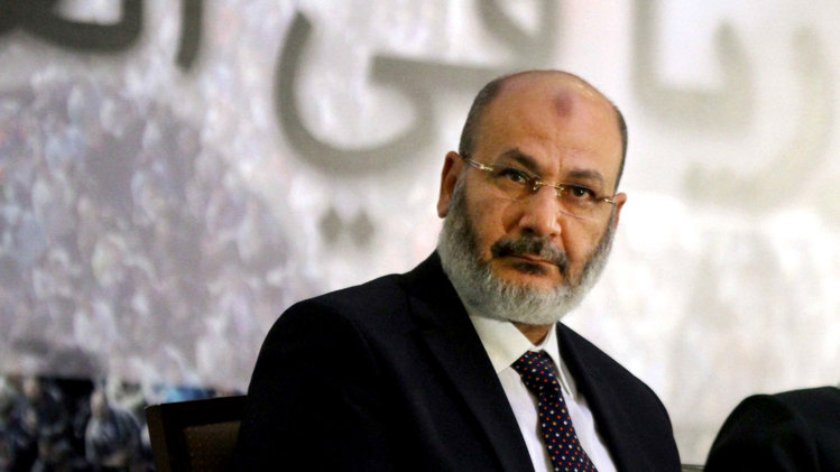


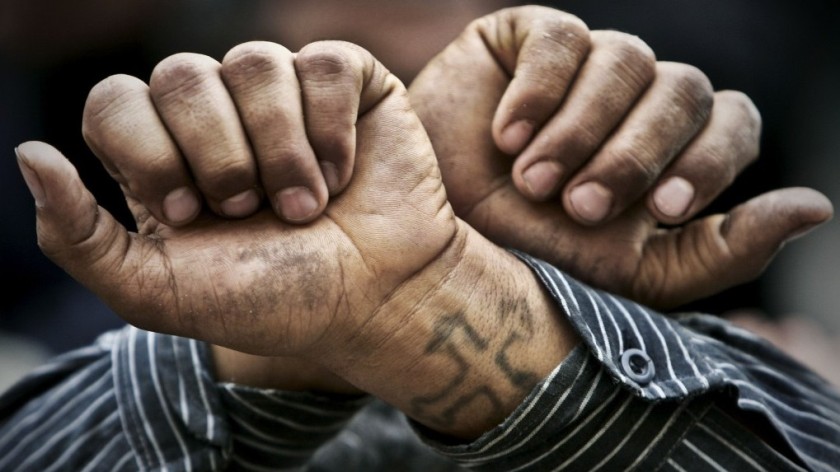











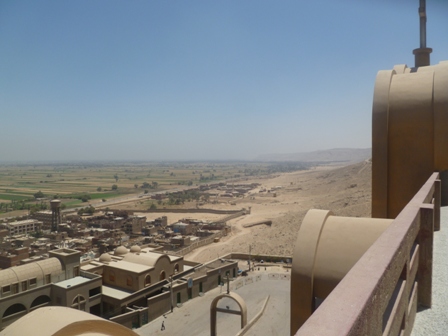
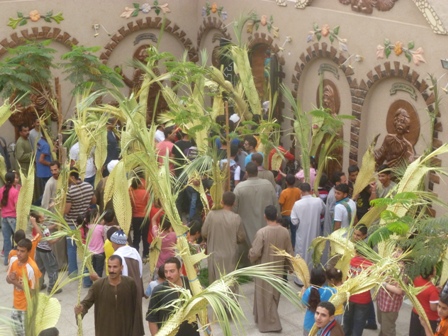


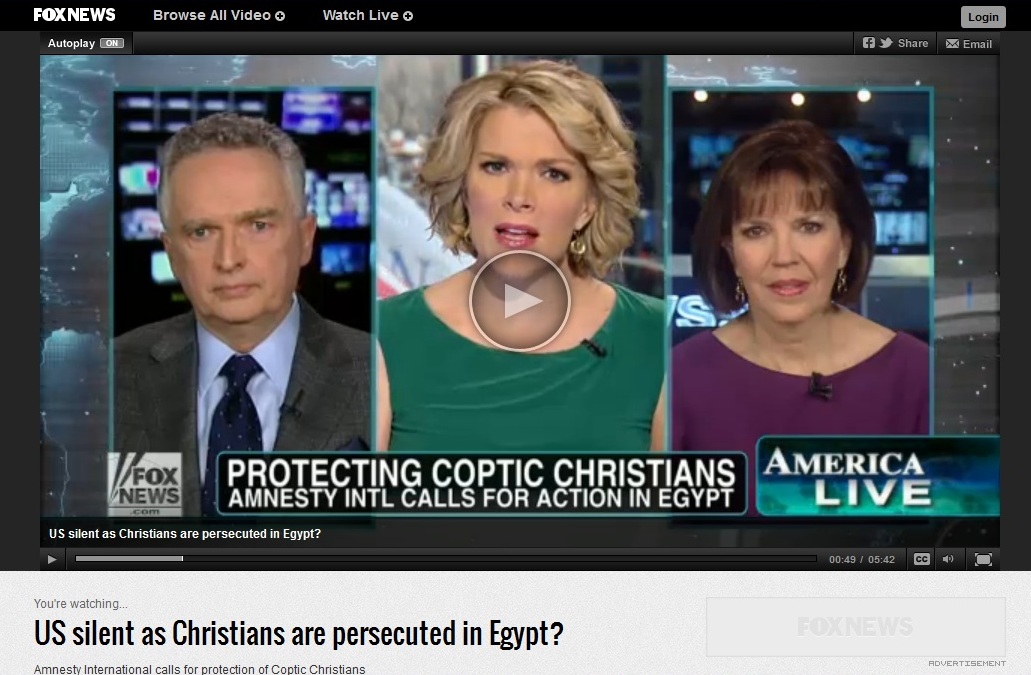
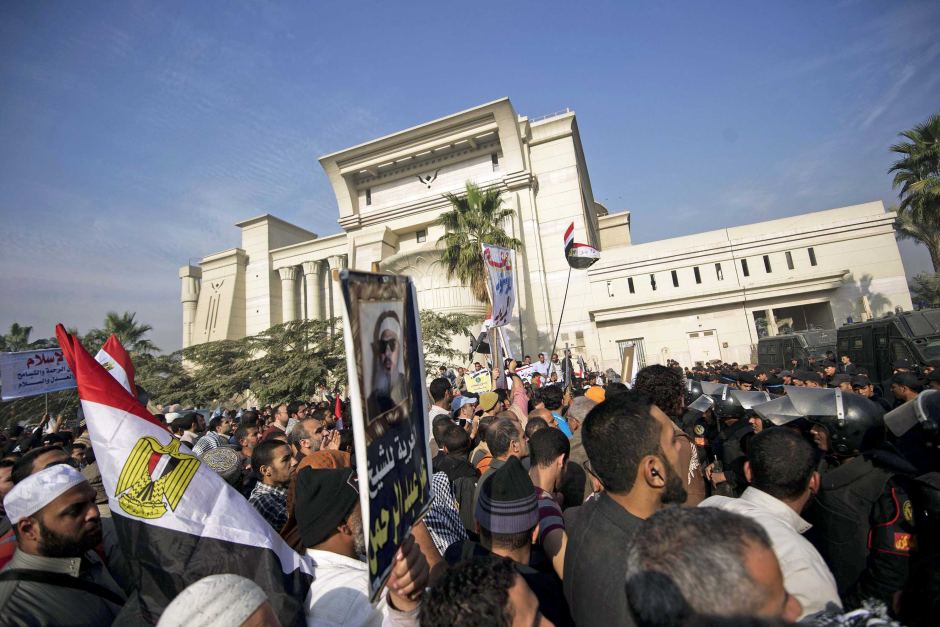




 Jayson Casper