This popular Egyptian song by Ali al-Haggar is titled ‘We are a People’. It was created around the time of the military action to remove President Morsi from power, showing scenes from the protests against him.
Fair enough, but the lyrics do not stop at the title. The refrain continues ‘… and you are a people’.
It is a very thinly veiled contrast of the Egyptian people with Islamists, and in particular the Muslim Brotherhood.
This could possibly, maybe, be fair enough. The Muslim Brotherhood is a transnational organization that aims for the unity of the Muslim peoples. Their opponents accuse them of using Egypt as a launching pad for a new caliphate, rather than being loyal to Egypt as a nation-state.
As such, they are a separate people, or so the song suggests.
This is very dangerous and divisive sentiment. Some may say these are dangerous and divisive times. It is good, they say, the Brotherhood has been removed from power before it is too late.
Perhaps. But the song continues, ‘Despite there being only one God, we have a God, and you have a God.’
One Salafi friend, profiled here, complained bitterly about this line before I was even aware of the song.
Islamists are often accused of being ‘takfiris’ – those who call anyone who does not agree with them an infidel. This song does the same in reverse.
‘Take your fatwas and go far away from our land,’ it sings. Early after the revolution some Salafis told Christians and liberals they could leave Egypt and go to Europe or America if they didn’t like the results of elections.
‘We have ibn Sina and ibn Rushd [two famous Arab philosophers], you have bin Laden [you know who he is],’ it also declared. Since dispersing the pro-Morsi sit-in the media had declared the crackdown on the Brotherhood as a ‘War against Terrorism.’
And perhaps it is. Few things are yet clear, but the dangerous and divisive lyrics of this song are one of them. Whatever criminal conspiracy the Brotherhood has possibly engaged in, there are hundreds of thousands of ordinary Egyptians who are partial, at least, to the slogans and promise of Islamism.
Every Friday I seek to semi-summarize events of the week and reflect on what God would desire as Egypt’s best. This becomes harder because I don’t want these to be my prayers, but something all Egyptians – Muslims and Christians, of all political stripes – can pray together.
As such, it is often reduced to the triumph of principles, the application of which might be stridently debated among those who would jointly call for justice, freedom, and the like.
I suppose this has been the plague of post-revolutionary Egypt. Still, we should not stop praying, nor should Egyptians stop seeking joint solutions beyond the principles. Too many seem ready to accept their desired solution be imposed upon their opponents.
Yes, it is hard. How can right and wrong be compromised? How can completely divergent perspectives come together?
As a result, my prayers get repetitive, and often are reduced to the posing of questions. I, myself, generally don’t know how to answer them. Inasmuch as Egyptians differ over the answers, the best we can hope for is that God will sort it out – preferably through some sort of consensus.
But can we rejoice in the triumph of one side of a dichotomy: Morsi vs. Sisi, legitimacy vs. coup, Islamism vs. liberalism, extremism vs. democracy?
After all, if God is sovereign over the promotion of kings and the deposing thereof, he is not above using the deceitful wiles of man to establish his righteous will.
But as the sides have changed so frequently, how can any have confidence God’s will is behind it all, beyond simple theological assertion?
Is he winnowing Egypt? Is he punishing her? Will one set of partisans triumph in the end after he brings them through tribulation?
I wish I had the discernment and wisdom I ask him to give the good people of Egypt. May they soon have a nation to match all of his principles, whatever that must look like.
In the meanwhile, I am glad to share this video prayer offered by an Egyptian, which wrangles over similar issues. Like mine, it is comprised more of questions than anything else. It combines images of triumph from the continuing revolution with images of its tragedy. It is moving and sobering.
It is also a prayer. Please pray along with them, and may God’s will be done. As it both opens and closes: Deliver us…
Many Egyptians believe the United States is deeply involved in their nation’s affairs. Some believe because of strong military ties, President Obama was behind the removal of President Morsi. Others believe because of a State Department search for a new reliable partner to do their bidding, President Obama was behind the ascent of the Muslim Brotherhood and is still working to hoist them upon a wary public.
Paul Atallah is among the latter. He frequently distributes a newsletter summing up Egyptian developments in local media and provides his own commentary. If you would like to receive it, his email address is: paul_attallah@hotmail.com
He has given me permission to share his latest take on the ‘weird speech’ President Obama offered at the United Nations.
Point 1: Mohammed Morsi was democratically elected, but proved unwilling or unable to govern in a way that was fully inclusive.
Point 2: The interim government that replaced him responded to the desires of millions of Egyptians who believed the revolution had taken a wrong turn,
Point 3: but it too has made decisions inconsistent with inclusive democracy – through an emergency law, and restrictions on the press, civil society, and opposition parties.
Comment: At this point, Obama did not mention anything about MB and Islamist terrorist actions committed during the last three months which had been the cause of this emergency law, etc. and this makes the whole difference.
Point 4: Of course, America has been attacked by all sides of this internal conflict, simultaneously accused of supporting the Muslim Brotherhood, and engineering their removal from power. In fact, the United States has purposely avoided choosing sides.
Comment:Liar!
Point 5: The United States will maintain a constructive relationship with the interim government.
Point 6: We will continue support in areas like education that benefit the Egyptian people.
Comment: This argument is normally used to say: We are against the regime but we cannot harm the people!
Point 7: Our approach to Egypt reflects a larger point: the United States will at times work with governments that do not meet the highest international expectations, but who work with us on our core interests.
Comment: So we have to deal with a dirty military dictatorship against our will!
Point 8: But we will not stop asserting principles that are consistent with our ideals, whether that means opposing the use of violence as a means of suppressing dissent, or supporting the principles embodied in the Universal Declaration of Human Rights.
We will reject the notion that these principles are simply Western exports, incompatible with Islam or the Arab World – they are the birthright of every person.
Comment: Condemning the Egyptian regime and nothing about MB monstrosities. I feel that he is speaking about Syria and not about Egypt.
Point 9: And while we recognize that our influence will at times be limited; although we will be wary of efforts to impose democracy through military force, and will at times be accused of hypocrisy or inconsistency – we will be engaged in the region for the long haul. For the hard work of forging freedom and democracy is the task of a generation.
Comment: I am not quite sure of what Obama meant by this statement? Does he mean that US at a certain moment would interfere to impose democracy by military force or is he talking of the military coup that happened in order to impose democracy?
If he meant the first one so it is a warning: At a certain point we will be obliged to impose democracy through military force. But I am not sure of this translation.
If the meant the second: How was it possible to get rid of a paramilitary/religious regime?
As an example of his newsletter, here are a few other links he provides about local analysis in the Egyptian press:
It is always fun to be an American in Egypt! In our experience, Egyptians, no matter which side of this divide they occupy, have always treated us kindly and with respect.
On September 7, I posted an article questioning the legitimacy of US intelligence in Syria. Here is the response of Dale Gavlak to the article she allegedly authored:
Mint Press News incorrectly used my byline for an article it published on August 29, 2013 alleging chemical weapons usage by Syrian rebels. Despite my repeated requests, made directly and through legal counsel, they have not been willing to issue a retraction stating that I was not the author. Yahya Ababneh is the sole reporter and author of the Mint Press News piece. To date, Mint Press News has refused to act professionally or honestly in regards to disclosing the actual authorship and sources for this story.
I did not travel to Syria, have any discussions with Syrian rebels, or do any other reporting on which the article is based. The article is not based on my personal observations and should not be given credence based on my journalistic reputation. Also, it is false and misleading to attribute comments made in the story as if they were my own statements.
I, like many others, made reference to this article in the debate over who used the chemical weapons that killed scores and almost resulted in a US strike on the country. A useful comment posted there was a voice of reason that went against the conspiratorial fervor at the time.
It also jarred me. I am no fan of conspiracy, but am also wary of my nation’s militancy abroad. When I read the article I wondered why such a bombshell was reported only in Mint Press, which is not among the world’s leading journals. But the association of Dale Gavlak allowed me brush my hesitancy aside, and freely share the article along with my own reflections.
All on false pretenses, as it now turns out.
But it is still curious. Why did it take so long for Gavlak to issue this denial? And why did she do so only in personal correspondence to the Brown Moses blog? Another blog, al-Bab, includes other strange elements to this story, all centered around her identity:
There are two other oddities relating to Gavlak’s role or non-role in this affair. One is that a “Dale Gavlak” Twitter account (see screenshot) was deleted around September 3 – just a few days after the Mint Press article appeared. The other is that someone created a “Dale Gavlak” Facebook page on August 30, one day after the Mint Press article, and there are claims that the page may be a fake.
Journalism is about verification in a manner to which blogs are not held accountable. Still, reflecting on this incident – before the Gavlak revelation – made me question another story I shared.
On September 11, I posted an article describing Bishop Thomas’ defense of his church in Upper Egypt. It was shared very widely, striking a cord about Christian non-retaliation and Muslim defense of their Coptic neighbors. I didn’t feel great about how part of the story I did not copy seemed a little sensationalized, but I had heard of the attack from the bishop himself (with little detail) and I have always found him to be a sensible man.
Which is why I was surprised – and fearful – when I received this seemingly very knowledgeable comment:
This bishop is a liar, his residence is within the church perimeter that is walled and has a great gate. They did use soap and water, but no one ever attacked. They were targeting another house in the same street, and they have never approached the church where he resided in. Moreover, the fathers under his command gave some young men weapons (pistols and shot guns), they also gave them Molotov bottles to use in case if anybody attacks the church where he resides; however, no body attacked. This coward tried to protect his life by his parish!
I’ve received similar comments before, oddly enough, on Syria. I have no issue with allowing the alternate version of events, but I thought first to contact the commenter. He is obviously an eyewitness!
But no, there was no response, perhaps not unexpected with an email address of noone@nodomain.com. So I left the comment out, and let the story stand. I’m glad to have been prompted to investigate, but it also made me remember my uncertainty about the account.
Is it a true story? If the attackers had machine guns, they would not have needed to approach, and then slip and fall on the soapy pavement. I don’t yet distrust, but the comment, which I am glad to have investigated further, gave me pause.
Who would forge a story based on Gavlak’s repuation? And who would use such a weird email address to contradict a story on a blog? There is a mountain of misinformation in this region, and to some degree I have aided and abetted.
Only a small number of readers will see this reflection, compared to the many more drawn to the eye-popping stories I shared earlier. Neither one was my story; if I was writing an article I would be obliged to more fully investigate. Is this a fair enough mea culpa? This is only a blog; it is a place for reflection and questions. It is journalism which requires the verification and answers.
But in passing on both stories, I did not stop to listen to the small voice inside of me which questioned.
It is a good lesson to trust that small voice. I will aim to do so more faithfully in the future.
[For more details on this story, please read this article.]
Whenever Muslim Brotherhood journalist Islam Tawfiq files a story about the group’s struggle for survival for its newspaper Freedom and Justice, he fears his Internet address will tip off state security agents to his whereabouts.
Thousands of Brotherhood members have been arrested in a widening crackdown on the group since the army deposed Islamist President Mohamed Mursi on July 3.
Reporters for the newspaper, which still appears in a tiny fraction of its previous circulation, see themselves as the last people left to tell the Brotherhood’s side of the story in a country dominated by media that back the military crackdown.
The price, the journalists say, is an underground existence, moving from place to place, communicating from Internet cafes, rarely seeing family or friends.
“The greatest form of jihad is speaking up against an unjust authority,” Tawfiq, 27, said by telephone from an undisclosed location, citing the words of the Prophet Mohammad.
It also has two very interesting tidbits of information I did not know previously about the paper. The first concerns where it got its money:
He and about 50 others produce Freedom and Justice. It used to be a 16-page daily but is now half that length because, since the arrest of Saad al-Katatni, chairman of the Freedom and Justice Party and the newspaper’s financier, it has no money.
And the second concerns who printed it, and does still:
A mystery is why the government, which has closed down Islamist television channels, still allows the paper to be printed on the presses of the state-run newspaper Al-Ahram.
Some suggest it may help keep tabs on the movement, in the knowledge that the paper is struggling to stay afloat and reaching only a small audience. It also could provide a defense against accusations that the government is suppressing dissent.
The article also mentions that none of the paper’s employees are arrested, though it tells a horrific story of a photographer who was killed at a protest.
Now that we are back in Egypt after a long visit away, I am curious to find out the condition of mid-level Brotherhood members. I called one on the phone from the US and he spoke freely. Others, even prominent members, appear to speak freely in the press. Reports say that 100s have been arrested; do the rest live in immanent fear?
But courage to the FJP journalists who are still trying to tell their side of the story. I only hope they tell it objectively, rather than continuing in the pattern of partisan press they and others engaged in prior to the deposing of Morsi.
Here in Maadi, Cairo, life goes on as normal amid the political instability. This town in Minya is not so fortunate. From the AP:
A town of some 120,000 — including 20,000 Christians — Dalga has been outside government control since hard-line supporters of the Islamist Mohammed Morsi drove out police and occupied their station on July 3, the day Egypt’s military chief removed the president in a popularly supported coup. It was part of a wave of attacks in the southern Minya province that targeted Christians, their homes and businesses.
Since then, the radicals have imposed their grip on Dalga, twice driving off attempts by the army to send in armored personnel carriers by showering them with gunfire.
Local Christians are particularly suffering, at least those who have not fled:
Among the homes torched was that of Father Angelos, an 80-year-old Orthodox priest who lives close to the monastery. Yoannis’ home was spared a similar fate by his Muslim neighbors. A 60-year-old Christian who fired from his roof to ward off a mob was dragged down and killed, the activists said.
“Even if we had firearms, we would be reluctant to use them,” said Yoannis. “We cannot take a life. Firing in the air may be our limit.”
Those who remain pay armed Muslim neighbors to protect them. Yoannis said his brother paid with a cow and a water buffalo. Most Christian businesses have been closed for weeks.
Armed men can be seen in the streets, and nearly every day Islamists hold rallies at a stage outside the police station, demanding Morsi’s reinstatement.
Most Christians remain indoors as much as possible, particularly during the rallies. They say they are routinely insulted on the streets by Muslims, including children. Christian women stay home at all times, fearing harassment by the Islamists, according to multiple Christians who spoke to the AP. Most requested that their names not be published for fear of reprisals.
“The Copts in Dalga live in utter humiliation,” said local rights activist Ezzat Ibrahim. “They live in horror and cannot lead normal lives.”
The Islamic concept of jizia requires non-Muslims to pay a tax in exchange for their protection. Many Muslims argue today this principle is no longer applicable, as Christians join in the army and jointly defend their nation.
But here the Copts have no share nor desire to defend their village with these Islamists against the army. Therefore, it appears, the concept of jizia is demanded from them.
Here is an example of their protector, the man guarding the monastery-church:
At intervals, the 33-year-old father of three would stop talking, move carefully to the edge of a wall and stick his head out to check if someone was coming.
His big worry was the bearded Muslim at the gate, Saber Sarhan Askar.
Skinny with hawk-like hazelnut eyes, Askar is said by Dalga’s Christians to have taken part in the torching and looting of the monastery. Outside the monastery that day, Askar was telling priests he was there to protect it. But the orders he yelled to other priests left no doubt who was in charge.
“Bring us tea!” he barked at one priest. “I need something cold to drink!” he screamed at another soon after.
To my knowledge, this is the only incident of pro-Morsi supporters gaining a foothold in a local area. Elsewhere, they are on the run. Still, the security apparatus has tasked itself with a heavy burden.
How much blood will be shed recovering this village? If the state of the nation and economy does not improve over the next several months, might their be similar mutinies elsewhere? The state, in general, was weak before the revolution, and is weaker now.
Dalga is the only current example, and is likely to remain so. But the question is open. What will the future hold?
I confess to not following every detail that emerges about the crisis in Syria, and ask patience from those who have who can bring more to bear in this brief post. Please comment freely.
But in searching briefly for a presentation of the evidence tying the recent chemical weapons attack to the Syrian government, I was disappointed by this article on CNN:
A declassified report by the White House does not divulge all details of the evidence the United States is looking at. And it remains unclear what the “streams of intelligence” cited in the report may be and how they were collected.
It goes on to summarize the result of the evidence, presented by Secretary of State Kerry:
“We have declassified unprecedented amounts of information, and we ask the American people and the rest of the world to judge that information,” Kerry told lawmakers Tuesday.
It “proves the Assad regime prepared for this attack, issued instruction to prepare for this attack, warned its own forces to use gas masks.”
Physical, “concrete” evidence shows where the rockets came from, when they were fired, and that not one landed in regime-controlled territory, Kerry said.
“Multiple streams of intelligence indicate that the regime executed a rocket and artillery attack against the Damascus suburbs in the early hours of August 21,” the White House says in the declassified report.
“Satellite detections corroborate that attacks from a regime-controlled area struck neighborhoods where the chemical attacks reportedly occurred. … The lack of flight activity or missile launches also leads us to conclude that the regime used rockets in the attack.”
Here is an analysis of the evidence from Reuters, carried by Ahram Online:
No direct link to President Bashar al-Assad or his inner circle has been publicly demonstrated, and some US sources say intelligence experts are not sure whether the Syrian leader knew of the attack before it was launched or was only informed about it afterward.
While US officials say Assad is responsible for the chemical weapons strike even if he did not directly order it, they have not been able to fully describe a chain of command for the 21 August attack in the Ghouta area east of the Syrian capital.
It is one of the biggest gaps in US understanding of the incident, even as Congress debates whether to launch limited strikes on Assad’s forces in retaliation.
The strongest evidence, they say, comes from a link between Assad’s presidential circle and the scientific center responsible for chemical weapons:
Personnel associated with the Syrian Scientific Studies and Research Council (SSRC), which has direct ties to Assad’s entourage, were likely involved in preparing munitions in the days before the attack, they say.
A declassified French intelligence report describes a unit of the SSRC, known by the code name “Branch 450”, which it says is in charge of filling rockets or shells with chemical munitions in general.
US and European security sources say this unit was likely involved in mixing chemicals for the 21 August attack and also may have played a more extensive role in preparing for it and carrying it out.
But…
Much of the US claim that Assad is responsible was initially based on reports from witnesses, non-governmental groups and hours of YouTube videos.
Perhaps my disappointment is conditioned by the long wars in Afghanistan and especially Iraq, the case for which was built on faulty or misrepresented ‘streams of intelligence’. I understand that this work cannot be made public fully. I have a basic trust in the US government, but I also fear the behind-the-scenes maneuvering among world and regional powers, masquerading as concern over chemical weapons.
Here is an alternate explanation along with direct testimony, from Mint Press:
However, from numerous interviews with doctors, Ghouta residents, rebel fighters and their families, a different picture emerges. Many believe that certain rebels received chemical weapons via the Saudi intelligence chief, Prince Bandar bin Sultan, and were responsible for carrying out the dealing gas attack.
“My son came to me two weeks ago asking what I thought the weapons were that he had been asked to carry,” said Abu Abdel-Moneim, the father of a rebel fighting to unseat Assad, who lives in Ghouta.
Abdel-Moneim said his son and 12 other rebels were killed inside of a tunnel used to store weapons provided by a Saudi militant, known as Abu Ayesha, who was leading a fighting battalion. The father described the weapons as having a “tube-like structure” while others were like a “huge gas bottle.”
…
“They didn’t tell us what these arms were or how to use them,” complained a female fighter named ‘K.’ “We didn’t know they were chemical weapons. We never imagined they were chemical weapons.”
As stated above, this article places primary blame on Saudi Arabia, while reporting how different nations seek to influence events:
More than a dozen rebels interviewed reported that their salaries came from the Saudi government.
…
Ingersoll referred to an article in the U.K.’s Daily Telegraph about secret Russian-Saudi talks alleging that Bandar offered Russian President Vladimir Putin cheap oil in exchange for dumping Assad.
“Prince Bandar pledged to safeguard Russia’s naval base in Syria if the Assad regime is toppled, but he also hinted at Chechen terrorist attacks on Russia’s Winter Olympics in Sochi if there is no accord,” Ingersoll wrote.
“I can give you a guarantee to protect the Winter Olympics next year. The Chechen groups that threaten the security of the games are controlled by us,” Bandar allegedly told the Russians.
But it is not just Russia:
“They believed that Prince Bandar, a veteran of the diplomatic intrigues of Washington and the Arab world, could deliver what the CIA couldn’t: planeloads of money and arms, and, as one U.S. diplomat put it, wasta, Arabic for under-the-table clout,” it said.
Bandar has been advancing Saudi Arabia’s top foreign policy goal, WSJ reported, of defeating Assad and his Iranian and Hezbollah allies.
…
Although Saudi Arabia has officially maintained that it supported more moderate rebels, the newspaper reported that “funds and arms were being funneled to radicals on the side, simply to counter the influence of rival Islamists backed by Qatar.”
But rebels interviewed said Prince Bandar is referred to as “al-Habib” or ‘the lover’ by al-Qaida militants fighting in Syria.
Certainly there can be misinformation and invented testimony on all sides, but the reporter for Mint Press, Dale Gavlak, writes consistently for the AP and has contributed often to Christianity Today. I have met her once and appreciate her journalism. She states, however, she did not investigate personally in Syria, but relied on a local journalist.
In the end, is this much different than ‘streams of intelligence’? Yes, at least in part, for the journalist is named. Unfortunately, as seen above, not all of his sources are. But the two accounts are almost comically different. The first builds its case on the complexity of the attack, the second on the incompetence of the delivery.
So what should America do? Here I will pause, for I realize that geopolitical realities are messy and our ideals, perhaps, can rarely be realized. In fact, perhaps, they must often be compromised. Among the regional powers listed above, are there any with which our ideals can rest comfortably?
So shall we choose between the least bad options, using language with which President Obama has described the recommended missile strike? Or should we just stay out of someone else’s fight? If so, it is not as simple as saying we will stay out of a civil war, since so many other regional agendas are in play. Should we let them decide matters, and keep our ideals from having any influence at all?
Goodness. I hope we have moral men and women in our administration making these decisions. But I fear that as long as our intervention is portrayed in ‘humanitarian’ terms, we compromise these ideals by not being fully honest.
I fear a situation as in Libya, where a mandate was given to protect the people of Benghazi from Gaddafi’s anticipated assault. Not long afterwards US-supported NATO forces went far beyond their mandate to aid the rebels and facilitate the overthrow of the government, even though, reportedly, there were no ‘boots on the ground’.
But tough decisions must fall to someone, and I am glad the president has involved Congress. Our intervention must now be the choice of the American people, for good or for ill.
Syrian church leaders have welcomed and endorsed the call of Pope Francis for a day of prayer and fasting for Syria on Saturday, 7th September. The Pope condemned the use of chemical weapons, along with all other forms of violence, and renewed his appeal for urgent effort towards a negotiated settlement rather than military escalation. The Pope’s call has also been welcomed by other religious leaders, including the Grand Mufti of Syria.
The Syrian crisis is increasingly complex, with the chemical weapons attack of 21st August a particularly heinous example of the numerous atrocities perpetrated by a range of parties. Widespread violence between Government and various opposition groups continues, including in the major cities of Damascus, Aleppo and Homs. There are also conflicts between Kurdish groups and opposition groups as well as intra-opposition clashes.
The death toll continues to rise and the number of displaced people grows ever larger. The most reliable estimates suggest that at least four million are displaced within the country and that more than two million are officially registered as refugees in neighbouring countries (many more have not officially registered).
Syrian Christian leaders are appalled by the continuing violence and violations of human rights. Their consistent message is that a solution can only come through political dialogue and that all parties must prioritise the needs of the Syrian people.
Syrian Christians urge that we join in prayer for Syria at this time. They request our prayers that:
a. Peace, justice, and reconciliation will be established in Syria
b. Calls for renewed effort to find a political solution will be heeded by all those in authority and with influence
c. There will be effective provision for those internally displaced and for refugees
d. The international community will cease using Syria as a place to pursue their own agendas and act only in the best interests of the Syrian people.
But simply praying is not enough for everyone. Robert Miner is a friend of ours who lived for 26 years in Jordan, working extensively with the Program for Theological Education by Extension. With a small number of like-minded friends, he protested the possible strike at the American Embassy in Amman.
Robert Miner, in the middle
His petition declares:
Please take note that we strongly disapprove of the proposed US attack on Syria, which is soon to be discussed in the US Congress.
The cause of peace in Syria, as well as in the entire region, will in no way be furthered by an attack by the US and its allies on Syria, but will lead to further death, destruction, and the prolonged suffering of the Syrian people.
We demand the US withdraw its military and denounce these threats against Syria.
He also provides links to the White House, Congress, and in particular for Christians, a message of faith programed for delivery to your appropriate representatives.
May God give wisdom to all in determining the right course of action, and bring peace, justice, stability, and consensus to the Syrian people.
This is an unbelievable video of Safwat Hegazi in custody. In previous posts I summarized his controversial statements as conveyed in the media, and provided an interview with him conducted by AWR.
Here is a translation of the written Arabic caption in the video:
0:06 – I swear by God Almighty, I am not a member of the Muslim Brotherhood, but no one believes this.
0:15 – I swear by God, if I knew there was a single knife in Rabia al-Adawiya (site of the MB sit-in) meant to kill a soldier, I would have left them.
0:43 – If I could go back in time I would not have stood by the Brotherhood ([spoken, not in caption] – not because they are terrorists but) because they don’t know how to do anything right.
1:39 – I am not against the deposing of Morsi nor his trial. There is no one in the world above the court.
From the publication Animal, a very interesting photo-journal documenting an attack on an individual in the days before the dispersal of the pro-Morsi sit-in protest:
I spot a dozen men on the sidewalk, walking parallel to us, writing graffiti — “Morsi is my president,” “No CC,” and “CC is a murderer,” phonetically referring to the current leader and coup-mastermind General al-Sisi. They’re hitting everything — walls, awnings, buses — bombing in broad daylight.
I jump down, run over and ask permission to shoot, in Arabic. “Yeah, we’re not afraid,” they say. Then, this burly man runs up to the door of the Saint Fatima Church which the nearby square is named after. He spray-paints “Islameya.”
Islameya means “Islamic” and is short for masr Islameya. In this context, on that door, it’s “Egypt is Islamic.” An older protester runs right up, pleading with him to stop: That’s against Islam, because Lakum deenukum Waliya Deen — “For you is your religion, and for me is mine.”
The vandal clocks him. Several others run up, drag him away and egg the vandal on: “Write it! Write it!”
I’m snapping away. I’m stepping closer. The photos are getting better. I have permission. I’m cool… Until he turns around.
“Why are you taking pictures of me?!” he yells. Before I have time to think, he lunges at me, spray-can aimed.
The above paragraphs are interspersed with pictures, and then the account continues as the individual describes being attacked by the mob of protestors. Eventually they seize his camera and demand he go with them to the sit-in site to get it back.
What follows is very interesting, as it provides a street-level verification of Brotherhood complicity in the defacing of churches, something they have vehemently denied, especially after the numerous attacks on churches after the sit-in was dispersed. But the marking of ‘Islameya’ was meant to signal which buildings were to be attacked, according to Ramez Atallah of the Egyptian Bible Society.
Three more hours of this. Miles. We’re definitely not in my neighborhood anymore. Everyone’s screaming at everyone else. Chaos. Nothing happens, so I have to call my cousin who is in the Muslim Brotherhood. I don’t want to bother him on his brother’s wedding day, but I don’t want this story to end in Rabaa Al-Adawiya Square. I want my camera back.
“Well, why didn’t you say you were his cousin from the start, man?” Five minutes later, the camera’s in my hand, and the memory card too.
Please click here to read the full article and see the many photos at Animal.
The following is from the newsletter of Arab West Report, penned by Cornelis Hulsman. It is a good summation of events so far:
Cairo is burning. Normal Egyptians are scared and stayed as much as possible at home. The Friday of Rage was announced in a statement of the Muslim Brotherhood led Media team of the Anti-Coup, Pro-Democracy Alliance.
Statement: Friday of Rage
(Cairo, Friday, August 16)- Despite our deep pain and sorrow following the August 14 Rabaa massacre and others committed since the bloody coup, the crimes of the coup regime have only increased our steadfastness and firmness in rejecting it and determination to remove it.
The struggle to overthrow this illegitimate regime is an obligation, an Islamic, national, moral, and human obligation which we will not steer away from until justice and freedom prevail, and until repression is conquered.
Our revolution is peaceful, and we will continue to mobilize people to take to the streets without resorting to violence and without vandalism. Violence is not our approach. Vandalism only aims at distorting the image of our peaceful revolt and finding justifications for the coup leaders to continue to govern.
We call on the great Egyptian people to gather in all revolutionary squares on the Friday of Rage.
The starting points for the protests in Greater Cairo are the following mosques. (28 names of mosques were mentioned.)
Afterwards, all marches will meet at the nearest intersection, and will all head to Ramsis square. Meanwhile, million-man marches will be held in all other Egyptian governorates.
The anger of the Muslim Brotherhood is not unfounded. Maha Azzam, an associate fellow in the Middle East and North Africa programme at Chatham House (the Royal Institute of International Affairs) in London, explains in the Guardian of August 13the bitter irony. The January 25 Revolution was to bring democracy. Morsi (Mursī) was voted, albeit with a very small majority, as the first democratically-elected president. He was deposed on July 3 by the military, feeling that they had sufficient support from the masses, but, she writes “the fact remains that the ballot box is an essential part of the democratic process. Politically, what Egypt lacked during its experiment in democracy was a loyal opposition. Instead, the opposition that came together under the umbrella of the National Salvation Front decided to back a military coup.” Muslim Brothers feel they were trapped. Maha Azzam is clear in her opinion, that is that “the military and police state has returned in full force to Egypt. A country that for a brief period after 60 years of dictatorship was on a path of democratic transition saw a reversal of that process with the coup on 3 July against Egypt’s first freely elected president.”
Maha Azzam describes opinions that I hear often in talks with Muslim Brothers. They strongly feel they have been betrayed. That feeling is important to understand for the violence we are witnessing now.
The demonstrations followed fiery preaching in line with the belief that they have done injustice to. Well-known Muslim leaders as Youssef al-Qaradawi and Selim el-Awa have preached in this line of thinking. They did not call for violence, but as we have seen in previous demonstrations, armed thugs and snipers use the masses of people to mix among unarmed demonstrators and fire on whoever they believe to be their opponents.
These demonstrators were a mix of Islamists and thugs of very different backgrounds. Of course it was Brotherhood-organized and thus large numbers belong to this organization, but there were also Jamā’ah al-Islāmīya, Salafīs, and radicals of all kinds present and thus it is extremely difficult to determine to what organizations the people who engaged in violence belonged.
We have seen on videos large amounts of weapons found in different places. That shows preparation and makes the claim that this was spontaneous anger impossible.
Volkhard Windfuhr, the well-informed chairman of the Cairo Foreign Press Association is angry and wrote on Friday:
Unfortunately, some of our colleagues succumbed to fatal attacks. They were not just victims of chaos or normal fire exchange, they had been fired at on purpose. Not by police or army officers, but by the self-proclaimed ‘peaceful demonstrators’. Today I myself happily escaped a mean sniper attack on the 15 Mayo bridge at Zamalek. The criminal was not a policeman either, I have witnesses for that fact – normal Egyptian citizen by passers. I was not there for press coverage, but just heading for a coffee shop to meet friends.
It is outrageous what these aggressive ‘protestors’ commit. They attack people at random, attack their own state – attack public buildings and an ever increasing number of churches und houses and shops of Christians.
Most violence was at Ramsis Square, the most important and busiest intersection in Cairo where also the railway and bus stations are located. If this square was blocked the consequences for traffic in Cairo would be far worse than closing Tahrir square.
The Arab Contractors building, the largest building at the square, went up in flames. What purpose does such violence have? Arab Contractors is a very large Egyptian construction company that, for example, has built most bridges in Egypt. The destruction of this building will cause thousands of engineers to lose work for at least a certain period to come. In a country that is already economically suffering this is not what Egyptians need.
Muslim Brotherhood statements speak about a peaceful revolution, but what we have seen in the streets is different. Was this Brotherhood-organized as the opponents of the Brotherhood believe? Or were these thugs? Perhaps even security agents who wanted to create havoc? Conspiracy theories are flourishing!
It is certain, however, that many Muslim Brotherhood leaders do not want to give up resistance. Morsi’s son declared on Facebook: “We will not give up. We will either win or die.”
That is not an approach of seeking a middle ground; a compromise in order to avoid more bloodshed and destruction of Egypt. Morsi’s son is not the only one using this rhetoric, but stating “either win or die” sounds heroic to his followers, but at the expense of Egypt. Continued violence is also at the expense of the Muslim Brotherhood itself, which is rapidly becoming more closely associated with the carnage we are witnessing now and further validates calls to ban the organization.
Uncompromising attitudes will not only make the Brotherhood a loser of the conflict—the military and Egypt as a whole will suffer dearly as well. The conflict makes the role of the military domineering, but that may cost Egypt international support. Language of some people “that we don’t need this” is stupid. Foreign companies that had remained in Egypt thus far are now closing their doors, making the economic situation more difficult than it already is.
The Muslim Brotherhood is an organization with an estimated 1 million followers. Leaders in the past have told us they were proud of being so well organized. In the past two years well-informed Egyptians have told us on several occasions that the Brotherhood is capable of bringing at least 5.5 million voters to the ballot box. Just excluding such a large group of people from the political scene is not an option.
But what does the severe pressure on the Brotherhood mean for the unity in the group? Muslim Brotherhood member, Amr Amru, went public with a statement that there are around 200 Muslim Brotherhood members who want to file a complaint with the prosecutor against their own leaders because they have led them into this violence. Amr Amru spoke about the hierarchical Muslim Brotherhood structure with leaders giving instructions to branches that branches then have to simply execute. But we don’t know who Amr Amru and these 200 people are. Many others will continue to follow their leaders.
Amnesty International came with a strong statement about Egypt: “There must be a full and impartial investigation into the violent dispersal of sit-in protests in Cairo this week, where security forces used unwarranted lethal force and broke promises to allow the wounded to exit safely, Amnesty International said today on the basis of its research on the ground.”
Of course, many may disagree with the conclusions of Amnesty International, but the call for a full and impartial investigation is certainly justified and needed in order to heal the very deep wounds in a deeply fractured Egyptian society.
Pope Tawadros had been criticized for sitting with Azhar Shaykh, Ahmed el-Tayib, when General al-Sisi announced the sacking of President Morsi on July 3, but on Friday he again went public with a statement in support of the security and military. I do not think that to be wise. I have been traveling in the past years through Egypt and have seen people suffering. The Pope knows the consequences of his words and he knows that his statements can be used as an excuse for more violence against Christians. Then why make statements that could make ordinary Christians victims of angry Islamists?
We appreciate the responses we get to our newsletters, in particular if they come from Egypt. Please continue writing about your own experiences. May God bless Egypt and give Egypt peace!
(Note: The website for Arab West Report was hacked several weeks ago; efforts to restore archival content and continue publication have not yet been successful.)
As violence continues in Cairo and cities throughout Egypt today, the Anglican Bishop Mouneer Hanna Anis has issued a statement urging people to pray. Here is his description of events:
Greetings in the Name of our Lord Jesus Christ!
As I write these words, our St. Saviour’s Anglican Church in Suez is under heavy attack from those who support former President Mursi. They are throwing stones and Molotov cocktails at the church and have destroyed the car of Rev. Ehab Ayoub, the priest-in-charge of St. Saviour’s Church. I am also aware that there are attacks on other Orthodox churches in Menyia and Suhag in Upper Egypt (see attached photo), as well as a Catholic church in Suez. Some police stations are also under attack in different parts of Egypt. Please pray and ask others to pray for this inflammable situation in Egypt.
Early this morning, the police supported by the army, encouraged protestors in two different locations in Cairo, to leave safely and go home. It is worth mentioning that these protestors have been protesting for 6 weeks, blocking the roads. The people in these neighborhoods have been suffering a great deal—not only these people, but those commuting through, especially those who are going to the airport. The police created very safe passages for everyone to leave. Many protestors left and went home, however, others resisted to leave and started to attack the police. The police and army were very professional in responding to the attacks, and they used tear gas only when it was necessary. The police then discovered caches of weapons and ammunition in these sites. One area near Giza is now calm, but there is still some resistance at other sites. There are even some snipers trying to attack the police and the army. There are even some rumors that Muslim Brotherhood leaders asked the protestors in different cities to attack police stations, take weapons, and attack shops and churches.
A few hours later, violent demonstrations from Mursi supporters broke out in different cities and towns throughout Egypt. The police and army are trying to maintain safety for all people and to disperse the protestors peacefully. However, the supporters of former President Mursi have threatened that if they are dispersed from the current sites, they will move to other sites and continue to protest. They also threatened to use violence. There have been a number of fatalities and casualties from among the police as well as the protestors, but it seems that the numbers are not as high as expected for such violence. However, the supporters of former President Mursi claim that there are very high numbers of casualties. The real numbers will be known later on.
Please pray that the situation will calm down, for wisdom and tact for the police and the army, for the safety of all churches and congregations, and that all in Egypt would be safe.
May the Lord bless you!
+Mouneer
In my quick reading of events, it seems clear that live gunfire is being exchanged on both sides. Either infiltrators were very quick to penetrate the protests and fire on police, or the lie is given that these demonstrations were completely peaceful. Reports the past few weeks indicated the protest organizers were keen to check the IDs and pat down everyone who entered the sit-in. Many, probably the great majority, of those present were unarmed. But apparently, reports which indicated weapons were present were also true.
As Bishop Mouneer stated, churches across the country are also being targeted. Interesting to note is this report:
The al-Gamaa al-Islamiya ultra-conservative movement called on supporters of toppled president Morsi to take to the streets to condemn what it termed “coup crimes.”
The statement by the hardline Islamist group – a close ally of Morsi’s Muslim Brotherhood – also urged its loyalists “enraged by police attacks on the Rabaa and Nahda sit-ins,” not to assault “Christians or their religious buildings.”
So at this point they read these attacks as actions of the pro-Morsi crowds, rather than a black flag of the security forces, which they warned about weeks earlier. The speculation would be if this is their public face covering over their own private rage and instruction. Anti-Christian rhetoric has been employed by several Islamist figures ever since the original protest movement against Morsi in December 2012 when he issued a constitutional declaration granting himself absolute power (later rescinded, but protecting of actions taken during that time).
But in this current climate, it is difficult to make sense of the situation. Patience is needed, for there will soon be a flood of propaganda.
One of the privileges of studying Egypt is to be able to be a resource for others who are studying and writing about the region. In recent weeks a few have inquired about my opinion or made use of resources here at A Sense of Belonging. If you wish, and if you have the language, please enjoy the following:
From the Spanish newspaper El Pais, on the relation between the Coptic Orthodox Church and the state in light of the Rebel movement which ousted Morsi:
“Como minoría religiosa, los coptos a menudo creen necesario aliarse estrechamente con el Estado, pues es este el agente de orden en cualquier sociedad”, explica Jayson Casper, un investigador especializado en minorías de Arab West Foundation, un think tank de El Cairo. Tawadros II fue entronizado a principios del pasado noviembre, y la mayoría de analistas subrayaron la dificultad de su labor. Y no solo por ocupar el puesto del carismático Shenuda III después de más de cuatro décadas de papado, sino por hacerlo en un momento de zozobra para la comunidad cristiana, acechada por un creciente número de ataques sectarios.
Durante el debate que precedió a la elección del nuevo patriarca, muchos coptos abogaron por que este tuviera una menor intervención en política. Sin embargo, muchos han ido cambiando de opinión a medida que avanzaba la presidencia de Morsi. “Las primeras señales de que [Tawadros II] sería menos político que su predecesor fueron desapareciendo a medida que los coptos sufrían bajo Morsi. Creo que la mayoría aprecian su posición clara, y estuvieron contentos de ver que está al lado del gran imán de Al Azhar y el consejo militar”, comenta Casper.
Jayson Casper, originaire des Etats-Unis et diplômé en économie et en islamologie, vit au Caire en Egypte avec sa femme Julie et leurs trois enfants. Il travaille comme rédacteur pour le magazine Arab West Report et ponctuellement comme journaliste indépendant pour différents médias chrétiens. Sur son blog, il propose des analyses approfondies de la situation politique, sociale et religieuse en Egypte. J’ai découvert son blog lorsque je commençais à m’intéresser à Rafiq Habib (d’ailleurs sa réflexion sur celui-ci (partie 1 et partie 2) vaut vraiment le détour) et depuis, je le visite régulièrement et corresponds aussi avec son auteur. Sur la page de présentation du blog, il écrit (traduit par moi) : “Le souhait de notre famille est d’apprendre à connaître et à apprécier tout ce que l’Egypte a à offrir et de découvrir sa langue, ses habitants, sa culture et ses religions. Nous espérons contribuer, par nos vies, nos amitiés et notre emploi, à la lutte contre les préjugés de nombreux Egyptiens envers les Américains et les chrétiens, et par nos écrits et nos visites aux Etats-Unis, à la lutte contre les préjugés de nombreux Américains envers les arabes, les musulmans et les orthodoxes. Notre prière est que nos vies à l’étranger plaisent à Dieu, qui désire que tous puissent expérimenter sa grâce, vivre en paix et aimer leur prochain.” Leur blog s’inscrit tout à fait dans cette démarche.
Pourquoi un tel titre ? Parce que c’est ce qui résume son appel : parce qu’il vit en Egypte, Jayson Casper veut le meilleur pour l’Egypte et les Egyptiens ; parce qu’il n’est pas lui-même Egyptien, il ne sait pas ce qui est le meilleur pour eux et cherche donc à comprendre ce qu’eux-mêmes pensent plutôt que de leur imposer sa propre vision d’avenir d’Occidental. C’est ce qu’il appelle le “foreigner’s sense of belonging”, le sentiment d’appartenance de l’étranger.
Par ailleurs, tous les vendredis (jour du culte dans l’islam), Jayson publie une prière pour l’Egypte. Ces prières sont rédigées de façon à ce que tout un chacun, quelle que soit sa religion ou son appartenance politique, puisse l’adresser à Dieu. Dans ses prières, il demande à Dieu de faire triompher la paix, la justice et la vérité, pour tous les Egyptiens. Exemple : le vendredi suivant le coup d’Etat, alors que la très grande majorité des chrétiens égyptiens (sauf certains mouvements de jeunes révolutionnaires, hostiles aux Frères Musulmans mais inquiets du retour de l’armée) ont soutenu le coup d’Etat (cf la photo de l’annonce du coup d’Etat, sur laquelle on voit le pape copte Tawadros apparaître aux côtés du général al-Sissi et du nouveau Président de la transition), Jayson demandait à Dieu de protéger les Frères Musulmans de toute injustice, des arrestations arbitraires et de la marginalisation ! Hier encore, dans sa dernière prière, il demandait la paix et la protection pour tous.
Bref, un blog très intéressant d’une personne très intéressante, que, vous l’aurez compris, je recommande chaudement à tous ceux désireux de mieux comprendre les enjeux complexes des événements actuels en Egypte et au Moyen-Orient.
And finally, Barry Rubin, a researcher and scholar of Islamist movments based in a private university in Israel, referenced this blog in his recent publication on Egypt’s Salafis. I get footnote number 39, on the Asala Party:
There are two other Islamist parties that ran jointly with al-Nour in the parliamentary election and took the same stance in the presidential election.[35] The Asala or Authenticity party was formed after the revolution by Abel Abd al-Maqsoud Afifi. He had an unusual previous career for an Islamist leader, having worked for 33 years in the Egyptian government, mostly in the Immigration and Citizenship Department.[36]
One distinctive aspect of the party’s platform was its foreign policy, advocating that Egypt take leadership in the Islamic world.[37]In general, though, it has no clear reason, other than its personalist nature, for remaining a separate organization.[38] Like the other Islamist political parties, it does not openly advocate violence.[39]
The third Islamist party allied with al-Nour is the Building and Development Party, many of whose key figures were involved as al-Jama’a cadre in the 1990s violence.[40] Indeed, some of its leaders were convicted in 1982 in the assassination of President Anwar al-Sadat and were released from prison by the armed forces’ junta in March 2011.[41] Like the other two, it demands both the implementation of Shari’a while promising Christians and women that their rights will be respected.[42]
From the AP. Earlier I highlighted the Muslim grassroots leader of the Rebel Campaign which collected a reported 22 million signatures calling for early presidential elections. Here is one of his many activists – a Christian – who has now paid with his life:
With a mob of Muslim extremists on their tail, the Christian businessman and his nephew climbed up on the roof and ran for their lives, jumping from building to building in their southern Egyptian village. Finally they ran out of rooftops.
Forced back onto the street, they were overwhelmed by several dozen men. The attackers hacked them with axes and beat them with clubs and tree limbs, killing Emile Naseem, 41. The nephew survived with wounds to his shoulders and head and recounted the chase to The Associated Press.
The mob’s rampage through the village of Nagaa Hassan, burning dozens of Christian houses and stabbing to death three other Christians as well, came two days after the military ousted Islamist President Mohammed Morsi from power. It was no coincidence the attackers focused on Naseem and his family: He was the village’s most prominent campaigner calling for Morsi’s removal.
…
Naseem’s friends and family say he was targeted because of his activism against Morsi. In the months before Morsi’s ouster, he was energetically collecting signatures in the village for Tamarod, or “Rebel,” the youth-led activist campaign that collected signatures nationwide on a petition demanding Morsi’s removal. It organized the June 30 protests that brought out millions.
“Emile was the de facto Tamarod leader in the village and that did not escape the notice of the militants,” said Naseem’s best friend and fellow activist Emile Nazeer. “He, like other activists, received threatening text messages for weeks before he was killed.”
“Almost everyone in Nagaa Hassan loved my uncle. He spoke a lot about politics and people listened to what he had to say,” said el-Ameer, Naseem’s nephew. “He paid the price.”
Click here to read the rest of the article and its sordid details. Ugh.
From the New Yorker, providing an account of the dawn killings between the military and pro-Morsi protestors:
Fifty-one dead at dawn. A doctor who said he preferred not to give his name lives in an apartment building that overlooks the Republican Guard barracks in Cairo. He told me he woke for the dawn prayer before 4 A.M. Shortly afterward, he heard gunfire and went onto his neighbor’s balcony for a better view.
“I saw that the Army retreated about ten metres and began to fire tear-gas cannisters, about ten or fifteen of them,” he said. “I couldn’t see if the other side [the protesters] was shooting, but I heard people through megaphones encouraging jihad. Then I saw four to six motorcycles coming from the direction of the Rabaa intersection to the Republican Guard barracks. Some people were still praying, some were not, because the dawn prayer had finished by then. The men on the motorcycles were all masked, and it was hard to see them through the dark and the tear-gas smoke, but they seemed to be shooting, they were coming from behind the protesters, so they were shooting toward the protesters and the Army. Then the Army started firing. And the protestors were firing. I saw firing from both sides.” As for details, though—what they were firing, whether it was one or two protesters or something more organized—he said that it was dark and that he couldn’t exactly tell.
Men on motorcycles. It is a maddening detail, constantly repeated over the past two and a half years. It has parallels even in the January 25 incidents of snipers firing into Tahrir Square. Back then it was widely suspected to be the police, but to this day no one knows – as no one has been convicted.
If it was the police trying to disperse the crowds, it was a woefully unsuccessful strategy. If anything, the crowds increased and the nation turned against the government. The result, coupled with continual suspicion against the Muslim Brotherhood, made people argue the opposite: Snipers were with Hamas, who acted on behalf of the Brotherhood to help the revolution succeed. Here and there since then, the theory goes, Hamas reappeared to do the dirty work.
Liberal revolutionary activists I know hate this theory, as they believe it is old regime propaganda to let themselves off the hook. Even so, the commission which studied post-revolutionary transgressions on the part of the military – also often assumed to be old regime partial – gave its report to President Morsi, who let it sit on his desk. Did he hold it as leverage to use against the army? Leaked pages suggested their wrongdoing. Or did he hold it because Hamas was implicated therein? To this day – though the day is still early – we do not know.
What is in the report? And who rode the motorcycles? Was it Muslim Brotherhood sponsored, seeking to provoke the army and paint them as killing innocent civilian protestors? Was it the army itself, raising a false flag against the Brotherhood to paint them as extremists and justify jailing their leaders? Was it jihadists seeking to create chaos? Was it foreign powers wishing to do the same? Every conspiracy floats well in a sea of obscurity; they sink where transparent systems are in place.
So is Egypt trying to build one, or protect the old sea of mud? To close, here is the explanation offered by a friend:
First: MB ignored completely the Egyptian people who asked Morsi to leave as if they are just ghosts. They want to put in equation: MB and the military. It had been always the MB strategy: We (the civil state) vs. the army (military regime) and always neglected the Egyptian people as if there is a vacuum outside these two entities.
Second: Ignoring the Egyptian people we reach this conclusion: the army toppled Morsy and his regime.
Third: Reaching this result we get a new equation: Fighting the army is a national and religious duty.
Fourth: MB international mass media (CNN, Jazira and I would say Euro news) must confirm this equation putting the Egyptian army at the same ignoble level as the Syrian army.
Fifth: This will bring us to the big game in Sinai. The big battle against this “dirty” army will be deployed in Sinai.
It means that if you will not give us Egypt again we will get Sinai and establish our Emirate with the help of Hamas and all jihadists. Something is better than nothing.
Most probably the scenario they want to implement is to establish an Egyptian sub-state on the area Gaza/Arish under Morsi’s legitimacy (the legitimate president of Egypt). This State will be blessed by Israel and US.
Most probably, this is the reason why US don’t want to announce officially if what happened in Egypt is or is not a coup. They are keeping this card to the last moment.
If Hamas will get this area (Gaza/Arist) and will establish their new State, US will announce that 30th of January had been a coup. If Hamas and all other Jihadists will fail, US will announce that it was not a coup.
Suez Canal
On the other side, the army deployed military forces in Suez, Ismailia, Port Said and Suez Canal is under strict control.
Closing Suez Canal would be an excellent argument to allow international forces to occupy this vital passage. In this case, the Egyptian army will have problems to go to Sinai and will help the Jihadists to do whatever they want.
This is my reading of the events. I hope that I am wrong. No doubt that the best thing to do to stop this “crescendo” is to announce clearly, loudly and officially that 30th of June had not been a coup but the revolution of a people who are looking for their freedom.
Judge for yourself, but to reach a place of stability, Egypt needs to know who rode the motorcycles.
From Ahram Online, perhaps the making of a hero, but the portrait of the man who designed the Rebel Campaign:
Far from being overawed, Badr was soon arguing with General Abdel-Fattah El-Sisi about the military’s roadmap for a political transition, and rejecting his suggestion that Morsi should call a referendum on his continued rule.
Millions of people were demonstrating for the recall of the president, not for a referendum, the activist told Sisi.
“I tell you, sir, you may be the general commander of the Egyptian army but the Egyptian people are your supreme commander, and they are immediately ordering you to side with their will and call an early presidential election,” he said.
The general surrendered. A bunch of kids in T-shirts had changed the course of the Arab world’s most populous nation by mobilising mass protests against the ruling Muslim Brotherhood, then threatening to turn on anyone who resists their demands.
“We own the streets because we stand with the people and the will of the people, and we will always do so,” Badr said.
Like many activists of the Facebook generation, he cut his political teeth in the uprising that toppled veteran autocrat Hosni Mubarak in 2011. He started working as a journalist and voted for Morsi a year ago but became disillusioned.
He told the generals that if they opted for a half-way solution, they would be lost. If they stuck to the referendum idea, he and his movement would walk out.
“I don’t have a blank cheque from the people,” he told Sisi. “People signed Tamarud’s petition for an early presidential election so I can’t go out and tell them anything else.
“If you are worried about the Brotherhood’s reaction, they will also refuse a referendum, so in that case you will lose both sides. Win the Egyptian people!”
A senior military source confirmed that Sisi dropped the idea of a referendum in deference to Tamarud’s argument.
Fascinating article, which includes speculation that the Rebel Campaign was eventually infiltrated by state security and old regime supporters.
But the Rebel Campaign did what many liberal politicians would or could not – work the street. The transition now is in the hands of politicians, and they will do well to remember where their authority comes from.
From Ahram Online, official promotion of Egypt’s Christian heritage:
On Wednesday, Mostafa Amin, secretary general of the Supreme Council of Antiquities (SCA), inaugurated the Abbey Church of the Apostles in Atfih town in Giza governorate after the completion of its restoration with a budget that reached LE6 million.
The opening came within the framework of a drive by the Ministry of State for Antiquities (MSA) to save the Coptic shrine and to open more sites to tourists, in order to encourage the tourism industry.
The church, like other Coptic and Islamic monuments located in rural areas, had suffered serious damage, including from high sub-soil water levels, high levels of humidity, and an outdated and decayed sewerage system installed 100 years ago.
It is one thing to show respect to buildings, another thing to honor people and their right to freedom of belief and expression. Negative examples of the latter have proliferated over the past two years, but this news is nonetheless encouraging, especially as it takes place in a diocese which experienced the first sectarian tensions after the revolution.
There, a church was burned due to village family tensions and rumors of witchcraft practiced inside. The army stood by and watched, but amid outrage and protests the government sought reconciliation, part of which was an agreement to rebuild the church. Whether or not the two efforts are related is not stated in the article.
Is the Egyptian government schizophrenic, then? Maybe. The current cabinet is composed of many technocrats joined by members of the Muslim Brotherhood. While many ministers carry out the functions of state as before, others appear to be actively ignoring incidents against Copts or pursuing legal action against them for defamation of Islam. The Ministers of the Interior, Justice, and the Public Prosecutor are not members of the Brotherhood, but were appointed by Morsi. Other ministers he simply inherited.
But the Minister of Antiquities, under whose authority this restoration project falls, was also a Morsi appointment. He is considered an Islamist, but is an expert in both the Coptic and Islamic heritage of Egypt. Was this project an ongoing one whose file he received near completion, or an example of his own initiative? Either way, it is a needed break from the ongoing flow of bad news.
From AhramOnline, providing a necessary break from politics to highlight Egyptian sporting success:
The first professional sumo wrestler from either Africa or the Arab world was given a boost Wednesday, winning promotion to the sport’s second highest division in Japan.
The Japan Sumo Association promoted 21-year-old Egyptian Abdel-Rahman Ahmed Shaalan, who goes by the ring name of “Osunaarashi” (Great Sandstorm), to the “jyuryo” division, made of wrestlers ranked between 43rd and 70th.
Meanwhile, Egypt is the top chess playing nation in Africa:
Egypt’s national chess team devoured almost all African Championship 2013 Open top spots, qualifying them for the World Cup in Norway in August.
The Egyptian team lead both men’s and women’s competitions held this year in Tunis from 17 – 27 May.
The first three places in the men’s competition were dominated by Egyptians, with Bassem Samir taking the crown, Ahmed Adly second and Essam El-Gindy third.
Likewise, in the women’s competition, Shorouq Nagi and Aya Moataz of Egypt nailed the top two slots.
And for those who didn’t know, though there is no recent article to highlight, Egyptians are among the best squash players in the world.
In order to justify removing a standing president, first an author must defend his democratic credentials. After an extended introduction, he writes:
This was last October, and up until that point I had been convinced that President Mohamed Morsi was the legitimate president of Egypt, and that even though I did not vote for him due to my conviction that neither his political experience, his mental capabilities nor his moral make-up qualifies him to rule Egypt, I still considered him not only to be a legitimate president, yet my personal president.
My respect for Mohamed Morsi stemmed from my awareness that his legitimacy emanated from the ballot box, from votes by citizens like myself, despite their different political inclinations. And I was looking forward to the day when another round of elections would come, and I would vote against him again, and hopefully bring him down, a thing which he makes easy for me by his poor administration and his deplorable record in the realms of security, economy, and politics.
So why then remove him now? In the opening the author described his chief reason for participating in the January 25 revolution was the systematic use of torture by the police force. Therefore, he is outraged because:
I expected that the Muslim Brotherhood, in particular, considering what they experienced in terms of oppression and injustice and torture at the hands of the past regime, would rush to restructure the security sector and put an end to the systemic torture still taking place in police stations, and to turn over those responsible for killing citizens to the authorities. Yet President Morsi and his Brotherhood opted to battle with the judiciary and the media, not the interior ministry, and they have turned a blind eye to daily horrors committed by the police.
Recall that January 25, the strategically chosen start date of the revolution, was the national holiday ‘Police Day‘. Many analysts suspect that the Muslim Brotherhood has played nice with the army and police and old regime in order to buy time to cement/protect their new found power. Some think they will still reform these sectors over the long term; others fear they only wish to replace the formerly ruling NDP and preserve the system.
Click here to see the Rebel Campaign petition translated into English.
Though Islamists currently govern Egypt, they often behave as if they are still an oppressed minority subject to endless conspiracies. Among their chief targets of complaint is the independent media. Here, they have a point.
Riham Said receives a prominent Islamist lawyer, Sheikh Youssef al-Badri, on her show and proceeds to bait and berate him on what seems like an obscure point. The video is only a three minute clip, but the tenor of their conversation suggests it was a difficult interview throughout.
At heart is the issue of wearing a hijab, a head covering which reveals the full face. After the revolution several Islamists have demanded their interviewers wear a hijab, and Riham appears to relent, though she is not pleased.
But then she takes it off amid an argument, and reveals the amount of money Badri received to make an appearance on the show. It is good entertainment, but it looks also like a set-up. Certainly she showed little respect to Badri, an old man.
But then again, Badri appears to deserve little. He earned his reputation as as an activist lawyer. Long before the revolution he would bring lawsuits against prominent personalities who in his opinion violated sharia law. Often, the law (or at least the judge) agreed. He is a crusader and the scourge of Egypt’s intellectual class.
But perhaps he is also a hypocrite. Filming off air, he and Riham talk casually without her hijab, as they discuss whether or not she must wear it. But once the cameras are rolling, as she removes the head scarf Badri averts his vision, lest he improperly look at an uncovered woman. Furthermore he shouts about her betrayal of agreement amid boasts of his suit to shut down the whole station.
But his piety is public, and she exposes him. It is fair, I suppose; hypocrisy should be exposed. But perhaps one of the reasons Islamists detest the independent media is they violate the cultural values of honor and shame.
In traditional Egyptian understanding, sin is not a great problem unless it becomes known. Public morality is elevated over personal morality, and if an individual can conceal his or her deviant thoughts or behavior it does not embarrass the family or larger group. Everyone knows the arrangement; you protect me and I’ll protect you.
Independent media has its own objectives, which include entertainment, making money, and often, opposing Islamist politics. But to do so, they trash this unwritten understanding. Yes, Badri is exposed as a hypocrite, but Riham emerges as a woman with little honor.
Sometimes I find this balance to be difficult to maintain. In pursuing journalism I do not simply want a story. I want to tell the truth, but I also wish to honor those I speak with. Ideas and politics can be thoroughly opposed; their advocates must be treated with respect.
But what about a hypocrite? The honor and shame culture breeds hypocrisy, in my Western-developed sense of morality. There is much to be respected in covering over sin, but at the end of the day, sin will be exposed. Is it not the journalist to whom this burden falls?
Especially as a foreigner, lack of full understanding gives me pause, and knowledge of my own hypocrisy invokes the Golden Rule. There is a job to be done, but what manner of conduct results in the most good?
Randa embarrassed Badri, but Badri was rejected and hated by her audience from long before. Perhaps those outside her audience were also listening; maybe those outside Badri’s ideological camp but of non-liberal persuasion might see him in a new light. Let us consider that his activism is unbecoming and improper; did Riham’s behavior curb his influence? Did it damage an excessive Islamism?
What if she had simply ‘honored’ him? If she let him spew his viewpoints with deference perhaps he might have even have convinced some of her traditional audience. She would be hurting her own cause.
This is why honor is not enough. Riham showed little, and though she exposed Badri she comes off herself as brutish. She makes a point, and perhaps some are affected. But Badri remains an unchanged man.
What if instead of exposure or honor, Riham cultivated love for Badri? There would be no off-camera revelations, no set-up, no angry storming off the set. She would challenge him – pointedly and explicitly. But could she engage him and lead him to expose himself? Could she have sought to display his hypocrisy not to an audience, but to his own heart?
Maybe, and perhaps he would still have remained an unchanged man. Perhaps Riham would have lost rating points, and Badri maybe would even have gotten the better of her.
But this video brings out the worst of both. Hopefully Egyptian media – of all stripes – can find a better way.
From Arabist, translating an article by political commentator and liberal politician Amr Hamzawy:
The bifurcation of Egypt’s government into an official and unofficial administration – as has been noted before – is at the root of a serious crisis that is blighting the chances for democratic transition and the rule of law. One half of this dual administration is made up of the president, his team of advisors and his government as the executive wing on one hand and the Freedom and Justice Party as the legislative wing on the other. Meanwhile, the other half of this administration is composed of the Muslim Brotherhood and the shadowy figures that they have placed in influential political and executive positions that involve direct, decision-making authority. This dual administration now holds sway over the Egyptian state, its institutions and agencies, while giving birth to disastrous mix-ups and derailing plans to reform the state, to implement transparency and freedom of information, and to ensure accountability and equal opportunity.
If this has been noted before, it is often overlooked as part of the current reality of Egyptian politics. But not just in government is it noted that Western governments engage the wrong actor, but within the MB structures as well:
They give support to the idea of fixing the relationship between religion and politics, then they elevate the Muslim Brotherhood over the Freedom and Justice Party — that was founded as the Brotherhood’s political wing — through their ongoing communication with decision-makers in the Brotherhood concerning Shura Council legislation, economic and social issues, matters related to aid, etc. This is despite the fact that all these issues fall within the Freedom and Justice Party’s purview, not to mention that of the official administration consisting of President Mohamed Morsi, his team and his government.
I have had several non-political Egyptian liberals tell me they do not want to see President Morsi fail, but to fulfill his mandate and then be voted out of office. They say as well they do not oppose political Islam as a concept, but wish to see them active through the registered Freedom and Justice Party, rather than through the nebulous Muslim Brotherhood.
Basically, they want politics up front, legal, and transparent. Hamzawy is convinced it is not happening, and in fact, the West is abetting the very opposite.
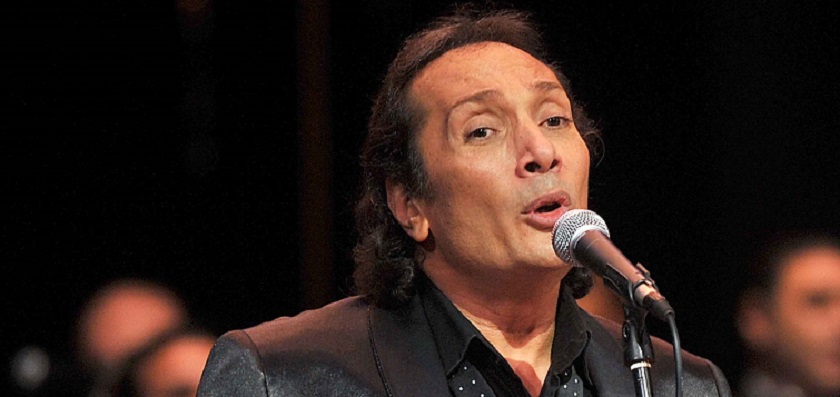
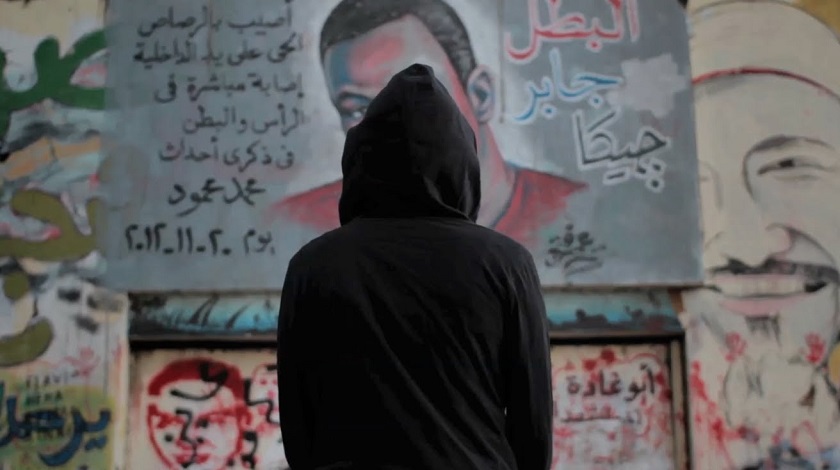
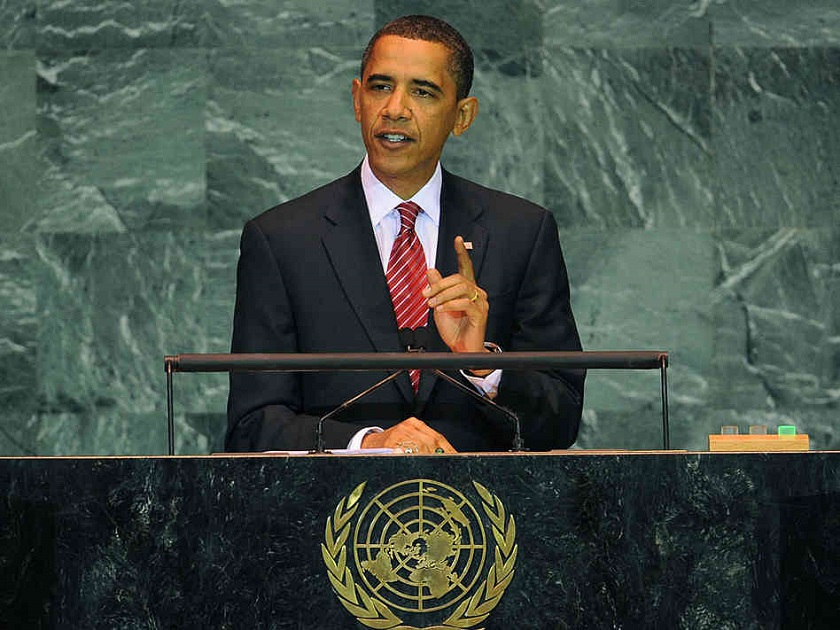
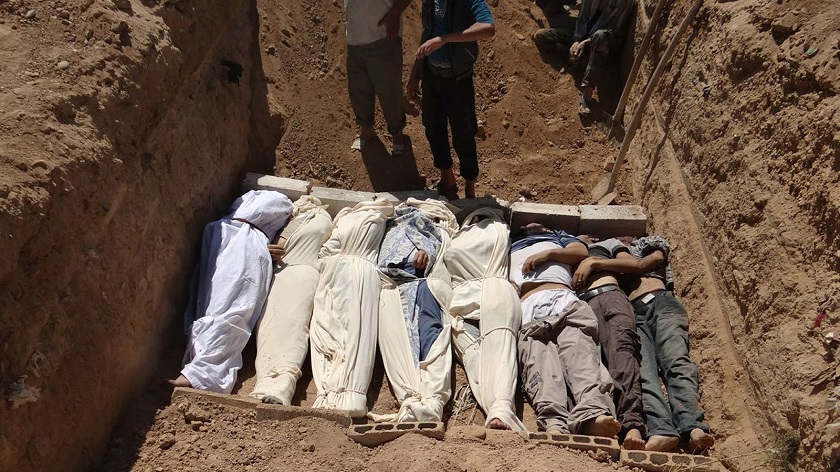


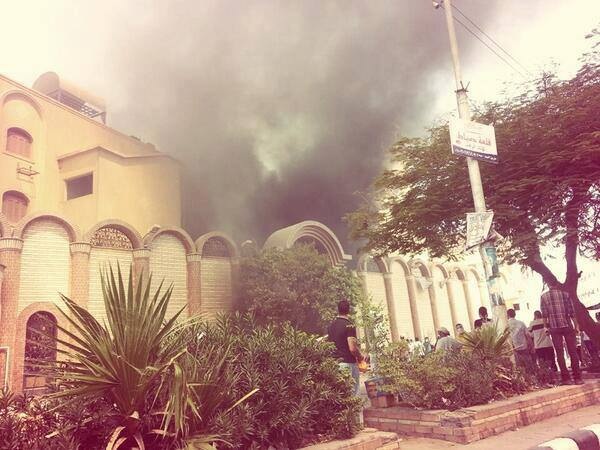

 Jayson Casper