Categories
Christianity Today Middle East Published Articles

Why We Opened a Christian University in Iraq Amid ISIS’ Genocide

Catholic University of Erbil
The Catholic University of Erbil (courtesy CUE)

This article was first published at Christianity Today, on May 7, 2020.

For 25 years, Stephen Rasche was a “bare knuckles” international lawyer. But in 2010, he offered his services to the Chaldean Catholic Church of Erbil in Iraqi Kurdistan and has increasingly dedicated his life to the preservation of this ancient community.

Under the leadership of Archbishop Bashar Matti Warda, in 2015 Rasche helped found the Catholic University of Erbil, where he serves as vice chancellor. Also the director of its Institute for Ancient and Threatened Christianity, Rasche lived this title as ISIS ravaged Iraq’s Christian homelands in the Nineveh Plains and many believers fled to Erbil.

After testifying on their behalf before the United Nations and the US Congress, Rasche allows them to represent themselves in his recent book, The Disappearing People: The Tragic Fate of Christians in the Middle East. The book has won a diverse range of endorsements, from leaders such as Matthew Hassan Kukah, bishop of the Catholic Diocese of Sokoto, Nigeria; Yahya Cholil Staquf, general secretary of Nahdlatul Ulama, the largest Muslim organization in the world; and Thomas Farr, president of the Religious Freedom Institute.

The US State Department’s Office of International Religious Freedom reports that less than 250,000 Christians are living in Iraq, most in Kurdistan or on the Nineveh Plains. Two-thirds belong to the Chaldean Catholic Church.

CT interviewed Rasche about the logic of establishing a university during a genocide, how its Catholic identity functions in a Muslim society, and his enduring optimism for Christianity in Iraq.

What led you personally to invest your life in this endeavor?

In 2010, Bishop Warda had just been made archbishop, and I went to pay him a visit of respect, asking if there was anything I could do to help. “Yes, in fact,” he said. “You Americans have made a big mess here, and you could stay and help me. I have 3,000 displaced families here from the south, they need help, and no one is helping us with them. We don’t have jobs for them, and there’s a whole range of things I would like to do.”

I assisted on and off on a pro-bono basis for the next four years, but by 2014 the situation looked really desperate. ISIS was maybe 30 miles away from Erbil. But in a visit just after Christmas, I sat down with the bishop and the priests who told me, “We are going to stay. Will you be with us here, and help us?”

Honestly, I was skeptical. But after some deep thinking, I tried to determine the right thing to do and if there was a calling in this for me.

Tell us more about that calling.

Being an international transactions lawyer involved a fair amount of bare knuckles litigation. And not a lot of it, quite frankly, was fulfilling…

Please click here to read the full article at Christianity Today.

Categories
Christianity Today Middle East Published Articles

Cleared of Landmines for Easter, Jesus’ Baptism Site Now Closed by COVID-19

OLYMPUS DIGITAL CAMERA

This article was first published at Christianity Today, on April 17, 2020.

For over 50 years, Jesus’ baptismal site was a casualty of war.

Now, it is a casualty of the new coronavirus.

Last week in time for Easter, the UK-based demining specialist HALO Trust group exploded in chain reaction the final 500 landmines at Israel’s Qasr al-Yahud monastery complex.

“We got the churches together, all eight different denominations, and then we got the Israelis and the Palestinians,” HALO Trust CEO James Cowan told the BBC.

“So all three major faiths, and we looked at how we could do this.”

Located six miles east of Jericho on the Jordan River, “Bethany beyond the Jordan” in 1968 was placed by Israel under military jurisdiction following the Six Day War. Fearing terrorist infiltration across the shallow riverbed, the army laid over 6,000 landmines and booby-trapped the churches.

Israel declared peace with Jordan in 1995, but the area remained closed.

In 2011, it was partially reopened, allowing access along one narrow path between the Jordan River and the Greek Orthodox St. John the Baptist Monastery.

And in 2016, HALO Trust, which works in 27 nations around the world, announced…

Please click here to read the full article at Christianity Today.

Categories
Christianity Today Middle East Published Articles

The Holy Fire Must Go On

Holy Fire
Image courtesy of Cistern Films

This article was first published at Christianity Today, on April 10, 2020.

With the new coronavirus canceling Holy Week services around the globe, one of the most severe blows will be felt by Orthodox Christians. On the Saturday before Easter, which the Orthodox will observe on April 19 this year, thousands of pilgrims flock to Jerusalem’s Church of the Holy Sepulchre—the traditional location for Jesus’ crucifixion, burial, and resurrection—to witness the “miracle” of Holy Fire.

The historic church houses six ancient Christian sects—Greek, Franciscan, Armenian, Coptic, Syriac, and Ethiopian—which more or less cooperate in the administration of its affairs. By tradition, the Greek and Armenian bishops enter the tomb alone, but emerge with a divinely lit flame. The fire is shared candle-to-candle throughout the expectant and jubilant crowd.

Eventually it is transported to Greece in a special container, and then on to Serbia, Russia, and other nations in the Orthodox world.

Despite the social distancing restrictions in place due to the COVID-19 outbreak, Israel is nevertheless facilitating a scaled-back religious ceremony. And to avoid quarantine, foreign dignitaries will receive the flame at their airplane after it lands and immediately return home.

Mentioned obliquely in fourth-century sources, the first Western mention of the Holy Fire dates to Bernard the Wise, a monk from modern-day France who went on pilgrimage in 876 A.D. Disputed by many, its popularity with Orthodox communities worldwide makes the Holy Fire one of the world’s foremost Christian celebrations.

Local Christians are known to chant in Arabic: “We are the Christians, we have been Christians for centuries, and we shall be forever and ever. Amen!”

Filmmakers Reuben and Brittany Browning grew up in Israel and Palestine as children of Nazarene missionaries, traipsing around the holy sites. As adults…

Please click here to read the full article at Christianity Today.

Holy Fire is available for rent or purchase at Amazon and Vimeo. A teaser and trailer can be watched on Vimeo.

Categories
Christianity Today Middle East Published Articles

Arab Christians Have Lost Easter Before. Here’s What They Learned.

Losing Easter Churches
House of St Ananias, Damascus

This article was first published at Christianity Today, on April 3, 2020.

Christians around the world are about to lose their usual Easter celebration—the highlight of most congregations’ annual life together.

Yes, there will be a livestream. Their pastor will likely call them. They may even chat on Zoom with friends and family.

But it will be different. The community of believers has been sundered by the new coronavirus. And threatened with it is Christ’s body, his bride, his temple for his presence in the world.

If there is any consolation, it is that this is not the first time.

“There are forces of nature—and forces of man—that challenge our ability to experience the presence of Christ,” said Gregory Mansour, the Maronite bishop of Brooklyn.

“[COVID-19] is different from persecution. But it is the same.”

A born-again Catholic led into personal relationship with Christ by the Navigators, Mansour later reconnected with his ancient Lebanon-based church. His clerical colleagues there received thousands of ISIS-fleeing Christians from Syria and Iraq.

“There was a deliberate desire to obliterate churches, hymnals, prayers, and people,” he said. “The only thing we had left was…

Please click here to read the full article at Christianity Today.

Categories
IDEAS Middle East Published Articles

When You Can’t Return Home

Can't Go Home

We had just prepared our letter to loved ones in America.

Corona is spreading everywhere, I wrote, but we are on lockdown, and perhaps safer here than we would be in the States. We have money, food, and good relations with neighbors. We plan to stick it out here.

And then the announcement was issued by the government: The airport and all borders are closing in 48 hours.

Suddenly, my stomach dropped. All my earlier confidence felt like bravado. Unspoken, there was always the assumption that if things get bad here, we can leave. Now, it would be impossible. And given the unprecedented nature of this virus in our modern world, who knows when the opportunity to travel would come again.

The nation we live in is not known for its stability. What if it gets really bad?

After dropping, my stomach turned. Should we quickly uproot and return to America? I hadn’t yet sent that letter.

The complications to normal life would be terrible. The airports would be crowded Corona-factories. And who would receive us back home save for parents who must be extra careful against the virus?

I didn’t want to leave. But what does wisdom suggest when faced with a last chance? The reasons against leaving are clear, but they were not what I needed.

My earlier bravado disappeared.

I longed for a deeper confidence.

Stepping away from our own story, here are four reminders that helped buttress my spirit. Perhaps they will also be an encouragement to others.

  1. You have a job. Some foreigners are tourists, and others were sent overseas by their employer. But for many, the choice to live in a foreign nation was deliberate. We earn our salary, we enjoy cross-cultural experiences, but we also believe that our work is helpful.

Remember that. Corona will change the nature of your job, but not its essence. Keep at it, for the good of your adopted country.

  1. You have allies. If the section above applies, we are likely not squirreled away in an expat compound in isolation from national neighbors. We have probably learned at least a little bit of language. In all likelihood, we have friends.

Remember that. Corona is devastating them also, but they know how to live here. Rely on them, encourage them, and fit into their cooperative networks.

  1. You have providence. With proper humility, you can likely look back upon your journey to your country as a series of circumstances that somehow all fell into place. We studied, we planned, we decided, but we may have also prayed.

Remember that. Corona is upsetting many circumstances, but nothing eternally known. God “determined the times set for humankind and the exact places where they should live.” Rest in this truth.

  1. You have a mission. Our jobs are not our life. What we do is helpful, but who we are is unique and transformative. As we learn from others, they do from us. If offered humbly, we have much to contribute.

Remember that. Corona changes nothing of your essence. “As the Father sent me [Jesus], so send I you.” Find the good you can do, and do it.

Finally, my stomach settled. But to keep our confidence from becoming a spiritual bravado, two final reminders are necessary.

One, we remain foreigners. We retain privileges. We are guests.

Two, we are all foreigners. We receive grace. We are ambassadors.

Corona reminds us all of the transience of life and the fragility of the world. Our norms have been shaken, our illusions shattered.

But we remain human, and beloved of God. Abroad or at home, we will all return to him. Our deeper confidence can only be this: “Well done, my good and faithful servant.”

Categories
Christianity Today Middle East Published Articles

Iran Releases a Third of Christian Prisoners Due to Coronavirus Concerns

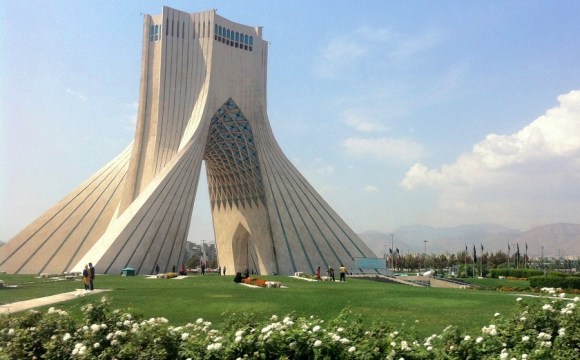
Azadi Tower Iran

This article was first published at Christianity Today, on March 23, 2020.

Forced by the new coronavirus, Iran took the tiniest of steps to placate global advocacy for religious freedom.

A temporary release of about 85,000 prisoners to curb the spread of COVID-19 disease included Ramiel Bet Tamraz, an Assyrian Christian serving a four-month sentence for holding illegal church meetings.

He was one of seven Christians set free, some on bail.

The release—which also pardoned 10,000 prisoners in advance of this past weekend’s celebration of Nowruz, the Persian new year—did not include four Christians recently granted a retrial.

Ramiel’s father Victor was the pastor of the Assyrian Pentecostal Church of Tehran until 2009, when it was shut down by the government for holding services in Farsi, the Iranian national language. Arrested in 2014 for conducting services at home, in 2017 he was given a 10-year jail sentence. Released earlier on bail with his wife Shamiram, they are awaiting the outcome of court appeals.

Ramiel’s sister Dabrina has advocated for her family all the way to the White House.

“Raising awareness always helps,” she told CT, prior to her brother’s release. “When the US and international bodies speak out and address persecuted Christians, they have an enormous amount of influence.”

According to the latest annual report of violations against Christians in Iran, 17 believers ended 2019 in prison on account of their faith. Culled from public statistics describing sentences from 4 months to 10 years, the report—released in January and jointly produced by Open Doors, Article 18, Middle East Concern, and Christian Solidarity Worldwide—warned the true number could be much higher.

Open Doors, which ranks Iran No. 9 among the world’s worst persecutors of Christians, reports at least 169 Christians were arrested from November 2018 to October 2019.

Compared to those who decline advocacy, Dabrina said…

Please click here to read the full article at Christianity Today.
Categories
Christianity Today Middle East Published Articles

Despite a Murder and Visa Denials, Christians Persevere in Turkey

Turkey Korean Murder
Image: Source Images: Congin Kim / Annie Spratt / Unsplash

This article was first published in the March print edition of Christianity Today.

Five days after her husband’s murder, Jung Kyung-In named her newborn daughter “God’s Goodness”—in Turkish, not Korean.

Jung moved to Turkey with her husband, Kim Jin-Wook, in 2015. The Korean Christian couple found a place to live in an impoverished district of Diyarbakir in southeastern Turkey, 60 miles from the Syrian border.

Kim worked selling spices, but his real calling, as he understood it, was witnessing to the gospel. He took the Turkish name “Peace,” and his Christian friends in Turkey say he was a great evangelist.

“He shared the gospel in every corner of Diyarbakir without hesitation,” said Ahmet Güvener, pastor of the Diyarbakir Protestant Church, which has about 70 members. “He was not aggressive, but clear, and I think local people were uncomfortable with this.”

One day in November, Kim told Jung he was going out to evangelize. He was attacked on the street, stabbed twice in the chest and once in the back. Kim, 41, died of his wounds in a city hospital.

Authorities arrested a 16-year-old boy for the crime. He has allegedly confessed to the murder, saying he was trying to steal Kim’s phone.

Despite her grief, Jung saw this as an opportunity to testify. She wrote a letter to the boy accused of killing her husband.

“I do not understand why you did this, but I cannot be angry at you,” she wrote on her phone.

“Many people want the court to give you a heavy punishment. But I and my husband don’t want this. We pray that you become worthy of heaven, because we believe in the worth of people. God sent his Son Jesus, who forgave those who persecuted him. We also believe in that and we pray that you would also repent of your sin.”

Jung read the letter aloud to the local media. Her testimony was viewed online more than…

Please click here to read the full article at Christianity Today.

Categories
Christianity Today Middle East Published Articles

Closing the Bible Gap in the Gulf

Bible Engagement Gulf
Image: Illustration by Rick Szuecs / Source Images: Pexels

This article first published at Christianity Today, on February 5, 2020.

Joining 80 leaders from 24 countries in Washington, DC, last September, the World Evangelical Alliance (WEA) announced 2020 to be the Global Year of the Bible.

“Ignorance of Scripture is ignorance of Christ,” said WEA general secretary Ephraim Tendero. “In contrast to the sacred writings of many other traditions, the Bible is meant to be read and understood by all people.”

But what if they cannot read? This is the case for up to 40 percent of the 1.5 million Telugu-speaking workers in the Gulf states. Having dropped out of school in their native India, these migrants find that the crowded labor camps of the United Arab Emirates (UAE) and Bahrain offer the best opportunity to support their families back home.

But having come to the glitzy Gulf to gain a meager share of petrodollars, many find also the spoken—and storied—words of Jesus.

In 2019, the Bible Society of the Gulf (BSG) was awarded “Best Mission Project” by the United Bible Societies (UBS). Honored in the category of “Focusing on Audiences,” BSG’s pioneering audio and storytelling work among illiterates distinguished it among the 159 UBS branches worldwide.

“We help migrant workers rediscover themselves as children of God,” said Hrayr Jebejian, BSG general secretary. “Through the faith and hope of scripture, they gain the strength to navigate their many challenges.”

Jebejian’s book, Bible Engagement, noted during the UBS ceremony, described the long working hours, high rates of suicide, and…

Please click here to read the full article at Christianity Today.

Categories
Christianity Today Middle East Published Articles

13 Christian Takes on Trump’s Peace Plan for Israel and Palestine

Trump Peace Plan

This article was first published at Christianity Today, on January 28, 2020.

After three years of anticipation—and dread—President Trump announced the launch of his “Deal of the Century” to achieve peace between Israel and Palestine.

With Israeli Prime Minister Benjamin Netanyahu at his side, he outlined details for a proposal that would recognize a Palestinian state following extensive land swaps and security arrangements.

Palestinian Authority President Mahmoud Abbas was not present, having broken off communication with the White House following several US decisions deemed biased toward Israel.

Abbas immediately rejected the plan, which Palestinians had long declared “dead on arrival.”

But Netanyahu’s acceptance was enthusiastic, declaring himself willing to begin negotiations with the Palestinians on such terms. A day earlier, Netanyahu’s challenger Benny Gantz also signaled his party’s agreement with Trump’s proposal.

With three Arab states lacking a peace treaty with Israel in attendance—Oman, Bahrain, and the United Arab Emirates—Trump hopes there will be a regional push to implement his plan.

And with $50 billion promised as investment for the nascent Palestinian state, the president believes all the necessary pieces are in place.

“All previous generations from Lyndon Johnson tried and bitterly failed,” Trump said. “But I was not elected to do small things, or shy away from big problems.”

It only required he approach peace in a “fundamentally different” manner…


Following a summary the article includes the perspective of

  • Joel Rosenberg, co-founder of the Alliance for the Peace of Jerusalem
  • Salim Munayer, head of the Jerusalem-based Musalaha reconciliation ministry
  • Daoud Kuttab, a Palestinian journalist and secretary of the Jordan Evangelical Council in Amman
  • Hanna Massad, a Palestinian pastor who led Gaza Baptist Church for 12 years and returns regularly
  • Gerald McDermott, Anglican Chair of Divinity at Beeson Divinity School who recently wrote The New Christian Zionism: Fresh Perspectives on Israel and the Land
  • Yohanna Katanacho, a Palestinian pastor and academic dean at Nazareth Evangelical College
  • Lisa Loden, the Messianic Jewish co-chair of the Lausanne Initiative for Reconciliation in Israel–Palestine
  • Joel Chernoff, general secretary of the Messianic Jewish Alliance of America
  • Martin Accad, chief academic officer at Arab Baptist Theological Seminary in Beirut
  • John Hagee, the founder and chairman of Christians United for Israel
  • Todd Deatherage, cofounder and executive director of Telos Group, which seeks to build a “pro-Israeli, pro-Palestinian, pro-peace movement”
  • Wissam al-Saliby, the Geneva-based advocacy officer for the World Evangelical Alliance
  • Ibrahim Nseir, Syrian pastor of the Presbyterian Church of Aleppo

Please click here to read the full article at Christianity Today.

Categories
Christianity Today Middle East Published Articles

Soleimani’s Death Doesn’t End Iran’s Influence on Middle East Christians

Soleimani Funeral
(via Fars News Agency)

This article was first published at Christianity Today, on January 28, 2020.

Middle East Christians might shrug their shoulders. They might even fret and worry. But perhaps Qassem Soleimani got what he deserved.

“We regret what happened. We do not want anyone to die, because Christianity wants the good of all,” said Ashty Bahro, former head of the Kurdistan Evangelical Alliance.

“But a person leads himself to his own destiny.”

Soleimani, head of Iran’s special operations Quds Force, was killed by a US rocket strike on January 3. It was a rapid escalation following the Iran-linked death of an American contractor, a retaliatory attack on the responsible Iraqi militia, and the storming of the US embassy in Baghdad.

According to the US State Department, Soleimani, who reported directly to Iranian Supreme Leader Ayatollah Khamenei, was responsible for 17 percent of American deaths in Iraq from 2003 to 2011.

He also enraged Sunni Muslims by engineering the subsequent Iranian defense of Syria’s regime, led by President Bashar al-Assad. With Russia and the Iran-backed military wing of Lebanon’s Hezbollah, the shelling of rebel-held cities resulted in the displacement of thousands during Syria’s civil war.

But Soleimani was also acclaimed for his role in fighting ISIS, personally directing Iraqi militias from the front lines.

Thus, Middle East Christians have mixed feelings about his death—and the immediate aftermath.

Some Syrian believers see no benefit to anyone.

“Iran was working with the US government in certain agreements. Why did you destroy them?” asked Maan Bitar, pastor of the Presbyterian churches in Mhardeh and Hama, noting both the fight against ISIS and the nuclear deal.

“This will prompt a severe reaction that will hurt…”

Please click here to read the full article at Christianity Today.

Categories
Christianity Today Middle East Published Articles

The Top 50 Countries Where its Hardest to be a Christian

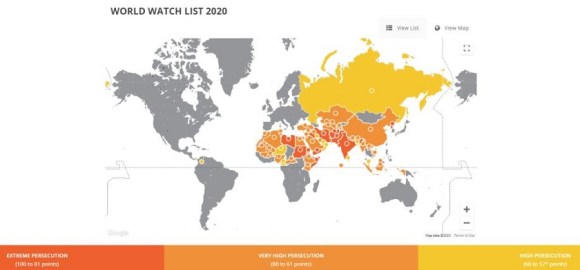
WWL-2020

This article was first published at Christianity Today on January 15, 2020.

Every day, 8 Christians worldwide are killed because of their faith.

Every week, 182 churches or Christian buildings are attacked.

And every month, 309 Christians are imprisoned unjustly.

So reports the 2020 World Watch List (WWL), the latest annual accounting from Open Doors of the top 50 countries where Christians are the most persecuted for their faith.

“We cannot let this stand,” said David Curry, president and CEO of Open Doors USA, during the 2020 list’s unveiling in Washington, DC, this morning. “People are speaking out and we have an obligation to hear their cry.”

The listed nations comprise 260 million Christians suffering high to severe levels of persecution, up from 245 million in last year’s list.

Another 50 million could be added from the 23 nations that fall just outside the top 50—such as Mexico, Chad, and the Democratic Republic of the Congo—for a ratio of 1 in 8 Christians worldwide facing persecution.

Last year, 40 nations scored high enough to register “very high” persecution levels. This year, it reached…

Please click here to read the full article at Christianity Today.
Categories
Christianity Today Middle East Published Articles

Sudan Lets Christians March for Jesus Again

Religion Sudanese Christians
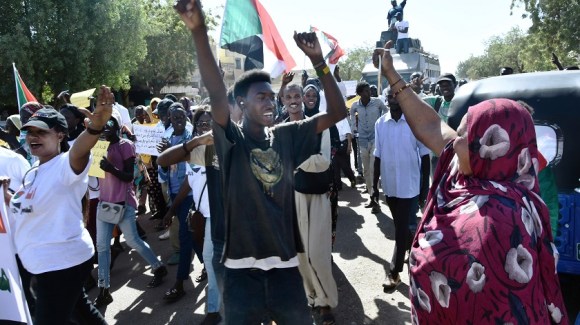
In this Monday, Dec. 23, 2019 photo, Christians march through the streets to celebrate the birth of Jesus in Khartoum Bahri, Sudan, north of the capital Khartoum. More than eight months after the army forced out long-ruling autocrat Omar al-Bashir, who upheld harsh interpretations of Islamic laws, Sudanese Christians are hoping for more religious freedom. (AP Photo/Mohamed Okasha)

This article was first published at Christianity Today, on December 28, 2019.

“Hallelujah! Today, we are happy that the Sudanese government has opened up the streets for us so we can express our faith,” said Izdhar Ibrahim, one of the marchers. Some Christians had been frightened before “because we used to encounter difficulties.”

The changes started in 2011, after South Sudan gained independence from Sudan following a long war and a referendum. South Sudan is mostly Christian and animist, a belief that all objects have a spirit. Al-Bashir’s government then escalated its pressure on the remaining Christians, human-rights campaigners and Christians say.

Al-Bashir, who came to power in an Islamist-backed military coup in 1989, failed to keep the peace in the religiously and ethnically diverse country.

Noah Manzul, one of the church elders, said the march was treated almost as if it were a “crime.”

Its return is “an expression of religious freedom,” Manzul said. “We can live our lives with ease.”

Manzul’s social work with homeless children and orphans got him into trouble under al-Bashir, when he was accused of trying to convert the children to Christianity, an allegation he denies. Activities like singing hymns in the teeming market outside the church were stopped, he said.

To be sure, some Christians said they were not impacted negatively by al-Bashir’s government, and officials at the time disputed that the government targeted Christians.

But Suliman Baldo, senior adviser at the Enough Project, which supports peace and an end to atrocities in Africa’s conflict zones, said the ultimate goal under al-Bashir was “to limit the influence of the church.” Under his rule, Christian church properties could be seized, Baldo said, adding some churches were demolished, and some preachers were arrested.

During past holiday seasons, many recalled, posters would appear on the streets warning against celebrating with the kofar, or infidels, a reference to Christians.

Now, the constitutional declaration that guides this transitional period no longer refers to Islam as the primary source of legislation in Sudan. A Christian woman was appointed to the nation’s interim ruling Sovereign Council.

And December 25 was declared…

Please click here to read the full article at Christianity Today, to which I contributed additional reporting.

Categories
Christianity Today Middle East Published Articles

Christmas Celebrations Canceled in Iraq After Deaths of 400 Protesters

Iraq Protests Baptist
Pastor Ara Badalian leads members of National Baptist Church in prayer at Baghdad’s Tahrir Square. Image: Courtesy of National Baptist Church

This article was first published at Christianity Today, on December 9, 2019.

Distributing food to protesters with 40 fellow church members under the Jumariyah bridge near Tahrir Square in Baghdad, Ara Badalian made a poignant observation.

“This movement is a flood, occupying the hearts of the youth and the poor, without any religious discrimination,” the pastor of National Baptist Church recalled to CT. “It has broken down all the walls that divided Iraqis.”

It is at the bridges—about a dozen span the Tigris River, which bifurcates the Iraqi capital—where most violence has taken place. The protest movement, which began in October, has resulted in more than 400 deaths, around a dozen of them security personnel. Over 17,000 people have been injured.

In response, the Chaldean Catholic Church decided last week to refrain from holding public celebrations of Christmas, trading tree decorations and holiday receptions for prayers of intercession.

“Instead of bringing hope and prosperity, the current government structure has brought continued corruption and despair,” Bashar Warda, the Chaldean archbishop of Erbil, told the United Nations Security Council last week.

“[Iraqi youth] have made it clear that they want Iraq … to be a place where all can live together as equal citizens in a country of legitimate pluralism and respect for all.”

Protesters have demanded the dissolution of parliament, widespread government reforms, and amendment of the sectarian-based 2005 constitution.

Ratified following the United States-led 2003 Iraq War, the current constitution gives the Middle East nation’s Shiite majority (55% of the population) the leading position of prime minister, as well as the influential interior and foreign ministries.

The Sunni minority (40%) receive the speaker of parliament and the defense ministry. The Kurds, who comprise only a third of the Sunni population but are concentrated in their own autonomous northern region, receive the presidency and finance ministry.

Islam is established as the religion of the state and the foundational source of legislation. Christians are among three religious minorities guaranteed religious freedom, though the constitution protects the Islamic identity of the majority.

While the protests have been cross-sectarian in Baghdad, they’ve paradoxically been strongest in the nine Shiite provinces in southern Iraq.

“People don’t want foreign interference from anywhere…

Please click here to read the full article at Christianity Today.
Categories
Christianity Today Middle East Published Articles

Egypt’s Christian Women Treated Like Muslims in Inheritance. Until Now?

Nasrallah Kamel
Nasrallah (L) and Kamel (R), both working to address Coptic grievances, find different receptions from the state. Image: Associated Press / Jayson Casper

This article was first published at Christianity Today, on December 5.

Two stories here, so the article deck is an important follow-up to the headline:

Meanwhile, Coptic activist who insists true religious equality does not yet exist goes to prison on terrorism charges.

Here’s the intro to the first:

Coptic lawyer Huda Nasrallah may have won a great victory for Christian women in Egypt. Last week, a Cairo court ruled in her favor, dividing the family inheritance equally between her and her two brothers.

Nasrallah’s verdict followed the decision of two other courts to reject her appeal on the basis of the sharia law stipulation that a male heir receive two-thirds of the inheritance.

This past summer, the Egyptian Initiative for Personal Rights (EIPR) took up her cause. In a campaign called “Christian on ID card, Muslim in Inheritance,” it claimed millions of Coptic women suffer similarly.

Coptic men are sometimes all too willing to go along with it, Nasrallah told the Associated Press. But she is “thrilled” by the verdict, and hopes it will inspire other women.

“It is not really about inheritance; my father did not leave us millions of Egyptian pounds,” she said. “If I didn’t take it to court, who would?”

And here is the second:

But a few days earlier, Coptic activist Rami Kamel may have suffered a great setback for all Egyptian believers. He was arrested for his reporting of sectarian tension, and accused of joining a terrorist group.

A founding member of the Maspero Youth Union when Egypt’s military tanks rolled over Coptic protesters in 2011, he later documented sectarian strife between Muslims and Christians.

He is now facing charges of joining a terror group and spreading false information, his lawyer told Agence France-Presse. Additional charges include harming public peace, inciting strife between Muslims and Christians, and agitating against the state.

“There is no credible evidence to support these charges,” said Thabet, who last spoke with Kamel a few days before his arrest. Around 10 days prior, security called Kamel in for informal interrogations as a warning to stop his activity.

But Kamel continued, speaking out against the recent arrest of Khalil Rizk, a Coptic labor rights activist charged with joining a terrorist group.

Please click here to read the full article at Christianity Today.

Categories
Christianity Today Middle East Published Articles

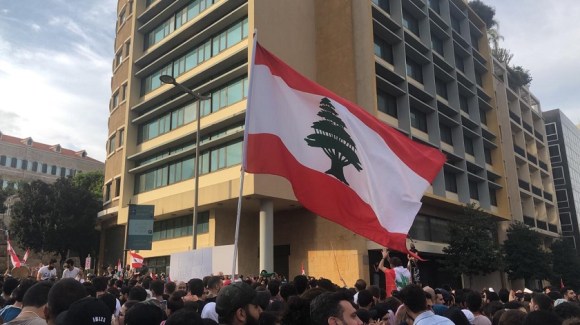
Should Lebanon’s Christians Join Protests? Viral Sermons Argue Yes and No.

This article was first published at Christianity Today on November 27.

Lebanon Protests
Anti-government protesters chant slogans against the Lebanese government as they hold Lebanese flags during a protest in Beirut, on October 26. (AP Photo/Bilal Hussein)

Does a revolution need a leader?

As the rocks rained down near the tent of Ras Beirut Baptist Church’s effort to discuss the question, suddenly the faith of the Christians gathered there was put to the test.

For the past month, Lebanese evangelicals have debated Scripture, sharing sermons online. One viral effort urges believers to stay away from widespread demonstrations in submission to authority. Another licenses participation in the popular push for justice.

Trying to find a third way, RBBC has visited the protest site weekly at Beirut’s Martyrs Square to discuss issues related to the revolutionary movement.

“We are not supporting a political agenda, but listening to people about why they are coming down to the streets,” Joe Costa, RBBC youth leader, told CT. “You cannot evangelize people if they are hungry or hurt. You have to be with them where they are.”

And this time, the church’s tent was at the front line as dozens of Hezbollah flag-waving partisans approached on their motorcycles.

Since October 17, citizens of Lebanon and its multi-confessional democracy have shed their religious identities in largely peaceful demonstrations against their political leaders. Some politicians have responded by justifying the violence of their followers, without authorizing it. Other politicians have expressed sympathy, asking for trust to make things better.

But long seen as the untouchable defenders of their communities’ interests, over the decades many political leaders have become wealthy.

“Corruption is like decay in our bones,” Hikmat Kashouh, pastor of Resurrection Church of Beirut (RCB), told CT. “No single person doubts it, including those in authority today.”

The current protest movement is leaderless and has no formal demands, but in general seeks…

Please click here to read the full article at Christianity Today.

Categories
Christianity Today Middle East Published Articles

Palestinian Evangelicals Gain Official Recognition

Palestine Evangelical Council
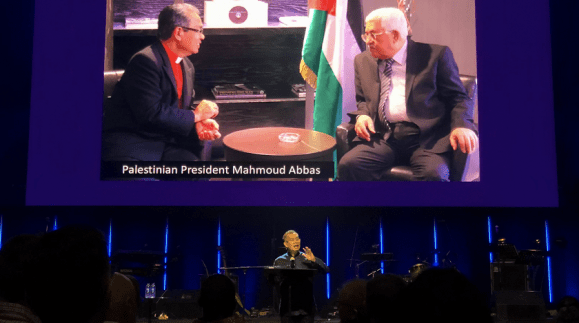
Bishop Efraim Tendero announces the legal recognition of a Palestinian Evangelical Alliance at the general assembly of the World Evangelical Alliance. (Image: Jeremy Weber)

This article was first published at Christianity Today on November 27.

After 12 years of waiting, evangelicals in Palestine now claim they have greater civil rights than their fellow believers in the Holy Land.

Earlier this month, the president of the Council of Local Evangelical Churches in the Holy Land—which represents congregations and ministries located in the West Bank, East Jerusalem, and the Gaza Strip—triumphantly held aloft his evidence at the once-a-decade general assembly of the World Evangelical Alliance (WEA).

“Here is the presidential decree signed by … President Mahmoud Abbas,” Munir Kakish told the approximately 800 WEA delegates from 92 nations gathered in Bogor, Indonesia. “Our hearts are full of thankfulness to God for this new declaration.”

When the Palestinian Authority (PA) was created in 1994 following the Oslo Accords, pastors of local evangelical churches met to create a council in order to have a voice with the new government, Kakish told CT.

Ministering in the Holy Land since 1978, Kakish pastors two churches: an independent congregation in Ramallah, Palestine, and a Baptist congregation in Ramla, Israel. They are only 30 miles apart, but divided by the Israeli separation wall.

“I knocked on [the PA’s] doors many times,” he said. “But now the timing was right, and the personnel … were understanding.

“Most of all, it was our persistence to obtain our civil rights as Palestinian citizens.”

Over time, the council—which Kakish has led since 2007—gained credibility as…

Please click here to read the full article at Christianity Today.

Categories
Christianity Today Middle East Published Articles

Split the Cedars of Lebanon: Evangelicals Balance Prayer, Protest, and Politics in Ongoing Uprising

Lebanon protests
(via Shahen Books)

This article was first published at Christianity Today, on November 8.

At first, it was two high school girls.

The education minister in Lebanon had just canceled classes nationwide due to an explosion of popular anger at proposed taxes. Public squares in Beirut and other cities swelled with demonstrations. The two students asked Steve White, principal of the Lebanese Evangelical School (LES), if he would join them and protest too.

White, a Lebanese citizen since 2013, became principal in 2000, succeeding his English father who’d held the post since 1968. Founded by a British missionary in 1860, LES preaches the gospel clearly and is one of the top schools in Lebanon. But it bucks the sectarian trend of community enclaves as 85 percent of its students are Muslim—most coming from the Shiite community. Discussion about religion and politics is forbidden.

The protests began October 17. At the height of student interest, White arranged four school buses for a unique civic education. Though he knows his students well, he couldn’t tell their breakdown by sect: Sunni, Shia, or Christian.

Which fit perfectly with the protests.

“I got excited because it was not religious,” said White. “It was nonsectarian: all of Lebanon together, no flags, no parties, they were cursing everybody.”

White did not approve of the cursing. But he did of the “everybody.” The slogan adopted by protesters: “All of them means all of them.” It targeted the leaders of Lebanon’s multiple religion-based political parties, accusing them all of corruption.

Transparency International ranked Lebanon No. 138 out of 180 in its 2018 corruption perception index, listed from clean to corrupt.

Traditionally viewed as the guardians of each sect’s interests, Lebanese political parties would regularly voice vague charges of corruption against unnamed colleagues. But unlike previous protest movements, which carried the banners of each party, this one hoisted only the Lebanese national flag with its distinguishing cedar tree.

Accordingly, White forbade students from bringing the flag of LES.

Whether inspired, sympathetic, or threatened, political leaders had little choice but to express solidarity.

According to the World Bank, one-quarter of Lebanon’s population lives in poverty. Citizens pay exorbitant fees for privately generated electricity, as the tiny Arab nation of 6 million on the shores of the Mediterranean Sea has the fourth-worst public provision in the world. Smaller than Connecticut, public debt is 150 percent of GDP. Prior to the protests, strikes threatened to cripple bread and gasoline services, as the US dollars needed to import materials dried up from the market.

People started to fear economic collapse.

In order to unlock millions of dollars of promised international investments, the government announced new taxes—including upon WhatsApp, a popular free messaging service— to lower the deficit. An austerity budget loomed, with some effort at reforms it was long unwilling to tackle. Sectarian political squabbling had prevented an agreed-upon national budget for the prior 12 years.

The subsequent protests caught the government off guard. Promising a solution in three days, officials hastily agreed to cancel tax increases, fix the electricity sector, slash their own salaries, pass laws to fight corruption, and impose a one-time tax on lucrative banks in order to balance the budget.

It wasn’t enough.

“We’ve had the same names and parties for 30 years. Why should we give them another chance?” said Nadim Costa, head of the Near East Organization, an evangelical ministry serving the poor, marginalized, and displaced across the Arab world.

“There is a spiritual dimension to what is going on…”

Please click here to read the full article at Christianity Today.
Categories
Christianity Today Middle East Published Articles

There’s No One Christian View on Kurds and Turks

Turkish Christians
(Image: Lefteris Pitarakis / AP. Clergy representing minority communities in Turkey gathered Sunday in a monastery in southeastern Turkey to pray for Turkish soldiers fighting in the cross-border operation against Syrian Kurdish fighters.)

This article was first published at Christianity Today on October 24.

As reports circulated that Turkey had violated its five-day pause in operations against the Kurds on the Syrian border, President Recep Tayyip Erdogan’s rhetoric intensified. If Kurdish fighters did not withdraw from their positions, as agreed between Erdogan and President Donald Trump, Turkey would “crush their heads.”

The front now appears quiet as Turkey has secured its “safe zone” in cooperation with Russia.

In America, as reported in the press, Christian opinion has been almost universal in its condemnation. But the Christian landscape in the Middle East, home to the oldest and some of the most enduring persecuted traditions in the faith, offers a complex array of responses.

CT has previously covered anti-Turkish sentiment from the Syriac, Assyrian, and Protestant communities of the region.

But there is an underreported—and contested—pro-Turkey and anti-Kurdish contingent as well.

Arameans:

“President Trump is right on Syria!” stated Johny Messo, president of the World Council of Arameans, in a press release. “These ‘heroes’ have oppressed vulnerable Arameans, taken their innocent lives, Kurdified their lands, and still use a tiny Christian group as their mouthpiece.”

The Arameans, though an ancient expression of Christianity, represent a 20th-century revival of identity tied to the ancient biblical land of Aram. Communities exist in Syria, Turkey, and elsewhere in the region, and have been recognized by Israel.

While the West has rallied behind the democratic Syrian enclave that permits religious freedom, Messo says what it commonly called Kurdistan is actually…

Please click here to read the full article at Christianity Today.
Categories
Christianity Today Middle East Published Articles

Armenian Orthodox Leader: ‘We May Forgive One Day, But We Will Never Forget.’

Aram I Armenian Orthodox Church
(Image: Associated Press)

This article was first published at Christianity Today, on November 1.

The Armenian Orthodox Church is one of the oldest Christian churches in the world. According to tradition, Armenia was evangelized by Jesus’ disciples Bartholomew and Thaddeus. In 301 A.D., it became the first nation to adopt Christianity as its official religion.

An Oriental Orthodox denomination, the Armenians are in communion with the Coptic, Syriac, Ethiopian, and Malankara (India) churches. They differ with Catholics and Protestants over the 451 A.D. Council of Chalcedon decision to recognize Christ as one person with two natures: human and divine. Oriental Orthodox Christians declare Christ has one nature, both human and divine.

The Armenian Church is governed by two patriarchs, entitled Catholicos. One, Karekin II, is Supreme Patriarch for all Armenians and sits in Armenia.

CT interviewed Aram I, Catholicos of the Great House of Cilicia, which was once located in modern-day Turkey but since the Armenian Genocide relocated to Antelias, Lebanon, five miles north of Beirut. His jurisdiction includes the Armenians of the Middle East, Europe, and North and South America.

Aram I discussed the genocide, the US House of Representatives resolution this week to finally recognize it, and Armenians’ desired response from Turkey.

How do you respond to the US resolution recognizing the Armenian Genocide?

Yesterday I made a statement welcoming warmly this action taken. I believe it is very much in line with the firm commitment of the United States of America in respect to human rights. The rights of the Armenian people are being violated. After more than 100 years, we tried to bring the attention of the international community that the Armenian Genocide is a fact of history.

Whether we call it genocide or massacre or deportation, the intention is important. The intention of the Ottoman Turkish government at the time was to destroy [and] eliminate the Armenian people for political reasons. The presence of Armenian people in the western part of present-day Turkey and [historic] Cilicia was an obstacle to their project of pan-Turkism.

This is our legitimate claim: that the international community make a visible, tangible manifestation of their concern in respect to human rights, and recognize the Armenian Genocide. It was carefully planned and systematically executed by the government at the time.

Our people all around the world warmly greeted this action of the House of Representatives. It is our firm expectation that…

Please click here to read the full article at Christianity Today.

Categories
Christianity Today Middle East Published Articles

Syrian Christians Brave Insecurity to Stay Behind and Help

Syria Open Doors
via Open Doors USA

This article was first published at Christianity Today, on October 18.

Though most of the fighting has stopped for now, Turkey’s incursion on Kurdish-controlled northern Syria has left another humanitarian crisis in its wake.

Local churches as well as Christian organizations like Open Doors and Preemptive Love Coalition have prioritized caring for the citizens who took the risk to stay behind and helping the displaced return.

Last Saturday night, after three days of Turkish bombing, the Alliance Church of Qamishli met to make a decision. Would they flee for safety, or remain and help?

To some degree they had no choice.

Fadi Habsouna, a father of two, was injured when missiles hit his home and ruined his shop. His wife is in critical condition. His grandfather’s home was destroyed by a bomb. The pastor housed them in church-owned property, and decided to remain to assist the family, and others suffering similarly.

The church agreed; only eight families would leave.

“These are extremely brave people who want to be salt and light in their communities,” said David Curry, CEO of Open Doors USA, who relayed this story from his field staff. “They want to maintain the presence of Jesus and reach out.”

Open Doors is better known for its advocacy work on behalf of the persecuted; Syria ranks no. 11 on its World Watch List of places hardest to be a Christian. Its local partners keep a low profile in order to provide on the ground assessment. But the crisis in Syria has driven them to humanitarian aid.

It is not the first time. Following the rise of ISIS in 2014, Open Doors helped 150,000 Christians located in camps along the Turkish and Lebanese borders. Now their community hubs are providing food, medical care, hygiene kits, and temporary shelter in the northeast Syrian towns affected by the Turkish incursion.

“Christians have to make hard choices,” Curry said. “Leave the communities they were raised in, move inland, or …”

Please click here to read the full article at Christianity Today.