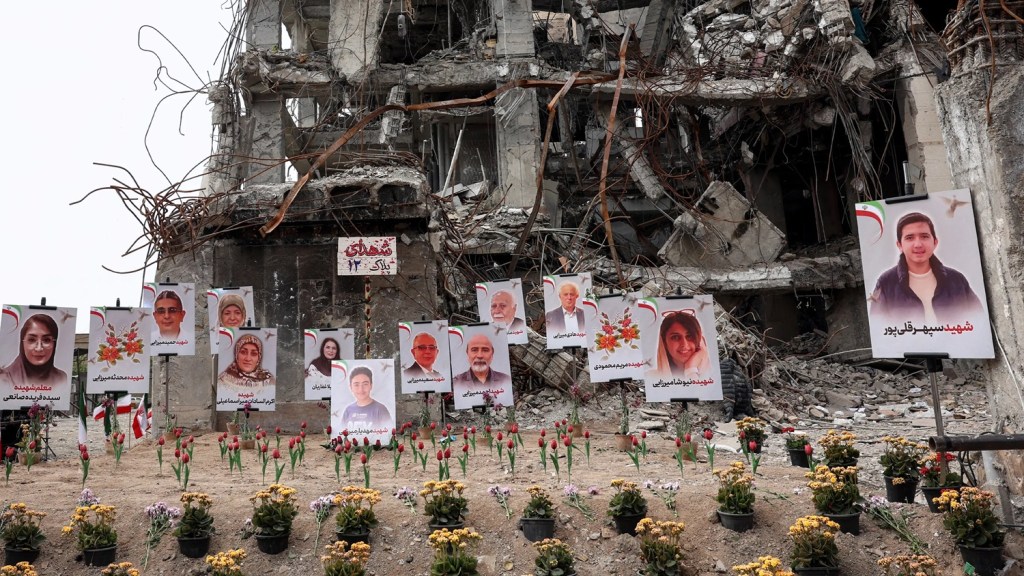
Early in the morning on February 28, Ed Martin awoke in his home in Lancaster, Pennsylvania, rolled over in bed to check his phone, and let out a slow sigh. The United States and Israel had attacked Iran. With a sense of resignation, the 78-year-old went to the computer in his bedroom office to learn more. Following weeks of negotiation and military buildup, in the first 24 hours the allied nations dropped at least 1,200 bombs on hundreds of targets across the country.
Martin worried about his friends in Iran.
“I felt awful,” he said. “But I wasn’t surprised.”
Most grandfathers in rural Pennsylvania do not have friends in Tehran. But Martin has spent more than two decades seeking peace between the geopolitical enemies. As Mennonites who know the pain of religious violence—he traces his ancestry to Swiss Christians fleeing persecution in the 17th century—he and his Anabaptist brethren have tried to promote interfaith relationships between North America and the Islamic republic.
Their efforts have gone mostly ignored and sometimes criticized. That morning, they found out they had failed.
They had made a last-ditch overture for peace just three weeks earlier. An interfaith group Martin cofounded, called the Luke 10 Foundation, issued an antiwar statement in early February. Fourteen Americans, including the director of Churches for Middle East Peace, three Muslim imams, and three Jewish rabbis, joined seven Iranian leaders, including an ayatollah, to “implore” their governments to seek reconciliation.
Short on specific criticisms, they called on politicians to oppose tyranny and “to uphold universal human rights.” Luke 10, which is based in the United States and was founded during COVID-19 to aid Iranians hit hard by economic sanctions, sent the statement to the American and Iranian governments one day before officials met in Oman for indirect negotiations. It made hardly a blip in US media but was published in English and Farsi by the official Islamic Republic News Agency, perhaps to show that some Americans were also against the war.
“Governments will do what they do in terms of propaganda,” said John Hartley, an early evangelical participant in Luke 10, which takes its name from the biblical passage containing the parable of the Good Samaritan. “We must seek the human good, not a political agenda.”
Mennonites have rarely put their trust in princes. They originate from a 16th-century reform movement in Europe attempting to model the early Christian community. The church developed three core religious commitments, according to Doug Hostetter, cofounder of Luke 10: First, faith is not inherited but must be chosen freely as an adult. Second, believers must take literally Jesus’ command to love their enemies. And third, allegiance to God overrides any government order to go to war on behalf of the state. In 2019, he outlined these convictions to professors at the University of Tehran.
Yet some in the Iranian diaspora, as well as Christians and Jewish groups, have criticized the Mennonites’ interactions with Iran, claiming they are justifying a repressive regime that uses dialogue to polish its image. Amnesty International cites the widespread use of torture, unjust trials, and the denial of education to women who refuse to veil. Open Doors ranks Iran No. 10 on its World Watch List for Christian persecution, primarily for its jailing of converts from Islam.
The Mennonites’ engagement with Iran was born from tragedy…
This article was originally published at Christianity Today on April 17, 2026. Please click here to read the full text.

