Categories
Christianity Today Middle East Published Articles

I Was the Enemy Jesus Told You to Love

Photography by Sandra Singh for Christianity Today

When I was 16, a new student named Zakariya showed up at school. His forehead bore fan-shaped scars that identified him as a member of the Dinka people group—south Sudanese minority rebels, many of whom were Christian. My enemies. Zakariya was nice to everyone and scored the top grades in class, which made me hate him more.

As devout Muslims, my family and I were committed to Islam’s central place in the government. But our application of our religion was radical, since we prayed for Allah to destroy those who opposed us.

For two years, I added a request for Zakariya’s destruction to my daily noontime prayers. One night, that prayer was answered. My friends and I climbed a tree with our bayonet-fixed rifles and watched as a flashlight approached in the distance. It was Zakariya, who we knew walked this way each evening.

When he was beneath our tree, we ambushed him, beating him mercilessly with our fists and rifle butts. In a frenzy, I stabbed him repeatedly with my bayonet.

“Allahu Akbar,” I muttered in pride as we walked away from his mangled body. We left him for dead, and he never returned to school.

I was born into one of independent Sudan’s three leading families. My great-grandfather had joined the 1881 Islamic revolt against the British. Members of my family helped enshrine sharia law in our country. My father led the military in Darfur, where he later served as governor.

As the only son, I was to inherit this legacy. Our family believed our highest allegiance transcended the nation to include all Muslims in a global Islamic community called an umma. This inspired a tradition—unknown to me at the time—of early commitment to religious learning. So when I was 8 years old, my father drove me 500 miles north of Khartoum and dropped me at a desert madrasa to learn the Quran. He gave me no explanation and barely said goodbye.

At the madrasa, I was shaved bald and given a white robe and prayer cap for my daily uniform. Our group of ten boys sat in a straw hut and memorized Arabic verses with a long-bearded shaykh. The Quran was in his right hand; in his left he held a leather whip to punish our frequent mistakes. Allah must be like this too, I thought. I cried at night for 17 days straight.

When my father came to pick me up two years later, there was no embrace, but I saw he was proud of me. At home, I recited the entire Quran to my family and received a camel as my reward.

In my family’s eyes, I was now a man. Instead of playing soccer, I practiced disassembling and reassembling a Kalashnikov rifle and playacted ambushes against our enemies. Maybe it was preparation for Zakariya. By the time I graduated from high school in 1989, I was ready for jihad and to die as a martyr. I was the perfect son my father had dreamed of.

But my role model wasn’t my father. It was…

This article was originally published in the September/October print edition of Christianity Today. Please click here to read the full text.
Categories
Current Events

How a Missionary Family in Lebanon Produced an American Hero

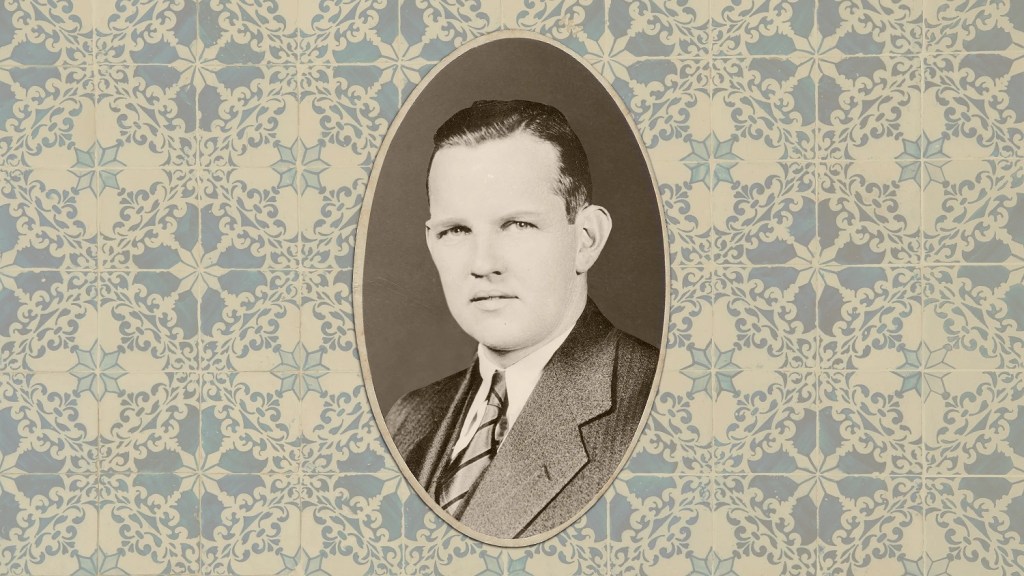
William Alfred Eddy
Illustration by Christianity Today / Source Images: Getty, Unsplash

This is part two of the Eddy family’s story. To read about the Eddy missionaries in Sidon, click here.

William Alfred Eddy was an American hero. Nicknamed “Bill,” he received the Navy Cross, two Silver Stars, and two Purple Hearts for his service in World War I. During World War II, he quit his job as a college president to reenlist and helped plan the Allied invasion of North Africa. Later, as a diplomat, he advanced Franklin Roosevelt’s agenda by forging the US alliance with Saudi Arabia.

“Eddy (hereafter ‘Bill’) managed to pack four or five lives into a single lifetime,” wrote Princeton University’s alumni magazine about its former doctoral graduate. One of those lives began as a missionary kid to an American family in the Levant.

Top of Form

Part one of this series chronicled the Eddys’ multigenerational service in Lebanon, particularly its southern city of Sidon. Active in evangelism, education, and medical work, some of the Eddys died on the field and are buried in local evangelical cemeteries.

So was Bill. But while his gravestone inscription marks the rank of colonel in the US Marine Corps, it doesn’t include the number of years he “served the Lord” like his family members’ gravestones.  The modern Eddy biographer, Muhammad Abu Zaid, didn’t criticize either approach. He called Bill the American “Lawrence of Arabia” and sympathized with his family’s earlier religious commitments.

In Forgotten Pages from the Ancient History of Sidon, published in Arabic by the Baptists of Lebanon, the president of the Sunni Muslim Sharia Law Court in Sidon described the religious and social development of Protestant ministry through building churches, schools, and clinics. Bill, he contrasted, pursued his country’s political objectives in the Arab world.

But today, evangelicals number only one percent of the Lebanese population. And polls indicate America’s poor reputation in the Middle East. Secular or spiritual, how does Abu Zaid evaluate the Eddys’ presence in his homeland?

“I felt sorry for them,” he told CT. “They didn’t succeed.”

The story continues from part one, with William Alfred, age 10, watching his father William King die suddenly on a preaching tour. After this traumatic experience, Bill moved to America and eventually enrolled in a Presbyterian university. Two years later, he transferred to Princeton and graduated in 1917. When the US entered World War I, he enlisted, fought in the tide-turning battle of Belleau Wood, and suffered a leg injury that made him limp for the rest of his life. After receiving his PhD in 1922, he joined the American University in Cairo, and one year later, he became chair of the English department.

Bill remained devout in his Christian faith—he even…

This article was originally published at Christianity Today on September 5, 2025. Please click here to read the full text.

Categories
History Middle East

Why an Early American Missionary Family Was Beloved in Lebanon

William King Eddy
Illustration by Christianity Today / Source Images: Courtesy of Nick Eddy

Pastor Michael Sbeit stood pensively in front of the marble gravestone in the evangelical cemetery of Sidon, a Lebanese city 25 miles south of Beirut. Mediterranean Cypress trees offered shade from the sweltering summer heat, while their fallen brown needles covered the ground and obscured the inscription engraved in both English and Arabic:

William King Eddy
Born March 13, 1854
Died Nov. 4, 1906
Served the Lord in Syria 28 years

Next to the grave of William King Eddy (hereafter “King”), is the grave of his wife, Elizabeth Nelson Eddy. Her tombstone honors her 49 years of service. Several feet away lies the body of their son, William “Bill” Alfred Eddy, who died in 1962.

The Eddys were an American family who originally came as Protestant missionaries to late 19th-century Lebanon, then part of the Syrian region of the Ottoman Empire. Several family members, including King’s sister Mary Pierson Eddy, and their father William Woodbridge Eddy (hereafter “Woodbridge”) are buried in Beirut.

“They were pioneers of our church,” said Sbeit, who leads the Presbyterian congregation the Eddys’ missionary colleagues founded in Sidon. “We don’t have many like them anymore.”

Two generations of Eddys shared the gospel, built schools, and offered healthcare. The last of their line in Lebanon left a more colorful legacy. William Alfred Eddy’s gravestone notes nothing about service to the Lord and instead displays his rank of colonel in the US Marine Corps.

“Bill loved this city,” said Sbeit. “But he was different.”

This two-part story chronicles the Eddy family’s multigenerational commitment to Lebanon. The family’s modern biographer is Muslim: Sheikh Muhammad Abu Zaid, president of the Sunni Sharia Law Court in Sidon. In Forgotten Pages from the Ancient History of Sidon, he expresses his deep appreciation for their foreign service.

“It is not how we look at the Eddys,” he said. “But how they looked at us.”

Abu Zaid’s sympathetic portrayal of Protestant missionaries contrasts with the more conflicted views that many Lebanese Muslims and Christians have held. Some view them as “sheep stealers” trying to convert the original Catholic, Orthodox, Sunni, Shiite, or Druze populations. Others see them as Western agents advancing America’s political agenda. Still others defend them, citing their years of devoted social service. The Eddys offer evidence each narrative could note.

The family’s story began when Chauncey Eddy, a Presbyterian pastor from New York joined the American Board of Commissioners for Foreign Missions in 1823. But when poor health impeded a potential missionary career, he prayed that God would call his children in his stead. His son Woodbridge and his daughter-in-law Hannah moved to the Levant in 1851, a year after the Ottoman sultan issued a decree to include the Protestant faith among the empire’s legally recognized sects.

The couple’s ministry started in Aleppo by learning Arabic before moving to the Lebanese mountain village of Kfarshima. In 1857, Woodbridge and Hannah moved south to Sidon, where they served in an evangelical church planted two years earlier. They replaced missionary Cornelius van Dyke, who left to complete a translation of Arabic Bible still cherished by many Middle Eastern Christians today.

Chauncey visited his son a year later, delighted at the fulfillment of his prayers. He even…

This article was originally published at Christianity Today on September 4, 2025. Please click here to read the full text.