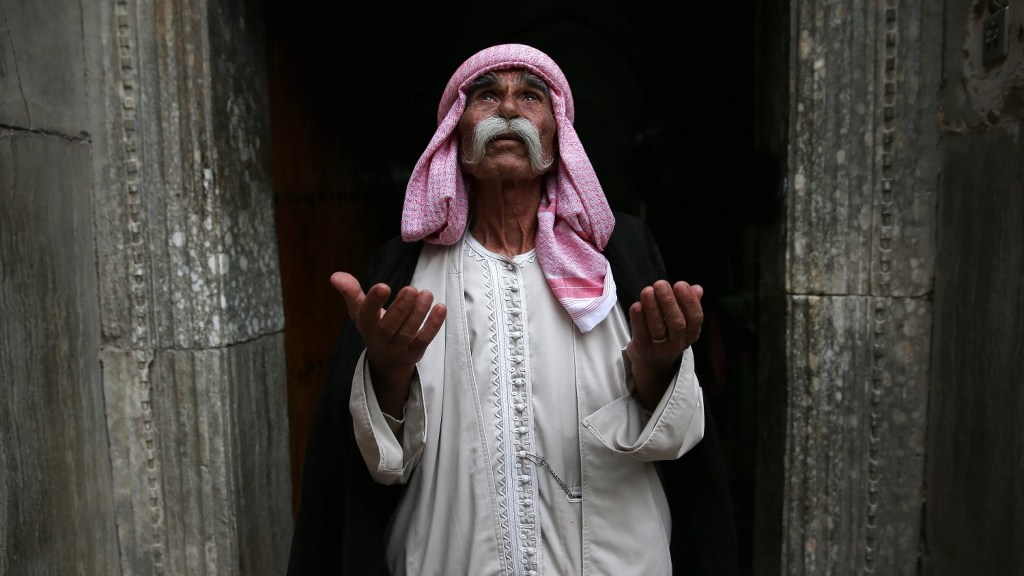
The previous article in this series highlighted the impact of USAID cuts on the vulnerable Yazidi community in Iraq. ISIS displaced Yazidis from their historic home of Sinjar in northern Iraq in 2014, killing and enslaving thousands. The jihadist group claimed that the Yazidis, whose religion has roots in ancient Mesopotamia, worshiped Satan. (The nature of the Yazidi religion will be discussed in the final article of this series.)
After US coalition forces drove back ISIS, most Yazidis remained in United Nations camps for the internally displaced. USAID was a key aid provider, facilitating access to essential services for more than 30,000 people in Sinjar. The cuts have prevented vulnerable groups like the Yazidis from accessing food and health care they need to survive, wrote Amy Hawthorne, a former Obama-era State Department official.
Top of Form
Yet the legacy of USAID in the Middle East is mixed.
American foreign policy is “deeply unpopular” in the region, Hawthorne continued, while tens of billions of dollars in assistance have failed to create stability, prosperity, or democracy.
If USAID has its critics in the region, so too does faith-based aid.
“Some [Iraqis and secular expats] are very critical of Christians,” said one aid worker serving Yazidis. CT granted him anonymity due to the sensitivity of the issue. “They accuse us of mixing help with the gospel.”
Humanitarian organizations of many varieties rushed to help the Yazidis in 2014 during their displacement. Yet large agencies like World Vision, Medair, and Doctors Without Borders began leaving in 2019 as the situation stabilized and crises multiplied around the world. Among the international groups remaining, the aid worker said, many are small and motivated by a long-term commitment to serve the Yazidi people.
For instance, the Kurdistan-based Zalal Life (highlighted in part 1) provides food distribution, vocational training, and medical services to three Yazidi camps and dozens of villages in the northern Iraqi governorate of Duhok. Other Yazidis are displaced to Iraq’s Nineveh valley, bordering Syria.
Ashty Bahro, who founded the Christian group in 2007, has never received USAID or UN funding. But this would not be a problem in Kurdistan, he explained, because unlike many Arabs in the Middle East, most Kurds love America.
Christian foundations and church support fund Zalal Life operations, he said, which recently included the repair of 100 tents left leaking in the wake of Trump’s budget cuts. And his two medical clinics are now serving twice as many patients as before, with three times the demand.
Bahro said the aid work is separate from his church ministry. He is also…
This article was originally published at Christianity Today on July 2, 2025. Please click here to read the full text.
 Jayson Casper