Categories
Christianity Today Middle East Published Articles

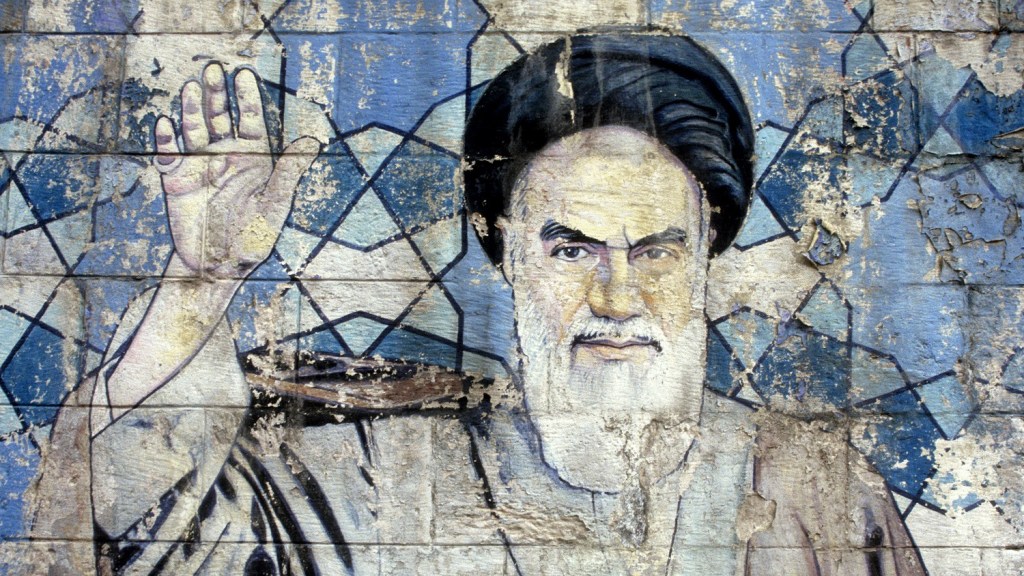
A Marxist and an Ayatollah Shaped Iran’s Islamic Republic

Kaveh Kazemi / Contributor / Getty

(This is part four of a four-part series on Shiite Islam and the Iranian regime. Please click here to read parts one, two, and three.)

While the first three parts of the series explored the history of Shiite Islam and how the lack of an earthly imam formed Shiite political culture, today we look at modern Iran and the rise of the Islamic republic.

Although other Shiite sects exist, Iran adopted the Twelver faith—based on a line of 12 imams. The last of these disappeared, and in the centuries that followed, the sect waited for the Twelfth Imam to return as Mahdi, a messiah-type figure, and establish global Islamic governance. In his absence, Shiites submitted to political authority without admitting its ultimate legitimacy.

Something began to shift in mid-19th century Iran as Western influence seeped into the still-Shiite but increasingly secular monarchy. In 1890, the shah granted an English business monopoly over the local tobacco industry, and in response, the masses protested the blow to national sovereignty and their personal economic interests.

Sitting at home, a leading Twelver scholar then issued a fatwa (legal opinion) declaring that continuing to smoke represented a war against the Twelfth Imam himself. The wave of support for the fatwa drove the shah to reverse his policy, and clerics began to sense their secular influence. Five years later, some joined the push for a national constitution.

Most clerics stayed quiet, however, focusing on ordinary religious affairs. But decades later in the 1960s, frustration with an unpopular shah led Ali Shariati, a Paris-educated sociologist from a clerical family, to apply a Marxist reading to the story of Hussein, the grandson of the prophet Muhammad.

Hailed as “Lord of the Martyrs,” Hussein gathered a small contingent of faithful followers and set out from Medina, the city of Muhammad in today’s Saudi Arabia, to oppose the unjust caliph who ruled from Damascus, Syria. Along the way in Karbala, Iraq, the caliph’s army intercepted Hussein’s approach, and a siege ensued. After ten days of negotiation, the army killed Hussein and his supporters.

The standard Twelver narrative held that as an imam, Hussein had divine foreknowledge of the massacre yet went to his death anyway. Faithful Shiites treated it as a redemptive act compensating for the failure of their ancestors to follow the imam. A Shiite tradition quotes Muhammad as saying, “[Hussein] shall die for the sake of my people.”

By visiting Hussein’s shrine and lamenting during the yearly commemoration of Ashura, they seek fulfillment of another traditional saying: “A single tear shed for Hussein washes away a hundred sins.” Extreme Shiites will even whip themselves with ropes or chains to demonstrate their remorse.

Shariati pushed back on that interpretation, calling for a “Red Shiism” that returned the faith to an activist posture against oppression and away from the “Black Shiism” of mourning. Shariati said Hussein had died valiantly. Though he had failed, in imitation Shiites might yet succeed in taking down the unjust shah. Shariati popularized a new phrase to remember: Every day is Ashura. Every land is Karbala.

The clergy…

This article was originally published at Christianity Today on July 11, 2025. Please click here to read the full text.

Categories
Christianity Today Middle East Published Articles

Shiites Await a Savior. How Should They Govern Now?

HUSSEIN FALEH / Contributor / Getty

(This is part three of a four-part series on Shiite Islam and the Iranian regime. Please click here to read parts one and two.)

The previous articles centered on the origins of Shiite Islam and its political history to examine the Shiite basis for Iran’s vision of government, one that is based on the central concept of wilayat al-faqih, translated literally as “guardianship of the jurist,” meaning the rule of a sharia expert. 

A brief recap: The two primary theological concerns of Shiism are Islamic justice and leadership, both represented in the figure of the imam. The large majority of Shiites, including most in Iran, are called Twelvers since they follow the line of 12 imams beginning with Ali, Muhammad’s cousin, whom they believe should have immediately inherited the prophet’s political position—but was wrongly denied.

Top of Form

Iran returned Shiites to power. Prior to the Islamic Republic, the ruling shah belonged to the sect but was a secular and modernizing leader. But does the restoration of religious government honor or betray the Shiite heritage? To evaluate, we will now examine the end of the lineage of imams and the two rare instances when Twelver dynasties ruled in Iran—without a rightful imam.

Ali did eventually lead the Islamic community as the fourth caliph, and Sunni Muslims agree his governance was just. Yet when civil war and assassination ended Ali’s rule, Sunnis controlled the empire and often persecuted Shiites as rival claimants to Muhammad’s mantle. The imams counseled patience to the Shiite community, knowing they were a vulnerable political minority. They focused on religion, guiding their followers in the right understanding of Islam.

But in AD 874, the Twelfth Imam, a five-year-old boy, disappeared.

This threw the Twelver community into confusion, and many drifted toward a rival Shiite sect called Ismailism, which had broken off from the Twelvers in AD 765 and ruled a powerful dynasty from Cairo. But Twelvers said that the child did not simply vanish but that Allah had preserved his life in occultation.

In astronomy, the term refers to one celestial body passing in front of another and blocking its view. Here Shiites said that Allah was hiding the imam from public view—especially from the Sunni authorities—until he could grow up and restore Shiites to Islamic political leadership. In the immediate aftermath, the treasurer of the deceased 11th imam continued to collect the Shiite tithe and answer believers’ questions, claiming to communicate with the child in secret. After nearly 70 years passed without the imam’s reappearance, this “minor” (or short-term) occultation gave way to a “major” occultation that lasts to this day.

Twelver scholars held that…

This article originally published at Christianity Today on July 10, 2025. Please click here to read the full text.
Categories
Christianity Today Middle East Published Articles

Imam’s the Word

HUSSEIN FALEH / Contributor / Getty

(This is part two of a four-part series on Shiite Islam and the Iranian regime. Please click here to read part one.)

The previous article introduced the Shiite concept of justice through Ali ibn Abi Talib, cousin of Islam’s prophet Muhammad. Ali is a linchpin for understanding the difference between Sunni and Shiite Islam, the former representing the majority of Muslims in the world and the latter representing the majority in Iran. In 1979, Iran led a revolution that resulted in the world’s only Shiite government, establishing wilayat al-faqih, the “guardianship of the jurist,” meaning the rule of an expert scholar in sharia law.

This article will continue our examination of Shiite history, starting with the way Shiites see the Quran as containing both literal commands and mystical values. Shiites say it takes spiritual insight to understand the Quran correctly. And there are a multitude of traditions—the Sunna, from which Sunnis take their name—describing what Muhammad said and did.

Sunni scholarship recognizes many of these reports as authentic and others as uncertain or outright invented to support a political cause. They exist in the thousands, and although the standards of determining authenticity are internally rigorous, the task is a human endeavor.

Shiites say the Sunni criteria are necessarily insufficient. They believe proper Islamic leadership requires supernatural insight passed directly from Muhammad to his offspring—those who knew him best. Ali married the prophet’s daughter Fatimah, and they had two sons, Hasan and Hussein. Recall that Ali was assassinated in an Islamic civil war and leadership passed into Sunni hands. In AD 680, Hussein led a revolt against Yazid, the sixth caliph, whom many Sunnis consider impious. Yazid’s army slaughtered Hussein with his small contingent in Iraq, marking another blow to Shiites while reinforcing…

This article was originally published at Christianity Today on July 9, 2025. Please click here to read the full text.

Categories
Christianity Today Middle East Published Articles

How Iran Became an Islamic Republic

NurPhoto / Contributor / Getty

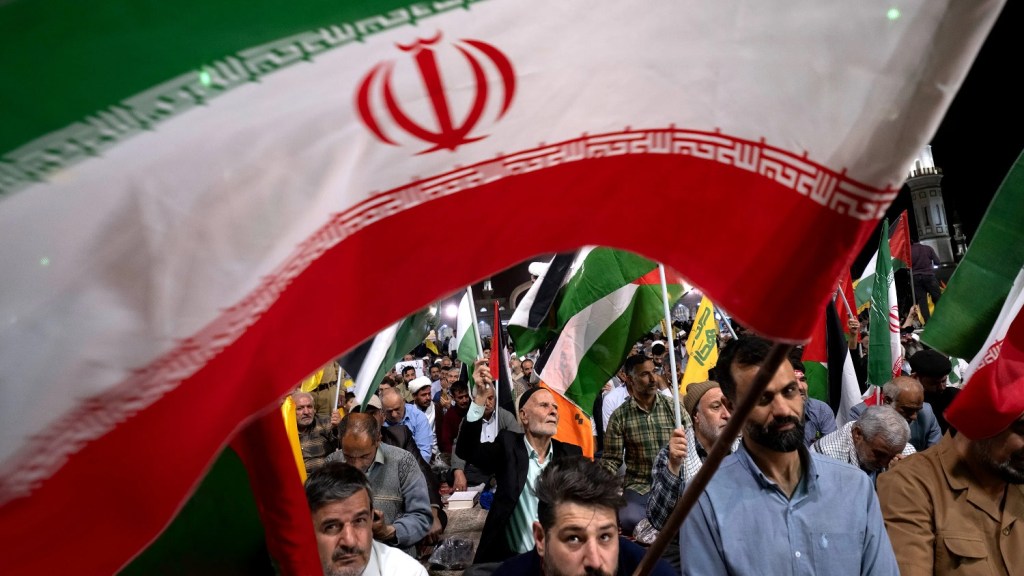
When asked last month about his goals in attacking Iran, Israeli prime minister Benjamin Netanyahu stated that he sought to stop a nuclear threat. Yet he also expressed hope for a regime change.

“The decision to act,” he said, “is the decision of the Iranian people.”

Although Iranian sentiment is hard to measure, some surveys suggest widespread disillusionment with the country’s rulers. According to the nonprofit Freedom House, Iran ranks No. 20 on its list of the least-free nations in the world. But if Iranians were free to decide, on what basis would they decide what is right?

Shiite Islam offers Iranians a standard it views as just. Iran calls itself an Islamic republic. Many Iranians may appreciate the Western understanding of human rights. But long before Freedom House existed, their sect prized two concepts through which the Shiite people can judge their governments: justice and leadership.

Najam Haider, assistant professor of religion at Columbia University, calls these the core theological beliefs of Shiite Islam. Iran’s constitution purports to enshrine them via the judiciary in wilayat al-faqih, the “guardianship of the jurist.” In plain terms, the religious scholar, an expert in sharia law, is to rule and ensure fidelity to Islam. Iranians can theoretically vote politicians out of office but the chief religious scholar is in charge. He can be removed from his post—but only by fellow religious scholars.

To understand the Iranian government we need to understand Shiite political history. This article is the first in a four-part survey, based on Haider’s Shi’i Islam, Vali Nasr’s The Shia Revival, Mark Bradley’s Iran and Christianity, and interviews with Shiite experts.

Part one is the origin story, describing why Shiites view themselves as cheated out of Muslim leadership. Part two looks at how different branches within the sect responded to this loss. Although Shiite rule is historically rare, part three considers how two premodern dynasties shed light on later developments in Iran. And part four describes two Iranian personalities who played a key role in politicizing the Shiite faith.

The starting point: Politics is never far from Islam, as the Muslim prophet Muhammad also became a head of state. But for centuries, most Shiites waited for divine intervention on their behalf, and did not push to create a government themselves.

Iran is one of only four majority Shiite countries in the world—Iraq, Bahrain, and Azerbaijan are the others—but is unique as the only nation with specifically Shiite governance. The global majority Sunni population may admire Iran for its centrality of religion, its anti-Western posture, or its opposition to Israel. But Sunnis reject the theological basis of wilayat al-faqih.

This article will focus on what Shiites think. An anecdote about…

This article was originally published at Christianity Today, on July 8, 2025. Please click here to read the full text.