Categories
Christianity Today Europe Published Articles

Azerbaijan Added to US List of Religious Freedom Offenders

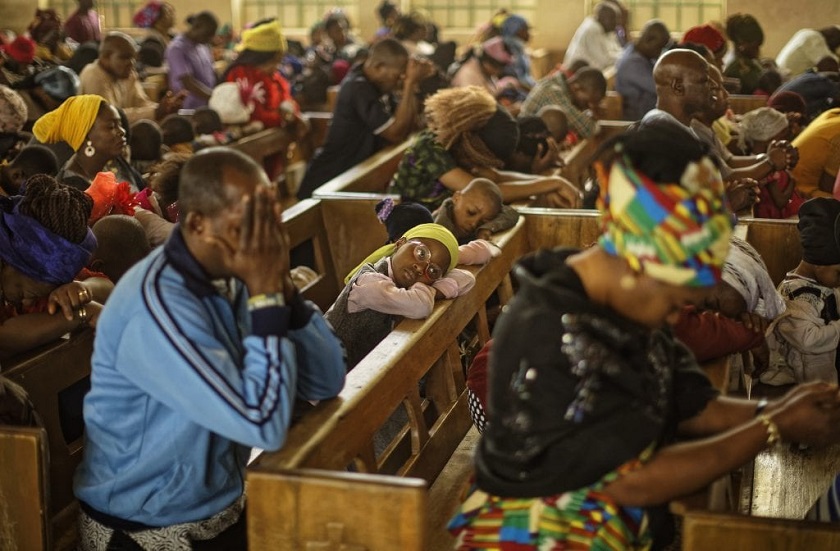
Image: Mozar / Getty / Edits by CT

For the first time, the United States has recognized Azerbaijan as a violator of religious freedom.

Inclusion on the State Department’s second-tier Special Watch List (SWL) subjects the oil-rich Shiite Muslim–majority nation to the possibility of economic sanctions.

The US Commission on International Religious Freedom (USCIRF) has called for the Caucasus nation’s censure each year since 2013. Created by the 1998 International Religious Freedom Act (IRFA), USCIRF’s bipartisan yearly report evaluates “systematic, ongoing, and egregious” violations independent of US foreign policy concerns and tracks government implementation of its recommendations.

Complicating any consequences, Azerbaijan aligns with US foreign policy in certain areas: It cooperates closely with Israel, is aligned against Iran, and agreed to increase oil exports to Europe in the wake of Russia’s invasion of Ukraine.

In a brief statement, US secretary of state Antony Blinken kept unchanged all other 2022 designations mandated by the IRFA. Azerbaijan joins Algeria, the Central African Republic, Comoros, and Vietnam on the SWL, cited for “engaging in or tolerating severe violations of religious freedom.”

Twelve nations—China, Cuba, Eritrea, Iran, Myanmar, Nicaragua, North Korea, Pakistan, Russia, Saudi Arabia, Tajikistan, and Turkmenistan—again received designations as first-tier Countries of Particular Concern (CPC).

USCIRF “welcomed” the designation of Azerbaijan. But it stated there was “no justification” for failing to follow its advice to also label India and Nigeria as CPCs.

India was first recommended from 2002–2004 as a CPC, from 2010–2019 for the SWL, and then again from 2020 onward as a CPC. Nigeria was recommended for the SWL from 2003–2008, and as a CPC since 2009.

While the State Department has never included India, former president Donald Trump listed Nigeria on the SWL in 2019 and as a CPC in 2020. President Joe Biden removed it entirely the following year.

USCIRF called for a congressional hearing over these omissions and further criticized the State Department for issuing sanction waivers for CPC violators Pakistan, Saudi Arabia, Tajikistan, and Turkmenistan.

In a statement to CT, Lilieth Whyte, public outreach chief of the State Department’s Office of International Religious Freedom, cited three main factors.

Azerbaijan’s laws place “onerous registration requirements” on religious groups to register nationally, restricting them further in their right to worship freely and select their own clergy. The government physically abuses, arrests, and imprisons religious activists, she added, while conscientious objectors are not permitted to serve their country in accordance with their beliefs.

Not mentioned was Azerbaijan’s months-long blockade of its Armenian-populated enclave of Nagorno-Karabakh—which Armenians call “Artsakh”—which culminated in an invasion last September that displaced more than 100,000 people.

At the time, Blinken “urged” Azerbaijani president Ilham Aliyev to “immediately cease military actions.” In November, assistant secretary of state James O’Brien told a congressional committee that “there cannot be ‘business as usual’” in US relations.

But last December, the State Department press service clarified that cessation of interaction with Azerbaijan would be…

This article was originally published at Christianity Today, on January 8, 2024. Please click here to read the full text.
Categories
Christianity Today Published Articles Religious Freedom

How 1 in 4 Countries Restrict Religious Conversion

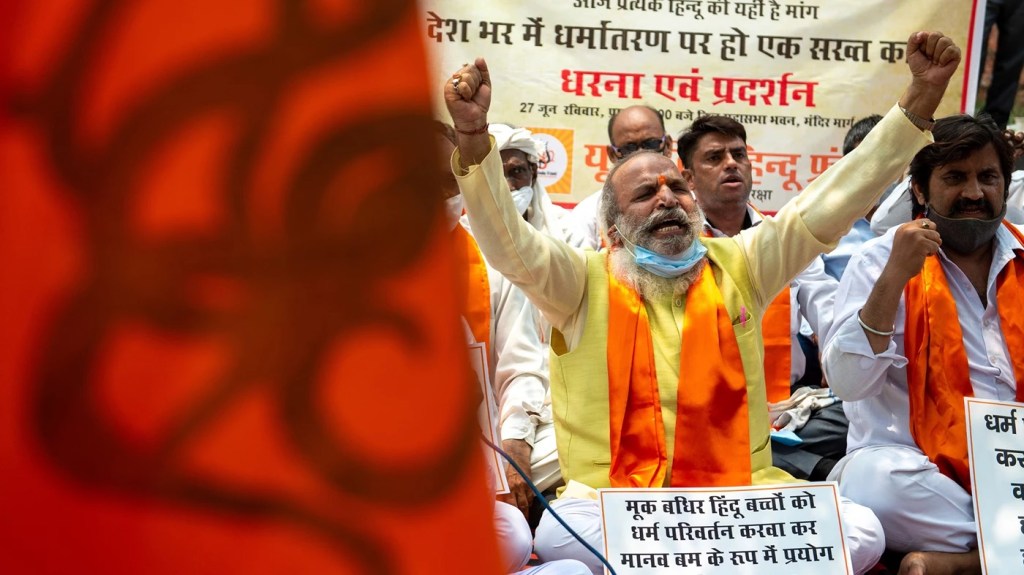
Image: Pradeep Gaur / AP Images

To share your faith—or change it to another—first check your citizenship.

The US Commission on International Religious Freedom (USCIRF) has released a new report on anti-conversion laws around the world. Providing the legal text for 73 separate laws, the compendium notes that 1 in 4 nations (46 total) restrict the right of its people to either adopt or propagate a religion.

“The right to convert from one religion or belief to another, or to no religion or belief at all, is central to [the] protection for religious freedom,” said Susie Gelman, a USCIRF commissioner. “And in countries with anti-conversion laws, religious minorities tend to be broadly targeted for harassment, assault, arrest, and imprisonment.”

Gelman, a three-term president of the Jewish Federation of Greater Washington, cited the example of pastor Keshav Acharya, sentenced by Nepal to one year in prison for allegedly attempting to convert Hindus to Christianity. But he is not the only example.

Last week in India, 9 Christians were arrested for allegedly evangelizing the poor.

Last summer in Iran, 106 Christians were arrested for their religious beliefs.

Last spring in Libya, an American Christian was arrested for alleged missionary activity. The USCIRF report grouped the laws into four categories. First, anti-proselytizing laws restrict witnessing of one’s faith in 29 nations, including in Indonesia, Israel, and Russia.

In Morocco, for example, it is illegal…

This article was originally published at Christianity Today, on December 8, 2023. Please click here to read the full text.
Categories
Christianity Today Published Articles Religious Freedom

Religious Freedom Violations Go West

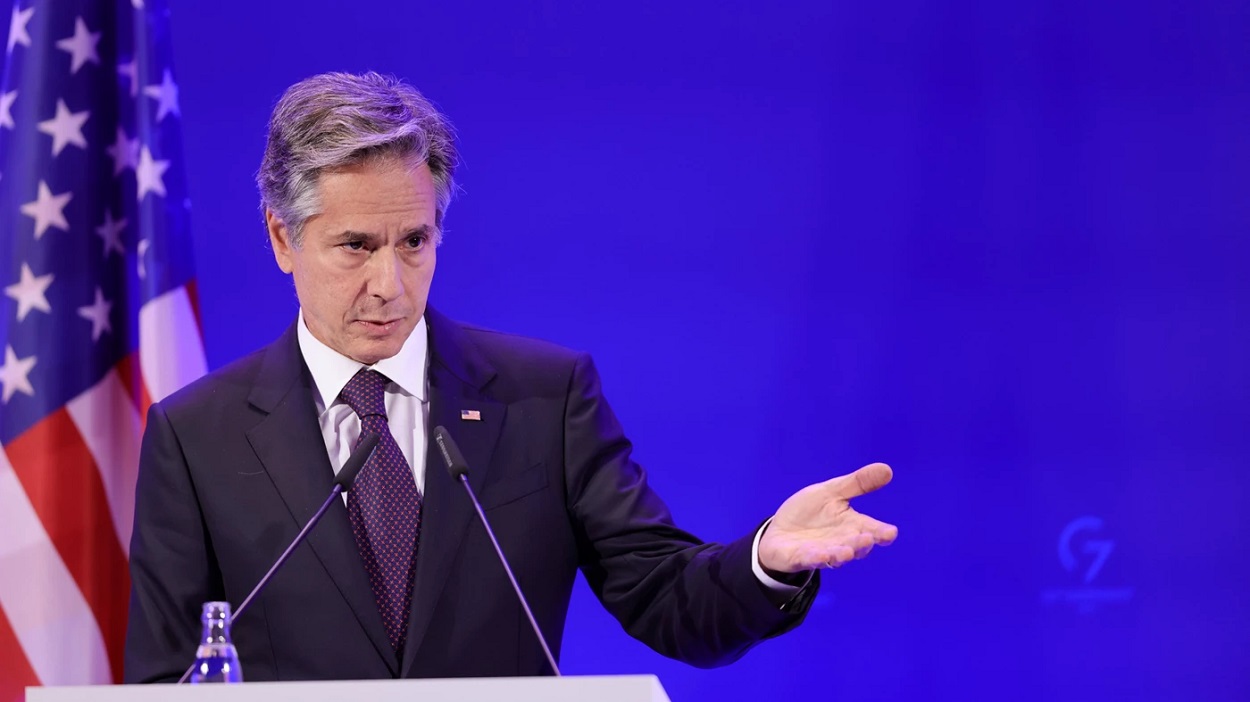
Image: STR / AFP via Getty Images

While longstanding offenders in Asia and the Middle East remain epicenters of persecution, Latin America and Europe occupy more space in an annual chronicle by the US Commission on International Religious Freedom (USCIRF).

For the first time, Cuba and Nicaragua are labeled Countries of Particular Concern (CPC), according to the independent watchdog. Its 2023 report also makes special mention of the religious rights of indigenous communities in Mexico, Chile, and Colombia. And France, Germany, and Ukraine are highlighted as examples where minority believers have suffered for their faith.

The report’s greatest emphasis, however, is monotonously familiar.

The commission recommends the US State Department relist Burma (Myanmar), China, Eritrea, Iran, North Korea, Pakistan, Russia, Saudi Arabia, Tajikistan, and Turkmenistan as CPCs, in addition to Cuba and Nicaragua. Afghanistan, India, Nigeria, Syria, and Vietnam were recommended for additional designation.

Violations in these nations are “systematic, egregious, and ongoing.”

USCIRF chair Nury Turkel highlighted Iran in his opening remarks. The nation brutally represses its minority communities, he said, and this past year cracked down on protestors peacefully demonstrating against mandatory hijab laws.

Mahsa Amini, who died in custody, was the feature image of the 2023 report’s cover.

“USCIRF is disheartened by the deteriorating conditions for freedom of religion or belief in some countries,” said Turkel. “We strongly urge the Biden administration to implement USCIRF’s recommendations.” These include…

This article was originally published at Christianity Today, on May 2, 2023. Please click here to read the full text.

Categories
Christianity Today Published Articles Religious Freedom

US Commission ‘Outraged’ By Omitted Offenders of Religious Freedom

Image: Andreas Rentz / Getty Images

The United States has expanded its list of the world’s worst violators of religious freedom.

Two new nations—Cuba and Nicaragua—were added on Friday to the State Department’s list of Countries of Particular Concern (CPC). Two others—Vietnam and the Central African Republic (CAR)—were added to its Special Watch List (SWL). And one new organization was added to its list of Entities of Particular Concern (EPC): Russia’s mercenary Wagner group, due to its cited offenses in CAR.

“Around the world, governments and non-state actors harass, threaten, jail, and even kill individuals on account of their beliefs,” stated Antony Blinken, US Secretary of State. “The United States will not stand by in the face of these abuses.”

His own watchdog, however, is unconvinced.

The US Commission on International Religious Freedom (USCIRF) tweeted its “outrage” over the non-inclusion of Nigeria and India. It is “inexplicable,” the independent bipartisan organization continued, given the State Department’s own reporting.

In June, Blinken released the US government’s annual Report on International Religious Freedom. Mandated by the 1998 International Religious Freedom Act (IRFA), the report chronicles violations in every nation of the world, whether by governmental or societal actors, measuring also the local legal frameworks.

The sections on Nigeria and India were particularly lengthy.

“They each clearly meet the legal standards for designation,” stated Nury Turkel, USCIRF chair. “USCIRF is tremendously disappointed that the Secretary of State did not … recognize the severity of the religious freedom violations.” This past year, USCIRF issued…

This article was originally published at Christianity Today on December 5, 2022. Please click here to read the full text.
Categories
Christianity Today Published Articles Religious Freedom

3 Fewer Hot Spots for Trump-Biden Handover on Religious Freedom

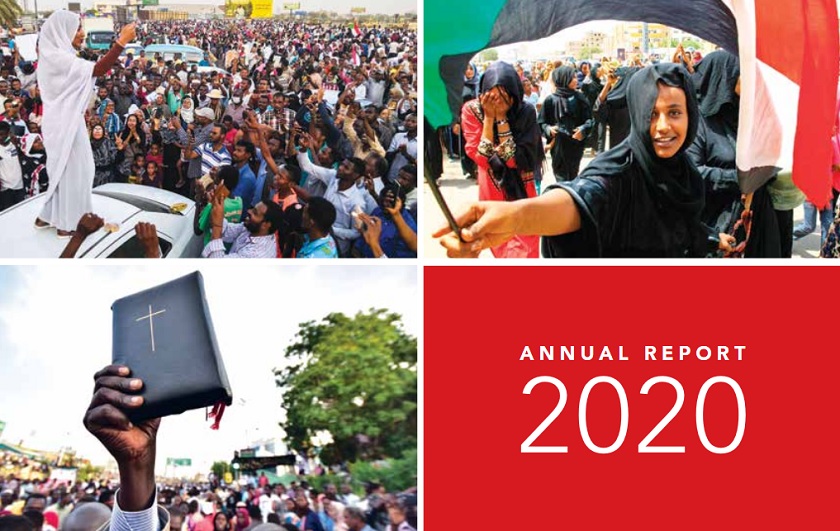
Image: USCIRF, from the cover of their 2021 report

As a new administration takes over leadership of America’s commitment to religious freedom worldwide, Gayle Manchin believes President Joe Biden is “very aware” of its importance.

But given global developments, the watchdog work of the US Commission on International Religious Freedom (USCIRF), which she chairs, sometimes feels like “treading water.”

Others agree. For example, an 800-page study released this week by Aid to the Church in Need concludes that 1 in 3 nations of the world do not respect religious freedom.

And in 95 percent of these, the situation is growing worse.

USCIRF, created to provide recommendations to the US government, released its 22nd annual report today. Its analysis identifies significant problems in 26 countries, down from 29 last year. It also marked a surge in worldwide antisemitism.

Following the commission’s advice, last December then-Secretary of State Mike Pompeo announced the designation of Burma [Myanmar], China, Eritrea, Iran, Nigeria, North Korea, Pakistan, Saudi Arabia, Tajikistan, and Turkmenistan as a Country of Particular Concern (CPC). USCIRF’s 2021 report recommends that new Secretary of State Anthony Blinken add…

Last year, Nigeria was added as a CPC by the State Department. How did USCIRF’s work contribute to the decision?

USCIRF has a unique ability to focus on religious freedom, while the State Department looks at the relationship with a country in balance. But they take our work very seriously, and know the research and credibility behind it. They watch, and when the information is overwhelming—and when they are comfortable—they will join us in a recommendation.

But I never question when they don’t. There may be details going on that we are not aware of.

So how do you interpret the State Department additions of Cuba and Nicaragua to the SWL? Maybe they are not the most egregious violators of religious freedom, compared to others on the USCIRF list?

Both of these countries are continuing to trend worse. When we are able to travel again, these are nations we will reach out to for a visit, to get a clearer picture of what is going on. There is always a political aspect, from the government’s perspective.

But now that Cuba is without a Castro for the first time, there are things happening that may change. Of course, it could also be toward the negative, so we will continue to monitor.

What nations generated the most controversy and discussion among USCIRF commissioners?

This article was originally published at Christianity Today on April 21, 2021. Please click here to read the full text.
Categories
Americas Christianity Today Published Articles

Report: ‘Tremendous Progress’ Ahead for Religious Freedom Worldwide

USCIRF 2020

This article was first published at Christianity Today, on April 28, 2020.

A new report aims to “unflinchingly criticize the records of US allies and adversaries alike” on religious freedom.

And there’s a lot to report, with more headlines each month confirming the Pew Research Center’s 10-year analysis that government restrictions and social hostilities involving religion have reached record levels worldwide.

Today’s 21st annual report by the US Commission on International Religious Freedom (USCIRF) identifies significant problems in 29 countries—but sees “an upward trajectory overall.”

“Our awareness is going to grow greater, and the problem will appear more pronounced,” USCIRF chair Tony Perkins told CT. “But as we continue to work on it, I think we will see tremendous progress in the next few years if we stay the present course.”

Created as an independent, bipartisan federal commission by the 1998 International Religious Freedom Act, USCIRF casts a wider net than the US State Department, which annually designates Countries of Particular Concern (CPC) for such nations’ violations of religious freedom, or places them on a Special Watch List (SWL) if less severe.

Last December, Secretary of State Mike Pompeo announced CPC status for Burma, China, Eritrea, Iran, North Korea, Pakistan, Saudi Arabia, Tajikistan, and Turkmenistan.

USCIRF now recommends adding India, Nigeria, Russia, Syria, and Vietnam.

And where the State Department put only Cuba, Nicaragua, Sudan, and Uzbekistan on the watch list, USCIRF recommends also including Afghanistan, Algeria, Azerbaijan, Bahrain, Central African Republic, Egypt, Indonesia, Iraq, Kazakhstan, Malaysia, and Turkey.

USCIRF’s mandate is to provide oversight and advice to the State Department. Aiming to make its recommendations more easily accessible to policymakers, this year’s report limits country chapters to two pages each and adopts the same evaluative criteria as the State Department.

To qualify, a nation must engage in or tolerate “systematic, ongoing, and egregious” violations of religious freedom. CPC status requires all three descriptors, while SWL status requires two.

In previous reports, USCIRF used a “Tier Two” category requiring only one qualifier. As a result, Laos is no longer listed.

Following 11 commission field visits, 5 hearings, and 19 other published reports, USCIRF’S 2020 annual report calls attention to religious freedom violations against all faiths, including:

  • 1.8 million Muslims in Chinese concentration camps
  • 171 Eritrean Christians arrested while gathering for worship
  • 50,000 Christians held in North Korean prison camps
  • 260 incidents of religious freedom violations in Cuba
  • 489 raids conducted against homes of Jehovah’s Witnesses in Russia
  • 910,000 Rohingya Muslim refugees in Bangladesh
  • 1 million Muslim residents excluded from the National Register of Citizens in India
  • 37 Shi’a Muslim protesters executed in Saudi Arabia
  • 5,000 Baptist calendars burned by authorities in Turkmenistan

Perkins spoke with CT about how nations move up (e.g., India and Nigeria) or down (e.g. Sudan and Uzbekistan) between lists, why the State Department doesn’t accept all of USCIRF’s recommendations (but should), and whether he has hope for the future with violations at “a historical high in modern times.”

Roughly how many countries are on your studied list?

The ones that are listed are the ones that we look at. There has been discussion if we should add Venezuela. There have been a couple of others we have considered.

Examining “Country X,” how do you evaluate if and where it belongs on your lists?

First, we begin with the statutory definition of a Country of Particular Concern (CPC). Our mandate is to identify countries with systematic, ongoing, and egregious violations of religious freedom—whether it engages in or tolerates such behavior.

One thing to be cautious of is that we don’t rank countries. It is not a comparison. Country X and Country Y may both be CPC-listed, but be miles apart on the egregious nature of their violations. We look at each country separately.

It is based upon reporting that we can validate and verify; visits that we make to these countries; and hearings we hold with expert witnesses to come in and testify. It is a combination of factors, and quite frankly it is subjective.

We try to make it as objective as possible, but it is hard to quantify some things—though we do so to the degree we can.

What happens if you disagree about the designations?

The nine commissioners…

Please click here to read the full article at Christianity Today.

Categories
Christianity Today Middle East Published Articles

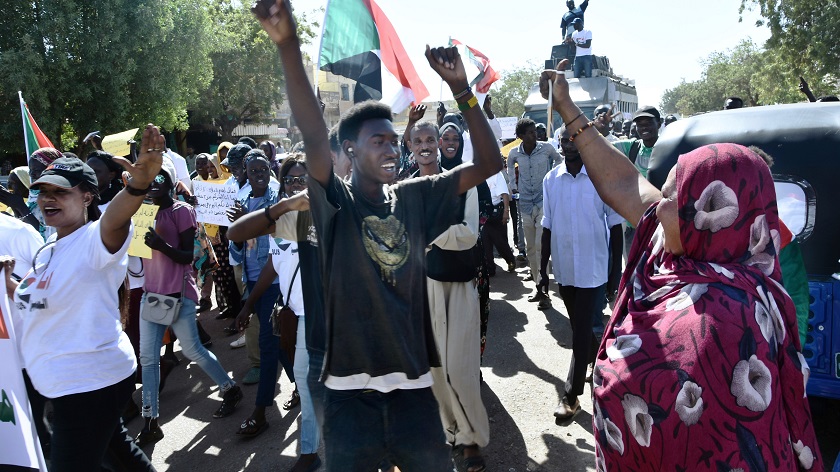
Sudan Lets Christians March for Jesus Again

Religion Sudanese Christians
In this Monday, Dec. 23, 2019 photo, Christians march through the streets to celebrate the birth of Jesus in Khartoum Bahri, Sudan, north of the capital Khartoum. More than eight months after the army forced out long-ruling autocrat Omar al-Bashir, who upheld harsh interpretations of Islamic laws, Sudanese Christians are hoping for more religious freedom. (AP Photo/Mohamed Okasha)

This article was first published at Christianity Today, on December 28, 2019.

“Hallelujah! Today, we are happy that the Sudanese government has opened up the streets for us so we can express our faith,” said Izdhar Ibrahim, one of the marchers. Some Christians had been frightened before “because we used to encounter difficulties.”

The changes started in 2011, after South Sudan gained independence from Sudan following a long war and a referendum. South Sudan is mostly Christian and animist, a belief that all objects have a spirit. Al-Bashir’s government then escalated its pressure on the remaining Christians, human-rights campaigners and Christians say.

Al-Bashir, who came to power in an Islamist-backed military coup in 1989, failed to keep the peace in the religiously and ethnically diverse country.

Noah Manzul, one of the church elders, said the march was treated almost as if it were a “crime.”

Its return is “an expression of religious freedom,” Manzul said. “We can live our lives with ease.”

Manzul’s social work with homeless children and orphans got him into trouble under al-Bashir, when he was accused of trying to convert the children to Christianity, an allegation he denies. Activities like singing hymns in the teeming market outside the church were stopped, he said.

To be sure, some Christians said they were not impacted negatively by al-Bashir’s government, and officials at the time disputed that the government targeted Christians.

But Suliman Baldo, senior adviser at the Enough Project, which supports peace and an end to atrocities in Africa’s conflict zones, said the ultimate goal under al-Bashir was “to limit the influence of the church.” Under his rule, Christian church properties could be seized, Baldo said, adding some churches were demolished, and some preachers were arrested.

During past holiday seasons, many recalled, posters would appear on the streets warning against celebrating with the kofar, or infidels, a reference to Christians.

Now, the constitutional declaration that guides this transitional period no longer refers to Islam as the primary source of legislation in Sudan. A Christian woman was appointed to the nation’s interim ruling Sovereign Council.

And December 25 was declared…

Please click here to read the full article at Christianity Today, to which I contributed additional reporting.

Categories
Africa Christianity Today Published Articles

11 Nigerian Christians Executed in ISIS Christmas Video

Nigerian Christians
(Credit: AP Photo/Ben Curtis.)

This article was first published by Christianity Today on December 28, 2019.

In another filmed massacre, 11 Nigerian Christians were executed by the Islamic State West African Province (ISWAP) over the Christmas holiday.

Wearing the orange jumpsuits made familiar by similar executions of Egyptian and Ethiopian Christians in Libya, the first Nigerian victim was shot in the head by the black-clad terrorists who then slit the throats of the remaining ten. It is understood to be the largest group killed by ISWAP, a Boko Haram splinter group, so far.

“This message is to the Christians in the world,” stated the 56-second propaganda video, released December 26, in both Arabic and Hausa, according to The New York Times.

“Those who you see in front of us are Christians, and we will shed their blood as revenge for the two dignified sheikhs.”

The reference is to Abu Bakr al-Baghdadi, the former ISIS caliph killed by US troops in an October raid in Syria, and Abu al-Hassan al-Muhajir, his purported successor, who was killed the next day.

The video offered no information about the victims, other than that they were recently seized in Nigeria’s northwest Borno state. But an earlier video was released by ISWAP in which captured aid workers appealed to Nigerian President Muhammadu Buhari, as well as to the Christian Association of Nigeria (CAN).

Four aid workers were killed by ISWAP earlier this month. Dozens of others are believed to still be in captivity, including Leah Sharibu, a teenage girl kidnapped almost two years ago whose perseverance under pressure has inspired Nigerian Christians.

The International Crisis Group estimates the jihadist group consists of between 3,500 and 5,000 fighters.

“These agents of darkness are enemies of our common humanity, and they don’t spare any victim, whether they are Muslims or Christians,” stated Buhari, according to al-Jazeera.

Nigeria’s population of 200 million is evenly divided between Muslims and Christians.

Muslim victims have been many, agreed CAN in an earlier statement. But it stated the widespread killing in Nigeria’s north has predominately targeted Christians, who make up 95 percent of those currently detained by jihadists.

“The government has been paying lip service towards securing their freedom,” stated CAN, mentioning in particular…

Please click here to read this article at Christianity Today.