Categories
Christianity Today Middle East Published Articles

ISIS Victims Welcome Christian Help, Not Christian Conversion

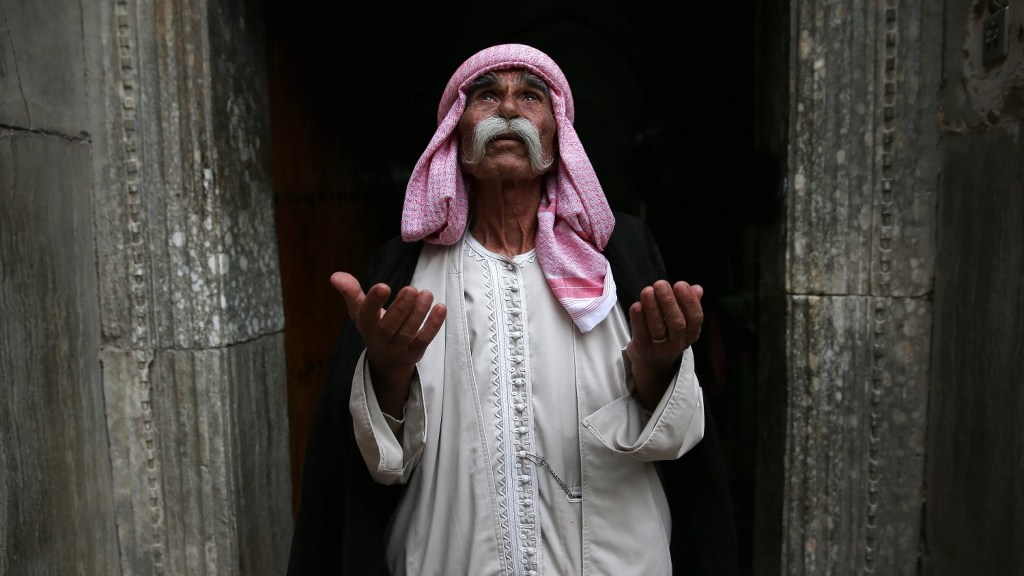
John Moore / Getty

The previous article in this series highlighted the impact of USAID cuts on the vulnerable Yazidi community in Iraq. ISIS displaced Yazidis from their historic home of Sinjar in northern Iraq in 2014, killing and enslaving thousands. The jihadist group claimed that the Yazidis, whose religion has roots in ancient Mesopotamia, worshiped Satan. (The nature of the Yazidi religion will be discussed in the final article of this series.)

After US coalition forces drove back ISIS, most Yazidis remained in United Nations camps for the internally displaced. USAID was a key aid provider, facilitating access to essential services for more than 30,000 people in Sinjar. The cuts have prevented vulnerable groups like the Yazidis from accessing food and health care they need to survive, wrote Amy Hawthorne, a former Obama-era State Department official.

Top of Form

Yet the legacy of USAID in the Middle East is mixed.

American foreign policy is “deeply unpopular” in the region, Hawthorne continued, while tens of billions of dollars in assistance have failed to create stability, prosperity, or democracy.

If USAID has its critics in the region, so too does faith-based aid.

“Some [Iraqis and secular expats] are very critical of Christians,” said one aid worker serving Yazidis. CT granted him anonymity due to the sensitivity of the issue. “They accuse us of mixing help with the gospel.”

Humanitarian organizations of many varieties rushed to help the Yazidis in 2014 during their displacement. Yet large agencies like World Vision, Medair, and Doctors Without Borders began leaving in 2019 as the situation stabilized and crises multiplied around the world. Among the international groups remaining, the aid worker said, many are small and motivated by a long-term commitment to serve the Yazidi people.

For instance, the Kurdistan-based Zalal Life (highlighted in part 1) provides food distribution, vocational training, and medical services to three Yazidi camps and dozens of villages in the northern Iraqi governorate of Duhok. Other Yazidis are displaced to Iraq’s Nineveh valley, bordering Syria.

Ashty Bahro, who founded the Christian group in 2007, has never received USAID or UN funding. But this would not be a problem in Kurdistan, he explained, because unlike many Arabs in the Middle East, most Kurds love America.  

Christian foundations and church support fund Zalal Life operations, he said, which recently included the repair of 100 tents left leaking in the wake of Trump’s budget cuts. And his two medical clinics are now serving twice as many patients as before, with three times the demand.

Bahro said the aid work is separate from his church ministry. He is also…

This article was originally published at Christianity Today on July 2, 2025. Please click here to read the full text.
Categories
Christianity Today Middle East Published Articles

USAID Cuts Leave Yazidi Tents in Tatters

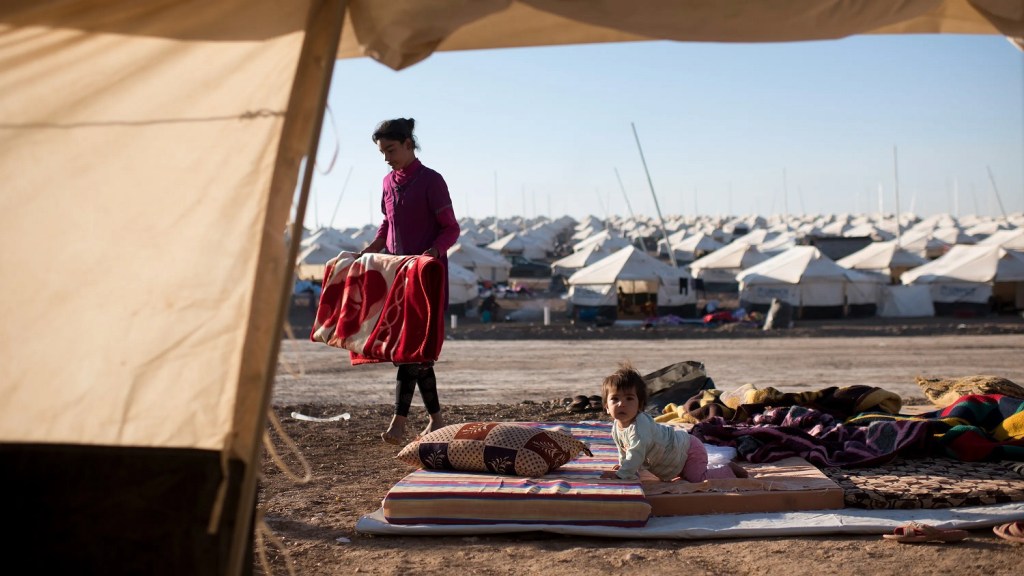
Lynsey Addario / Contributor / Getty

When Hadi Maao was five years old, his mud-brick home collapsed on him after Muslim extremists detonated car bombs in his northern Iraqi village. Seven years later, in 2014, ISIS jihadists forced his community in the district of Sinjar to flee to the mountains. Now 22, he is an asylum seeker in the Netherlands and sends a quarter of his meager earnings as a grocery shelf stocker to his family still sheltering in a United Nations camp for internally displaced Yazidis.

“Sinjar is not a place to live,” he said. “I’m afraid people are forgetting us.”

US Agency for International Development (USAID) cuts have made things worse, pausing the reconstruction of Yazidi villages and overwhelming medical centers. An evangelical organization is trying to fill the gap, while a new generation of Yazidis living aboard are seeking ways to help. In this three-part series, we will also cover the complications of Christian aid in Sinjar and explain the basics of the Yazidi religion that Maao and his people follow.

Top of Form

Maao is the youngest of four brothers and three sisters. All of his siblings currently live in Sardashti Camp in the Nineveh Valley, 12 miles east of the Syrian border. The money Maao sends home contributes to building a concrete house for his aging mother and father. They currently reside with his cousin’s family in the UN’s standard canvas tent.

At the International Religious Freedom Summit in February, Vice President JD Vance praised the first Trump administration’s action to bring aid to Yazidis and Christians “facing genocidal terror from ISIS.” Yet President Donald Trump’s executive order to freeze foreign funding and the subsequent dismantling of USAID has had a disastrous effect on the camps where Yazidis still live.

The camp is full of tattered tents that allow rain leakage, unhygienic bathroom facilities, and the threat of fire from spark-prone electricity cables, according to on-the-ground sources that CT spoke with. Cuts have halted the building of schools, community centers, and water purification units. An unused transformer, delivered prior to the stop-work order, was placed in storage.

Maao is from the village of Tel Ezer, also known as…

This article was originally published at Christianity Today on July 1, 2025. Please click here to read the full text.

Categories
Americas Christianity Today Published Articles

What Arab Leaders Think of USAID Funding Persecuted Christians

This article first published at Christianity Today on November 2, 2017.

USAID Christians
Vice President Mike Pence addresses the In Defense of Christians’ fourth-annual national advocacy summit in Washington, Oct. 25, 2017. Credit: AP, via VOA News.

Here are a few excerpts from my new article.

First, the reason:

Zalal Life distributed 300 food baskets and bottles of water. The government of Hungary donated $2 million in aid for reconstruction. The United Nations wasn’t there.

“People are not happy with the UN; they are using money for administration,” said Bahro. “The help is coming from churches and Christian organizations.”

Second, the condition:

“If the US can help Christian organizations directly, it will be good—if it can be done without discrimination,” he said.

“They must serve Muslims and other minorities also. We live together, and want to remain together in our communities.”

Third, the complication:

“Having the US transfer funds directly to persecuted Christians could be a good thing, but American politics will surely mingle in,” the Israeli Arab Christian said.

“They will want to brag about the aid to show their success, and to prove to the Christian Right that [President Donald Trump] delivers on his promises.”

Fourth, the danger:

Farouk Hammo, pastor of the Presbyterian church in Baghdad, agreed. “The bottom line is that we do not recommend direct aid from the States to Christians,” he said.

“It will agitate our Muslim brothers negatively against the Christian community.”

Fifth, the reality:

But the Jordanian leader respects Trump and is cautiously in support of the USAID policy change if done well, as it will empower the church to do the ministry.

“Maybe we will be targeted more,” he said. “But in some countries, it can’t get worse.”

Sixth, the possibility:

If USAID offered to help, Bitar would accept it—if it is not conditioned on any political agenda. He has little fear of local reaction.

“Muslims will be happy,” he said. “They like to send their children to schools run by Christians.”

Finally, the outcome:

Amid conflicting Christian reactions and unknown Muslim response, the policy change represents a new approach. Will it make things better or worse?

“Here in our area, the Kurdish Muslims trust Christians,” Bahro said. “In Arab areas, I don’t know.”

Please click here to read the full article at Christianity Today.