Categories
Christianity Today Middle East Published Articles

Flight to Egypt: How Pastor’s Wife in Gaza Church Got Out

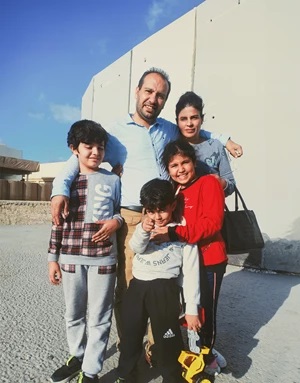
Janet Maher is out of Gaza.

The Palestinian wife of the Egyptian former pastor of Gaza Baptist Church had been sheltering in the Saint Porphyrius Greek Orthodox Church with her three children and 350 others—but not her husband. Two weeks before the October 7 Hamas terrorist attack on Israel, Hanna Maher had traveled temporarily back to Egypt, where he had to remain after the war broke out.

Despite the horrors of suffering 43 days of bombardment by herself, as CT previously reported, the family separation is the reason why Janet and her children are now safely in Egypt, reunited with Hanna. But first they had to undergo a harrowing journey that began with tearful goodbyes to a hallowed community.

“I spent weeks with these people and am broken by the experience,” Janet said. “But everyone pleaded: If you get out, tell the world about our situation.”

The death toll in Gaza exceeds 11,000, including more than 5,000 children, according to statistics released by the ministry of health in the Hamas-run enclave and last updated November 10. But save for the shrapnel and scattered remains of human carcasses flying over the walls of the church compound, little of this was known to the Christians inside.

With no television or internet and only intermittent connection to the cell phone network, Janet and her fellow sheltering Gazans knew only the daily reality of war. Most of the day was spent trying to figure out how to procure food, with the young men tasked with trips outside to the local market.

Most often, the day would begin with bombing—sending the people scurrying away from windows and doors to the center of the room. Three times a week, the priest would lead morning prayers. Frequently, they would gather for impromptu singing, simply to calm their nervous spirits. Some would read the Bible; others cried alone in the pews.

They would clean often. Dust and debris settled after every explosion, while most people suffered some form of illness—coughing, fever, stomachaches—with flies everywhere, flitting about from the corpses in the street.

With no breakfast or dinner, most daily meals consisted of lentil soup with occasional rice or macaroni. Water was seldom clean, though the clergy obtained some by trading available gasoline to the neighboring mosque, which used the fuel to run its well-pumping generator.

“Once, the priest was able to find chocolate,” Janet said. “It was like Christmas.”

But after eating around 4 p.m., the darkness settled. With no electricity, everyone moved to their mattresses for a fitful night of sleep. As 100 other people in the funeral hall of the church tucked in, Janet read Psalm 23 to her children. But she relied on the more militant realities of Psalm 91 to settle her own anxious thoughts.

A thousand may fall at your side, ten thousand at your right hand,” Janet recited. “If you say, ‘The Lord is my refuge,’ and you make the Most High your dwelling, no harm will overtake you, no disaster will come near your tent.”

She has ample personal experience to prove it. Before moving her family to the shelter, Janet left her apartment in search of food. Finding none at the market, she returned home. Five minutes later…

This article was originally published at Christianity Today on November 22, 2023. Please click here to read the full text.
Categories
Christianity Today Middle East Published Articles

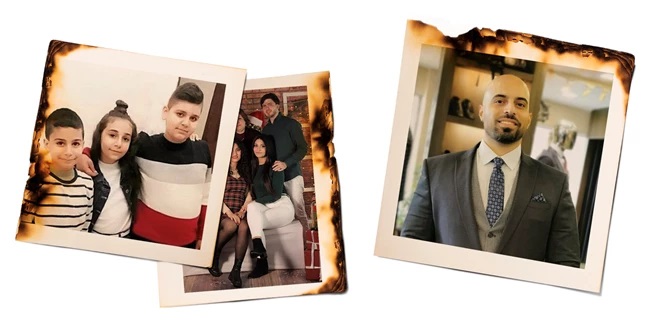
Pastor’s Family Trapped in Gaza Grieves Relatives Killed at Church

Image: Illustration by CT / Source Images: Courtesy of Hanna Maher

Trapped in Gaza, Janet Maher has not had a shower for two weeks. She feeds her three children one meal a day, often no more than bread and cheese.

Her cousin perished from damage caused by an Israeli missile, shielding his seven- and five-year-old boys from the collapsing wall at St. Porphyrius Orthodox Church. The two families had been sheltering together, and the younger boy was friends with her son in kindergarten.

But amid the horrors of life under siege, perhaps the worst is this: Janet’s husband is trapped in Egypt.

“I feel like Moses’ mother and sister after they put him in the bulrushes,” said Hanna Maher, former pastor of Gaza Baptist Church. “All I can do is watch from afar.”

Born in Sohag in Upper Egypt, Maher pastored the evangelical congregation from 2012–2020. Single upon arrival, he married Janet, daughter of an Orthodox father and Baptist mother, during his first year of service in Gaza. Though he was called to “the hard places,” ministry was taxing—as was navigating the permissions for complicated entry and exit procedures under Israeli occupation.

Since 2007, Israel and Egypt have imposed a blockade on the 140-square-mile coastal strip.

Every family vacation to Egypt began with the feeling that he should never return to Gaza. But until 2020, each trip ended with Maher’s renewed sense of commitment to mission. That year, he accepted the pastorate at the Presbyterian church in Beni Suef, 90 miles south of Cairo, and Janet—who had always desired to stay close to her extended family—felt at peace.

Maher did not. Three years later, with Janet’s blessing to renew his calling, he resigned from his position, and last May the family returned to Gaza. Since he is no longer a funded missionary, he used the extended vision trip to explore service opportunities apart from the pulpit. Contemplating an educational or small business development center, on September 28 he returned alone to Egypt to seek denominational partnerships.

Less than two weeks later the war began, with no one allowed in or out.

“I can’t concentrate, I have no energy, and I couldn’t sleep after the attack on the church,” said Maher. “I just watch the news and pray for my family.”

Much of his day is devoted to trying to call them. From morning until night he rings Janet’s cell phone, but with communication networks damaged in the bombing, it takes hours to get a connection. At best, they have a five-minute conversation—but are usually cut off after about 60 seconds.

Once, his son forced a reluctant chuckle: It’s fantastic, daddy, there is no school.

Maher’s smile passed quickly amid the morbid statistics. Over 8,000 people have been reportedly killed in Gaza, including at least 3,324 children, with another 6,000 children injured. The ministry of public works reported that 43 percent of all housing units have been destroyed or damaged, with more than 1.4 million out of a population of 2.2 million displaced from their homes.

And prior to Israel restoring flow to the second of three main water pipelines, water for drinking, cooking, and washing was estimated at 3 liters per day per person, far below the World Heath Organization recommendation of 100 liters.

Maher’s Tel al-Hawa neighborhood in Gaza City came under extensive Israeli bombing. Living near the al-Quds Hospital—accused of being a Hamas hideout—where about 10,000 displaced Gazans have taken refuge, Janet was unable to find food on the local grocery shelves.

Israel has accused Hamas of hoarding essential water, food, and fuel. Janet left to take refuge at the Greek Orthodox church five days after the war began, when…

This article was originally published at Christianity Today, on November 3, 2023. Please click here to read the full text.