Categories
Christianity Today Middle East Published Articles

Does Oman’s Ban on Evangelism Increase Its Religious Liberty?

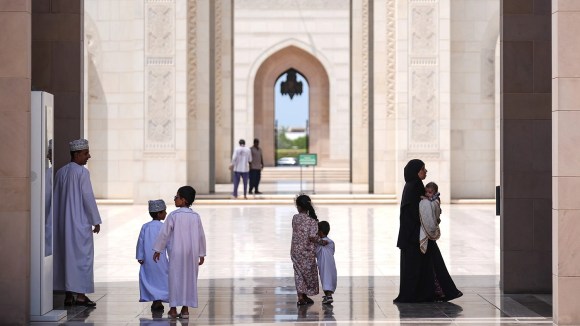
Anadolu / Contributor / Getty

In 2018, authorities in Oman escorted two American college students off a local university campus as they alleged the students were sharing their faith with Muslims. Omani law prohibits proselytism, and its constitution defines Islam as the state religion and declares sharia law as the basis of legislation.

Depending on the nature of their offense, the students could have faced up to 10 years in prison. Alternatively, they could have been found in violation of the law forbidding religious teaching without a government permit—as they were in the country on a tourist visa—and deported. Instead, they were let go with a warning.

Michael Bosch, a persecution analyst with Open Doors, said many foreign Christians who work with Omani converts from Islam have had to leave the country. For security reasons, Open Doors does not give numbers or details of these cases, yet it believes the Omani law hinders religious freedom.

However, Justin Meyers, director of Oman’s al-Amana Center (AAC), an interfaith ministry partnering with the Reformed Church in America, believes the law actually protects the religious freedom of its diverse population. (Part 1 of this series explained AAC’s background.)

After the students’ arrest, the Ministry of Religious Affairs called Meyers, asking him to talk with the students. Realizing they were from his home state of Michigan, Meyers first called local pastors he knew. One contact identified one of the students but had no idea he was in Oman. The sending organization had instructed him not to name the nation of his visit, the student told Meyers, lest he be inadvertently exposed—and possibly killed.

Open Doors ranks Oman No. 32 in its annual World Watch List (WWL) of countries where it is hardest to be a Christian. Its most recent report included an article about a female Omani convert to Christianity living in the US who stated on social media that if she were in her home nation, she would be killed or imprisoned for her faith.

Yet Oman is not on any lists of religious liberty offenders created by the US State Department or the Commission on International Religious Freedom. The State Department’s annual report cites Open Doors’ complaint about the treatment of converts and the monitoring of churches, but also that Christian groups had not reported any incidents of abuse or surveillance.

Meyers counseled one of the students, whom he was able to connect with, to respect the laws of Oman. Both students finished their six-month stays without further incident. Several years later, with the publishing of the 2025 WWL, the Omani government called Meyers again. Would he invite Open Doors for a visit so that officials could address their complaints?

The Open Doors report praised AAC for creating a more tolerant attitude among Omanis toward Christians while citing the Oman government’s support for AAC as an example of the country’s efforts to improve diplomatic relations with the West. Meyers has resided in Oman since 2013, serving as AAC executive director since 2021.

Open Doors had not consulted him and did not immediately respond to the Omani government’s invitation to visit—but Open Doors and AAC have since begun discussions about how to work together.

Since the death of former sultan Qaboos bin Said in 2020, Bosch explained, the new government has intensified its efforts to discover Christians who secretly share their faith. Previously, the authorities only identified those working directly with Omani converts. Now, the interrogation is broader, as authorities try to find networks and funding sources, Bosch said.

According to Open Doors criteria, “dictatorial paranoia” and “Islamic oppression” are two key drivers of local persecution. Although apostacy is not a criminal offense, converts could lose custody of their children under sharia-influenced personal status codes. But another driver is “clan oppression.” Within Oman’s tribal society, converts face shunning from society. And although the report recognizes that violence is not encouraged by the culture, some have been attacked for their faith.

Persecution, Bosch emphasized, is any act of hostility toward faith.

Mohammed al-Shuaili, associate director of AAC, said that Oman’s laws against proselytizing are expressly meant to…

This article was originally published at Christianity Today on October 15, 2025. Please click here to read the full text.
Categories
Christianity Today Published Articles Religious Freedom

The 50 Countries Where It’s Hardest to Follow Jesus in 2024

Image: Illustration by Kumé Pather

Almost 5,000 Christians were killed for their faith last year. Almost 4,000 were abducted.

Nearly 15,000 churches were attacked or closed.

And more than 295,000 Christians were forcibly displaced from their homes because of their faith.

Sub-Saharan Africa—the epicenter of global Christianity—remains the epicenter of violence against followers of Jesus, according to the 2024 World Watch List (WWL). The latest annual accounting from Open Doors ranks the top 50 countries where it is most dangerous and difficult to be a Christian.

The concerning tallies of martyrdoms and abductions are actually lower than in last year’s report. But Open Doors emphasizes they are “absolute minimum” figures. It attributed both declines to a period of calm in advance of Nigeria’s last presidential election. Yet Nigeria joined China, India, Nicaragua, and Ethiopia as the countries driving the significant increase in attacks on churches.

Overall, 365 million Christians live in nations with high levels of persecution or discrimination. That’s 1 in 7 Christians worldwide, including 1 in 5 believers in Africa, 2 in 5 in Asia, and 1 in 16 in Latin America.

And for only the fourth time in three decades of tracking, all 50 nations scored high enough to register “very high” persecution levels on Open Doors’ matrix of more than 80 questions. So did 7 more nations that fell just outside the cutoff. Syria and Saudi Arabia, meanwhile, entered the tier of “extreme” persecution, raising its count to 13 nations.

The purpose of the annual WWL rankings is to guide prayers and to aim for more effective anger while showing persecuted believers that they are not forgotten.

The 2024 version tracks the time period from October 1, 2022, to September 30, 2023, and is compiled from grassroots reports by teams of Open Doors workers and partners across more than 60 countries. The methodology is audited by the International Institute for Religious Freedom.

When the list was first issued in 1993, only 40 countries scored sufficiently high to warrant tracking. This year, 78 countries qualified.

Where are Christians most persecuted today?

North Korea ranked No. 1, as it has every year except for 2022 when Afghanistan briefly displaced it. The rest of the top 10 reshuffled but remained the same: Somalia (No. 2), Libya (No. 3), Eritrea (No. 4), Yemen (No. 5), Nigeria (No. 6), Pakistan (No. 7), Sudan (No. 8), Iran (No. 9), and Afghanistan (No. 10).

The deadliest country for Christians was Nigeria, with more than 4,100 Christians killed for their faith—82 percent of the global tally. Overall, 15 sub-Saharan countries scored “extremely high” on Open Doors’ violence metric. In Mali (No. 14) and Burkina Faso, jihadists exploited breakdowns in government security, while attacks on churches grew sharply in Ethiopia (No. 32).

Open Doors scores each nation on a 100-point scale. Increases of more than 4 points were recorded in…

This article was originally published at Christianity Today on January 17, 2024. Please click here to read the full text.

Categories
Current Events

117 Witnesses Detail North Korea’s Persecution of Christians

Kim Haeun/Korea Future Initiative

Two North Korean families prayed silently on the prison floor—making certain to keep their eyes open. Another detainee, a veteran of Kim Jong-il’s gulag system, asked them if they were afraid.

“No,” one of the mothers replied. “Jesus looks over us.”

The detainee began to cry, knowing the fate that awaited them. The next day, they were sent to Chongjin Susong political prison camp, and have not been heard from since.

But elsewhere in Onsong County’s pre-trial detention center, however, a different Christian prisoner closed his eyes. After confessing he was at prayer, his fellow detainees collectively assaulted him—afraid he would bring trouble on them all.

These are just some of the harrowing stories told in a 2020 report on religious persecution in North Korea. Groundbreaking in its scope, it is drawn from the testimony of 117 defectors, cross-referenced with known data.

Produced by the Korea Future Initiative (KFI), Persecuting Faith reveals 273 documented victims—76 of whom are still in the North Korean penal system. It names 54 individual perpetrators, including 34 with identifying information.

KFI hopes the information will inform future Global Magnitsky sanctions, applied against individual human rights violators by the United States and other Western nations.

Drawn from experiences stretching from 1990 to 2019, KFI’s report lists scores of violations. These include 36 instances of punishment meted out to family members, 36 instances of torture, and 20 executions. Women and girls represent 60 percent of the victims.

And Christians are disproportionately imprisoned—by far.

Open Doors, which has ranked North Korea No. 1 in its World Watch List for 19 straight years, estimates there are 300,000 Christians in the population of 25 million. Tens of thousands of these occupy the gulag. Of KFI’s 273 victims, Christians total nearly…

This article was originally published at Christianity Today, on December 21, 2020. Please click here to read the full text.

Categories
Christianity Today Middle East Published Articles

The Top 50 Countries Where its Hardest to be a Christian

WWL-2020

This article was first published at Christianity Today on January 15, 2020.

Every day, 8 Christians worldwide are killed because of their faith.

Every week, 182 churches or Christian buildings are attacked.

And every month, 309 Christians are imprisoned unjustly.

So reports the 2020 World Watch List (WWL), the latest annual accounting from Open Doors of the top 50 countries where Christians are the most persecuted for their faith.

“We cannot let this stand,” said David Curry, president and CEO of Open Doors USA, during the 2020 list’s unveiling in Washington, DC, this morning. “People are speaking out and we have an obligation to hear their cry.”

The listed nations comprise 260 million Christians suffering high to severe levels of persecution, up from 245 million in last year’s list.

Another 50 million could be added from the 23 nations that fall just outside the top 50—such as Mexico, Chad, and the Democratic Republic of the Congo—for a ratio of 1 in 8 Christians worldwide facing persecution.

Last year, 40 nations scored high enough to register “very high” persecution levels. This year, it reached…

Please click here to read the full article at Christianity Today.

Categories
Excerpts

Stop Murdering Terrorists

From Christianity Today, in an interview with Brother Andrew of Open Doors:

Not long ago of course Osama bin Laden was assassinated, and the whole world rejoiced. Thousands have died in drone assaults. What is your response to such killing?

I have been speaking in meetings in America, and part of my sermon was, “Have you prayed today for bin Laden?” People were rather shocked, and some people said, “I must confess. I have never prayed for bin Laden, but now I do it.”

Bin Laden was on my prayer list. I wanted to meet him. I wanted to tell him who is the real boss in the world. But then he was murdered, I call it. Murdered, because he didn’t shoot back. He had no resistance. That’s not warfare. And I have had too much of that. A good number of my own friends in Gaza have been assassinated. Liquidated they call it in their terminology. I call it murdered.

We must witness to people. And all the people that I now talk about in Gaza that were murdered were people that I met in their homes and I gave a Bible. I prayed with them.

The title of this post is taken from Christianity Today, and is the part of this interview the magazine chose to highlight.

Let us suppose there was certainty about the object of a drone attack being a self-confessed, proud, and practiced terrorist. The reality is that this certainty is often lacking, and many otherwise innocent people die in the process of targeting them. But let us suppose.

One of the tensions of Christianity – a very positive one – is that it encourages fidelity to both country and creator. As an American, a case can be made that drone killings are cheaper, more effective, and save more lives than traditional warfare. Certainly they keep the lives of our own soldiers from risk.

But as a Christian? The appeal to Genesis – he who sheds the blood of man, let his blood be shed – only applies if you give America jurisdiction over the rest of the world. That such a terrorist be killed may represent justice, but that anyone assume the right to kill him is another matter.

The words of Brother Andrew are poignant, because he is not just an armchair theorist. He has met with such people, and loved them. Perhaps this distracts him from the necessary cold-hearted calculation required of a nation.

But let it tug at the heart strings of Christians, who must be merciful, as God is merciful. Who must love their enemies, and do good to those who hate them. Who must from love keep no record of wrongs, refuse to delight in evil, and always protect, trust, hope, and persevere.

Dear Christian, dear citizen, live in this tension, but remain whole.