Categories
Christianity Today Middle East Published Articles

Christmas Celebrations Canceled in Bethlehem, Jerusalem, and Jordan

Image: Uriel Sinai / Stringer / Getty Images

There will be no Christmas lights in Bethlehem this year.

In solidarity with the suffering in Gaza due to the Israel-Hamas war, last week Christian leaders and municipal authorities in the West Bank city decided to cancel all public festivities. For the first time since modern celebrations began, the birthplace of Jesus will not decorate the Manger Square tree.

It is “not appropriate,” stated local authorities.

But the Bethlehem decision is only the most recent. One week earlier, the Patriarchs and Heads of the Churches in Jerusalem asked Christians in the Holy Land to refrain from “unnecessarily festive” Christmas activities. Catholic churches in Galilee requested the same, as did the Council of Local Evangelical Churches in the Holy Land.

“Due to the thousands killed—and in prayer for peace,” said its president, pastor Munir Kakish, “we will only hold traditional services and devotionals on the meaning of Christmas.”

The initiative, however, came first from Jordan, home to the world’s largest concentration of Palestinian refugees—many of whom have become citizens. On November 2, the Jordan Council of Church Leaders (JCCL) announced the cancellation of Christmas celebrations.

Christmas is a public holiday in the Muslim-majority nation, with many city squares and shopping malls feted with seasonal decorations. But congregations throughout the country will now forgo the traditional festivities of public tree lighting, Christmas markets, scout parades, and distribution of gifts to children.

Religious services in all locations will continue.

“In our homes we can celebrate, but in our hearts we are suffering,” said Ibrahim Dabbour, JCCL general secretary and a Greek Orthodox priest. “How can we decorate a Christmas tree?”

The formal Jordanian Christian declaration reflected respect for the “innocent victims” and denounced the “barbaric acts” of the Israeli military. It recognized the “difficult time” in both Gaza and all Palestine, noting the destruction of homes, schools, hospitals, and places of worship.

It pledged that offerings collected last weekend would be donated to Gaza.

Dabbour, whose parents were refugees from the now-Israeli cities of Ramla and Jaffa in the 1948 war, was born in Amman and serves as the chairman of the Jordan Bible Society. He linked the current war to that original displacement, calling for dialogue rather than further fanaticism-inducing violence.

But beyond solidarity within the depressed national mood, Dabbour said the council, representing 130,000 Christians in the Hashemite kingdom, had another purpose in the declaration.

“Many Muslims do not know the history of Christianity, thinking we are a people of the West,” he said. “But we are the sons of St. Peter, here for 2,000 years. We want to show society that we are one people.”

Jordan’s evangelicals believe they have a further obligation.

“We have a role to speak to our friends in the West,” said David Rihani, president and general superintendent of the Assemblies of God Church of Jordan. “Jesus did not teach us to blindly side with anyone against another.”

He cited a widely shared video of Tennessee-based pastor Greg Locke calling on Israel to turn Gaza into a “parking lot” and to blow up the Dome of the Rock to make room for the Third Temple and usher in the return of Jesus. Local evangelicals, Rihani said, refuse to be associated with such Christian Zionism.

Adherence to the Christmas decision, however, issues from Jordanian culture.

Growing up 10 miles northwest of Amman in the traditional city of Salt, a UNESCO World Heritage site, Rihani recalled that both Muslims and Christians would frequent any neighborhood wedding celebration—no invitations necessary. But if there was a funeral, any previously scheduled wedding would be either postponed or held quietly among the family.

Weddings mid-war are now treated the same.

“The announcement was not even necessary,” said Imad Mayyah, president of the Jordanian Evangelical Council (JEC). “No Jordanian is celebrating anything.”

Founded in 2006 and representing the Assemblies of God, Baptist, Nazarene, Free Evangelical, and Christian and Missionary Alliance denominations, the JEC released its own statement on Tuesday.

“The Christmas holidays, when we remember the birth of our savior Jesus Christ, comes upon us while we are in the midst of a human tragedy that is ravaging our region,” stated the evangelical council. “In obedience to the Holy Word of God and in line with [both Christian and public sentiment, the JEC] has decided to limit the celebrations of Christmas to religious ceremonies and church prayers within our churches.”

The JEC also prayed for…

This article was originally published at Christianity Today on November 22, 2023. Please click here to read the full text.

Categories
Personal

Top 10 Persecution Stories at CT

Many thanks to readers who have followed my articles at Christianity Today. CT just published a year-end summary of the ten most read stories about the persecuted church, and I am pleased to report my articles placed at numbers 1, 3, 6, and 10.

That the articles needed to be written in the first place involves little of pleasure, but I am glad that in most there have been moments of grace amid the suffering.

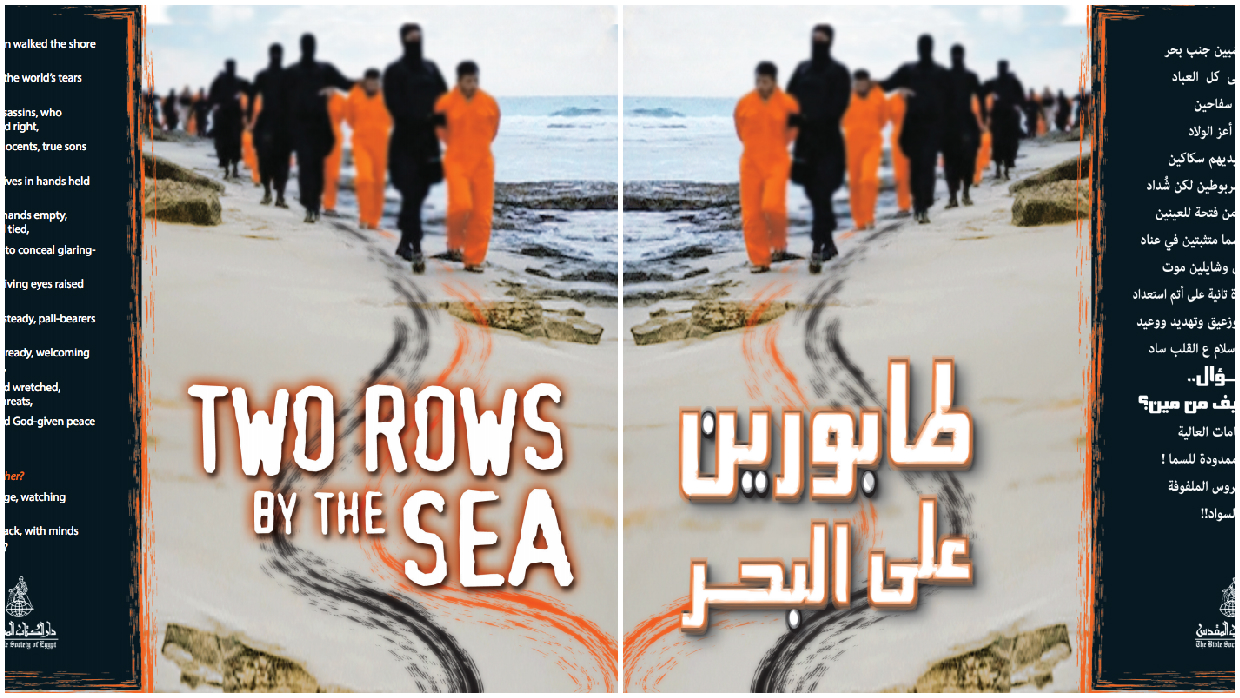
1) How Libya’s Martyrs Are Witnessing to Egypt

Murders spark largest outreach ever amid new freedoms and new threats.

3) Forgiving ISIS: Christian ‘Resistance’ Videos Go Viral in Arab World

Ten-year-old girl from Mosul becomes Christian broadcaster SAT-7’s most-watched interview ever.

6) Libya’s 21 Christian Martyrs: ‘With Their Blood, They Are Unifying Egypt’

As Coptic Christians mourn ISIS beheadings, they praise the response of their government and Muslim neighbors.

10) Why Christians Are Fleeing One of Africa’s Oldest and Largest Christian Homelands

Beyond the search for a better life, evangelicals and Orthodox in Ethiopia increasingly share even more.

And this story came in at #16 of the 20 most read ‘Gleanings‘, subtitled ‘important developments in the church and the world’.

16) More Martyrs: ISIS Executes Dozens of Ethiopian Christians in Libya

Propaganda video released the same day Justin Welby arrives in Cairo to honor the previous 21 victims.

For what it is worth, none of the articles made the overall top 20 most read list, which was dominated by US domestic trends, though some with international aspects.

As for this list, in general I do not like the word ‘persecution’ or a focus thereupon. Though these articles certainly qualify, the word risks setting Christians into an ‘us versus them’ mentality that risks violation of many Gospel principles. The struggle, says the scripture, is not against flesh and blood.

But without doubt the next mentioned ‘principalities and powers’ have employed flesh and spilled blood. I am grateful to be in a position to help tell these stories, and pray they may result in greater love both for the church around the world, and those who stand against her.

Thanks for reading — and within your power — acting accordingly.

Categories
Personal

Remembering the Christmas ‘Martyrs’ of Nag Hamadi

“Don’t cry for me, mother; to a martyr you’ve given birth. Murderers killed your son, on a night of Christmas mirth.”

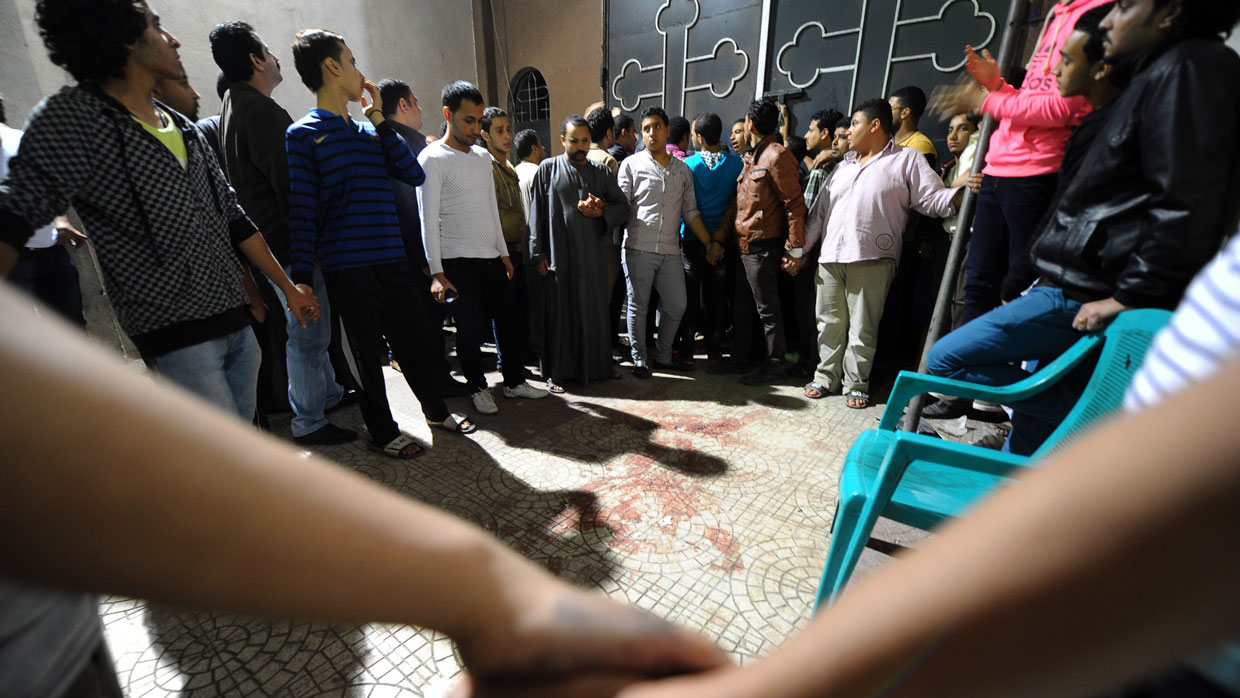
These lines of poetry were crafted for the fortieth day memorial service held for the six young Egyptian Christians randomly gunned down while exiting a Coptic Christmas Eve mass, January 6, 2010, in Nag Hamadi, three hundred miles south of Cairo. They reflect the worries of the Christian community of Egypt that their situation as citizens, even in terms of safety, is steadily declining.

The particular use of the word ‘martyr’, however, carries a strong implicit message. It is common in Egypt for both Christians and Muslims to use this word for anyone in their community who dies unnaturally, regardless of cause. Beneath this general usage, though, is a Coptic remembrance of the hundreds of martyrs celebrated daily in the liturgy, who suffered death for their Christian faith. The message is given that these young men were killed for their faith in Christ, and this at the hand of a killer alleged to have cried while firing, “I avenge my Muslim sister!”

The vengeance in question refers to an event two months earlier in a nearby village, where a Christian man is alleged to have raped a 12 year old Muslim girl. This is the opinion of Sheikh Ahmad al-Sayih, retired professor of Islamic doctrine and philosophy at Azhar University, who grew up in a village fifteen miles from Nag Hamadi. While he condemns the murder on Islamic grounds, he sees it as part of the culture of revenge killings for which the area is known. In this understanding, shared by many Muslims, the attack was simply an expression of tribal justice, having nothing to do with sectarian strife.

Amin Makram Ebeid, a retired doctor and Coptic intellectual, disagrees. He sees the incident as part of an unorganized but increasing pattern of sectarian violence against the Christians of Egypt. He doubts the account of rape, as well as the status of the girl as a minor. He states that tribal revenge would be executed only against family members, not random worshippers exiting a church on the holiest of Christian holidays. These considerations indicate the sectarian nature of the crime, and in these matters he echoes the opinions of many Copts.

Governor Magdi Ayoub of Qena, in which Nag Hamadi is located, is the only Copt among the twenty-nine governors of Egypt. Instead of being acclaimed by his religious community, however, he is reviled as being subservient to Muslim interests so as to maintain his post. Though he states that he is an Egyptian governor first and a Copt second, many Copts reject him for failing to address Christian concerns in deference to his position in what is seen as an increasingly Islamic state. Viewing religious discrimination as part and parcel of true Islamic religion, more than a few Copts anticipate further violence as a coming inevitability.

A different explanation is offered by Osama al-Ghazoly, a prominent Egyptian journalist. He agrees that violence in Egypt is increasing, but this is true of society in general, independent of sectarian tension, though it is certainly an aspect of it. He criticizes both Muslims who deny that sectarian violence exists at all, as well as Christians who view it only through this lens. Regardless of the origin, it is only the government which can extend protection to any citizen, Christians included. Copts may do well to criticize the governor’s performance, but not his position.

The Egyptian government is treating the attack as a non-sectarian isolated incident and increased its promotion of national unity. Egyptian society, however, remains divided about the causes and necessary responses to the attacks in Nag Hamadi, though all have categorically denounced the violence. Yet as the interpretations of the killing vary so dramatically between the two communities, the religious divide threatens to grow deeper. As the forty day commemoration service is a shared practice of both Muslims and Christians, and given the mingled blood of the young Christians with the Muslim policeman also killed in the attacks, perhaps this occasion may serve as a reminder that peace and the future of Egypt is built upon both religious communities.