Categories
Christianity Today Middle East Published Articles

Egyptian Christians Show ‘Love of Jesus’ to Displaced Palestinians

Courtesy of Christian Mission to Gaza

Almost six months have passed since Issa Saliba boarded a bus in Gaza with 15 other Christians to seek safety in Egypt. But he still relishes how they sang, clapped, and danced as they escaped devastation.

The air conditioning cooled his nerves, frayed from the harrowing journey to the border. Later that day, the wayside stop provided his first full meal.

Top of Form

As 1.9 million Palestinians—90 percent of Gaza’s population—remain internally displaced, less known is that 100,000 have managed to take refuge in Egypt. Saliba, allowed to depart because he is enrolled at the American University of Madaba in Jordan, left behind his father, two younger brothers, and the hundreds of other Christians remaining in the war-torn Mediterranean strip.

Saliba’s trip in April took him south along the damaged, dusty coastal road through Israeli checkpoints to the Rafah crossing. Then came a six-hour ride to Cairo. Saliba got out just in time: In May, Israel took control of Rafah’s Philadelphi Corridor and closed the border. The 8-mile-long strip of land remains a key sticking point in current negotiations over a ceasefire.

But from the first days of the Israel-Hamas war, the Egyptian government has resisted overtures to resettle displaced Palestinians in the adjacent Sinai Peninsula. Wary of terrorist infiltration but also fearful Israel will permanently refuse refugee reentry to Gaza, Egypt limited entry to people with medical emergencies, the financial means to pay up to thousands of dollars in fees, and international educational connections, like Saliba.

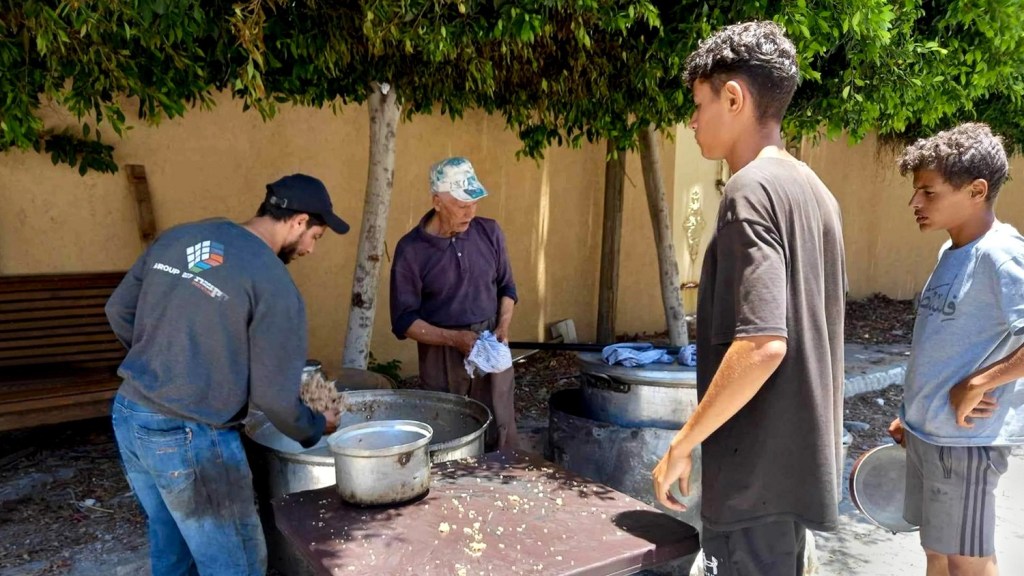
Evangelicals, though, are becoming known for giving food and supplies to refugees, whether Christian or Muslim. The Egyptian church, partnering with like-minded Palestinians, has even sent aid into Gaza for the believers huddled for safety in churches, as well as thousands of others displaced from their homes in makeshift camp communities.

“We show the love of God to everyone,” said Samuel Adel, chairman of the pastoral, outreach, and missions council of the Evangelical Presbyterian Church of Egypt, also called Synod of the Nile. “When people ask why, we tell them it comes from our love of Jesus.”

Soon after the Israel-Hamas war began on October 7, aid to refugees began…

The article was originally published at Christianity Today on September 16, 2024. Please click here to read the full text.

Categories
Christianity Today Middle East Published Articles

Pastor’s Family Trapped in Gaza Grieves Relatives Killed at Church

Image: Illustration by CT / Source Images: Courtesy of Hanna Maher

Trapped in Gaza, Janet Maher has not had a shower for two weeks. She feeds her three children one meal a day, often no more than bread and cheese.

Her cousin perished from damage caused by an Israeli missile, shielding his seven- and five-year-old boys from the collapsing wall at St. Porphyrius Orthodox Church. The two families had been sheltering together, and the younger boy was friends with her son in kindergarten.

But amid the horrors of life under siege, perhaps the worst is this: Janet’s husband is trapped in Egypt.

“I feel like Moses’ mother and sister after they put him in the bulrushes,” said Hanna Maher, former pastor of Gaza Baptist Church. “All I can do is watch from afar.”

Born in Sohag in Upper Egypt, Maher pastored the evangelical congregation from 2012–2020. Single upon arrival, he married Janet, daughter of an Orthodox father and Baptist mother, during his first year of service in Gaza. Though he was called to “the hard places,” ministry was taxing—as was navigating the permissions for complicated entry and exit procedures under Israeli occupation.

Since 2007, Israel and Egypt have imposed a blockade on the 140-square-mile coastal strip.

Every family vacation to Egypt began with the feeling that he should never return to Gaza. But until 2020, each trip ended with Maher’s renewed sense of commitment to mission. That year, he accepted the pastorate at the Presbyterian church in Beni Suef, 90 miles south of Cairo, and Janet—who had always desired to stay close to her extended family—felt at peace.

Maher did not. Three years later, with Janet’s blessing to renew his calling, he resigned from his position, and last May the family returned to Gaza. Since he is no longer a funded missionary, he used the extended vision trip to explore service opportunities apart from the pulpit. Contemplating an educational or small business development center, on September 28 he returned alone to Egypt to seek denominational partnerships.

Less than two weeks later the war began, with no one allowed in or out.

“I can’t concentrate, I have no energy, and I couldn’t sleep after the attack on the church,” said Maher. “I just watch the news and pray for my family.”

Much of his day is devoted to trying to call them. From morning until night he rings Janet’s cell phone, but with communication networks damaged in the bombing, it takes hours to get a connection. At best, they have a five-minute conversation—but are usually cut off after about 60 seconds.

Once, his son forced a reluctant chuckle: It’s fantastic, daddy, there is no school.

Maher’s smile passed quickly amid the morbid statistics. Over 8,000 people have been reportedly killed in Gaza, including at least 3,324 children, with another 6,000 children injured. The ministry of public works reported that 43 percent of all housing units have been destroyed or damaged, with more than 1.4 million out of a population of 2.2 million displaced from their homes.

And prior to Israel restoring flow to the second of three main water pipelines, water for drinking, cooking, and washing was estimated at 3 liters per day per person, far below the World Heath Organization recommendation of 100 liters.

Maher’s Tel al-Hawa neighborhood in Gaza City came under extensive Israeli bombing. Living near the al-Quds Hospital—accused of being a Hamas hideout—where about 10,000 displaced Gazans have taken refuge, Janet was unable to find food on the local grocery shelves.

Israel has accused Hamas of hoarding essential water, food, and fuel. Janet left to take refuge at the Greek Orthodox church five days after the war began, when…

This article was originally published at Christianity Today, on November 3, 2023. Please click here to read the full text.

Categories
Christianity Today Middle East Published Articles

O Come, Ye Gazan Christians, to Bethlehem

Gaza Christians Bethlehem
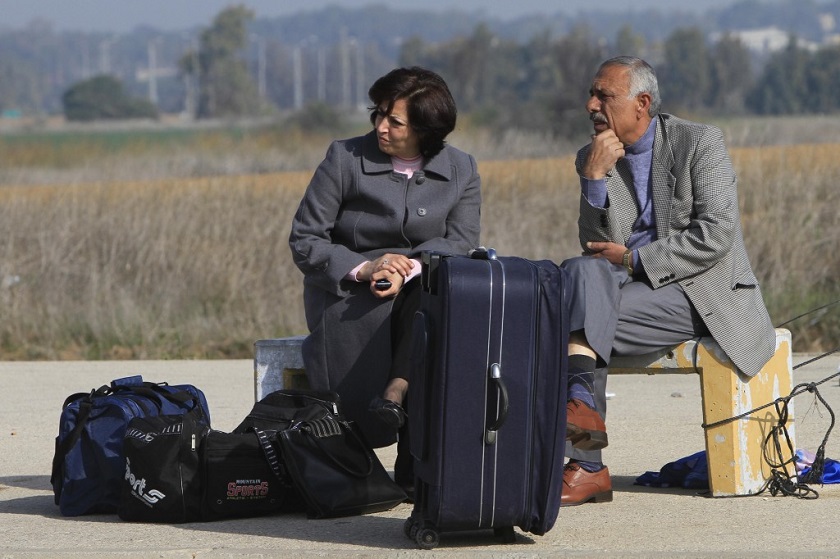
Palestinian Christian couple from the Gaza Strip leaves through the Israeli Erez crossing, Thursday, Dec. 24, 2009 (photo credit: Tsafrir Abayov/Flash90)

This article was first published at Christianity Today, on December 20.

Bethlehem’s Church of the Nativity has restored its sparkling mosaics and marble columns to their original glory for the first time in 600 years.

“It has become such a beautiful church,” Ziad al-Bandak, head of the local project committee of Christian leaders, told the AP. “Every Christian in the world would love to see it now.”

Palestinian Mayor Anton Salman expects 1.2 million tourists will make their way to Christ’s birthplace this year. Among them, following an Israeli reversal, will be those who most long to visit for Christmas—the Christians of the Gaza Strip.

“In Gaza, they talk about the West Bank as if it is heaven,” said Hanna Maher, Egyptian pastor of the Gaza Baptist Church. “People love to go for Christmas; there are so many churches.”

In Gaza, there are three. According to the 2017 census, 47,000 Christians live in the Palestinian territories (1% of the population), but only about 1,000 live in Gaza.

Last week the Christian advocacy group Middle East Concern (MEC) reported that nearly all who applied to enter Israel to visit the West Bank for Christmas failed to receive permits, except for those older than 55.

Applicants younger than 16 were also approved, consistent with restrictions instituted last Christmas and maintained through Easter. A previous policy limited travel to those between ages 16 and 35.

The MEC report was confirmed by Maher, who stated that initially just 200 travel permits had been granted, and Christians, sharing stories of the delayed permit applications, began to assume those outside the age limit would not be allowed to travel.

But their prayers were answered this week…

Please click here to read the full story at Christianity Today.