Categories
Christianity Today Persecution Published Articles

The 50 Countries Where It’s Most Dangerous for Christians in 2026

Illustration by Kumé Pather

Pastor Edward Awabdeh had just finished serving Communion at the Evangelical Christian Alliance Church when he noticed members fiddling with their phones and whispering nervously to their neighbors. Many in the Damascus, Syria, church had received notifications of a suicide bombing at the Mar Elias Greek Orthodox church, located only 15 minutes away. 

Syrian security forces suddenly entered from the rear of the church and evacuated the congregation within a few minutes. But even as congregants filed out peacefully, many feared for their friends’ and relatives’ safety at Mar Elias, where they learned that the June 22 bombing last year had killed 22 Christians and wounded at least 60 others.

“This was our hardest day,” Awabdeh said. “But most concerning is the general atmosphere of extremism [in the country].”

Persecution monitor Open Doors agrees. In the 2026 edition of its annual World Watch List (WWL), the nonprofit listed Syria at No. 6, up from last year’s ranking of No. 18. The country is the only newcomer to the top 10 most dangerous places to be a Christian and received a near-maximum score of 90 in Open Doors’ methodology. 

In Open Doors’ previous reporting cycle, which ends each September, zero Syrian Christians died for faith-related reasons. For the 2026 report, Open Doors verified at least 27 deaths of believers. 

The fall of the Assad regime in Syria occurred in December 2024. Shortly after, Ahmad al-Sharaa, the leader of the rebel coalition and head of the jihadist group Hay’at Tahrir al-Sham (HTS) appointed himself as the country’s interim president and established Islamic jurisprudence as the main source of legislation in the transitional constitution. 

Open Doors stated that power remains fragmented in the country, leaving space for extremists to harass Christians. Fear prevails among the few Christians who remain in the northwest city of Idlib, where the HTS base also contains ISIS cells and a Turkish military presence, as well as in central Syria due to a lack of local security and extremist intimidation.

In the larger cities of Damascus and Aleppo, Islamist actors have called for conversion to Islam through trucks laden with loudspeakers in Christian neighborhoods. They have placed posters on churches demanding payment of the sharia-mandated jizyah tax (historically levied on non-Muslims) for those who refuse. 

The situation for Christians is more tolerable in Syria’s coastland regions and the Kurdish-ruled northeast, Open Doors stated. Still, Syrian authorities closed 14 Christian schools in the northeast that refused to adopt a new Kurdish curriculum, denying education to thousands of students. 

Awabdeh has hope for Syria. Evangelicals enjoy “ten times” more freedom now than under Assad, he said. Authorities sent security forces to guard all Christian areas during Christmas, and the head of police in Damascus visited his church to offer holiday greetings. Officials also recently gave permission to build a community center on Alliance-owned land in the capital, which the previous regime had denied for more than three decades.  

Yet Awabdeh remains troubled that the government is not reining in extremism. Officials say all the right things about minorities’ rights, he says, but there was little accountability following the Syrian forces’ massacre of Alawites last March and during armed militias’ killings of Druze Muslims last July. 

In the southwest region of Druze-majority Sweida, armed men entered the apartment of one of Awabdeh’s church members and held him at gunpoint. They stole everything and destroyed all the Christian symbols in his home. A moderate Muslim shaykh told Awabdeh that some Islamic militants believe they have the right to loot non-Muslim properties.  Syrian

Christian emigration continues to grow. Open Doors estimates that only…

This article was originally published at Christianity Today on January 14, 2026. Please click here to read the full text.
Categories
Asia Christianity Today Published Articles

The 94-Year-Old Hong Kong Cardinal Fighting for Chinese Freedom

Anthony Wallace, Getty / Edits by CT

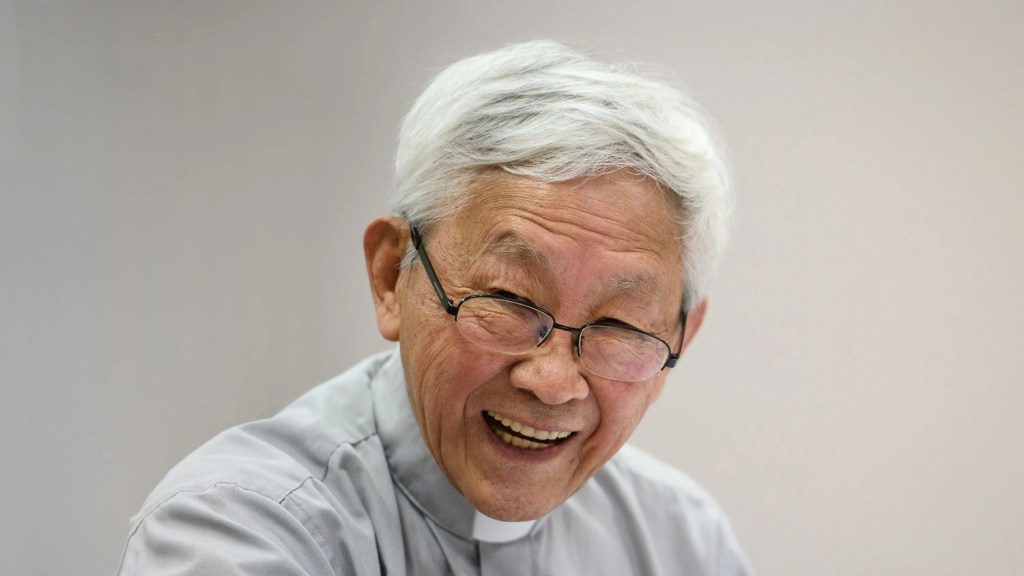
Three years ago in a Hong Kong courtroom, 90-year-old cardinal Joseph Zen Ze-kiun leaned heavily on his cane. Wearing his black clerical robe and white collar, the white-haired bishop emeritus faced charges of failing to register a legal support fund to help arrested activists during the 2019 pro-democracy protest movement.

Despite his advanced age, Zen shows no sign of slowing down. Last June in a Hong Kong parish he leaned heavily on a different kind of cane—a golden ecclesial monstrance bearing the Eucharist inside. He had just finished celebrating the controversial Latin Mass, reinforcing his position on the conservative wing of the Catholic church.

Savvy in public messaging, Zen—who turns 94 today—in both images portrays himself as a quiet rebel, clashing with governmental and religious institutions. Such commitment marked his ministry especially after his appointment as bishop of Hong Kong in 2002. Mindful of the needs of the poor and the oppressed in the underground Chinese church, the Hong Kong faithful welcomed his own elevation as the Vatican’s recognition of his stance on social justice.

“The purpose of life,” Zen said in an interview after his court appearance, is to be a person of integrity, justice, and kindness.

Yet this does not temper his clear words of rebuke. He called the 2018 provisional agreement between the Vatican and Chinese government to jointly appoint bishops as “blatantly evil [and] immoral because it legitimizes a schismatic Church.”

Open Doors ranks China No. 15 on its World Watch List of countries where it is hardest to be a Christian. Because of Chinese Catholics’ international ties to the Vatican, faced even greater persecution than Protestants. In 1951, the Communist government cut diplomatic relations with the Vatican and six year later organized the Chinese Catholic Patriotic Association (CCPA) to oversee the national church.

Zen was born in mainland China in 1932, one year after the Japanese invasion in Manchuria that eventually contributed to the beginning of World War II in Asia. He moved from Shanghai to Hong Kong in 1948, two years after the then-British colony was promoted to a Catholic diocese. His Catholic family left behind endured persecution from Mao Zedong’s regime, which considered the church a counterrevolutionary entity.

In Hong Kong, Zen attended a Catholic school associated with the Salesian order of Don Bosco. The order was founded in 1859 to help poor boys and young men with no education.

Zen became a priest in 1961 and earned a doctorate three years later from the Salesian Pontifical University in Rome. In 1978, he headed the local order as he concentrated on parish ministry. But when Chinese soldiers opened fire on students peacefully protesting at Tiananmen Square in 1989, Zen felt motivated to serve also the mainland church.

Shortly thereafter he secured China’s permission to spend six months every year as a professor in government-run Catholic seminaries. Though he watched the Tiananmen Square massacre with horror, for the next seven years he remained quiet about his opinions to nurture ties with Chinese officials and the underground church.

Zen described his sojourns in China as…

This article was originally published at Christianity Today on January 13, 2026. Please click here to read the full text.
Categories
Christianity Today Published Articles Religious Freedom

3 Fewer Hot Spots for Trump-Biden Handover on Religious Freedom

Image: USCIRF, from the cover of their 2021 report

As a new administration takes over leadership of America’s commitment to religious freedom worldwide, Gayle Manchin believes President Joe Biden is “very aware” of its importance.

But given global developments, the watchdog work of the US Commission on International Religious Freedom (USCIRF), which she chairs, sometimes feels like “treading water.”

Others agree. For example, an 800-page study released this week by Aid to the Church in Need concludes that 1 in 3 nations of the world do not respect religious freedom.

And in 95 percent of these, the situation is growing worse.

USCIRF, created to provide recommendations to the US government, released its 22nd annual report today. Its analysis identifies significant problems in 26 countries, down from 29 last year. It also marked a surge in worldwide antisemitism.

Following the commission’s advice, last December then-Secretary of State Mike Pompeo announced the designation of Burma [Myanmar], China, Eritrea, Iran, Nigeria, North Korea, Pakistan, Saudi Arabia, Tajikistan, and Turkmenistan as a Country of Particular Concern (CPC). USCIRF’s 2021 report recommends that new Secretary of State Anthony Blinken add…

Last year, Nigeria was added as a CPC by the State Department. How did USCIRF’s work contribute to the decision?

USCIRF has a unique ability to focus on religious freedom, while the State Department looks at the relationship with a country in balance. But they take our work very seriously, and know the research and credibility behind it. They watch, and when the information is overwhelming—and when they are comfortable—they will join us in a recommendation.

But I never question when they don’t. There may be details going on that we are not aware of.

So how do you interpret the State Department additions of Cuba and Nicaragua to the SWL? Maybe they are not the most egregious violators of religious freedom, compared to others on the USCIRF list?

Both of these countries are continuing to trend worse. When we are able to travel again, these are nations we will reach out to for a visit, to get a clearer picture of what is going on. There is always a political aspect, from the government’s perspective.

But now that Cuba is without a Castro for the first time, there are things happening that may change. Of course, it could also be toward the negative, so we will continue to monitor.

What nations generated the most controversy and discussion among USCIRF commissioners?

This article was originally published at Christianity Today on April 21, 2021. Please click here to read the full text.
Categories
Current Events

Do Catholics Care about Persecuted Christians?

Embed from Getty Images

For the first time, American legislation in defense of international religious freedom has reached into the Chinese Politburo.

Last week, President Donald Trump signed into law a bill to authorize sanctions against any officials in China’s top political body responsible for ongoing persecution against the country’s Muslim Uighur minority.

Passed by Congress with only one “no” vote, the action follows on the heels of this month’s release of the State Department’s 2019 Report on International Religious Freedom (IRF).

During the report’s public release, Secretary of State Mike Pompeo lauded the United States’s commitment.

“America is not a perfect nation by any means, we always strive towards that more perfect union, trying to improve,” he said.

“[But] there is no other nation that cares so deeply about religious freedom.”

Such commitment was marked this week by the US Conference of Catholic Bishops (USCCB). Each day from June 22–29 highlights an issue of concern, whether domestic or international.

Yesterday (June 24) the focus was on China.

Last summer, the government-affiliated Chinese Catholic Patriotic Association—representing about half of China’s estimated 12 million Catholics—condemned US criticism after the State Department’s second Ministerial to Advance Religious Freedom advocated for the 800,000 to 2 million Uighurs and other Muslim minorities who have been arbitrarily detained in internment camps.

But one month later, the Chinese government permitted the first consecration of a Vatican-ordained bishop—a result of Pope Francis signing a controversial 2018 deal with Chinese authorities in an attempt to unite Rome with the underground Catholic church.

The US bipartisan consensus evident in the Uighur law reflects Pompeo’s assertion. First amendment rights guarantee freedom for all religions, and Americans generally desire for such liberty to extend worldwide.

But is there particular concern over Christian persecution? And is religious liberty eroding at home?

Two new polls suggest declining Catholic attention abroad, while the faithful grow more worried about the US. Aid to the Church in Need–USA (ACN–USA), an international papal agency that supports suffering and persecuted Christians in more than 140 countries, surveyed 1,000 US Catholics…

This article was first published at Christianity Today, on June 25, 2020. Please click here to read the full text.
Categories
Christianity Today History Published Articles

The Forgotten Final Resting Place of William Borden

william-borden
Courtesy of Bethany House

This article was first published at Christianity Today on February 24, 2017.

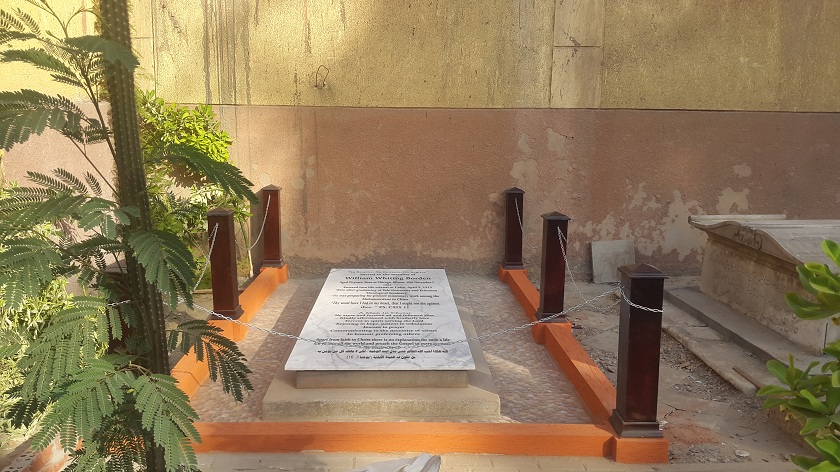
Tucked away in the northwest corner of the American cemetery in Cairo lies the neglected grave of William Borden, one of the most celebrated missionaries of the 20th century Student Volunteer Movement. Heir to a family fortune, the Yale graduate instead devoted his life to Christ, pledged in service to the Muslims of China.

But at age 25 Borden died in Egypt, having contracted spinal meningitis while studying Arabic in preparation. His will distributed nearly everything to mission groups and Christian ministries, leaving him only a cement slab as a gravestone. Engraved at the bottom were words uttered in memorium, “Apart from Christ, there is no explanation for such a life.”

That is, if anyone could read them. A recently erected wall in the poorly tended cemetery pressed square up against his plot. This meant that the gravestone now faced the wrong direction, requiring the rare pilgrim to slither in between the wall and the grave to read the inscription. It was an ill testament for one whose death was mourned from Chicago to New York to Cairo to China.

Even stranger is the fact that what Borden is perhaps most known for—the inspirational quote that he is reputed to have written into his personal Bible, “No reserves. No Retreats. No Regrets”—has not been found by historians or biographers.

Is the central anecdote of Borden’s life a case of hagiography? That it has not been found does not mean it is not true. But as with many Christian heroes, the reality is more inspiring than any potential fiction.

Please click here to read the full article at Christianity Today.

william-borden-grave

Categories
Prayers

Friday Prayers for Egypt: Finding Balance

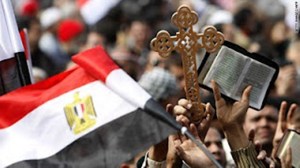
Flag Cross Quran

God,

Take care of Egypt. Every nation needs stability, as every nation needs liberty. Balance her rightly as friends fight for leverage and enemies aim to topple. May an honorable equilibrium come, and soon.

With January 25 on the horizon, make the nation safe, free, and wise. The government moves against protest, while a weakened Brotherhood calls for revolt. Few anticipate great mobilization, but more fear sporadic violence. Already a bomb has killed police and civilian alike in Giza.

God, develop Egypt so that protest does not presage a crisis. Give outlets for grievances and redress for wrongs. But make this part of a dynamic system, with officials and citizens agreed on the rules.

And let similar wisdom come to bureaucracy. Parliament paused its wholescale approval of interim laws to reject the reform of civil service.

God, you know if this particular effort was worthy. It is good for one branch of government to check another. But find a way to protect millions of employees and to make efficient their performance.

One thought is to move them all away. The president has proposed a new administrative capital, and the president of China has agreed to finance. With him twenty other projects have been negotiated, as Egypt makes more diverse its international posture.

The more friends, the more flexibility. But also the more responsibility and intertwine. God, may Egypt play this game well, for the benefit of her people and the region.

Governance, though, is not a game. Politics can make it so, and protest can be zero sum. But in navigating all, lift Egypt to the greater principles.

May she give her people security to live, and freedom to thrive. And an honorable equilibrium, to bear well this trust.

Amen.

Categories
Prayers

Friday Prayers for Egypt: China, Elections

Flag Cross Quran

God,

Two fronts are brewing, and both received a push. Egypt is trying to stabilize through its economy and elections.

For the first, President Sisi traveled to China and signed a number of trade agreements. For the second, just before leaving he signed into law the mechanisms for parliamentary elections.

In March is scheduled a major investment summit; around then the polls are expected as well. If both are clean and well supported it will be a sign the nation is moving forward.

God, move Egypt forward, but with more than money and ballots.

Bring investment, but distribute it well. Clean the centers of corruption and ensure fair return for both capital and labor. Egypt recently mandated electronic tax payments for corporations; help the state to receive – and use – its fair share, wisely.

Bring voters, but prepare them well. Give them worthy candidates who will represent their constituencies. Spread a culture of democracy that gives no one a blank check; help the state to facilitate its own accountability.

But God, others are not comfortable with Egypt becoming stable in its current shape. Some are looking to sabotage and disrupt, keep them from causing harm. But others wish for deeper or different justice. Honor the sentiment, God, and weigh the demands.

May Egypt more forward in that which is good.

Seek knowledge as far afield as China, says the hadith. Help the president find one source, but forsake the other. Not all stability is honorable.

Amen.

Categories
Prayers

Friday Prayers for Egypt: IMF, Sinai, China, Iran

God,

Much of Egypt’s attention turned outside its borders this week, and though Sinai is not foreign, it is almost a separate land. Military operations against Islamic extremists have been underway for some time, but lately there have been religious delegations sent, even from the president. These have involved former jihadists who wish to turn those in Sinai from the error of their ways. Or, at least, to halt operations.

Meanwhile the president has been in personal deliberations with the IMF over a nearly five billion dollar loan to support the economy. Beyond the financial implications lie religious controversies, if Islam permits such interest based credit. Now in power, Islamist seem to be finding it more difficult to forbid, while others – supporters and opponents – accuse them of hypocrisy.

A useful escape and popularity boosting effort was provided by the president’s travels to China and Iran. In the former he reinforced and increased economic ties, while in the latter he stood on the world stage of the Non-Aligned Movement and condemned Syria without wholly offending Tehran. Egypt and Iran have been without ties since 1979. In both nations he demonstrated a desire to move beyond uni-polar dependence on the United States.

These are the matters of governance, God, and bless Egypt in them. Give peace to the Sinai, and convict criminals who use violence in the name of religion. If there is any duplicity involved, as some liken to the political use of the US War on Terror, then expose manipulations, God. And anticipating evolution of the region to touch the Camp David Accords with Israel, may these two nations speak to each other and find ways toward mutually agreeable and just peace. Amid it all, bless the people of Sinai; may they find full citizenship and freedom of opportunity in the new Egypt.

As for the IMF, God, give the president good and honest advisors. May those who know economics well sort through the competing propaganda on the liberating / enslaving nature of IMF monies. Whatever the outcome, may the economy stabilize with sovereignty secured for the Egyptian people. As for the relationship between Islam and interest, preserve the integrity of the religious scholar. May he not bend to political pressure, nor pander for political influence. May he fear you alone as he guides the people.

As for foreign policy, give wisdom among competing interests. May the president serve only that which serves his people. May Chinese investment create jobs and aid infrastructure. May Syrian criticism lead to the cessation of violence and bloodshed and a just solution to popular grievances. May Iranian contact promote dialogue between former enemies and possibly current adversaries.

May the region avoid more war.

God, rebuild Egypt and help her to turn to all the practical matters of governance. Yet while these international issues are of deep importance, provide solutions soon to the domestic problems which plague Egypt. Restore security; lift the economy; help the poor. Build an open, free, and democratic structure to include all. Resist any attempts to close ranks, settle scores, or marginalize.

Give respect among Egypt’s political forces, one to the other. Give respect between poor and rich, and narrow the gap between. Heal wounds; issue justice; promote reconciliation.

God, the solutions to these conundrums are in your hands. Enlighten Egyptians that they may find them as well.

Amen.