Our family recently had the privilege to go on a Nile tour from Luxor to Aswan. With my parents visiting from the US, one of the sites my Dad wanted to see was the Valley of the Kings. At first we said it was too far to try, but then Jayson heard our local Orthodox church advertise a trip to Luxor/Aswan, and so we enquired. Turns out, no one else in the church signed up, but the travel agent, who worships at this location, was able to get us the same good price as he was offering to the Egyptian congregation, and so we made the arrangements for Mom, Dad, Jayson, me and our three little girls to embark on this great tour.
First step was getting to Luxor which is located about 8-9 hours south of Cairo by train. We debated going by train or plane – big difference in time and price – and in the end, went with the more adventurous route. We weren’t sure what to expect as we boarded the sleeper train in Ramses station, but we had three sleeper cabins which were quite comfortable and roomy.
Sleeper Car in the Train to Luxor
Since we left town around 8pm, we got our girls to bed as quickly as possible, anticipating a 5am arrival in Luxor. Then we enjoyed a good dinner before retiring to our different beds. I don’t think I slept too much and among the adults, we got varying hours of sleep. The beds were comfortable enough, but the train was really rough. We stopped and started all through the night, and felt like we were going to blow right off the track at different points. About an hour before Luxor, we got some breakfast, then woke and dressed the girls before arrival.
We were met in Luxor by a representative from the travel company and taken to a big tourist bus along with about 25 Egyptians. Our agent in Maadi had told us he had a group of doctors going on the same trip so we would be with them. After traveling together a bit, we realized that many of us were together in the same train car from Cairo to here. We went straight to the Valley of the Kings while our tour guide, Mohamed, began telling us about Luxor and what we would be seeing soon. He usually works with English groups, but of course could guide in Arabic as well. And so, our little family had our own English translation from him each time he finished his Arabic spiel.
The sites that day were interesting, and the three girls did well despite it being hot and including lots of walking. We were all enjoying the places we visited, but also curious to get to the boat where we would be living for the next five days. It wasn’t long before we learned of a complication in this trip. Due to a workers’ strike at the locks near Luxor, our boat was parked about one hour south of Luxor in the town of Esna. This meant that we had to drive over an hour after touring before boarding the boat. And so, the schedule I had worked out for day one was not going to work. Fortunately, our littlest one was able to nap during the long bus ride, and we all made it till the 3pm lunch when we finally got to the boat.
Exhausted on the Unexpected Bus Ride
By that first evening together, Emma and Hannah had made friends with a young single Egyptian named Mahmoud, who was traveling with his two sisters, parents and grandmother. He quickly became like an uncle to them and throughout the week I often heard Emma call out, “Mahmouuuud, Mahmouuuud” as we walked around the temple ruins.
Mahmoud, with Hannah our Future ArchaeologistMahmoud, with Emma our Future Captain
Day two was another complicated day due to the lock strike. Since we had more to see in Luxor, we now had to drive an hour each way making for a long morning. Or so I thought. We were supposed to leave by 8 or 9 am, but by 10am our whole group was waiting in the lobby of the boat as the tour bus we were supposed to ride was having trouble finding gasoline due to a gas shortage. I don’t know exactly what time the bus arrived to pick us up, because the boat left the port for about half an hour to allow another boat to set sail, and when we docked once again closer to noon, our tour guide was more than ready to get on with the tour.
(Click here for a tour of our Nile cruise boat, and here for a lazy gaze at a pastoral Nile River island.)
During our waiting time, the girls were once again playing with Mahmoud and this gave me a chance to meet him and his family and we had a nice time getting know each other. I wasn’t sure if I was the only one stressed out about such a late start to our day since the boat was supposed to sail for its next destination at 3:30. I knew we had two places to tour in Luxor and at least two hours of driving. How could we possibly do it? I was relieved to hear the concern of others in the group too, but they said that the sites we were to see, the Luxor and Karnak temples, were among the most important of the tour. We couldn’t just skip out on these sites. I quickly tried to refigure Layla’s eating and nap plan as it was obvious she would not be doing either of those things on the boat this day.
Out of the six or seven families in our tour group, there were four young children: our three girls, and a 1 ½ year old boy, Yusuf. He was traveling with his parents, aunt, and grandparents, and Emma and Hannah really took to him. By day four, Hannah practically looked like she was in their family as she walked along with them at the sites and played with Yusuf on the boat.
With Yusuf, on the Sun Deck
We also met up with them a time or two in the disco room and the kids all danced together. On the final day, Yusuf’s dad delivered three black plastic bags to our girls, each one filled with the same assortment of snacks: a pack of crackers, a lollipop, a tube of chocolate, a small cake, some gummy worms and a juice box. By that point, Hannah was too sick to enjoy any of it, but the gesture was so typical of the generous Egyptians we know. It never even crossed my mind to buy something small for anyone, and yet, they bought all three of our girls bags of snacks.
Several other people in our tour group enjoyed playing with our girls as well. One of the daughters in a family of three older girls often played with Layla when she was strapped to my back.
Layla, with One of Many Children Lovers
It wasn’t unusual to find Layla in someone else’s lap on a motorboat ride or as we were waiting in the lobby of the boat. Even though we were the only non-Egyptians in our group, they welcomed us in and made the trip extra-special for our kids.
Not only were we the only foreigners in our particular tour, we were the only foreigners on the whole boat of three tour groups. According to one of the workers on the boat, they’ve only had Egyptians riding the boat for quite awhile now. One evening while I was in line for dinner, one of the servers asked me how I liked the food. I answered that I thought it was very good, and he tapped the lady next to me in line and said, “See, she is American and she thinks the food is very good!” I felt very strange when he said that like my opinion is more important than anyone else on the boat?! But perhaps he was excited about the presence of foreigners in his restaurant for the first time in a long time. Tourism has taken a severe dive since the revolution.
Among New Friends
There were three or four elementary-aged girls on the boat, and after the first or second day, they became friends with Emma and Hannah. Their time was limited together since we didn’t tour at the same time, but they could see each other on the sun deck or in the disco room. One night there was a gallabeya party. A gallabeya is a traditional robe-like dress which is a typical dress for men living in upper Egypt. Technically the woman’s equivalent for that is called an abaya. We weren’t planning on mentioning this party to our girls since it wasn’t going to start until 9pm which is two hours past their normal bed time.
However, the young girls on the boat, as well as the older girls in our group, were very excited about this party and asked Emma and Hannah if they planned to attend. Not only did this mean staying up quite late, but also buying a gallabeya! Following the lead of those in our group, we purchased a gallabeya for Emma and Hannah at one of the shops during our stop in Kom Ombo. We later purchased some more on the boat and then some fancy head-ware at the market in Aswan. Although it wasn’t in time for the party, by the end of the trip, our whole family was properly outfitted.
At dinner, just an hour before the party, Hannah was too tired to eat and decided to go to bed rather than attend the party. This meant only Emma had a chance to participate, and she had a great time with her friends.
Dressed up for the PartyDressed Up at Home - Adults have more Inhibitions
We had a wonderful trip and saw amazing sites in the south of Egypt, but probably the highlight of the trip for our entire family was the living people of Egypt, rather than its ancient monuments. You can see pictures of the temples anywhere, but how else could you get memories like these?
Our Touring Party
(Too bad the normally punctual Americans were late for this group shot. Oh well.)
This was one of the statements my friend said to me the other day in talking about the changes in Egypt recently, particularly the lack of safety.
“I used to go out with my sister-in-law. I would leave the kids at my mother-in-law’s house, and my sister and I would go downtown and walk around, do some shopping, all of this after 11pm. We would come back around 1 or 2 in the morning. Now I won’t even walk around Maadi at night, we are in our own house by 11:00.”
So many of my recent conversations with my Egyptian friends have either revolved around, or at the least, mentioned the lack of safety and the growing fear in everyday life.
Prior to the January 25, 2011 Revolution, the lack of crime in this huge city of Cairo was amazing. I don’t know the statistics, but people didn’t generally worry about purse-snatching, carjackings, kidnappings, robberies or violent crime. One of the reasons was the iron-fist of the previous regime, complete with a strong secret police system and the extreme power, and sometime corruption, of the regular police.
In truth, people were afraid of the police, and yet the average law-abiding citizen had nothing to worry about. In this way, their everyday life was safe. They could leave their cars running while they grabbed something from a kiosk, or send their children down the street for bread. They could go out late at night, as Egyptians are known for doing in this city that never sleeps, and walk along the Nile River, without a thought for personal safety. All this has changed for those I’ve talked with.
“Be very careful of anyone you see on motorcycles. Two guys on a motorcycle stole my friend’s bag from inside her car while she was sitting behind the wheel! Another friend’s car was stolen right in front of her apartment.”
Another friend of mine cautioned me as she related these stories of people she knew. Friends from her old neighborhood or colleagues at work, who live in our Maadi neighborhood, let their guard down for a moment, or perhaps, never had their guard “up” quite enough, and lost a bag and a car.
“Keep your eye on your children. Don’t let them play outside without you. People are being kidnapped now for ransom. It is happening to Egyptians, but they may see you and think you have a lot of money. Hold onto those kids.”
The same friend who hasn’t gone out for a year told me how when she goes out, she no longer carries a purse. Rather, she will put some money in her pocket, and only enough for what she needs to buy.
I then shared with her how my wallet was stolen just the other day. We went to the local Coptic Orthodox church for the worship service, and I was across the street at the church’s coffee area. I had just been sitting with some Egyptian friends and I went to pick up my daughter from her Sunday School class. I had my bag on my shoulder with Layla in that same arm.
As is common, my bag was too full to zip, since it contained cups for all three girls, plus a water bottle for myself, diapers and wipes, maybe some library books and random other things, and so my wallet was in the bag, laying on top, exposed to the world. I had to push through people to get to Hannah’s classroom, and then again, push through people to get out the door as her classroom is located in the same place as the cash register and food service counter.
Less crowded than other times, this is church coffee area, with the door to the classroom bottle-necking in the background. Daughter Layla is at the table.
As I was going through the doorway to get to the outside seating area, I felt someone run into me, perhaps a lightening of my bag and I turned to look. A woman with a child in her arms apologized briefly, and I nodded, understanding how babes in arms often touch people who are close to them, much to a mother’s chagrin. But something in me made me pause, and after taking a few more steps, I released Hannah’s hand and swung my bag to the front of me so I could check it.
No wallet.
I dug a little deeper to see if it was still in there, but it wasn’t. I quickly went back to the table I had been at to make sure I hadn’t left it there. Nope. I looked around at the tables where people were talking, drinking their coffee, eating their falafel sandwiches. No one was paying attention to me. What did that woman look like? Where did she go? Could she really have taken my wallet right there, surrounded by church folk, inside the church property?
I cautiously approached a table where I thought she may have gone, but I was trying to figure out how I could ask the people sitting there if they had stolen my wallet? How do you ask someone if they have seen the wallet that was just in your own bag? How accusatory is that? I looked around in vain.
Later, friends informed the staff at the shop who told them this was the third wallet that was stolen in the last month or so. I was kicking myself for putting it right on top with the bag open. I couldn’t do much about being distracted by my children, one on a hip, the other in hand, but I could have been more careful. If someone had to unzip my bag to get to my wallet, I probably would have noticed that quicker. Oh well, add me to the statistics.
My friend, who attends the same church, was sorry to hear the story, and especially that it happened at church. But she said the priests are often telling people to watch their bags. Wallets and purses have even been taken from inside the church during mass. The church is open to all, you can’t implicitly trust all who come in. I told her that I used to leave my whole bag (minus the money) on a table at the coffee shop to save a spot while I dropped my kids off. We both agreed that wasn’t a good idea!
“Praise the Lord it was just your stuff, and not your children. Hold onto them!” And that is the truth.
Another friend has often told me how scared she is these days, especially as a Christian. The first time I saw her after the Maspero incident in October, where about 27 Christians died during a peaceful protest, she was visibly nervous. State TV had turned people against Christians during that night and it left some of the Christians feeling vulnerable.
“I watch the news constantly because I want to know what is going on. But I am more scared each time I watch it. I don’t know what is going to happen in Egypt. But what can I do? I can’t go anywhere. I don’t have the means for it. We can only hope and pray.”
Egyptians are scared, at least the ones I talk to. Whether they are Christian or Muslim, they have fears now that they didn’t have before. Some are tired of the protests and just wish things would be stable again, but mostly, they want to be able to live without fear, as they lived before. They can see the problems with the old regime, and most I’ve talked to are glad that Mubarak is out of power. However, their personal lives are worse than before because they feel no safety on the streets.
Personally we don’t feel afraid. We feel our house is secure, and we are careful as we move about, aside from the wallet incident! We hold onto our kids and take precautions with our money. We call each other when we are heading home and as a woman, I don’t go out alone in the dark.
I feel for our friends, though, who feel safety has been taken from them. I don’t know how long it will take before that is restored. It’s not a quick process, and in the meantime, it makes life uncomfortable.
The disturbances in and around Tahrir Square in recent weeks have resulted in the erection of several walls cutting across downtown streets. These were built at the time to separate demonstrators from security forces as they battled in the streets. Additionally, some were built to provide additional protection from sensitive government facilities, especially the Ministry of the Interior, which runs the police. Some of these walls – namely near the Parliament building – are barbed wire allowing for foot traffic to flow while preventing mass demonstrations. The majority, however, are massive cement blocks which make Cairo begin to resemble an apocalyptic scene.
Julie’s parents have been visiting us, and the other day I accompanied them downtown to the Egyptian Museum, in the heart of Tahrir Square. I took advantage of the time to check out the scene. Many areas are too sensitive to photograph, but in and around the places of confrontation there were dozens of cameras – mainly for demonstrators seeking documentation – so I was more comfortable.
Fortunately I made my tour during a comparative lull in the conflict, but not without a reminder of how terrible tear gas is.
The most recent clashes occurred when angry protestors gathered near the Ministry of the Interior following the deaths of near eighty soccer fans in Port Said. While this may have been the result of hooliganism gone amuck, many people feel the tensions were deliberately stoked and facilitated by the security forces. The hardcore soccer fans then took to the streets, joined by other hardcore protestors who believe the police – the target of widespread anger in the January revolution – still reflects and works on behalf of the former regime.
In these street battles there is often little fighting. Usually a handful of protestors advances to the front lines, and will often throw rocks or Molotov cocktails. The police respond with tear gas, and there is a no man’s land in between the two sides. In addition, the police stand accused of using shotguns which fire pellets that scatter, resulting in small, but multiple wounds on a body. At times these have been fatal, or caused protestors to lose their eyes.
These clashes appear to have been different, though it is hard to verify. With all the walls downtown the Ministry of the Interior is effectively sealed off. Police could simply remain behind the walls, but some reports claim they have driven around the streets in their vehicles chasing after protestors. Whether or not this is true, other reports suggest the police have been the ones under pressure. One of the stone barriers has been destroyed as demonstrators filled the streets en masse. It also appears some demonstrators have fired similar shotgun pellets at police, resulting in many injuries. Whoever the aggressor is, to date around fifteen people have died in clashes over the past few days.
This picture is of a historic French research center housing many old documents. It was the scene of earlier clashes, in which an errant (or intentional) Molotov cocktail landed inside and destroyed the building with much of its content. Following the street to the right will lead to the largest Protestant Church in the Middle East, which has doubled in function as a field hospital during clashes over the past few months.
The next picture shows the street – Mohamed Mahmoud – which was also a scene of earlier clashes, described here and here. Not much was happening but many were gathered, and I wandered down to get a feel for the atmosphere. About halfway in the crowd turned and ran in my direction, but many at my level were calm and stationary. I turned to walk out with them, and soon knew why. The police had launched another round of tear gas.
I neither heard nor saw anything, but on the way out it became more and more difficult to breathe. My eyes watered and I was grateful to soon be back out in the open air of Tahrir Square. I stayed put for a little while just watching from a distance, but again, little was happening. The tear gas was meant simply to drive people back, keeping the sanctity of no man’s land.
I walked around town a bit to see where other clashes had taken place, as well as the barriers erected here and there. Near the Parliament I passed by about two hundred women who were leading a march to deliver demands to their representatives. They shouted against the military regime, and were viewed by many curious onlookers. Earlier in the day there was news of a larger ‘mother’s march’ which went to the site of the clashes to demand their sons stop being killed. This group, though, was much younger in appearance.
I kept moving and after taking several city blocks to maneuver around the barricades wound up on the other side of the clashes. The police line by this point was very calm, with many pedestrians milling about. This was the site of a great battle the night before, and many shops were damaged and the pavement scarred. All felt well, but it did not seem like the place for pictures.
Continuing the circuit, I wound up parallel to Mohamed Mahmoud looking in at the action from side streets. At the entrance were large crowds, appearing to regulate traffic in and out. It was not quite a human wall, but there were several arguments between people about joining the demonstrations or accusing them of ‘burning Egypt’. After several minutes of just watching, I meant to move through, but one of the group whistled and told me to come back. It was an easy decision to comply.
The next side street down had a similar scene. Again I waited within the crowd to get a sense of the situation. After a while I moved again to go to the main street and this time just sauntered by. It was eerie, as the street was deserted save for the handful of people moving either direction. Once I got back to Mohamed Mahmoud, though, I was back among the demonstrators and the several onlookers, as well as the multiple cameras, and all was well.
There was no conflict, except a philosophical one among those present. Several people rallied in the middle of the street and shouted, ‘To the Square, to the Square, he who goes is not a coward.’ Others adjusted their chant against the military council, shouting against this effort, ‘Down, down with the (Muslim) Brothers.’
There was nothing distinguishing about the effort to lead people away from the areas of conflict, but in the news were the efforts of different parliamentarians, among them the Muslim Brothers, who tried to mediate to end the clashes. The Muslim Brotherhood has positioned itself as the party of stability in the past several months. While this has played well among the electorate at large, it has infuriated the protestors who feel the Brotherhood is betraying the revolution now that they have won their legislative majority. Whether or not this effort was Brotherhood, it brought the anger of several. Most did not leave, even as the group clasped arms across the street and tried to sweep everyone away as they left.
Shortly after this I noticed a large contingent of Azhar sheikhs milling among the people as well. The Azhar has scholars of different persuasions, but is generally understood to be non-Brotherhood though socially conservative. Whoever these sheikhs represented, they were seeking a similar result, urging people to go back to the square.
Azhar Sheikh Holding a Megaphone
At one point a sheikh mounted a wall with a megaphone, but was drowned out by protestors shouting against him. His non-sheikh colleague took the megaphone and tried to gain an audience, beginning with ‘Down, down with military government.’ At this everyone cheered, and at least listened somewhat as they tried to argue the merits of protesting in Tahrir rather than in the streets leading to the Ministry of the Interior. They convinced no one, and after a bit the soccer fan among the protestors grouped together and raised their own cheers, dancing around and waiving their hands. All the while the police looked on from their line right even with the wall on which the Azhar sheikh stood.
By now several hours had passed and I started back to the museum to receive my in-laws. The following pictures show scenes from the center of conflict back out toward Tahrir Square.
A Wall Demolished by Protestors, between Tahrir and the Site of ClashesThe Size of a Single Boulder in the WallA Wall on a Side Street from Mohamed Mahmoud; Translation: Down with the Field Marshal, Down with Military Rule
At the end, I offered in-laws a chance to see the action and smell the lingering tear gas. All was calm, and they agreed, coming to the entrance to Mohamed Mahmoud before we found the nearest metro to return home. The following picture shows them in front of a sign accusing the military council figures of being oppressors, condemning them through a quote from the Qur’an.
Translation: And those who have wronged are going to know to what kind of return they will be returned.
There is a much different feel about the protests compared to that experienced last January. While the initial revolution was met with violence, there was a sense of hope and purpose, buttressed by the sheer number of people and the diversity of their backgrounds.
This time there is much revolutionary fatigue, and the revolutionaries are largely on their own. The anniversary of the 25th brought the masses, renewing their vitality, and every bloody incident serves to rally more troops. But for the most part those there now are troublemakers, curious onlookers, hardcore activists, street children, or some combination of the sort. Without commenting on the rightness or wrongness of their continuing struggle against military rule, the hope of earlier days has been replaced by the reality of death and struggle.
The following picture is a beautiful graffiti rendering of a few recent ‘martyrs’ who have perished on this street. Yet above them is written a curious phrase, seen elsewhere on city walls. It translates, ‘Peaceful is completely dead.’ In another place it continued, ‘Now we will take our rights by our own hands.’
In January every time the protestors were met with violence on the part of the police they called out ‘Peaceful, peaceful’. Now, though many still cling to this commitment, others have been induced to let it go. They feel that since Mubarak stepped down they have been increasingly killed during their protests, and must now change tactics. By no means is the situation as in Syria, where armed groups have formed among military defections, but this is a strong indication of the loss of hopeful idealism.
The latest change in tactics serves to take advantage of the final anniversary from the earlier revolution. Last year on February 11 Mubarak stepped down from power as the people celebrated. This year, a broad revolutionary alliance is calling for nationwide civil disobedience and a general labor strike, in addition to a boycott of all consumer products manufactured by the military.
It is unclear how much support this initiative has. The Muslim Brotherhood has condemned it, while several university student groups have indicated their participation. It is not a turn toward violence, but rather an effort to find another avenue toward hope (or chaos) – forcing the military to surrender power to civilians. The demand is that power be given to the Parliament with presidential elections to follow at the earliest moment possible.
The military council is currently weighing its options, and a prominent general has promised ‘good news’ will shortly be issued. What this entails is anyone’s guess.
Ever since the revolution Egypt has suffered / benefited from waves of popular protest. The expressions in Tahrir Square were largely political, yet included a significant expression of social and economic discontent. The original chant which rang through the streets demanded, ‘Bread, Freedom, and Social Justice.’
Most focus since the revolution has been on political matters, and these have yet only partially been achieved. The achievement is significant, as Egypt now has a parliament freely elected by its people. Yet the primary lesson learned by the population is that if you have a grievance, fill the streets.
‘One Hand’ on the Railroad
A few weeks ago I was assisting American documentary filmmakers obtain an interview with a Coptic priest and a Salafi sheikh, the latter of which was running for parliament with the former’s support. The couple is producing a film entitled ‘One Hand’, which focuses on youthful and unique expressions of national unity. They had other business in Asyut, and I was to meet them with the priest in Maghagha.
My train arrived as usual from Cairo, but coming from Asyut was another story. With the priest I waited at the station, and waited, and waited. Finally we learned that nearby villagers decided to escalate their protest against the local government for failing to deliver the normal supply of gas bottles needed for cooking. The shortage prompted a huge increase in price on the black market, so they decided to block the railroad tracks.
At this news we knew it could be hours, though probably not days, until the track was opened again. The priest and I drove an hour south to collect them on the side of the tracks. For whatever reason, the task was complicated by the fact there was very poor cell phone coverage, but we managed to speak with their neighbor who assisted them in their disembarkation. The filmmakers spoke very little Arabic.
Eventually they made it over to us, surrounded by a group of young men who were offering to ‘help’. They may or may not have been, but once we got them in the car one of them asked where we were from. Oddly, I felt a bit unnerved out of concern for the (young) couple, answered ‘America’ with a smile, and received a reply suggesting his ‘help’ may have been variable. ‘F*** America,’ he said, ‘We hate America.’
‘I know,’ I replied smiling still. We got in the car quickly and drove away, with both exhaustion and a sigh of relief. The long delay made little impact on their work, as the sheikh was not free until near midnight to begin a very friendly and welcoming interview.
Lock the Lock
The next two examples come from a Nile cruise on the occasion of Julie’s parents visit to Egypt. We boarded the sleeper car from Cairo and unloaded in Luxor, very pleased there was no railway protest to extend the journey.
Yet after the first few local sightseeing locations we noticed something strange. We got on a bus and drove over an hour away to board our cruise and spend the night. The next day we repeated the same ritual, only delayed an additional two hours. There are many ancient Pharaonic sites to see in Luxor, and both the delay and the absurd driving distance played havoc with our scheduled itinerary.
Mother and Daughter Exhausted from Extra Travel
The normal agenda is to get off the train, see the sites, and then board the boat right there in Luxor, stopping at all the tombs and temples along the way.
Unfortunately, we learned the workers at the canal lock in Isna were on protest, refusing to let any boats past. They began their sit-in on the 25th of January, to commemorate the revolution.
This left the boats in Luxor stranded, but fortunately our boat was trapped on the other side. This explains the hour plus bus ride after we finished sightseeing. We had to drive south to Isna in order to spend the night in our cabin, and then return the next day for Luxor sites, day two.
Only the next morning we encountered another post-revolutionary difficulty. The nation as a whole, but Upper Egypt especially, has suffered periodic gasoline shortages. The bus, we learned, was desperately searching for an open tap.
After several hours delay, a different bus met us at the dock and filled up from the boat’s supply of gasoline. I’m not sure there weren’t other shenanigans we weren’t being told, but we did see long lines of vehicles at the gas stations we passed on our way back to Luxor. I’m also not sure who’s bottom line must accommodate the extra costs of bus and gasoline – travel agent, cruise, tour guide – but the blow to tourism is substantial.
Other tours which knew of the lock strike at Isna cancelled their trips altogether.
A Free Pass at Edfu
The Massive Temple at Edfu
Later on in our tour we had a pleasant outcome from local instability. Our boat docked in Edfu, but the captain told everyone the tourism workers at the temple were all on strike. The rumor circulated but before it had time to settle in the guide rounded everyone up and we went ashore. From there, we rode horse drawn carriages to the site of the temple.
What we didn’t realize until later is that our carriages stopped at the back side of the temple. We passed along an open area along the wall of the massive complex, circled to the temple gate, and moved through en masse.
At the entrance of nearly every tourist location there is a small area to mill about where the grandeur is open to all onlookers. Then there is a welcome center where a ticket is purchased and then a souvenir section where tourists – foreigners especially – are all but assaulted by desperate sellers.
We skipped all this. By coming in the back we avoided whatever protest prevented entry from the front. At the temple gate some semblance of guard took money from every tour guide, but then allowed the group in without tickets, no questions asked. Ticket prices for Egyptians range from 1-5 LE ($0.18-0.80 US), but foreigners must fork over between 35-80 LE ($6-13 US) depending on location. It is still minimal, but it was a nice surprise – pleasant also, as we avoided the souvenir gauntlet.
Groups Moving Past the Entrance as Tour Guides Give a Little Baksheesh (Tips)
The Big Picture
It is difficult to know what to make of these protests. On the one hand, they are at the least annoying and disruptive, and perhaps even damaging to the local economy. Several people, especially in Cairo, criticize such strikes. They say people should be patient: ‘We waited thirty years to get rid of Mubarak, we should not expect things to get better immediately. In fact, such continuing ‘special interest’ protests are only making things worse.’
Fair enough, but how can this point be enforced when there is a window of opportunity now? Forty percent of Egyptians live on under two dollars a day, wages are low even in the middle class, and few people have benefits of any kind. The revolution has changed political leadership, but not so much at the regional level. Protests have proved effective for many in getting what they want – which could be as basic as a living wage. Who knows but if they wait longer the system will reset itself and local leaders will pay as little concern to their needs as before?
In many ways, the problem is one of trust. President Mubarak allowed the failure of the social contract which ensures domestic stability. Open political participation was minimal, but so was food on the table. As Egyptian institutions eroded from the inside, it will take a long time to rebuild following the revolutionary collapse. Unless such a contract is widely renegotiated, small and localized strikes will – and perhaps reasonably – continue.
Who pays the bill? Is it reasonable for the average working Egyptian to wait until the Muslim Brotherhood, elite liberals, and the armed forces get around to a new economic policy? If so few cared for their needs then, should they trust anyone will care now?
Perhaps they will. The only one of the three to demonstrate practical concern for the poor were the Islamists, who have now been widely elected to parliament. It is fair to ask if Islamist concern is opportunistic or transformative, but many have worked sincerely. Will they follow through? Will they be allowed to? Will the people wait? If so, for how long?
Revolutions are not easy, and the pain can linger even after resolution. Egyptians are among the most patient people on earth; they are now being put further to the test.
Postscript
On the sleeper train ride home I woke at about 2am from a lack of movement. It is difficult to catch shut-eye while the car lurches back and forth, but I was able. After about 45 minutes of standstill, however, I inquired. A baggage handler told me there was a train driver strike over assignments on the newer cars, which also came with a higher compensation.
Our car was newer, and despite my complaints above was much smoother than the older model we semi-suffered on the way south.
The handler assured me things would be settled soon, so I used the calm to get back to sleep. It worked, as I was unaware of another long delay that woke my wife around 4am.
In the morning I asked the porter about the delays. He replied there was just a normal backup of several trains at a particular station. Asking more specifically about a strike, he denied anything of the sort. I think I ran directly into the noble Egyptian quality of saving face.
In the end our scheduled twelve hour trip took sixteen. I don’t know if the drivers got what they wanted, or how it came about we did not spend an additional evening or two in the sleeper car. I just hope Egyptians remain patient as their lives accommodate such disturbances at an increasing frequency.
I suppose if everyone is doing it, it is easier to forgive.
Fortunately, They Slept Through the Night
Final Postscript
Today the media carried the news that a Luxor-Cairo train the day after our travels was attacked by thugs who tried to steal luggage from car number five. The passengers successfully beat them off.
Today I had a nice long visit with a fairly new Egyptian friend. Her name is Suzi and she is the mom of one of Emma’s classmates at school. This was our third visit together, once at our house and twice at hers. The kids all have fun playing together – Emma and her school friend, along with my Hannah and Layla, and the friend’s little brother who is the same age as Hannah. While they played, we mostly chatted about life. I thought I’d record some of the things I heard today as they provide an interesting insight into culture here.
Marriage Differences
One of the topics we spoke about was marriage. It is common here for a man to come to a woman’s house to inquire about marrying her. He may have known of her for a long time, or perhaps a friend mentioned her or he saw her in some spot and asked others about her. There are a variety of ways that this meeting can come about, but it is still a norm for marriages to be “arranged” this way. In most cases, it seems that the woman has full rights to say yes or no, but it is often the way a relationship begins.
That’s not to say there aren’t many, many relationships that start because people work together or go to school together or whatever, but this man coming to ask for a woman’s hand, while basically absent from the American culture, is still very present here. Suzi was asking if it was harder or easier to get married in America and I said that it was harder because of the absence of the arranged marriage. She seemed somewhat surprised to know that it doesn’t happen in the states. I couldn’t just wait at my parent’s house for possible suitors to come calling; I had to meet people and take initiative without being too forward. I told her it was tricky as it is a bit of a game to let someone know of your interest without being aggressive (as the woman). And meeting potential spouses in general can be challenging. While I appreciate the American dating system as a whole, I thought it might be a bit easier to find a husband in this culture.
That being said, she asked if the man must have a house or apartment already purchased and furnished before proposing to someone. He sometimes must have a car and enough money for a good amount of gold jewelry as well, that will be shown off at the engagement ceremony. In this way, I said, things might be easier in America. Many couples will start off living in an apartment and work together to afford a house after getting married. Whatever the particular timetable, it is not expected that a man have all the material goods before he can even look to get married. This is one reason that Egyptian men are getting married later in life as it is getting harder and harder to earn enough money to buy a flat and furnish it before proposing to a future bride.
Suzi’s story itself was quite interesting to me, and perhaps bizarre from the Western perspective. She is married to her first cousin. Her mom and his dad are sister and brother. We talked about this a bit as I told her it is illegal in the states to marry your cousin. (I guess I don’t really know if it’s illegal, but I think it is.) I tried to explain that one reason is the possible genetic problems with the offspring, but she said they just trust God for the health of their children.
I have encountered this frequently in this part of the world—the idea of marrying within the same family. Suzi said it makes sense as you know where the spouse comes from if they are from your family. It is a risk to marry an outsider. Her sister also married a cousin, and they have already, somewhat jokingly, arranged for Suzi’s daughter to marry the sister’s son, which is many years down the road considering they are both five now.
Even though Suzi married her cousin, she had never actually seen him until the wedding day! His family has lived in Cairo his whole life and she grew up about 8 hours south and at one point when they were very young they saw each other, but not another time until the day of the wedding. They got engaged over the phone and spent the following year planning things, and getting to know one another over the phone, before Suzi came to Cairo to get married to her cousin whom she had seen once in her life! They have been married 7 years now and seem to be happy with the arrangement.
Children Sleeping
Another topic we covered was children sleeping. We’ve talked about this each time we were together as Suzi cannot get over the fact that my girls go to bed at 7pm. In Arabic there is a word specifically for “staying up late,” and Egyptians, in particular, are known for their love of the late night. Especially in summer when kids are off school and the weather is so hot during the day, the streets will be busier at night with people enjoying a walk downtown or the view of the Nile. As such we have to miss out on some of these late-night activities if we want to hold to the regular bedtime.
Today Suzi was trying to figure out how she could get her kids to sleep earlier. As of now, her six-year old daughter sleeps at 2 or 3am, maybe midnight on an early night. Apparently, she doesn’t struggle with being tired during the day, and is not too difficult to wake in the morning, but Suzi complained that sometimes she, as the mom, would like to go to bed earlier but can’t since her kids won’t.
How the kids fall asleep is another factor. Suzi couldn’t get over the fact that I put Layla in her crib awake and she would just fall asleep. She mentioned that they would rock their kids until they fell asleep and then lay them down. I assured her that even in America, moms do different things with their kids, but I followed others who had success with this method and I really appreciated being able to not take the extra time to put the kids to sleep.
There are some downfalls to this, however, as my babies have always been used to sleeping in a crib. The few times I have wanted them to fall asleep on me or in another bed often didn’t work. One nice thing about the sleeping habits of babies around here is that they can sleep anywhere! Sometimes that could come in handy.
Besides the time factor, they have been working on getting the kids to sleep in their room without the parents. Emma’s friend is scared to sleep without her mom and so Suzi will begin the night in the kids’ room before moving to her own room. They have begun rewarding the kids for sleeping on their own. The parents are ready to sleep and stay in their own room and let the kids be in theirs! I suggested using a similar reward system to slowly move up the bedtime to a more reasonable hour. I can’t imagine how the kids function going to bed so late, but besides that, I cherish those hours in the evening when the kids are in bed and I am still awake. Somehow Suzi is cheerful and full of energy even though it seems she doesn’t get much time to herself.
Potty Training
Once we exhausted the sleeping topic, I thought I would ask about her method of potty training since I have heard very different ideas in the Middle East than I have in the states. I asked her when she began potty training with her children and her answer was when they were about eight months old! I guess when she noticed them going to the bathroom, she would quickly strip them and put them on a small child’s potty so they got used to the idea. At night, of course, they would wear diapers as they had no control over nighttime toilet needs, but during the day, slowly, slowly, they would get used to the idea of using the potty. It seems it may have been a long process but by the age of 1 ½, the children would be fully potty trained.
I asked why she did it this way, was it because diapers are expensive? This is one of the reasons I heard in Jordan when I asked a friend who said she begins as soon as the child can walk. Suzi said this is the way her mom did it except that she would begin as early as five months! I shared with her that in the states, people may begin the process at 2 for girls, and 3 for boys (as a general figure). She pointed out that kids will do what they learn and get used to. This is what I had told her about sleeping: my girls are used to falling asleep on their own and sleeping early. Her kids got used to using the potty at an earlier age and needed no daytime diapers by age 1 ½.
Two different cultures; two different ways of doing things. We share so many things in common such as marriage and child rearing, but our methods vary greatly. Who has it better? Who does it better? What can we learn from each other?
In Tahrir and in squares throughout the nation, Egyptians once again filled public space. In fact, by appearances they did so in greater numbers than at the height of the January 25 revolution which deposed President Mubarak. What is not clear altogether is why they were there, or who they represent.
Tomorrow may tell.
Some Egyptians, the revolutionaries, are very clear. They demand the fall of the regime, just as they did a year ago. Mubarak, they say, was only the public face of a military regime that still stands. For Egypt to be truly free, the army must return to its barracks, guard the borders, and yield to a civilian president.
There are different variations on this theme. Some want power immediately transferred to the parliament, with its speaker as head of government as an interim measure. Others desire the formation of a civilian presidential council to guide through the writing of a constitution and election of a president proper. Nearly all, however, find the military council to be leading the counter-revolution seeking to preserve the status quo under a new guise, and many find the Muslim Brotherhood to be complicit in a power sharing agreement.
The Muslim Brotherhood is also in the square. Their presence is less clear. They have taken the lion’s share of responsibility to secure entrances to Tahrir, to prevent unruly factions or clandestine weapons to enter. They stop short of proclaiming today as a day of celebration, but they are pleased. One of their leading figures declared revolutionary legitimacy is in the hands of parliament, and no longer in Tahrir. Yet they still speak of an unfinished revolution, though they rarely speak ill of the military council. Another leader has proposed the idea of a ‘safe exit’ for the military, implying they have committed crimes while in power. Yet they firmly stick to the announced military timetable to hand over power, after presidential elections in June.
Salafis are also in the square, but their voices are diverse. Some are very anti-military council, others less so, equally pleased with their gains in parliament. Yet Salafism is not a united movement, even having banded together under a political party. While committed throughout their ranks to a state which enforces sharia law – however gradually – some see military rule as an obstacle while others see it as a fight not worth waging, as long as they have room to transform Egypt socially. Salafi presence is not a dominant makeup of today’s protest, but they are there.
Then there is the average citizen, who is impossible to qualify. The military council has been heavily lauding the January 25 revolution, billing today’s anniversary as a great celebration. They praise the heroism and bravery of the youth. They also praise the armed forces, as guardians of the revolution. Revolutionaries claim they have brainwashed the people through state media; equally likely is that the average citizen has always trusted the army, as most men have served within its ranks. Is the average citizen there to celebrate with them?
Or has the average citizen, at least in Tahrir, come to see the military council as the problem? Following the most recent clashes on Qasr al-Aini Street outside the Cabinet building, a female volunteer at a field hospital in Tahrir was beaten by military personnel and in the attack stripped of her full length niqab, revealing a provocative blue bra. This image was widely circulated, and a newspaper the next day posted it on its front page, with the title – Kazeboon (Liars). The military denied using force to dismiss the sit-in, and this paper was outraged.
In the weeks following this incident activists have created a Kazeboon movement, taking a projector through the lower class streets of Cairo and showing footage of the clashes in public spaces. They have often been resisted forcefully by military sympathetic residents, or, according to some accusations, paid thugs.
Has this campaign affected the average citizen? Is this why the numbers in Tahrir have swelled?
What is clear is that the numbers came from everywhere. Previous demonstrations used Tahrir as a gathering point; this effort recalled January 28, 2011 when marches set off from around the city to converge there. Most of these marches today appear to have been of revolutionary sentiment, and found Tahrir Square filled before they even arrived. As such they encamped in the side streets and on bridges crossing the Nile, while the mixed groups described above gathered around their various stages – Islamist, liberal, socialist, and families of the martyrs.
The differences are immense, one year to the next. In 2011 the demonstrators were met by security forces who confronted them with batons, water cannons, and tear gas. From a different angle, once the demonstrators secured the square after the withdrawal of security, there were no stages in Tahrir; all the people were one. Now, the paths to Tahrir were open to all, but divided once they arrived.
This description illustrates why tomorrow may be indicative. Revolutionary groups have announced efforts to conduct an open sit-in. Meanwhile, the Muslim Brotherhood has announced they are leaving the square. The average citizen will go back to his home and sleep. What will he do tomorrow? Today, the numbers were immense; what will they look like tomorrow?
Perhaps tomorrow will not be deciding, in the same manner January 26 meant little last year. Yet still, the script is flipped. On January 25 the demonstrations were led by activists, with the Muslim Brotherhood wavering on the sidelines, and the Salafis largely maintaining political quietism. The 26th and 27th were met with smaller confrontations, but momentum was building in anticipation of Friday, the 28th, the Day of Rage. On the weekend, following Friday prayers, the nation was asked to validate the revolution. They, including the Muslim Brotherhood, did.
This time, religious groups have begun in participation, but at least in the case of the Brotherhood, now withdraw. Tomorrow, the 26th, will see a sit-in, but what will be of Friday, a day earlier this calendar year, on the 27th? Tomorrow and continuing there will be no conflation of Tahrir revolutionary celebrants; all who continue will be revolutionaries.
Without the Brotherhood and their vast skills of mobilization, can they succeed?
The question may not be that simple, as we still have a day in-between to change the equation. Since the fall of Mubarak sit-ins have ended violently. Often there has been an attempt at escalation, which eventually was met by force. Some say the escalators are infiltrators seeking conflict so as to mar the public opinion of continued revolution. Others say the escalations have been peaceful, and met with a security response that has been unwarranted and reminiscent of the Mubarak regime, or worse. What will happen with tonight’s sit-in, if anything?
Already some of the revolutionaries have moved the place of protest from Tahrir Square about three blocks to the north to the Maspero Radio and TV Building – the seat of state media. In occupying this site they wish to highlight what they believe to be media distortions, but they do so at a point of great state sensitivity. Will they be allowed to stay? Or, do some wish to storm it altogether? If so, are they infiltrators looking to spark a fight?
Also in the air are rumors the demonstration will move to the military hospital where Mubarak is residing, so as to bring him to the square for trial. Additionally a procession is foretold that will move to Tora Prison to bring his sons and other remnants of the regime yet to receive full trials. If these are more than rumor, they will certainly merit resistance. But who issues the rumor/plan – revolutionaries or infiltrators?
Engineered or otherwise, the spark that may change the equation is violence. A simple attempt by police to violently clear a small sit-in in November made immediate waves on Twitter. Within hours it brought a deluge of support, leading to five days of street fighting on Mohamed Mahmoud Street outside Tahrir. The square itself filled once more, leading to the sacking of the government when all was said and done.
Surely the military council will not use violence tomorrow, but who knows? Or, will someone use violence in effort to pin blame on them, or their supposed plain clothed thugs? If violence occurs, will it keep people away, or attract them in numbers? So much is unknown.
Equally unknown is the reaction if no violence occurs. How big will the sit-in be? Will it grow on Friday? Can it maintain itself until forcing the military council to hand over power somewhere? Will it maintain its presence until June, waiting for presidential elections? So much is unknown.
And, equally unknown is where the Muslim Brotherhood will be. By siding against Tahrir now do they reveal an understanding with the military council? Or, are they the best revolutionaries of all, seeking to undo the military state via an elected parliament with widely accepted legitimacy? Do they risk losing their own popular legitimacy among the people? Or, are they waiting in the wings – perhaps as before – to see where the winds blow? The Brotherhood has consistently denied any interest in securing the presidency since the first days of the revolution. Yet if the military council were to fall, might they claim this prize as well, maintaining public posture that they never sought it?
Of course, the next few days may pass entirely without incident. If it is true the majority sentiment from January 25 is against military rule, perhaps today is only a preview of June, in case of delayed presidential elections or the ascension of a military candidate. The Brotherhood, and the people, may not wish confrontation now – might the numbers padded through their mobilization have been a warning shot?
Such is Egypt during revolution, one year on. It is nearly impossible to read the tea leaves, as conventional wisdom is consistently turned on its head, and surprises await around every corner. Even today, no one expected these numbers.
note: This article was published on Lapido Media. The version below contains a few more quotes which did not make the final edit.
Young Coptic activists disrupted Christmas mass in St. Mark’s Cathedral in Cairo on January 7, shouting slogans against the military council.
Around ten individuals coordinated to erupt the moment Pope Shenouda, head of the Coptic Orthodox Church, extended Christmas greetings to military members, as captured on YouTube.
Among these was Gen. Hamdy Badeen, head of the military police. Many activists hold him responsible for the deaths of 27 people during a mostly Coptic protest at Maspero in October.
The pope has faced challenges leading the church during the revolution. Even so, he welcomed those whom many activists consider at odds with the Copts. This represents not only the military council, but also the Muslim Brotherhood, reported previously by Lapido Media.
Ramy Kamel
Ramy Kamel organized the Christmas protest in the cathedral – a rarity in the hierarchical church where the holiness of the pope is widely respected.
‘It has not yet been three months since Maspero and they invite the military council?’ Kamel stated.
Sameh Saad of the Maspero Youth Union echoed this dismay.
‘We are very angry because the Pope invited them. Nothing has happened to hold anyone in the military accountable since Maspero, and we do not want to greet them.’
‘Still, we will be silent because we love the pope.’
Kamel had been a leading member of the Maspero Youth Union, but resigned due to silence like this.
‘The organization was becoming content simply to issue statements, but people need to be awoken into action.’
Nevertheless, if not for his mother, Kamel would have passed the holiday at home. He states church security threatened him with attack dogs if he led a demonstration inside the cathedral.
Ramy Kamel's Mother, with grandson
Karima Salama is Kamel’s mother. ‘I pushed him to go. The common Copts here in our neighborhood are outraged, so how could my son sit at home doing nothing?
‘We must not say the pope makes mistakes but here he did.
‘The church should welcome all but the pope should not have invited them.’
Bishop Bisenti emphasizes such open reception in defense of the pope.
‘The pope expresses his love to welcome all, and if they want to come they are invited as brothers.
‘Those who reject this are looking from the point of view of punishment for what happened in Maspero, but we look from the point of view of love.
‘The question of punishment is left to the judge and we will accept this.’
The military council has stated lower ranking officers are being investigated concerning the tragedy at Maspero. Official charges, however, have only been leveled against activists.
A week before Christmas, Coptic confusion increased over the church’s reluctance to demand military accountability. Pope Shenouda stated peace and security prevailed in Egypt due to the military council, as reported in the local press.
Amir Bushra, another member of the Maspero Youth Union, was among those affected by Kamel’s protest.
‘I personally apologize to Ramy Kamel because I was opposed to doing anything in the cathedral, but realized I was mistaken when I saw Pope Shenouda with Gen. Hamdy Badeen.
‘The church should take pride in her sons, because their chants are the chants of all who lost loved ones at Maspero.’
A subsequent blow of protest was issued a week later at mass by Fr Yuhanna Fuad, priest of the Virgin Mary Church in Old Cairo, and presented on YouTube. He was present at the cathedral on Christmas.
‘Hamdy Badeen greeted me. I apologize I kissed him and shook his hand and was pictured with him. He arranged this to improve his image.
‘You have to know that your priest is honest and has to say the truth. These people are unjust. They are liars and thieves, holding on to power.’
Samir Morcos is a respected writer and researcher in Coptic Church affairs. He states, ‘This is a new dynamic we must accept after January 25, especially among the young people.
So it must be noted that while Bishop Musa [bishop of youth affairs] justified the presence of the military council, he did not condemn the youth.’
Samir Zaki, who works under Bishop Musa as the general secretary for encouraging civic participation, makes clear this perspective.
‘The system works that security and VIPs always come to Christmas, and we issue invitations to allow them through the doors of the cathedral. The military council stated they are coming to wish Christmas greetings. Should we not say thank you?’
As concerns the demonstrating youth, Zaki states, ‘The pope put forward the official church position, but they were representing their personal opinion. No one has done anything to them.’
Samir Morcos believes no one knows exactly the extent of Coptic frustration with the church, in its accommodation to the military council.
It is clear, however, there is an undercurrent of revolutionary sympathy. Ramy Kamel wants it to transform the church.
‘No one should be able to represent the position of the church absolutely, no matter who he is.’
For many, this itself is a revolutionary idea.
Please read the published article on Lapido Media.
Mohamed Mahmoud Street, with barricades in the near- and far-ground, erected by the army
note: This is Part Two of the Mohamed Mahmoud Clashes. For Part One dealing with surrounding conspiracies, click here.
Balancing Conspiracy with Testimony
Each of these conspiracy theories has several flaws; indeed each flaw is revealed in the theory of its opposite. Furthermore, the theories thrive not on fact, but on speculation where facts are absent. In each of the above suspects there is little transparency; even where it exists it is doubted due to the sizeable stakes allotted to the winners. For more clarity direct testimony is needed.
Even testimony, however, is colored by the media. Furthermore, activists have their own causes which filter through their narrative. Even so, this report is able to present the testimony of one ‘combatant’ in the Mohamed Mahmoud Street clashes. His perspective appears credible, and sheds light on why many, perhaps, were there. At the least it reveals why he took part.
The testimony comes from a Coptic Christian resident of Shubra, Cairo, who prefers to remain anonymous. Though he has spoken of his tale on Facebook and Twitter, he believes these avenues to be largely ignored by the police. Foreign media, on the other hand, is monitored and suspect.
Non-Revolutionary Pedigree
Mina, as he will henceforth be called, was an onlooker during the January revolution, connected only to the pro-Mubarak State TV. Slowly he became politicized as he considered joining, but refrained, fortunately, the morning of the infamous Battle of the Camel. Yet momentum triumphed and he descended to Tahrir the Friday after Mubarak resigned, swept up in the euphoria.
Interestingly, Sheikh Yusuf al-Qaradawi, the renowned Islamist scholar connected with the Muslim Brotherhood, gave the traditional Friday sermon. Mina’s church community in Shubra was long suspicious of the revolution as the agenda of political Muslims, and Mina found himself in the position of having to represent Tahrir Square to apprehensive friends and family. Qaradawi’s words, he said, were inclusive and wise.
Over the months that followed Mina became increasingly concerned about the fate of the revolution vis-à-vis the ‘remnants of the former regime’ or the slow-moving government cabinet. He followed devotedly major activists on Twitter and saw events through their lens. He lent his presence during many major summer demonstrations. Yet he also grew critical of the sectarian Christian slice of revolutionary activity. Following each sequential attack on a church or Christian community, he foreswore the Coptic-specific protests in Maspero in favor of wide ranging condemnations issued from Tahrir, only two blocks away.
Over time, in fact, Mina began to see his chief revolutionary contribution to lie in translation of Tahrir to the traditional Coptic residents of Shubra, at least those within his circle of influence. He began to go less and less to the square, instead spending more time defending it among his friends on Facebook.
In Mohamed Mahmoud Street
Until, that is, the Twitter community broadcast the injuries suffered in Tahrir Square on November 19. He followed along horrified, and then went down the next morning when he found a friend of like mind.
The idea was not to engage the police, but to swell the numbers of demonstrators. It was a well known rule among protestors that small crowds meant increased chances for violent suppression. Hoping simply to be one of many, Mina and his friend arrived in Tahrir and found some, but no signs of conflict.
It did not take much searching. Tahrir was peaceful but they followed the commotion to Mohamed Mahmoud Street and found themselves via a side street immediately at the front lines.
Their description fits with that above. Protestors and police swayed through patterns of advance and retreat. Though the security movement was based on tactics, the crowd relied on emotion and passion. Mina was drawn in; police brutality was a central point of the January revolution, a principal cause of transitional frustration, and was once again in play. His friend threw rocks, but Mina chose not to. Both soon fell into the semi-violent rhythm: Watch the tear gas canister shot through the air to gauge its landing spot, run away, re-congregate, and advance again from another angle. As protestors were either shot by pellets or collapsed from tear gas inhalation, a Salafi riding a motorbike would come and ferry the injured back to Tahrir makeshift field clinics. To Mina and his friend, this man was a hero.
Characterizing the Combatants
The Salafi was notable by his beard and robe, but fit right in with the diversity of the crowd. It was clear to Mina that some were upper class as they twiddled on Twitter or were outfitted with expensive gas masks. Then there were others with torn sandals, shabby clothing, and a piece of cloth tied under their nose for protection. Yet they were one, and Mina was with them.
They were the good guys. They coordinated with residents to remove cars from the street so they were not damaged in the clashes. They climbed the buildings to put out fires caused by errant tear gas canisters landing in residential apartments. There was no vandalism. At one point during a temporary halt in hostilities, the protestors cleared the street from all rocks and debris.
The police, meanwhile, were the absolute bad guys. Groupthink solidarity took hold and Mina and his friend purposed not to abandon their newfound colleagues. At one point after several hours they pulled away to buy a sandwich to refuel for the evening, and a stranger asked sympathetically for them not to leave them. It was their furthest thought. They were in it together, and they were angry. They were determined not to yield their ground to police. They would not be defeated.
Mina relates there were no plans to storm the Ministry of the Interior. Yet he confessed also he somewhat fantasized about it – what they would do if the police gave up. Its burning would not have been for the sake of destruction, he explained, but for the sake of its corrupt symbolism. The people must win; the institution needs purging. Though never feeling on the cusp of victory, their greatest advance led them within eyesight, 700 meters away.
The Role of the Army
To Mina’s surprise, their conflict was not with the police alone. Earlier in the day Mina and his friend tended to nature’s call in a computer mall on Bustan Street, a few blocks north from the conflict flashpoint. Shortly later they found themselves in a mix-up with the military, who, unknown to them, had just cleared Tahrir Square completely with the help of the police. In Taalat Harb Square he witnessed a soldier fire a tear gas canister directly at a protestor, who turned just in time to avoid being hit in the chest. Yet before this conflict tarried too long, the scene was quiet as all security forces withdrew. Their displaced local group lurched back to Tahrir, found it empty, and reoccupied. Meanwhile, the battle continued on Mohamed Mahmoud.
During the evening hours Mina believed the military was involved again. He judged from their brown uniforms and sturdy build, as opposed to the black of the riot police with their equipment covering their normal Egyptian scrawny bodies. At nightfall only the soccer hooligan contingent continued scuffles with the police, who were now more passive behind a barricade. On a Mohamed Mahmoud side street leading to Sheikh Rehan Street, however, the protestors fought the army.
Nightfall was much more violent, with more casualties. Tear gas canisters could not be sighted in the sky, and victims fell from gunshot, not just pellets. He saw dead bodies. Mina had never repeated calls against the military council, though he joined many in condemning military trials for civilians. Yet that night in the street he prayed God would not allow military rule to continue. He did what he could on his part, maintaining his presence until the early morning hours.
Once home he was grilled by family and friends. Once again they wondered why he was there at a Muslim protest. Two days earlier Islamists, primarily, had called for a massive demonstration which led to the small sit-in violently dispersed. He was far too tired to answer, or even to think coherently. After several hours of sleep he arose, answered all possible questions on this Facebook page, and referred all inquisitors there. He did not return to Tahrir, which continued its protest for several days. Mina relates his community now understands better what took place, trusts him, and is sympathetic.
Conclusion
It is only one testimony, and should not be generalized. Nevertheless the sentiment that comes through is of a situation that escalated quickly, pungent with emotion and a lingering sense of grievance. Anger and solidarity drove the protestors, not strategy. Where there is no strategy, there is also no conspiracy – at least not from their part.
While testimony is lacking, it may well be anger and solidarity which drove the police as well. Images from this and other confrontations with protestors depict police taunting and celebrating against their rivals. Rivalry may be an apt description; it is said police feel as if they ‘lost’ in January, while protestors feel their ‘win’ has not been cemented as the Ministry of Interior fails to reform. The explosion at Mohamed Mahmoud Street may have stemmed from these unresolved tensions.
This is not to absolve any ringleaders from the charge of conspiracy, whoever they may be. Rumors are the catalyst for conspiracy, and Twitter is fertile ground. Surely most retweets were innocent; could some have been planted to provoke an onslaught of support? Were the specters of Tahrir in play?
Little else from Mina’s testimony adds to charges against the other suspects listed above, except for his tentative identification of military contribution to the clashes. While the reasons behind clearing Tahrir Square remain mysterious, the contingent at nighttime may well have been seeking to stand between the two factions. Or not, but Mina’s words alone are not sufficient to state either way.
The main contribution is simply to highlight his own heart during the Mohamed Mahmoud clashes. Conspiracies concern the big picture, the puppet master, but may well have no basis at all in reality. On the other hand, Mina and thousands of others represent the detail. They do not represent puppets. They are the reality. They are flesh and blood willing to put their lives on the line for the most visceral – and perhaps noble – of reasons. Their mistakes may have been many; their wisdom may have failed them. Yet they were there, and may we trust they were there for good.
If testimony was available from the side of the police, it is quite possible similar nobility would come through. Individual policemen also represent the detail. They too are the reality. They stood their ground in front of what must have appeared an angry mob. They did their job.
If either one were puppets, may God forgive those who abused them. Much of Mohamed Mahmoud, and even Tahrir Square in its entirety, may only make sense in retrospect, several years from now. Until then, while focus is needed on the big picture, the individual details must not be forgotten. These are the lives fighting for Egypt’s future, just as much as any army general or political leader. Conspiracy may enwrap them all, but it must not obscure them. Each is given a share, and each will be held accountable.
May God honor all who strive for right.
Translation: Martyrs Street, formerly Mohamed Mahmoud Street
Note: Yesterday and today Tahrir Square witnessed new violence between demonstrators and the military police. Right before the start of elections, however, demonstrators were engaged in a pitched battle with the regular police. I wrote about it here, but did not delve into the surrounding issues, which were far to numerous and complicated. In this essay I do, aided by the testimony of a participant, which will be provided tomorrow in part two. As for any light shed on the larger question by today’s confrontations, well, that may still need additional reflection. May God aid Egypt.
——
One of the most confusing aspects of the recent clashes in Tahrir Square is why they happened at all. The basic story, told at length here, is that a small group of sit-in protestors were dispersed violently by police, and as word spread more and more protestors joined their ranks. Eventually several thousand, and then tens of thousands, re-converged in Tahrir, provoking another political crisis which eventually led to the resignation of the government and a promise to hold presidential elections by the end of June 2012. This is not what the protestors were demanding; they wanted no less than the return of the military to its barracks and the immediate transfer of governance to a civilian council. Yet this basic description obscures the fact that over forty people died during these few days of clashes, which is the most likely reason why there were mass crowds at all. Blood and suppression rallied the troops.
But why did they die? Most clashes occurred on Mohamed Mahmoud Street, which leads from Tahrir Square along the American University in Cairo and toward the Interior Ministry. During this time the square itself was peaceful, with one exception when police and army cleared it together, but then immediately re-allowed its occupation. From my observer standpoint the two posited explanations made no sense at all. One, the protestors were trying to storm the ministry and burn it down. Two, the protestors were defending Tahrir against the police, who wished to raid it and prevent further protests. I do believe that participants in Mohamed Mahmoud may well have believed these explanations, one against the other.
But with so many deaths and injuries, why did this fight rage for several days? Protestors could have pulled back to Tahrir and its relative safety; if the police stormed through their aggression would have been obvious. By continuing the fight the protestors enabled accusations against them.
Yet the same can be said of police. Though they suffered far fewer injuries, they could have pulled back to the Interior Ministry and set up barricades. By engaging the protestors so far from these grounds they enabled the accusations of trying to suppress peaceful proteStreet
So was either group then seeking one of these objectives? If police were seeking to clear the square, they could have done so from any number of entry points. In fact this was done (as mentioned), and required little effort at all. Why then did the fighting rage in the side streets?
Perhaps there were a few thousand protestors in Mohamed Mahmoud. Though they threw stones and Molotov cocktails, they were otherwise weaponless. Did they believe they would overcome police? Perhaps. Protests in January led to the burning of several police stations throughout the country, when the police withdrew. This is still a mysterious part of the revolution for me, but it is plausible, however unlikely, there was a real offensive underway.
A Video Depiction of the Conflict
Furthermore, video from Mohamed Mahmoud gives a different picture than the circulated images of ‘warzones’ from the media. This video was filmed on the 20th, while numbers were still growing. It was also filmed during the daylight, and testimony suggests there was more violence after dark. Yet assuming the manner of clashes was consistent throughout, the video depicts a very slow moving conflict.
A vanguard of a few dozen protestors stand at the front lines and throw stones, while another hundred or so mill behind them, with the mass of a thousand or so further back. The story is similar on the police side. One or two move forward with tear gas launchers, or bird pellet shotguns, and fire towards the crowds. Behind them are several others, with even more further back. Every once in a while they charge briefly, but all in all, the conflict rarely moves more than a few meters. Even more telling, between the two sides is the length of at least half a city block, or more. It is not trench warfare; it is a faceoff.
Even so, no one stands their ground to be killed for no reason. Something was at stake, but what?
Seeking Sense through Conspiracy Theories
The assumed implausibility of these two scenarios has led to a number of conspiracy theories. The chief line of conspiracy analysis says the protests were manufactured; excessive violence was employed and blood shed so that protestors would flock back to Tahrir Square. Telling support is marshaled in lieu of the elections, which were only a week away at the time. In whose interests were protests manipulated? That depends on the storyteller, but there are three candidates: The military, the liberals, and the Islamists, with shadowy Tahrir specters floating throughout them all.
Against the Military Council
The conspiracy for the military is simple. The armed forces have ruled Egypt since the 1952 revolution and they are loathe to give up power now. Circumstances have forced the Arab Spring upon them, and they are not entirely opposed, but must remain in control. Elections are a threat, whether liberals or Islamists come to power, so why not engineer a crisis to ‘postpone’ them, and continue to manipulate public opinion back to pre-revolutionary sentiments?
Against the Liberals
The conspiracy for the liberals is less simple. All indications pointed to an Islamist victory in elections, which could well lead to the cementing of an Islamic state in the new constitution. While ivory tower liberals could not engineer this crisis on their own, either the police or the army provoked a situation to delay elections and work towards a situation in which the powers-that-be – business interests, media, the political establishment – marginalize the Islamists. Here is where the simplicity is loStreet
One line of conspiracy imagines this crisis was meant as a trap for the Islamists. One day before the small sit-in was raided Islamist forces led a massive protest in Tahrir Square. Perhaps it was hoped that these forces would be drawn into conflict with the police, and then fall accused of fermenting violence, resulting in widespread discrediting. This is the interpretation publically issued by the Muslim Brotherhood. If it was a trap, they did not fall for it, as they refused to engage. Their official line was that participation would have led to more bloodshed.
The other line of conspiracy accounts for this possibility. The protestors of Mohamed Mahmoud were championed in many circles as heroes against the ‘Mubarak-style’ repression of police. By not joining the protests the Islamists would be seen as abandoning the original spirit of Tahrir Square for their long desired electoral success. In fact, the Brotherhood was panned by many, both political parties and simple residents of Cairo. Yet if it was a conspiracy to discredit them politically it failed, as Islamists are currently sweeping the vote in the majority of constituencies.
Against the Islamists
The conspiracy for the Islamists is complicated. Islamists are suspected of playing both sides of an issue, so they come out the winners on either result. Recounting conspiracies must therefore jump back and forth across possibilities.
In the background is the question of international support. Conventional wisdom and Egyptian history suggest the ruling powers are threatened by Islamists. Yet there is a flip side, casting shadows on all possibilities, that a shift is underway. Some observers believe the ‘West’, the US, and via their international aid the Egyptian military council as well, are now poised to accept Islamist rule provided it respects international norms and the market economy. The Muslim Brotherhood, perhaps, is pragmatic and business oriented enough to accept this arrangement.
If true, or even otherwise, why would Islamists be behind the events of Tahrir Square, which ostensibly threatened elections? It should be noted, first of all, that despite official Brotherhood denials, there were Islamists in the square. Salafis were present in good number, and many youth from the Brotherhood ‘broke rank’ and joined in as well. Brotherhood youth are revolutionary, and forged many bonds with their secular activist counterparts. Conspiracy suggests, though, they could have been there by design.
Why? There are two options. First, as long as the Brotherhood could publically deny their official presence, distance from the ‘revolutionaries’ could help their cause. As most liberal political groups threw their support behind the protestors – winning the sympathies of the Tahrir crowd – the Brotherhood remained in the background as the rest of Egypt grows tired of endless protests. Even if elections were to be postponed, the Brotherhood would do well whenever they were held. Perhaps some leaders even feared their support might not have been as strong as was rumored. An election delay, and further discrediting of Tahrir liberals, might give them a boost.
Second, if the demonstrations in Tahrir succeeded, the presence of Brotherhood youth would allow the group to stake its claim as a revolutionary force, similar to January, when official leaders remained in the background. There would be damage control to render, of course, but if the military council resigned the weight of the Brotherhood could not be ignored in subsequent negotiations.
Another scenario is that Islamists did not want the postponement of elections, but did desire the chaos leading up to it. In fact, they initiated the massive Friday protest preceding the clashes. The security situation in Egypt has been deteriorating with rumors rampant the elections would be terribly violent. Against the backdrop of Tahrir, many average Egyptians might be afraid to go to the polls. The Brotherhood is understood as benefiting from low turnout, as their political machine would be able to command its usual support. While deaths and injuries mounted, Islamists demanded elections be held on time.
Against the Revolutionaries
Finally, the conspiracy for the Tahrir specters is obscure. This theory centers on the makeup of the core demonstrators in the square. That the masses came was necessary, but others call the shots. A murky figure in this camp is Baradei, who was present among them briefly, and hailed as the savior of a proposed ‘national salvation government’.
The mechanisms to achieve success in this conspiracy are unclear however, as Tahrir has no real power. Yet many hard core activists insist on the reality of the term: Egypt has had a revolution, and it is not yet finished. Revolutions are not won through elections, but through the seizing of power by a few. Baradei is not a revolutionary, and he is not in the trenches. He is considered a liberal, connected with Islamists, and under suspicion by many. It is said he has no credibility on the Egyptian street, and could thus never win a popular vote. Is there another operation underway to bring him to power? Is Tahrir the method, whatever that means?
Part Two, focusing on a participant’s testimony, will be presented tomorrow.
Polling Station Info, Handwritten on an FJP Leaflet
The morning of elections, I marveled at the political acumen of the Muslim Brotherhood. By afternoon, I was disappointed.
At polling stations across Egypt the Brotherhood’s Freedom and Justice Party volunteers manned tables equipped with laptop computers and logged into the voter registration system to assist confused citizens where their vote must be cast. The volunteers wore yellow FJP hats and wrote down the requisite information on a specially designed party leaflet. It was a beautiful stroke – practical service to create last minute impressions. The only problem, I discovered later in the day, was that it was illegal.
Election law proscribed campaign activity during the final two days before the vote. Many parties violated the law by passing out literature to passers-by as well as those waiting captive in long lines to cast their ballot. The Brotherhood’s violation was simply more creative and effectual than all others. Shame on the rest for not thinking of it first.
But shame on the Brotherhood for doing it at all. Many volunteers denied knowing of the regulation, and likely they were innocent. Party leaders, however, either failed in knowing the law or failed more egregiously by ignoring it. Yet this is politics, which is rarely celebrated as an arena of virtue. Why then should disappointment reign?
I am among those not wishing to dismiss Islamist governance out of hand. A nation’s rulers should reflect the makeup of their people, and there is a place for religion (morality, virtue) in crafting legislation. While politics can corrupt religion – and vice versa – I would, in general, desire a God-fearing man or woman to represent me in office. Religion should promote the humility and other-centered-service required of transparent leadership. I would wish to believe the Muslim Brotherhood, being Muslims, might fit this bill.
The laptop affair violated not only the law, to which believers should submit, but also the ideals of religion. I am most familiar with Christianity, where Jesus says,
Be careful not to do your acts of righteousness before me, to be seen by them. If you do, you will have no reward from your Father in heaven … but when you give to the needy, do not let your left hand know what your right hand is doing, so that your giving may be in secret. Then your Father, who sees what is done in secret, will reward you. (Mt. 6:1-4)
Truly the Brotherhood was giving to people in need. Perhaps the reward of electoral victory, having been seen by men, is enough for them.
I must pause before pronouncing anything concerning Islam, but I understand it contains similar sentiments:
If ye disclose (acts of) charity, even so it is well, but if ye conceal them, and make them reach those (really) in need, that is best for you: It will remove from you some of your (stains of) evil. And God is well acquainted with what ye do. (Qur’an, Baqarah, 271)
Seven people will be shaded by Allah under His shade on the day when there will be no shade except His. They are … (#6) A man who gives in charity and hides it, such that his left hand does not know what his right hand gives in charity. (Sahih Al-Bukhari, vol. 2, no. 504)
Islamic morality champions niyyah, or intention, in weighing the value of good works. No man can state what was in the hearts of Brotherhood leaders when they crafted their polling station strategy. Yet they could have worked without their hats, without their leaflets, without ever mentioning their identity, and provided the exact same service.
I wish to believe an Islamist government will root out corruption. I wish to believe it will aim to create a just economic order. I worry about the absolutism of claiming ‘God’s will’ for that interpreted by men, but I wish to believe Islamist leaders are at heart decent, pious Muslims who fear God.
They may be, but early appearances suggest they are also politicians who seek to please men. It is an inauspicious start.
Demonstrator with Gas Mask, an Unfortunate Reality in Recent Protests
As an American Christian in Egypt I find that I instinctively view events here through the following lens: Liberals are the good guys, Islamists are the bad guys, and the army is somewhere in between, perhaps neutral, perhaps not. Complicated times beg for simplistic narratives, and this one suffices. Other groups maintain their favorites, but for most rooting interests become established, even if objectivity is sought. In crucial times such as these, witnessed in the recent clashes in Tahrir Square less than one week before scheduled legislative elections, complexity is overwhelming, and a lens is not only a false crutch, but a dangerous one. This text will aim to set the scene as honestly as possible, admitting its unfortunate bias from the beginning.
The lens is dangerous because so much is at stake, with interests colliding from numerous directions as lives fall in the process. Yet all lenses have criteria, and mine is this: Manipulation. No matter who is confined where in the ‘good guy – bad guy’ evaluation, a place is assigned by the degree to which self- or group interest is sought on less than transparent terms. All have a right to seek their interest, and politics in essence is a mutually accepted game of manipulation – none of this is rejected. What colors the lens is the favor or disfavor granted to a particular outcome of the process, even if legitimately won.
I stated my natural predisposition above; I set forth my conviction here: I am a foreigner in Egypt, and neither have nor seek a stake in the outcome of events. I wish the best for this country in accordance with the will of its people, and will honor both winners and losers of the current political struggle. What I hope is that the struggle will be transparent, and in this spirit, for the benefit of readers I will narrate events according to my best observation and judgment. Please remember that much is uncertain, and in the end, I have little idea where Egypt is headed. It is far too premature to label anyone good or bad.
The Basic Story
At his resignation following the protests beginning on January 25, President Mubarak ceded power to the Supreme Council of the Armed Forces, headed by Field Marshall Tantawi. Riding a wave of popular acclaim for their decision not to violently suppress the protests, the military council assumed legitimacy to head the democratic transition process as the only undamaged institution remaining in Egypt. This legitimacy was validated in a national referendum on March 19, endorsing the military transitional vision. It called for legislative elections to determine a parliament, whose members would choose a constituent body to write a new constitution. Following a referendum to approve the constitution, presidential elections would be held. The entire process envisioned the military returning authority to the people within six months.
Ten months later, the transitional process has been very uneven. The economy has faltered as the security vacuum has expanded. The military has stood accused of violating basic human rights, and sectarian attacks have afflicted Muslim-Christian relations. The military’s impartiality has been called into question vis-à-vis the other political powers, and a specter of ‘hidden hands’ has been blamed for many ongoing troubles. After much political wrangling, legislative elections have been set to take place in three stages, beginning November 28.
The Lead-Up
Roughly three weeks before elections, Deputy Prime Minister Ali al-Selmi introduced a supra-constitutional document meant to bind the future constituent assembly in shaping the future constitution. This document resurrected a dispute from months earlier, which divided liberals and Islamists over the guarantees necessary to preserve Egypt as a civil state. Islamists are generally believed to be the dominant plurality, if not majority, following elections, and liberals feared they might write a constitution leading to an Islamic state. Islamists and others, meanwhile, decried the process as being ‘against the will of the people’, since the national referendum gave parliament alone the right to craft the constitution. The earlier crisis was averted through the intervention of the Azhar, the chief institution of Sunni Islamic learning, in which all sides pledged to preserve basic human rights in a civil state – in a non-binding document.
Al-Selmi, with elections looming, sought to gain binding approval. His document mirrored the Azhar’s, but included clauses that gave the military privileges to guarantee the constitutional nature of the state, as well as be exempted from legislative financial oversight. Furthermore, it imposed stipulations on the makeup of the constituent assembly to draft the constitution, drawing the majority of members away from legislative designation. It imposed a timeline to complete the draft, which if transgressed would reset the whole process through a new assembly chosen entirely by the military. Lastly, it ruled that if the final constitution violated any provision of the supra-constitutional document, it would be annulled.
All Islamists fumed at al-Selmi’s initiative, and though many liberals appreciated aspects of it, most balked at the privileges given to the military. Negotiations continued, with Islamists especially threatening massive protests if the document was not withdrawn. Though al-Selmi yielded by amending objectionable sections and removing its binding nature, the protest had gained too much momentum, and went forward anyway, on November 18, ten days before scheduled elections.
Friday, November 18
Principally organized by the Muslim Brotherhood and more conservative Salafi Muslim groups, the demonstration also witnessed substantial youthful revolutionary participation, including leftists and liberals, with some Copts as well. Most liberal political parties refrained, however, believing the protest to be threatening to public stability or just being too Islamist. Yet the turnout was massive, demanding not only the withdrawal of the al-Selmi document, but also a defined timetable for military transfer of power to civilians after presidential elections in April 2012. Many political forces threatened to turn the demonstration into an ongoing sit-in protest. By the end of the day, however, most organized parties, including the Muslim Brotherhood, withdrew by nightfall. A handful of Salafi and revolutionary groups camped out overnight in tents in the central Tahrir Square garden. Their numbers vary, but top estimates equal around a couple hundred.
The next morning security forces dispersed the remaining protestors, as they have done with lingering protestors previously. On this occasion, however, something triggered a wide response among the activist and revolutionary community. By afternoon, many began descending to Tahrir Square to protest at, and clash against, the violent dispersal. These were also met by force, and rapidly thereafter the numbers began to swell. By nightfall, Tahrir was re-occupied by several thousand.
Saturday – Monday, November 19-21
These thousands encamped in the square rather peacefully, but on a side street to Tahrir a pitched, violent struggle was taking place. While over a thousand people crowded into Mohamed Mahmoud St., several hundred engaged the police force with rocks and Molotov cocktails, while police responded with tear gas, rubber bullets, and alleged live ammunition. The street led eventually to the Ministry of Interior, though the battle was as of yet a ways removed. Hundreds of injured began to multiply, along with the death of one or two. These were scurried to makeshift field clinics hosted in various parts of the square. As the frontline protestors tired or fell injured, others would surge forward to take their place.
This scene continued almost nonstop for all of Sunday, Monday, and Tuesday, not only in Cairo but also in Alexandria and multiple other cities of Egypt. Official figures now list thirty-five dead and 3,256 injured. Most of the dead are from Tahrir Square.
Inside the square was a different story. Numbers multiplied but did not fill it, and all remained peaceful. That is, until sunset on Sunday, when a joint police – army initiative stormed the square, violently dispersed thousands of protestors, and burned their tents and banners. Rather than securing the area and preventing further occupation, however, they withdrew after an hour, apparently content with destroying the sit-in preparations. As they pulled back, protestors returned, and even more descended following the operation.
Noteworthy is the makeup of the protesting crowd. Most were the leaderless masses resembling the initial January uprising – youthful, middle and lower class together, along with the oft-violent soccer hooligan bands. Yet it also included the prominent Salafi presidential candidate Hazem Abu Ismaeel, who called on his followers to join them. Though in January the Muslim Brotherhood participated in the uprising, Salafis did not, as their doctrine generally requires obedience to the ruling leader. In this case, the Brotherhood was making equivocal statements as per their participation, but eventually decided not to come, though some of their youth, especially, were undoubtedly there. Other Salafi groups distanced themselves, but Abu Ismaeel brought along with him a substantial religiously-oriented minority. It is not clear who made up those fighting on Mohamed Mahmoud St., but it appears they were both youth and hardcore activists.
All were chanting no longer about the al-Selmi document or a timetable for elections. Instead, it mirrored that of January: The people want the fall of the regime, or more specifically, the fall of the field marshal. Such chanting – as well as the fighting – went on all day Monday, and on Tuesday the demonstrators called for a million man march the next day.
During this period speculation became rampant that the solution to the crisis might lie in forming a national unity government. The possible presidential candidate Mohamed el-Baradei has been advocating for months a reset button, in which a civilian presidential council would be formed, a constituent constitutional assembly, and following their work and a referendum, elections would be held for president and parliament based upon the new system. Yet only a day before the large Friday Islamist dominated protest Baradei re-proposed his idea in the form of a national unity government. Then, on the night of the million man march he appeared on a popular satellite program to make his case to the nation.
He made it, however, with Abdel Munim Abul Futouh, a Muslim Brotherhood member who was kicked out of the party when he declared his intentions to run for president, while the group insisted it would not field a candidate for the post. They spoke of their willingness to work together for the sake of the nation, a liberal and an Islamist, to guide the transition through. Meanwhile, the April 6 Movement, a key organizing figure for the ongoing protests, also issued a call for a national unity government, naming Hazem Abu Ismail, the Salafi, as another member, a prominent judge, and leaving a space for the military to add one from its ranks.
Media reports circulated meanwhile that the government of Prime Minister Essam Sharaf was tendering its resignation, and that the military council was in deliberation over appointing Baradei as the new head. All the while, the numbers of protestors increased, and the fighting continued in the side streets.
Tuesday, September 22
The day of the million man[1] march resembled the uprising in January. Every corner of Tahrir Square was full, and every segment of society was represented – men, women, and children. Only one party was absent – the Muslim Brotherhood. Earlier in the day Mohammed el-Beltagi, one of the leaders of their political arm, the Freedom and Justice Party, announced his support for the protestors against the brutality of the police, and visited the square. Frustrated with the Brotherhood reticence to come earlier, and perhaps also with the fact he arrived with a small group and not hundreds of supporters, the protestors kicked him out and sent him away. A short while later the Brotherhood announced it would not participate, preferring not to add to the instability of the situation, and compound traffic. Other figures stated they feared a trap from the army.
Such fear did not prevent the Brotherhood from negotiating with the military council that day, joining in with other political parties. They and other Islamist currents joined the liberal Wafd Party, a longstanding member of the faithful opposition to Mubarak’s National Democratic Party. Others joined in, but the liberal Free Egyptian Party boycotted until all violence stopped against protestors. The liberal Social Democratic Party, their election coalition partners did participate, but later issued a public apology for doing so, following the events of the next few hours. Oddly enough, this included the defection of two army officers into the crowd of protestors, shouting against Tantawi, arguing that much of the military was against him. One was Captian Ahmad Shoman, who joined demonstrators in Tahrir in January as well.
Around 7pm Field Marshal Tantawi delivered a taped message addressing the nation, an act which had been generally handled by other officers. He painted a picture of the great efforts the military council has expended to bring about a democratic transition under difficult circumstance. He mentioned the faltering economy and differentiated between the army and the police. Then, to a degree, he offered the concessions.
Some minor ones were significant. He declared the investigations surrounding the deaths of protestors in Tahrir would be investigated by the general prosecutor, not the military. Additionally he transferred investigations surrounding the death of twenty-seven mostly Coptic protestors at Maspero, allegedly at the hand of the army, though some believe third-party thugs were involved. There has been much criticism that a case involving the military had received military jurisdiction.
As for the most substantial concession, he made it toward the political demonstration of Friday, not toward the mass popular demonstrations since then. He announced the military council would cede power following presidential elections no later than July 2012. He also announced the acceptance of the government’s resignation, but not until the formation of a new government, but made no mention of personnel or timetable. He did, however, declare the elections would be held according to their scheduled date, now only six days away.
Finally, he added a clever wrinkle. He stated the welcome of the military council to leave power immediately, if that was demonstrated as the will of the people through a referendum. As such, he widened the question beyond Tahrir Square to all of Egypt, where substantial support for the army remains.
As for Tahrir Square, it was furious. Protestors compared it to the first speech of Mubarak, offering meager concessions. They held up their shoes in protest. They chanted for the immediate transfer of power. They were confident the events of January were replaying themselves, and they smelled triumph. Soon they smelled something else.
All during Tantawi’s speech the fighting raged on Mohamed Mahmoud St., including the constant use of tear gas. Veterans of this struggle against the regime have been subject to tear gas for months, but in these past few days they noticed it was of a stronger makeup. Some believed it to be CR gas, which is a banned chemical weapon in the US, as opposed to regular CS gas.
Those fighting in the side streets were pushed back near to Tahrir Square, and the tear gas began to fall on its periphery. Some said it was launched into the square itself. Others stated the gas now in the square was colorless – unlike the white plumes from the regular issue – and incapacitating. Rumors stated the people were under chemical attack, even coming up from the metro ducts, to drive them from the square to make it look like Tantawi’s speech was convincing. Others stated it was only the waft from the side streets, yet recognizing how painful ordinary tear gas is. Baradei, however, tweeted it was nerve gas, and Abul Futouh concurred some sort of gas dispersal effort was underway. Many left Tahrir, but it was clear that many thousands remained as well. Confusion reigned, and protestors vowed to continue their sit-in until their demands were met, yet fearful a military crackdown might come at any minute. As the night passed, it did not.
Wednesday, November 23
The next day violence continued on the side streets though Tahrir Square remained calm. Truces were brokered to end the fighting, with one effort secured through the intervention of Azhar sheikhs, after which hugs were exchanged and protestors even began cleaning up the street from debris. Yet after each period of peace violence would inevitably flare up again. ‘Who started it?’ is a question almost impossible to demonstrate, but most place the blame on the security forces. Though Tantawi stated the police would be replaced by military personnel, this did not take place.
On Thursday the army itself intervened, separating protestors and police, and erecting a barrier between the two sides. The police were finally withdrawn and the military secured both this road and other side streets in the direction of the ministry of the interior. Furthermore a group of protestors, believed to be the youth of the Muslim Brotherhood, formed a human wall where Tahrir Square enters into Mohammed Mahmoud St., preventing passage from either direction. Salafis present in the protest also made sure to condemn the violence. Some stated they shared in the demands of Tahrir, but others insisted they were there only to protect the people.
Thursday, November 24
When calm prevailed I decided to visit the square myself. I went to the field hospital hosted by Kasr el-Dobara Church one street to the south of Tahrir Square. Rev. Fawzi Khalil stated they had even treated three police officers, in addition to the dozens and dozens of injured protestors. Yet he verified the account of strange tear gas, and that it had been directly fired into Tahrir Square for thirty minutes straight following the address of Tantawi. One of their own volunteers, Dr. Safa, had passed out while treating others.
Dr. Muhammad Menessy had been a volunteer at one of the field hospitals within Tahrir Square itself, and as a general surgeon he handled the serious cases. He moved to the church, however, following the deliberate targeting of the hospital by security forces. Though basic clinics remained, all critical injuries were moved to places of worship, here or at Omar Makram Mosque, as their safety was inviolable. He testified he had seen spent canisters of CR gas, as well as numerous cases of people convulsing and losing consciousness in repeated pattern over several hours. Though there had been no fighting at all that morning, I witnessed one patient still in the cycle of symptoms.
Before reading to leave two random events provided more context on events. First, a crowd of people came down the street in front of the church, chanting something. A thief had been caught in Tahrir Square. Apprehended by protestors, they beat him severely, and then brought him to the church for treatment, and safety. Not all were happy at his transfer, though, and some scaled the walls incensed at his delivery. These were calmed by the intervention of a Muslim sheikh who was on the premises, as well as others, and then went away.
Second, a young protestor stumbled into the clinic, fully conscious but bloodied from obvious blows to the head, which were bandaged. Able to interact, I asked if I might speak to him, wishing to discover why these youths were fighting so ferociously in the side streets. As the conversation ensued I learned he was Maged al-Semni, better known by his Twitter name @MagButter, and a member of the Alexandria chapter of the No to Military Trials organization. He was not a fighter, but was on the side streets none the less.
Al-Semni was with fellow renowned Twitter activist Mona el-Tahawy, who he had only met personally that day. They wished to see the side streets where fighting took place, but were blocked by the human wall. Instead they went to see Bab el-Luk Square, where other fighting occurred nearby. After moving in the direction of Mohamed Mahmoud St., they were noticed and fired upon. Bystanders in civilian clothes motioned to a safe place to hide out, but then were beaten there, Mona was sexually harassed, and both were turned over to the police. Maged was transferred to Tora Prison, had his cell phone stolen, spent the night with other detainees, and then released in the morning. He had worked his way back to Tahrir Square, and sought medical attention in the church clinic.
The rest of the square was in waiting mode. Friday was the call for another million-man demonstration, and though there were several thousand people milling about, it was quite easy to navigate. Some were cleaning up trash, others were handing out surgical masks for tear gas defense. I sat with a few Islamist-looking youths due to their long, scraggly beards, and asked their opinion. They were elusive about which religious or political strands they belonged to, emphasizing instead the unity of Islam. Yet one asked why America continued to incarcerate Omar Abdel Rahman, convicted for inciting the 1993 World Trade Center terrorist attacks, when he was clearly innocent. Another lauded the youth of Tahrir as akin to the youth of the early Islamic conquests, in whom religious strength resides. They were with the protest 100%, wishing to see the military council give up its power immediately. Yet they would vote in elections for anyone who promoted the good of Egypt – Islamist, socialist, or liberal – and celebrated that ‘the street’ was there with them. They believed the majority of these demonstrators wished Islamic rule. From appearances, though appearances can be deceiving, I disagreed. So did Rev. Khalil, who estimated 90% of protestors were in favor of a civil, non-religious state, however important Islam is to them as a faith.
Friday, November 25
On Friday Tahrir Square was filled as expected. There was no violence, but political wrangling began in earnest. The military council appointed Kamal Ganzouri as the new prime minister, bequeathing him with full powers to form a national salvation government, in accordance with the spoken will of the demonstrators. The square rejected him out of hand, not only was he 78 years old and been Mubarak’s prime minister in the 90s, the protestors had their own desires for a national salvation government. They selected a representative who presented what was described as the will of the square, to name Baradei as prime minister. They asked that fellow presidential candidates Abul Fotouh and Hamdeen Sabahi, a Nasserist, be his deputies, and also named a prominent economic journalist and reform minded judge to complete the council.
Friday witnessed two other competing protests, and then one more that developed following the political impasse. The International Union for Muslim Scholars called for a demonstration in support of al-Aqsa Mosque in Jerusalem, and the Muslim Brotherhood backed it. Only a handful of people attended that gathering at the Azhar Mosque. Azhar officials, meanwhile, backed the Tahrir protest, and a deputy of the Grand Sheikh spoke during Friday prayers.
The other protest was organized by supporters of the military council, and drew several thousand people. They lauded the efforts of their leaders during difficult times, and opposed the disruption at Tahrir Square. There were fears the two groups might march one toward the other, but each stayed put without confrontation.
That statement is not entirely true. A few hundred demonstrators in Tahrir Square departed and readied for a confrontation – not toward the counter-protest, but toward the prime ministry. They marched several blocks and occupied the space in front of its offices, to deny the now-appointed Ganzouri the ability to enter the building and begin his work. A standoff is in the works, and rival governments are on the horizon. Though neither Baradei nor the others have accepted any official designation, the political situation is tumultuous, with no clear endgame in sight. Meanwhile, elections are only three days away, now extended to two days per round.
Conclusion
There is much in Egypt currently that does not make sense, which opens wide the public discourse for all manner of conspiracies. Were these crowds manipulated into massive demonstrations? If so, by whom, and why? Does the military wish to sabotage elections to stay in power? Has the military struck agreement with Islamists to deliver them an electoral victory? Has the military struck agreement with liberal forces to discredit the otherwise democratic Muslim Brotherhood? Are the protesters minority revolutionaries now seeking power by pressure since they will not win elections? Are the protesters Islamists who fear their popularity might not deliver a clear victory in elections, so they are seeking an alternate route? Aspects of the above narrative can be marshaled to evidence any one of these theories.
Or, are the events just happening? Do they represent genuine anger between protestors and the police force? Do they represent political forces trying to position themselves in light of circumstances? Do they represent the military council seeking balance for the best national outcome, if through soldierly tactics or otherwise? Much is at stake in Egypt, and many wish to grasp at power. Could events simply be the conflation of mutually antagonistic strivings for self-interest, mixed with miscalculations, mistakes, and failures in dialogue?
These questions figure prominently in determination of the original question: Good guys, bad guys, and rooting interests. If all have manipulated, are they all disqualified? Or has the manipulation been within acceptable grounds of politics? Or, if one’s rooting interest is strong, have the ends of a favored party justified their means? Yet as of this writing over thirty people have died, and there is little justification for this, however blame is distributed.
Perhaps events will only be understood in retrospect, or perhaps they never will. Egyptians especially have the responsibility to gauge actions, weigh motivations, and cast their lot with one side or the other. They must do so with partial information and political biases. Through either cooperation or competition their divergent interests will come together in a decision, with winners, losers, or degrees of the same. Yet if one or more parties are manipulated out of the game entirely, they risk all becoming losers. In times of revolution, excluded parties may choose to fight, and fight violently.
I hope for peaceful solutions. I hope for transparency. I hope for an outcome pleasing to the national will, for the good of Egypt. There need not be good guys or bad guys, only sons and daughters of the nation. If there are bad guys, may they be exposed; if there are good guys, may they be successful. Yet may all be honored, and may all see the triumph of their nation, forged anew in this historic time.
[1] The term ‘million-man’ has become popular since the uprising in January, but more scientific estimates posit that at a number of four people per square meter, Tahrir Square could hold upward of 250,000 people. This is an impressive accumulation of people, but not approaching the literal figure implied.
As clashes and demonstrations have resumed in Cairo and throughout Egypt, I have been closely following information to try and decipher what is going on. I wish soon to be able to publish a helpful summation of events, but things are happening so quickly, and in essence I remain confused about the ‘why’ of everything, as well as where it is going.
In light of this, here instead is a short human interest piece describing a video from al-Masry al-Youm, a local Egyptian newspaper, highlighting the efforts of Kasr al-Dobara Church,[1] a Presbyterian congregation one street removed from Tahrir Square, to treat the injured from the recent clashes.
This work was not unique. There were at least three areas in the square which had field hospitals, and another hosted inside Omar Makram Mosque which is a prominent feature of Tahrir. Yet the church opened its doors all the same, seeking to serve all who were in need. To note, while many churches in Egypt have adjoining clinics, this one does not. All medical supplies, in all locations, came through the donations of protestors or sympathizers with their wounded. The official count from the recent clashes count over twenty dead and over one thousand injured.
The video is a little over two minutes long, and in Arabic only. Below is a translation of both text and audio. Please click here to open the video.
Introductory Text on YouTube:
Maybe it wasn’t expected for the Kasr al-Dobara Church near Tahrir Square to become a temporary headquarters for a field hospital which treated tens of victims who fell during bloody confrontations between security forces and the army and thousands of protestors.
0:09 Caption: Kasr al-Dobara Church, Downtown Cairo, November 21, 2011
0:15 Chanting from a distance: The people want the downfall of the field marshal (Tantawi, de facto head of the ruling military council)
0:18 Caption: Victims of Tahrir in the Hospitality of Kasr al-Dobara Church
Speaker: Fayiz Ishaq
0:22 Have mercy on the tired ones. In the middle of events, this is the idea of the Bible, the idea of the church. In the middle of events we find ourselves invested in them. First of all, the church is downtown, in Tahrir Square, and this is a miracle. The church was built in the late 1940s when it was very difficult to build churches, and perhaps the reason for being here is revealed now, being so close to events.
Speaker not named, female doctor:
1:13 We knew there was pressure in the square, so we came yesterday around seven o’clock and opened the field hospital. For the first two or three hours we mainly distributed supplies. There were lots of people, and if the other field hospitals didn’t have supplies we’d send them out – tools, syringes, bandages. Then people discovered there was a field hospital here and began to come. In the first two or three hours there were about eight cases with simple injuries. By about 2:30 in the morning we heard they attacked the field hospital in the middle of Tahrir, and the doctors came here. They brought all their things and we set up three zones – here we dealt with the cases that were easy to treat, not dangerous. Over there we had two zones for the critical cases which required greater concentration.
It would be very interesting in the days to come to speak to church leaders and those involved to know more. If possible, I will relate these stories later. For now, it is good to see a church involved in its community, however temporary and extraordinary this community was.
[1] If you click on the link, the page will have a map of the church. Drag the picture down with the curser and you will soon see Tahrir Square to the north, with a large administrative building inbetween.
As a result of the Arab Spring and the fall of Mubarak, Egypt is witnessing a surge in political participation as young revolutionaries enroll in the political process. One such figure is Mahmoud Salem, otherwise known from his blog as ‘Sandmonkey’. Salem was an early activist against Mubarak, using social media such as Facebook and Twitter, in which he tongue-in-cheek labeled himself a ‘micro-celebrity’. Since then his fame has grown electronically, having over 50,000 followers. By contrast, NBA superstar Deron Williams of the New Jersey Nets has only 33,000.
As the democratic transition has stuttered in Egypt, Salem realized the necessary commitment now was not activism alone but political and civil society participation. Though discouraged by current post-revolutionary conditions, he decided to run for office in the People’s Assembly, from his home district of Heliopolis, seeking to do something good for his son for the future of Egypt. This remark came from a political stump speech delivered in Heliopolis on November 3. The invitation was issued to the Sandmonkey, fittingly, through Twitter.
Disappointingly, nowhere near the 50,000 followers of Salem attended. By my count there were only twenty-six Egyptians, joined by fifteen foreigners. Salem spoke for about twenty minutes, answered questions for another twenty, and then left quickly at 9pm to get to another meeting.
Perhaps it served as a dry run. It is not an easy thing to run for office, or to become a politician. Until learning of the reasons for his quick exit, I figured he was either disappointed by the turnout or else reticent to ‘press the flesh’ and interact with potential voters, however few. At least he had one more notch on his belt in making campaign speeches, imagined to be much more difficult than writing an engaging blog post.
During his presentation Salem spoke of his hopes for Egypt as well as his focus on the local district of Heliopolis. The chief problem the country faces, on both the national and local level, is poor administration of work. This is seen currently in three areas: security, economy, and transparency.
In terms of security, Salem spoke of his efforts to interact with local policemen, though as a unit the police force is widely despised. They told him there has not been a great increase in crime, as popularly believed, but that the police feel impotent after the revolution to police as before. They requested, and Salem supports, an effort to equip them with cameras so that their interactions with the people are recorded. Such evidence would keep police from abusing their position, as well as protect from the abuse of false accusation. Salem also spoke of the popular committees which defended their neighborhoods during the revolution. These must continue and expand their work, representing positive community participation upon which the new Egypt should be built.
In terms of economy, Salem concentrated on the local needs of Heliopolis. Though the district is comparatively well off, it suffers as the money to pay government services throughout Egypt is collected almost entirely from the tax base of Cairo and Alexandria. More money must be retained locally, as garbage collection and hospital care in Heliopolis stands in need of improvement.
In terms of transparency, Salem spoke of the problems of bureaucracy, in which he like many hates going to government offices. The people are underpaid, and thus seek bribes, as the labyrinth-like process scuttles confused applicants from one line to the next. Instead, a simple 1-2-3-4 order should be established everywhere, to streamline movement and pay only at the end.
The question and answer period was dominated with concerns about the sectarian tensions in Egypt. Salem spoke of the role of the state, especially in the 70s when President Sadat gave a religious veneer to government that continued, to a lesser degree, under Mubarak. But he also spoke of the role of society, lamenting the poor integration of Muslims and Christians, as well as the poor understanding Muslims have of Christianity – a problem generally not reciprocated, he believed. His general advice was to encourage Copts to participate in society and politics, stating they would achieve their rights if only they properly mobilized. There are an estimated 400,000 to 600,000 Muslim Brothers in Egypt, he stated, if their extended family members are counted. By contrast, he counts twelve million Copts.
I attended this event curious to see what an activist looked like. Young, middle class, social media friendly Egyptians are credited with driving the revolution, but are increasingly marginalized and accused of serving foreign agendas. What is the reality with Sandmonkey? I have read his blog in the past and been impressed by his analysis; it was hoped a face to face encounter would be more telling.
I was surprised by his appearance. I had assumed an ‘activist’ would be a grizzled combatant. Instead, he appeared more akin to a teddy bear. His normalcy was appreciated, as was his speaking demeanor. Salem was comfortable addressing the room, but not polished, and certainly not charismatic. While admitting the difficulty in addressing a handful of people, there was little that was magnetic in his presentation. Void of rhetoric, he simply spoke what he believed, and of what he was doing to study and improve the lot of his country. He was very much a non-politician.
Conversation after the event mirrored my appreciation for his style and person, but added a resignation that he was likely to fail. I was more hopeful, if only from faith. It is true that he does not speak the language of the street and would be hard pressed to win over large crowds. Yet if he met the person on the street, could he not win him over through sincerity of heart? Can he do so sufficiently to win Heliopolis? That is the art of politics.
It is an art that surely Salem is learning on the fly. Sandmonkey has 50,000 votes won in Egypt and abroad, but the tens of thousands of Heliopolis residents need much more than a Twitter account. Salem knows this, and has thrown his hat in the ring to pursue the transformation. He, and many activists like him will soon discover if they have what it takes – experiencing now what may only pay off in the future. Win or lose, it is a necessary process for Egypt, but also a test for the revolutionary generation. They overcame their apathy and political restraints in January 2011; can they mobilize and strengthen civil society in November, in 2012, and beyond? Mahmoud Salem is among those leading the charge.
On October 9, 2011 at least twenty-seven people were killed and over three hundred injured, following a largely Coptic demonstration culminating at the Egyptian Radio and TV Building at Maspero, in downtown Cairo. Clashes began at roughly 6:30pm and lasted long into the night, involving the military police, central security riot squads, demonstrators, ordinary citizens, and perhaps paid thugs.
Four main explanations have since emerged:
One Party Blaming the Other:
Coptic demonstrators were frustrated at recent perceived slights from the military council against their community, and at least a segment of them attacked the armed forces with stones, Molotov cocktails, and gunfire. They may also have attempted to storm and occupy the Maspero building.
The military council has come under increasing criticism for its handling of the democratic transition, and may even be undermining it seeking to stay in power. As such they attacked the peaceful demonstration and used State TV to blame and demonize the Copts, playing a sectarian card in order to unite the majority population behind them.
No Blame Offered for Premeditated Violence:
Both military police and Coptic demonstrators were caught off guard when an unknown third party infiltrated the protest and fired on both soldiers and protestors alike. This may have been from an internal enemy, such as the remnants of the former regime or radical groups seeking to drive a wedge between the army and the people (or perhaps Christians), or external, from any number of nations wishing chaos to prevail in Egypt.
A series of misunderstandings and mistakes complicated and aggravated an already tense situation, in which no one is guilty of premeditated aggression but in which all parties succumbed to the use of violence and demonization.
The following report will analyze video evidence to describe what took place on the night of October 9, relying on video evidence uploaded to the internet, largely on YouTube. A few limitations must be noted:
While videos have been sorted into a general timeframe, it is not possible to establish a complete sequence of events.
It is not possible to guarantee the integrity of these videos. Where editing or manipulation may be involved it will be noted appropriately.
The collection of videos followed an extensive search process, but one which cannot be described as exhaustive. Important videos may have been overlooked, and accusations exist that some videos have been removed from YouTube. This is the testimony of Hānī Labīb, managing director of the Center for Intercultural Dialogue and Translation, commenting on a television program on which he was a guest. The broadcast was originally on YouTube, but is now missing.
It is also the testimony of AWR executive secretary Diana Maher Ghālī, conveying the sentiment of Vivian Majdī, fiancé of Michael Mus‘ad, who was killed in the protest. Majdī told Ghālī she is in possession of videos uploaded to YouTube which have now been removed. To note, I attended two press conferences hosted by groups critical of the military council version of events, one of which included Vivian Majdī. Their videos presented did not differ significantly from the ones to follow, nor did they speak of videos being removed. If additional videos can be obtained later an update will be provided, and if readers are in possession of additional evidence they are welcome to submit it for review.
This report will not consider the evidence of written testimony, though it acknowledges its essential value. Witnesses on either side provide partial perspective, may color their testimony, or outright fabricate accounts. A full investigation must include all such evidence, weighing carefully all perspectives. Yet this report focuses only on video, which together convey images independent of explanation.
The analysis will seek to present the reader with what is visible in the videos, avoiding speculation or implications. Additional background material will be provided as necessary. It is not imagined that any of the four scenarios listed above will be confirmed through this process, but these overarching narratives will inform what follows. Links will be provided for all videos, and the reader is invited to explore the evidence on his or her own. Videos will be titled according to their original posting, and sorted into the following categories:
The Initial March from Shubrā
The Beginnings of Violence
Armored Personnel Carriers (APCs) Driving along the Cornish
Scenes of General Chaos
Media Coverage
Corpses Gathered in Hospitals or Elsewhere
Compiled Footage
As noted above, the issue of chronology is important, and impacts especially categories three and four. This report, based on video evidence alone, leaves exact determination of instigation in these categories open for further research.
Fr. Philopater is a priest of the Coptic Orthodox Church, a member of the Maspero Youth Union, and one of the principle organizers of the demonstration. During this video he is speaking publically in church and inviting attendees to join the march the next day. Shubrā is a suburb of Cairo with a disproportionately high percentage of Christians. ‘Maspero’ is the name given to the Radio and Television Building in Cairo, which has for decades been under heavy security to prevent non-state entities from entering by force and broadcasting unofficial messages.
0:10 We love the armed forces and we love the army, since they are from us
1:15 Copts will never surrender their rights
1:30 Honor us with your presence tomorrow at Shubrā Circle at 3pm, for a march the likes of which Egypt has never seen
1:50 We will conclude our march inside Maspero
2:15 We will not be able to take our rights except with the moderate Muslims of Egypt
3:15 They say you are a minority; no, we are the majority – not as Christians, but as true Copts and moderate Muslims, against the forces of backwardness who are foreigners here in Egypt and the minority
This video provides a panoramic view of the protestors from their gathering point in Shubrā. Hundreds of people, including many women, are seen standing, milling about, simply waiting for the march to begin. No weapons are visible, though several people carry wooden crosses. To be noted, generally in demonstrations the chant leaders are chosen by the organizing party, and therefore their calls are sanctioned. While spontaneous chants often develop as well, anyone who deviates from the general sentiment of the crowd is shouted down.
0:50 Small chant of ‘Illegitimate’ begins among some protestors
1:22 Camera zooms on a group of protestors wearing white, with a slogan written in red saying ‘Prepared for Martyrdom’. The phrase used for ‘prepared’ is commonly found on hearses during funeral processions
2:00 The group in white marches off in a line, apparently signaling the start of the march
2:35 A chant begins calling for the downfall of the field marshal, military council head Gen. Tantāwī
Despite the title locating this video at Shubrā, it is actually a compilation of several scenes from along the march route, including two interviews. All scenes appear to be free of weapons, with many women and children present.
1:00 Chanting against the military council, at one point calling ‘Dictator, dictator’
2:07 Scene switches, opening with Fr. Philopater, Fr. Mityās, and a monk walking together amidst the people
2:25 Scene switches again, the march is joined by two vehicles, among the chants are ‘The People Want the Fall of the Field Marshal’
3:27 Scene switches to an interview with Fr. Mityās, listing Coptic complaints and how they suffer attacks no one is brought to justice over, but that even sometimes, like with the Aswan governor, we are incited against; it makes us feel like this isn’t Egypt
6:00 Fr. Mityās describes demonstrations as an available and legitimate means of protest for all to express their opinions
6:34 Scene switches as the march continues under a bridge, much darker in this scene
7:40 Protestor speaking earlier in the day describing participants (Copts without Restrictions, Free Copts)
8:30 We are called a minority or a foreign entity, no we are the original inhabitants of the land
9:00 If we are not heard today after this march, we will have to study all possible, legitimate means to achieve our rights
9:20 Our demands: a committee to study the event of Marīnāb Church, arrest of all criminals in the proceedings, immediate rebuilding of the church, resignation of the Aswan governor (we will protest every day for this, and even sit-in, since he has transgressed our holy places and our possessions)
12:25 Scene switches to two more general scenes of protest and marching
(Note: Along the way, the protest march was attacked at an underpass by civilians throwing stones and glass. Footage is included in video thirty-seven, at minute 0:09.)
This video features the main priests and the monk among the organizers of the march, and includes incendiary comments from the monk. His identity is unknown to AWR at this time.
0:15 Protestor chanting ‘We are the owners of this land’
0:30 What are the demands of the march? Monk answers: For the governor to give his resignation (and other demands listed above). If he doesn’t, he knows what will happen. If he doesn’t respond in 48 hours he will die a heinous death
In this video the march has been underway for some time, and it is darker outside. The scene is captured by a camera filming from above on an onramp to a bridge. It appears to be right next to the Hilton Hotel leading into the Nile Cornish a few hundred meters from Maspero. If correct, this video leads directly into the clashes to be described below. Many women and children are present. Some of those clothed in white are at the front, which is very sparse at the opening.
1:38 A lone man is seen with a plank of wood using it as a walking stick
1:50 Another person seems to have a similar plank of wood, and nearby is another with a stick
2:25 Another person appears to be carrying a plank of wood, walking along the wall by himself
3:04 Another person is walking with a stick
3:50 Chant of ‘Kyrie Eleison’ (Lord have mercy) begins, an oft repeated hymn in church
4:20 Another person is visible to the left of the screen using a walking stick
4:45 Chant of ‘Raise your Head High, You’re a Copt’ begins
4:50 Two people waive objects above their heads during the chanting
5:25 A pickup truck drives down the procession with people aboard chanting the Lord’s Prayer
6:00 The procession begins to get much denser, showing the extent of the size of demonstration
6:45 The chant of ‘Illegitimate’ begins
Analysis: The march was very large, included women and children, and appeared to be peaceful at every stage along its path. Protestors were very frustrated with the current situation, and many chants were against the military council. The vast majority was certainly without weapons, though many carried crosses; though unclear it does seem that a few in the procession had planks or sticks which could be used violently.
Note: To download the full report in pdf, please click here. For Part Two, click here.
October 9 witnessed riots in Cairo that led to the death of at least twenty-seven people and the injury of over 300, mostly from Egypt’s Coptic Christian community. The conflict followed a peaceful march from the neighborhood of Shubra, with its high percentage of Coptic residents, to the Radio and TV Building in Maspero, which has become the location of choice for Coptic protests following the revolution. Early on in the coverage state media announced Coptic protestors had assaulted the army assigned to guard the Maspero building with stones, Molotov cocktails, and live ammunition, killing at least three. Yet when the dust had settled nearly all dead were Copts, with many witnesses laying blame upon the military for the entire event. Since then, speculation has posited the presence of a third party which may have set the two sides upon each other. The investigation is still ongoing, undertaken by the military prosecution.
This report does not seek to answer fully the ultimate question of responsibility, yet it treats in detail one of the main sources of evidence: Video testimony. Uploaded to YouTube are accounts filmed by eyewitnesses, television channels, and State TV. In all, this report has collected thirty-seven videos, beginning with initial march from Shubra, the onset of violence, the ensuing chaos, media coverage, and ending with images of the dead bodies strewn across the floor. A link for each video is provided, and minute-by-minute commentary explains the scene.
Simple analysis will accompany each section of videos, with a final assessment of video evidence provided at the end. Though presumably a transparent rendering of events, video is limited in establishing final judgment, if only because not all evidence is filmed. Eyewitness testimony and forensic reports must also be granted a hearing, which is beyond the scope of this report. Instead, the text places the events before its readers, allowing them their independent evaluation.
Yet it is hoped as well this effort will establish a common ground of analysis in what has become fiercely divided ground of controversy. Individual videos, in isolation, threaten to distort the overall picture, which otherwise could be exploited to serve a partisan narrative. It is not a question of seeking ‘balance’ or equal guilt; when twenty-seven people die justice is demanded. Rather, it is an effort to place all video evidence possible before the public view. As tensions are already enflamed, the situation needs sober judgment; the truth will come out of its own accord. This report is intended as a contribution – for the sake of justice, and the sake of Egypt. These are difficult times; may the nation know peace.
Just to pass on briefly, with no verified authenticity or knowledge of details, here is a picture taken of a solidarity demonstration over Christian deaths at Maspero. If a Salafi, as the original link asserts, it would represent a very necessary coming together of two sides almost completely isolated from each other. May they be brought closer, though through other means than this.
Egyptian State TV confirms 23 dead and over 170 injured in clashes between largely Coptic protestors, unknown assailants, and Egyptian military police on October 9, 2011. Protestors began their march from the heavily Christian neighborhood of Shubra at 5pm, culminating at the Egyptian Radio and TV Building in Maspero in downtown Cairo. The peaceful march was scheduled to end at 8pm, but was attacked at various stages along the route by unknown opposition.
I received word of the protest earlier in the day. Having witnessed the Coptic attempt at a sit-in at Maspero five days earlier, which was eventually dispersed by the army, I wished again to get a sense for the manner in which Copts were expressing their grievances. These largely centered on the burning of a purported church in the village of Marinab, in Edfu, in the Aswan governorate on September 30. Many Copts believe the interim government to be lax in protecting their community and securing equality of citizenship; what is certain is that a lack of security throughout the country has led to abuses.
I arrived by metro to Tahrir Square near Maspero at 7pm. Coming up from the underground I received a phone call from a colleague asking if I was on my way, and to be careful, as a protestor had been shot. Stunned by her statement, I immediately noticed the tension in the air as the metro entrance area was surrounded by Egyptians – many of them presumably Copts from lack of head coverings – pale, and in shock. Many had tears in their eyes. Shortly thereafter I did as well.
This group stated with vehemence they had been attacked by the army, emphasizing it was the army, and not simple thugs. People had been shot and armored vehicles had run over protestors as they swerved through the crowd. Some claimed there were snipers. Confusion reigned, and it was hard to know what was happening.
Only a few minutes later a group of protestors marched by where I was standing on their way to Tahrir Square. They were carrying what appeared to be dead body, chanting against Field Marshal Muhammad Tantawi, head of the ruling military council. I saw no signs of blood, but the body was inert.
I moved northward along the side of the Egyptian Museum toward Abdel Munim Riyadh Square, site of a major bus station. Hundreds of Egyptians were milling about, simply watching events unfold. From a distance I could see clashes between protestors and police taking place on the 6 October Bridge, both sides throwing rocks back and forth.
Ahead of me at an intersection of the Cornish Road along the Nile River several protestors were angrily destroying stop lights and street signs. A scuffle broke out around a taxi – it seemed two people were simply fighting to get in and drive away. Several of those standing around carried planks in their hands. Others carried crosses. The former were presumably informal members of ‘neighborhood committees’ which had been formed after the revolution to combat looting. The latter were presumably remnants of the protest, now scattered about.
One of these latter was an older gentleman from the church I attend in Maadi, Cairo. He was livid, but despondent. ‘Let the whole country get enflamed,’ he said. ‘It will serve them right. Do you see what is happening! They are killing us!’ I tried to comfort, and remind. ‘No, remember your faith. Let love hold in your heart. Copts must now be peacemakers.’ It was of little use, as we stood and watched another clash take place on the bridge. Comfort was better. I put my arm around him and cried. ‘I’m sorry for what is taking place. God protect Egypt.’ A moment later a stranger noticed me and asked if I was a foreigner. ‘Why are you here?’ he demanded. I kept quiet, said I was only watching, and moved away.
It should be noted that although I use the word ‘protestors’ throughout the text, it was impossible to tell Muslim from Christian, protestor from bystander from ‘thug’. Who was committing violence, and who was suffering it, was impossible to say.
This fact makes interpretation of events near impossible as well. A phone call to my wife allowed me to receive updates from the news and Twitter. Reports were conflicting. Wildly different numbers of dead were being reported, from two or three to thirty or fifty. Furthermore, there were reports that army personnel were also killed. Some said that Christians had machine guns. Others reported that State TV announced the army was under attack, and urged Egyptians to come into the streets to defend it. The largely activist and liberal Twitter community understood that official media was blaming the protestors for what happened, saying that they fired first.
I cannot say the truth of what took place, for I arrived no more than fifteen minutes or so late to the scene, and was never in a front line position. Yet before too long an acquaintance from the Maspero Youth Union recognized me and gave me his version of events. He stated there were 10,000 Copts and Muslim supporters in the march from Shubra, which was met with violence when their path was blocked. He blamed thugs sent by the army, but also that people were pelting them with rocks and glass from apartment buildings along the road. Eventually, they were able to proceed again. He insisted the group did not plan for a sit-in, but was ready to disperse freely at 8pm. Upon arrival at Maspero, however, the army began attacking immediately, he maintained. People were shot in the head, and others were run over by military vehicles. I discovered later that one member of the Maspero Youth Union, Michael Mossad, was among those killed.
As he was relating events tear gas was fired on the bridge, and he left to go check in on events. From time to time waves of protestors fell back, and gradually security regained control of the area, pushing everyone back toward the direction of Tahrir Square. Suddenly a fire engine sped through the area and was pelted by rocks as it went by. Whether or not this caused the driver to lose control of the vehicle, it swerved, hopped over the central median, struck one or two people along the way, and crashed into a street light. Waves of protestors then descended upon it, but I could not tell if they were beating the driver or pulling him from the wreck. Several climbed on top and began vandalizing. A car fire raged shortly thereafter on the other side of the street.
Contrary to media reports, however, I did not witness ‘clashes’ in Abdel Munim Riyadh Square between protestors and others. There was much tension, sounds of occasional gunfire, and tear gas lobbed throughout the area, but I never witnessed actual fighting except at a distance. The area is large, however, so I am hopeful if it took place I was stationed in the safer locations.
Contrary to other media reports, I did not witness large reactionary protests in Tahrir Square. Egyptians were all over, and at times small bands of protestors would march and chant slogans against the military council. Yet when I was present there was certainly not a mass gathering in response to what took place. I wandered a bit more throughout the area, before leaving to go home around 9pm.
As news continues to unfold there will be much to confirm amidst the rumors. There are reports the military entered media offices preventing transmission of live feeds. There are reports of clashes outside the Coptic Hospital where many injured are being treated. There are reports liquor stores – owned by Christians – are being attacked downtown. Meanwhile, Prime Minister Essam Sharaf has called for an emergency cabinet meeting tomorrow, and has posted on his Facebook page:
What took place was not a confrontation between Muslims and Christians but an attempt to create chaos and ignite sectarian sedition, which is not fitting for the children of the nation who were and will remain ‘one hand’ against the powers of destruction and extremism. Application of the law is the ideal solution for all of Egypt’s problems. I urge all children of the nation who are keen for its future not to answer those who call for sectarian sedition. This is a fire which will consume us all, without distinction.
These are wise words. May they prove true especially now and in the days to come. God protect Egypt.
Please note: The following was written a few days ago following a largely Coptic protest at Maspero. Obviously, it must be reconsidered in light of the horrible events of this evening, in which several were killed. All the same, this should do well to set the context for what happened today.
Outraged at the burning of a church in Marinab in the governorate of Aswan, over 1000 Copts and Muslim supporters marched in Cairo on October 4, 2011 from the heavily mixed Muslim-Christian neighborhoods of Shubra to the Court of Cassation in Ramsis. Afterwards, several hundred moved to the Egyptian Radio and TV Building in nearby Maspero, announcing a sit-in at the site of several previous Coptic protests.
The Setting
Unfortunately, the immediate spark that ignited this protest in Marinab is not at all clear. Many if not most demonstrators believed otherwise. A common interpretation claims extremist, likely Salafi, Muslims surrounded a church and torched it, besieging their minority Christian neighbors in an effort to keep them from having a place of worship and perhaps to drive them from the area. This despite the fact that local Copts possessed official documents authorizing building renovation.
A full report on what transpired will be published soon, based on the findings of Cornelis Hulsman and Lamis Yahia during a visit to Marinab. What is emerging, though, is a far more complicated tale. While it appears the Christians of the village may have had authorization, this may have been gained on false pretenses. Or, it could have come through a ‘deal’ made between the governor and the deputy priest of the bishop to keep quiet a conversion case – which often result in sectarian tension – in exchange for authorization to construct a church. Stay tuned for full analysis of documents and testimonies, but regardless, the burning of the building occurred on a slow boil.
Christians in Marinab had long used a nondescript structure as a church, which was well known to the Muslims of the village. Negotiations had been underway to tear down the building and replace it with a formal church building. Muslims objected not to the conducting of religious rites but to the physical markings of church architecture. Confident in their authorization, the Christians began to build. Then, in light of the security void in the region following the revolution, they began to exceed their mandate.
Muslims brought this to the attention of authorities: Christians exceeded the approved height of the structure, and added four unauthorized domes to the roof – typical of Coptic Orthodox architecture. This was not disputed by local Copts, and they began to dismantle. Two of the domes were removed and the walls lowered. Copts stated this required careful, painstaking effort, lest the building collapse. Muslims felt they were moving slowly, stalling, and perhaps deliberately leaving some domes untouched.
On Friday, September 30, something set the Muslim community off, which will require more investigation. Perhaps fearful Christians would circumvent agreements and get away with it, a group of 200-300 youths took the matter into their own hands, using simple tools to tear down the building. This eventually swelled into around 1000 strong, and security looked on doing nothing. At some point some Muslims arrived with gasoline, and used it to set the structure ablaze. As the church-to-be is in a densely populated area of the Christian ‘quarter’, the flames spread and consumed much inventory in the neighboring warehouse. Christian properties were also damaged, and looting took place. The general sense – which can be disputed – is that Muslims wished to target the church, and some wayward youths engaged in violent excess. It is clear, however, that Muslims could have done far more damage to Marinab Christians had they wished, and did not do so.
There is nothing redeemable in the actions of these Muslims, as their Islamic chauvinism led them first to oppose a physical Christian imprint on their village, and then to take the law into their own hands. Yet perhaps law is a misnomer, for it seems both Christians and Muslims abused its absence. Application of law had long been a neglected feature of Egypt; after the revolution the ongoing security void is a deep mystery.
The Protest
It is this lack of government that gives legitimacy to the Coptic protest at Maspero. Marinab is the third church to be attacked since the revolution, following Atfih and Imbaba. Christian hopes raised during the revolution, which appeared to portend a new spirit of cooperation and national unity, are being dashed as frustrations with the former regime re-circulate, and perhaps increase. Yet the response of anger to the Marinab attacks reflects a lack of understanding and a jumping to conclusions. Neither the state nor the church provided (or were able to provide) the depth of complexity and shared complicity which led to the unjustified Muslim attack, however much both groups felt they needed to take the matter into their own hands. Yet a simple narrative of persecution and extremist opposition is more easily digestible.
Unfortunately, it is a narrative which is polarizing, even as it bears marks of true suffering. It is a tale that isolates Christians, even as it is self-fulfilling. It was also clearly evident at the Maspero protests.
I was in attendance with Cornelis Hulsman, who supplies many of the remarks which follow. I also know a few of the Coptic organizers, and find them to be good people who are not manipulators. Yet that might not be true of all.
Whether or not they possessed a true history of the Marinab conflict, Fr. Philopater, Fr. Mityas, and Fr. Abram Suriyani, a monk, are all Coptic Orthodox clerics with strained ties to church hierarchy. They, along with other priests from Shubra, Ma’asara, Beni Mazar and elsewhere, appeared to be coordinators. While they were celebrated by many, followed by large gatherings, one protestor in particular upbraided the priests as bringing trouble on the Copts. He said this while repeating the frequently heard Coptic chauvinism of being ‘pure-bred’ from the Pharaohs, as opposed to the Muslims of mixed Arab blood.
Since the revolution there has been a movement among Christians to rejoin society as opposed to remaining walled in the church leaving Pope Shenouda to represent Coptic interests. This, I find, has been a largely positive development, even as it imitates the popular activist techniques of protests and sit-ins. The above priests appear to reflect this trend, and constantly remind both Copts and media their presence does not infer church sanction of the event. I do not know the priests well, and must be reticent to cast accusations. Yet an activist by nature is often single-minded; as he may have the tendency to neglect greater context, he may also face the temptation to simplify a narrative. This is no sin, yet it may not reflect wisdom.
Their fellow activist, Rami Kamel, general coordinator for the Maspero Youth Union, received a phone call from the office of Prime Minister Essam Sharaf, seeking to know their demands and sit for dialogue. He refused, stating he would offer demands the next morning. At another point during the evening Fr. Philopater was removed by security, apparently for negotiations, but later returned and the sit-in continued. The entire time the Maspero area was surrounded by military police and central security; veterans of public demonstrations we know – one an activist, the other security – conjectured appearances suggested they would violently clear the area.
Meanwhile, the Maspero Youth Union had drawn up and printed demands, reflecting a simplified and exaggerated narrative. It stated, for example, that though noble Egyptians have followed the news of the Marinab church, ‘we Copts follow with weeping hearts as our churches are daily exposed to burning and destruction’.
Furthermore, a threat was issued: ‘We know full well that the events of Marinab will not be the last as long as the military council and those running the country remain incapable of protecting Egyptian Copts’ churches and the lives of their sons. … As such, we have no choice but to struggle for our just cause by taking all possible measures of political escalation until we gain all of our squandered rights.’ They then list the following six demands:
Arrest of criminals who incited and caused the incident (in Marinab).
Resignation of the Aswan governor and investigation into his inflammatory statement to the media against the feelings of Copts, and of his lie about the truth of what happened.
Immediate investigation of Officer Ahmed Fathi, security detective in Edfu, and the security director of Aswan, and their collusion in the sinful aggression.
Rebuilding the church of Marinab on state expense.
Rapid issuance of a unified law for building houses of worship, as well as laws to criminalize incitement and sectarian discrimination.
Setting a specific timetable to implement the above mentioned demands.
The October 4 sit-in was in fact an escalation, though no more than the Maspero Youth Union had organized in the past, and no more than countless other groups have done since the revolution. Taking up residence in front of the Radio and TV Building, 1000 Copts lingered here and there, unimposing in terms of sheer mass, but blocking the busy Cornish Road along the Nile River all the same. Hundreds of security personnel actually stopped the traffic, with tension in the air if their presence was to deter an attack against the Copts, as happened during their last sit-in, or in fact to remove them.
A sit-in protest requires large numbers to solidify presence, and a few Copts murmured their disappointment at the turnout. They pressed forward all the same, but most appeared subdued, even dulled to the effort. Some said people were getting tired of protesting.
Not all. There appeared to be a group of fifty or so, never organized as such exactly, but asserting themselves right at the front lines of the security cordon. There they would chant in their faces, provocatively – ‘Muslim, Christian, one hand!’ or even ‘the people want the fall of the field general!’ (i.e. Tantawi, the head of the ruling military council). One protestor even went as far as to slap a policeman in the face. Showing great restraint, the army removed him without incident.
The restraint did not last, and the agitators continued. Earlier in the day Fr. Philopater urged the Copts to be peaceful, and several stated security was itching for conflict as an excuse to remove the protestors, and slander their reputation in the process. Yvonne Mossad, a media coordinator for the Maspero Youth Union, showed great courage to put herself in the middle of nearly every run-in, urging Copts to back down. They did not always, and in one flare-up the military police began hitting a protestor with his shield, and gunshots were fired into the air.
This was about 12:30am, and we had already made the decision to begin leaving in order to catch the last metro at 1:00. At the sound of gunfire everyone scampered chaotically, but things calmed down again. We left, hoping for the best, hoping the sit-in would proceed peacefully. As it turns out, I wish we had stayed, though it was probably for the best we left.
According to media reports the sit-in was dispersed forcibly around 1:00am. Other sit-ins have been dispersed by security, so there is nothing anti-Coptic in the government response. Force, to be sure, is required when resistance is met, even if that resistance is passive. Having left the area, we cannot comment on the behavior of the protestors. One video circulating afterwards on the internet, however, clearly shows an excess of violence. Even if the man in question was one of the agitators, surely an internal military investigation will be forthcoming.
Reflection
In a certain town there was a judge who neither feared God nor cared about men. And there was a widow in that town who kept coming to him with the plea, ‘Grant me justice against my adversary.’
For some time he refused. But finally he said to himself, ‘Even though I don’t fear God or care about men, yet because this widow keeps bothering me, I will see that she gets justice, so that she won’t eventually wear me out with her coming!’
And the Lord said, ‘Listen to what the unjust judge says. And will not God bring about justice for his chosen ones, who cry out to him day and night? Will he keep putting them off? I tell you, he will see that they get justice, and quickly. However, when the Son of Man comes, will he find faith on the earth?’ (Luke 18:2-8)
What then for the Copts of Egypt? How should those in Marinab be judged, or in Maspero, for that matter?
Let us imagine the Coptic villagers to be completely innocent in this case – victims – as investigations may yet conclude. Certainly their situation is not easy, and one Muslim in Marinab allegedly told his neighbor, ‘May God rest the soul of Islam. If we let this church be erected then Islam is buried in this village.’ Testimony on both sides seems to point to a shared causation, if of a different manner, between Muslims and Christians, but in such an atmosphere, Christians may wonder if they are equal citizens under the law. Difficulty in building churches has been long established.
The history and commonality of this difficulty should not numb the reader, as if it is a normal, simple inconvenience. Add to this slight the tales of discrimination, educational and media bias, and the pressures of a growing extremism, and the picture is painted of the Copts as the widow in the parable, calling out for justice. The sit-in at Maspero was not just about Marinab, it was about accumulation of grievances and frustrations. It is the experience of a community; legitimate or not it is the perception of many. Not a few Muslims agree with them as well; there are issues between Muslims and Christians in Egypt.
Allow a minute for the conspiracy to be advanced to undo this statement. Under Mubarak, many say, the security apparatus would play with religious tensions for political gain. These many now attribute the attacks in Atfih, Imbaba, and elsewhere to the remnants of the Mubarak system seeking to preserve their power base by discrediting the revolution. Enflaming Muslim-Christian tensions is among the best ways to do so both home and abroad. Noteworthy is the fact that the Aswan governor was a Mubarak appointee who maintained his job. Could the church insistence in building a church – with domes – come from subtle suggestions quite aware it could spark tensions? Could the individuals who brought the gas to burn the church simply have been paid thugs – as well as those who thereafter looted? It is unlikely investigations will uncover anything of the sort, but within a confusing post-revolutionary setting, questions of all natures are asked, and linger.
Either way – under a dominant Islamic chauvinism or a lingering security conspiracy – Copts have been crying out for justice for a long time. The parable encourages them to continue, for God is not an unjust judge. Surely he will grant respite – quickly, it assures – and without a begrudging heart. Do Copts believe this? Or has God proved himself unjust, unhearing, uncaring? Many Copts seem to believe God hears and answers better in America or Europe, for they are leaving their villages for cities, their cities for the capital, and the capital for refuge abroad. As one Copt stated in Maspero, ‘Egypt is rubbish; a garbage country!’ However difficult the plight, this is the voice of one having long given up on God; is he not the judge of every nation?
It is not that Copts must only pray. It is right for them to strive politically. It may even be right for them to demonstrate. Yet the question of Jesus must cut them to the marrow: When the Son of Man comes, will he find faith on the earth?
Did the Copts in Marinab call out for justice, or did they seek to manipulate for their interest? Did the youths at Maspero carry forward the cries of previous generations, or did they take justice into their own hands? Yes, both are dealing with reality as best they can, as normal efforts, they find, are frustrated. Yet are they acting from faith? Are they acting in accordance with faith? Faith changes reality. Or, is God unjust?
It is a frightening question. Answers are not easy. It calls for humility and introspection. It calls for creativity and action. It calls for hope and love.
The Jews to whom Jesus addressed his parable were waiting for the restoration of the kingdom. They are still waiting. Their picture of justice – a people governing their own land – is surely commendable, but was ultimately faulty. They cried to God for centuries; some abandoned this for increased moral purity, others for political escalation, still others for isolation from society. Each of these responses is current to some degree in Egypt today. Yet all of them failed. The kingdom never came.
At least not as they expected it. Jesus’ kingdom was of the spirit, and it remains established around the world, including Egypt. What does God intend, then, as justice for the Copts? It remains to be seen. It is proper for Copts to pursue all manner of human justice, as long as they recognize this is not necessarily the same as the vision of God. His justice – whatever its fulfillment – is coming quickly. It only remains for Copts, and all Egyptians, to maintain faith on the earth, and to act accordingly.
Our family lives in the Cairo suburb of Maadi, which is an upper to upper-middle-class neighborhood composed of many foreigners. Our particular house, however, is toward the border region consisting of more ordinary Egyptians, living at a lower-middle-class neighborhood. We featured this area in an earlier post following the sectarian attacks in Imbaba, Cairo, wondering if something similar could take place nearby.
We would like to present the following video walk through our neighborhood, following the path from our home to where our middle daughter goes to preschool. In a previous post we described the circumstances forcing us to move our children from the Coptic Orthodox Church preschool, when it closed down. We did a previous walking video tour to this preschool (from our old home), which you can watch here.
The new preschool was opened just recently by one of the teachers from the church preschool, and we are happy to keep our daughters in her care. She opened the preschool in the ground floor apartment owned by the family, where she lives above. This area, however, causes us to ‘cross the tracks’, so to speak. It is an area we are not fully familiar with, but in time, walking this route, we will become so. Hopefully people also become accustomed to us.
Video One (nine minutes) – Starting off until the dividing road
Video Two (four minutes) – An unexpected pause in videoing
Video Three (three minutes) – Inside the preschool
For an epilogue, first watch the videos, and then read on …
Last week Jayson and I got a chance to spend time together … just us. Since it is summer in Egypt where the weather is not so conducive to lots of outdoor walking, and it was also Ramadan which means no stopping for water breaks, we decided to go hang out at a mall for awhile where we could walk around in air conditioning and enjoy a nice meal as well. After settling the girls with a babysitter, we had five hours all to ourselves. We decided to take the cheaper and more exciting way to the mall, rather than simply hop in a taxi for the 30-minute ride.
We got directions from our neighbor who works out by the mall and could tell us which microbuses to get on and where. This is important since routes are not posted but one just has to learn from experience where these blue and white Volkswagen vans go. This is definitely a cheaper way to travel, but often involves more time as you must wait until a van fills up before it starts on its route, and your destination may not be directly on its route. As for us, we were supposed to walk 10 minutes to board the first minivan, then ride that to the end of the route where we were to walk a few minutes to find the next minivan to take us the rest of the way, dropping us off on the highway near the mall. I say, “supposed to” because we only followed the first half of the directions.
We started off from our house and crossed the metro tracks a little earlier than normal just to try a different route. We found that it was an interesting place to walk, but not necessarily the easiest route. Our double stroller would not have fared well on some of the paths, so we were glad to be free of the baby gear for this trek. We found the first microbus easily enough and boarded it to wait about 10 minutes before it filled up to leave. It was warm out and the microbuses depend on open window a/c only, so we were hot at times, but I realized during the ride that it was better on the microbus for couple time, as at least here we would sit together. In a taxi, Jayson sits up front and I’m in the back. One point for the microbus!
We got to the end of the line and the others riding along let us know that this was the place to get off. Jayson briefly asked one man to direct us to the next microbus going the direction of the mall. We thought we could see which direction to go, but he insisted we go another way as he was going to the same area and would accompany us. As we’ve learned in this culture, it’s not unusual for someone who is giving you directions, to actually walk with you to your destination to make sure you get there. I hoped this man was actually going our direction, and not just going out of his way for us. As we walked the 15 minutes between the last stop and our next vehicle, the man complimented Jayson on his Arabic and asked basic get-to-know-you questions. He was friendly and surprised to find an American speaking his language so well. He made a brief stop at a store and then we waved down a bus going our way.
Again, as is common to what we’ve found, this man who took us under his wing to show us where we were going also paid the bus fare for both of us when we boarded the bus. He directed us to move forward in the bus and pointed out an empty seat for me. Jayson exchanged phone numbers with him, his name was Anwar, and briefly asked him what time we would need to be sure to leave the mall in order to find a taxi before the fast-breaking time of day when life stops briefly for people to eat. Anwar didn’t answer the question, but instead asked why in the world we would take a taxi when we could go by bus and microbus! Truth is, these other modes are so much cheaper, but we also didn’t want to be late getting back to the girls.
Before long, we saw the mall on the side of the highway, but Anwar told us to wait until the bus turned off the road and actually let us off quite close to the entrance. We thanked him for his help and got off the bus, amazed to realize that we both got this far for the mere cost of 1.50LE (about 30 cents). We entered the mall and were refreshed by the air conditioning from the start. We spent about three hours walking around, eating dinner, walking some more and ending our time there with some ice cream. It was so nice to be able to start and finish conversations without interruption as well as have a leisurely meal without feeding anyone else! A nice break from the norm!
We left the mall about an hour before we hoped to be home just in case we ran into trouble finding a taxi. We had decided to take a taxi back thinking that would be simplest, but at the same time were open to other options if we found them. Our friend had said it was hard to find a microbus coming back toward Maadi with empty seats and we didn’t want to stand by the highway and wait forever. However, before we even climbed all the way to the highway we saw some maroon microbuses parked along the road. Jayson asked if these were going to the area where we had switched modes of transportation before and they said yes. So, we climbed in, waited a few minutes and took off, enjoying the breeze that took our breath away.
The intersection we were dropped in the middle of
Five minutes down the road, the van pulled over on the side of the highway, but no one made a move to get out. Then I saw the driver looking at us in his rearview mirror and he told us this was our stop. It wasn’t quite what we expected, but he pointed down the on-ramp and said the area we wanted was down there. We kind of laughed together about this as we weren’t expecting to just be dropped on the side of the road, but the driver never said he actually goes to the drop-off area. So we carefully walked down the on-ramp, admiring some grassy areas, overloaded trucks and people traffic as we walked. Once at the bottom, we had some busy roads to cross before we arrived at another set of microbuses.
Overlooking scenic Cairo
These weren’t going into Maadi, but could drop us off near a metro stop, and so we agreed and climbed in the front. It was fun to be riding in these areas that I don’t usually get to see. We passed a several block section of marble/stone workers where there were large pieces of rock stacked up to sell. There were many piles of various garbage and under one particular bridge there must have been about 20 old microbuses that were discarded there forever. At one point, we pulled over to let people out and noticed a stairwell built that would take people directly to the other busy road underneath us. This was one of those instances where it was reinforced that you have to know your route and where the microbuses go. So many people were going up and down these stairs because they knew this is the place to find transport.
This wasn’t the place, however, where we got out. We went a little further up and the driver pulled over and pointed out the metro station at the bottom of the on-ramp. Once again, we got out and navigated our way down the side of the road, past the piles of garbage, the shop selling garden decorations and the graffiti-covered walls of the metro until we found the entrance to the station. We briefly considered walking the 2 ½ stops to our house, but decided it may take too long and we don’t even know the way exactly. So, we bought our tickets and sat on a bench until the metro came.
It was about 6:30 by this time and fast-breaking was approaching quickly. Things were mostly quiet at the station and the metro itself wasn’t too full. We boarded and found a seat and enjoyed the last leg of our journey. At the stop before ours, someone threw something into the windows of our car. Others around us distributed the small bag of 3 dates and we got them too. As we exited the metro at our stop, we noticed a couple men filling cups and handing them out to metro passengers. People give away a lot during Ramadan and this was one example we saw up close.
We completed our journey by walking the final 10 minutes to our house where our three girls happily played with our wonderful babysitter. We had again made our way back for a pretty inexpensive amount, but even more importantly, enjoyed a little adventure together and saw a little more of this interesting city.
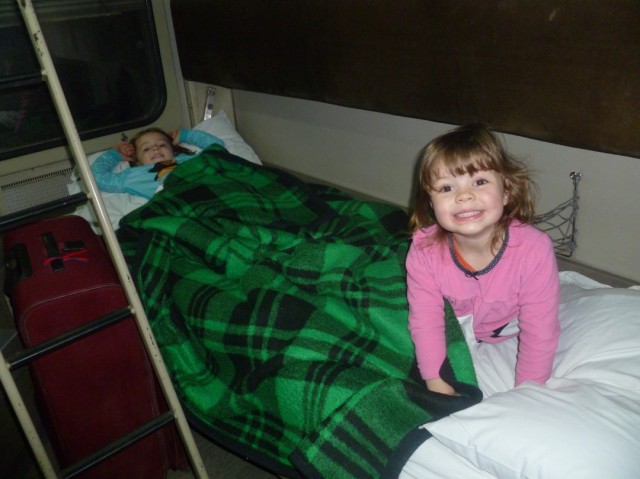


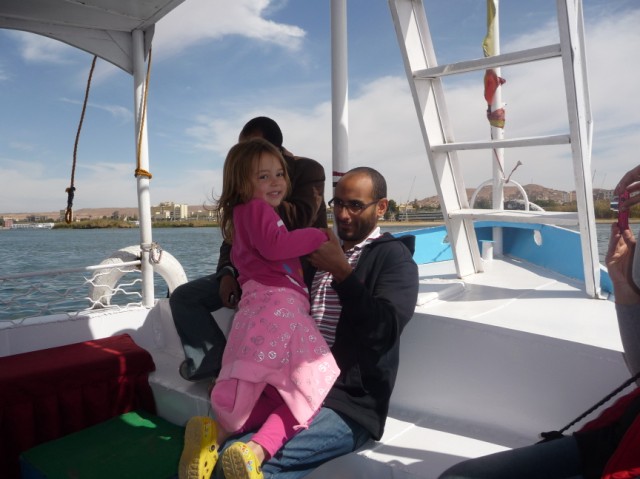

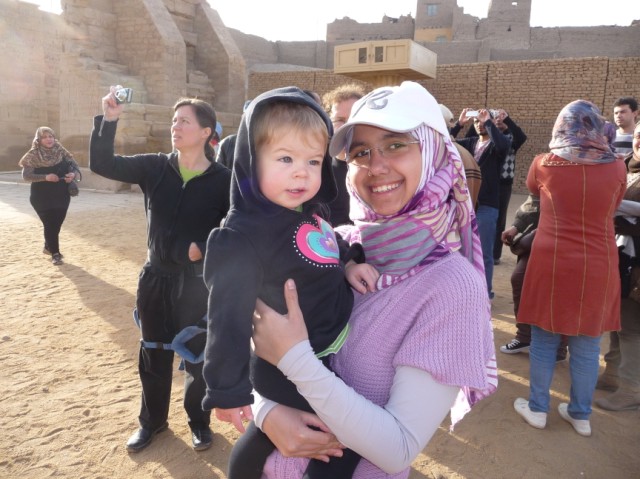
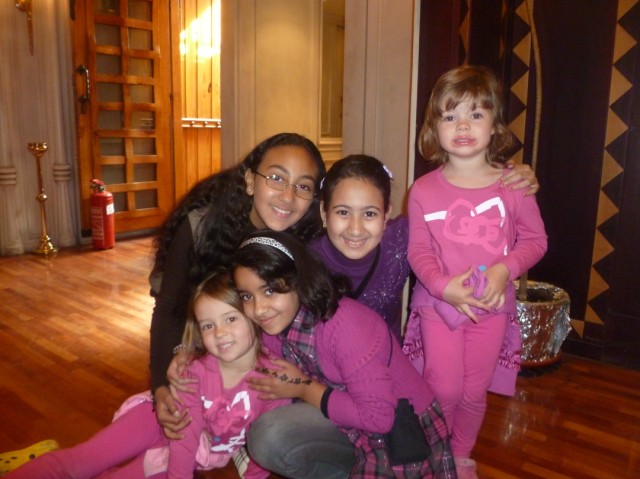

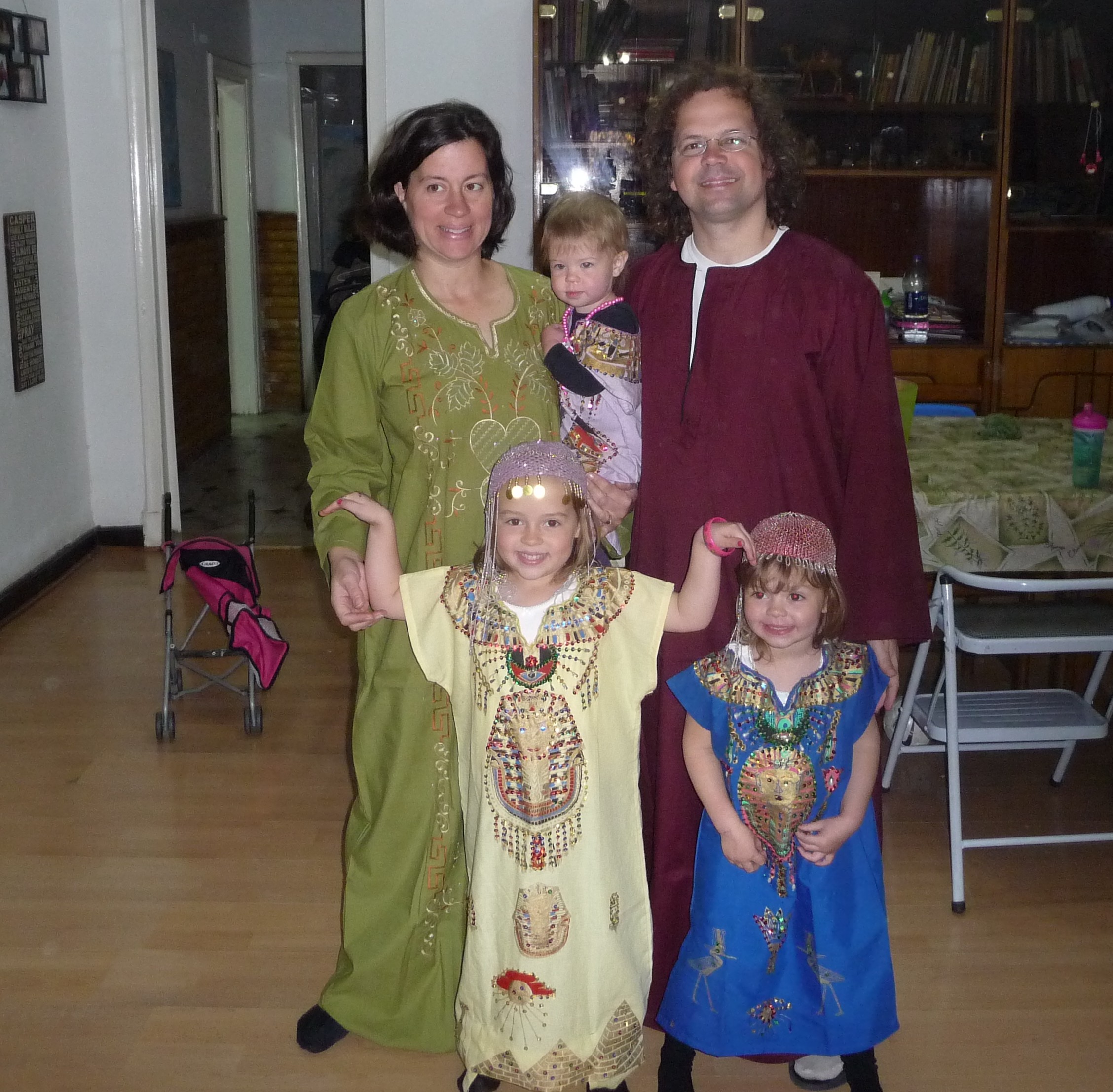


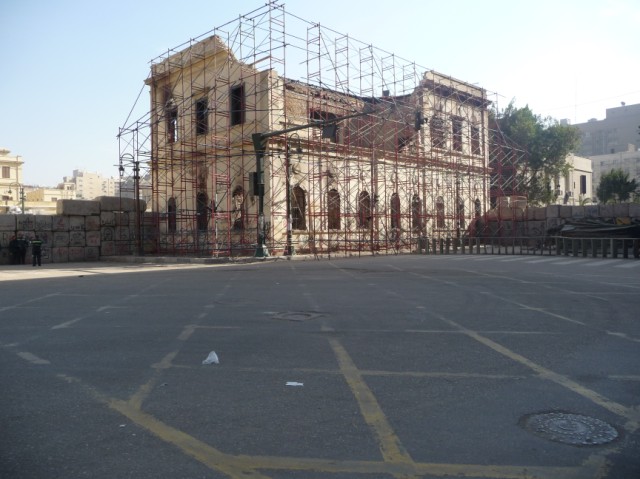
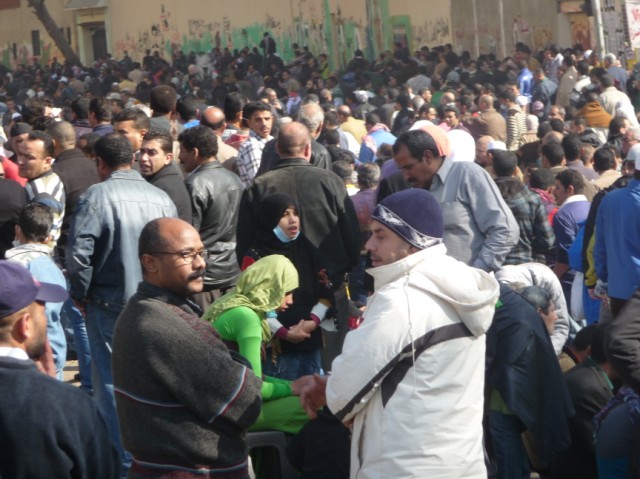
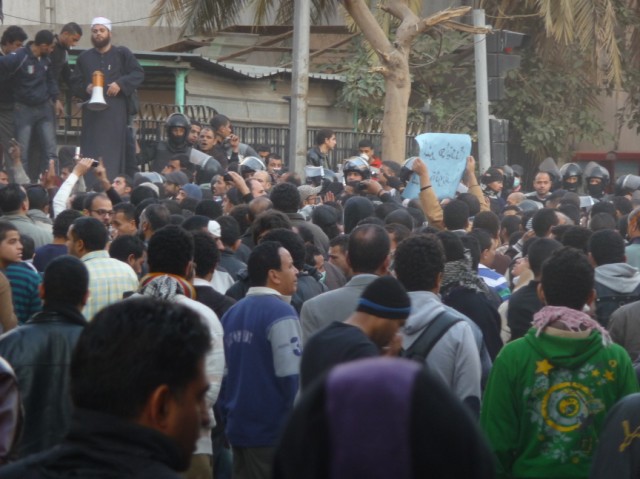
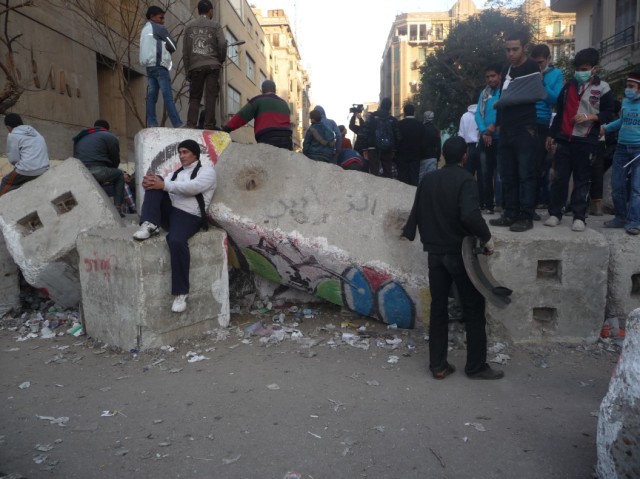


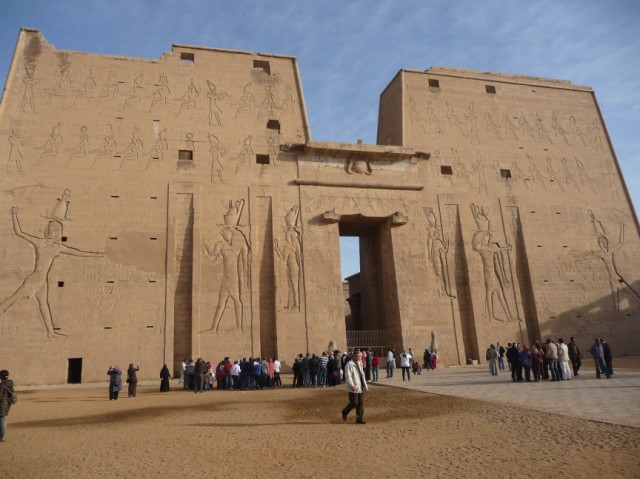
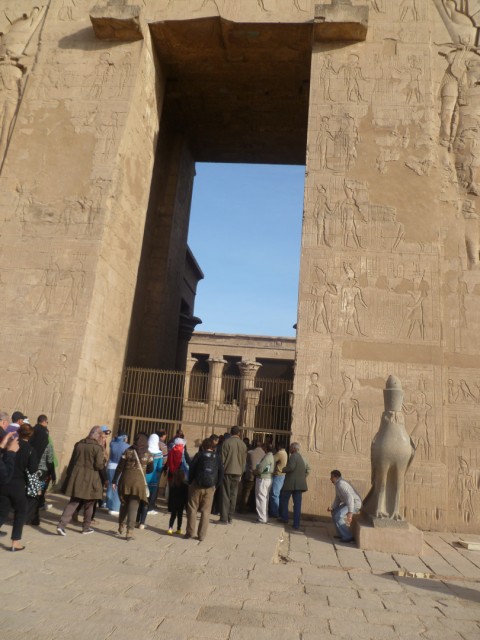


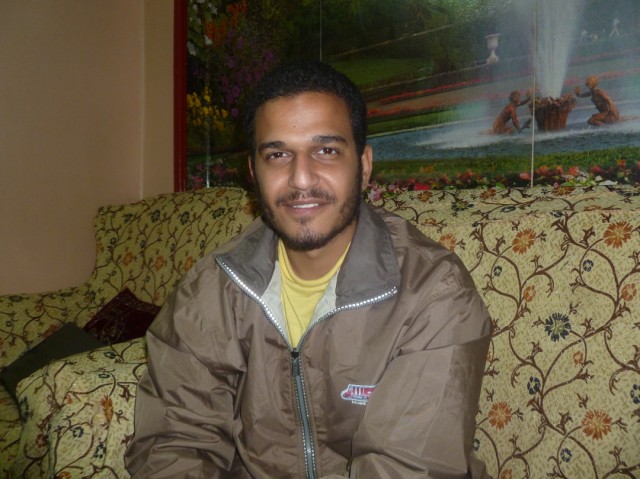
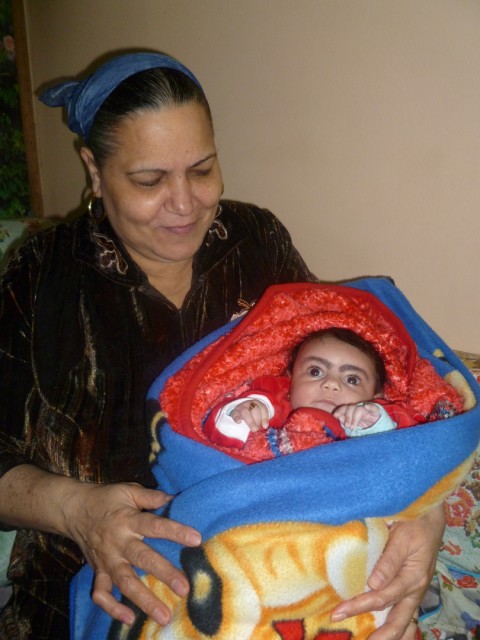
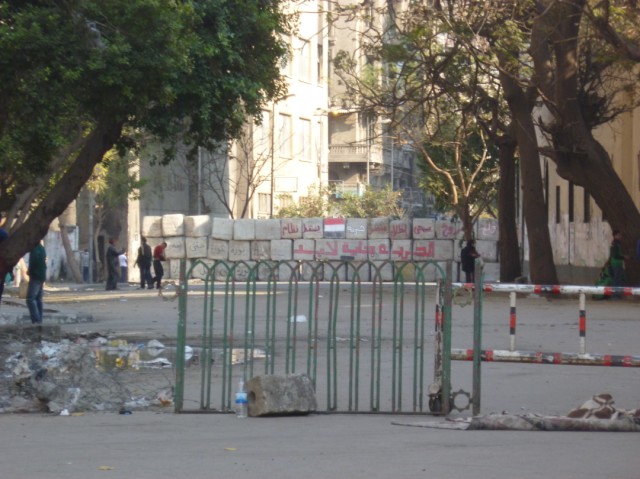
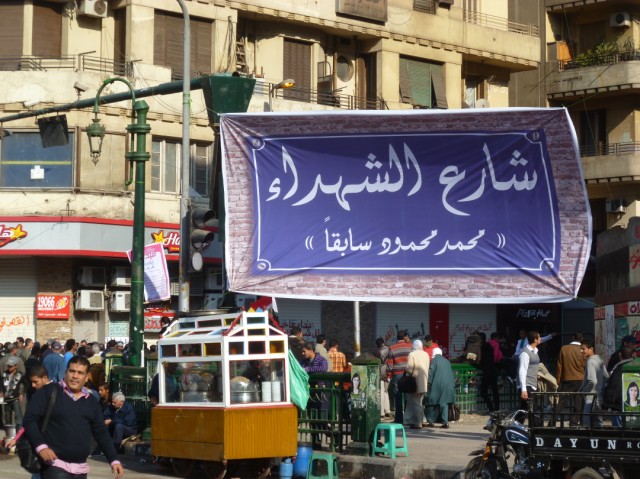


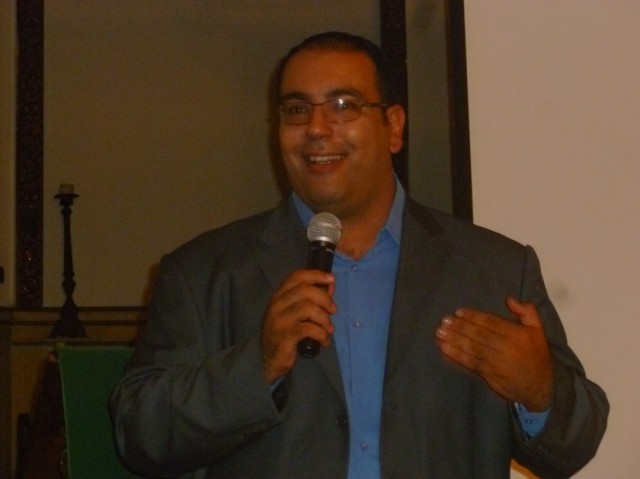




 Jayson Casper