Categories
Christianity Today Middle East Published Articles

Evangelism Isn’t Allowed in Oman. Sharing Is.

Image courtesy of Justin Meyers

In the ancient city of Muscat in the Sultanate of Oman on the northeastern shores of the Arabian Peninsula, several American Christian college students and local Muslims sat cross-legged on an oriental rug around printed passages from the Bible and the Quran. In the traditional Omani reception room lined with plush red mattresses and matching pillows, they discussed the phrase in John chapter 1 “the Word became flesh” and its Islamic parallels.

Two senior leaders—one Christian and one Muslim—guided the proceedings. They instructed the Americans to not place copies of the holy texts on the floor and assured the Omanis that these papers would not be thrown in the trash. Their primary goal that May afternoon was to avoid debating or comparing the texts academically, but rather to engage in a process called “scriptural reasoning.”

Though the concept was developed in the 1990s by Christian, Muslim, and Jewish philosophers, the term scriptural reasoning is a bit of a misnomer. Participants read and reflect on the selected passages with inquisitive curiosity, not logic. The point is self-discovery—and sharing—of one’s personal reasons for faith.

The Christians approach the Bible with love and reverence, describing the message they see within. Muslims do the same with the Quran, and the two groups exchange observations and ask questions, seeking to understand the passages’ meanings from the other side. Both Christians and Muslims listen attentively, free from the burden of convincing the other.

In Oman, where proselytization is illegal, al-Amana Center (AAC) uses exercises like scriptural reasoning to help bridge divides between Muslims and Christians, Arabs and Americans. Leaders said such activities by the current incarnation of the Reformed Church in America’s (RCA) 130-year ministry in Oman, now an independent partner institution, builds trust and mutual respect.

Justin Meyers, executive director of AAC, led the May session of scriptural reasoning. The students came from Hope College, a small Christian school from Michigan, as part of a senior seminar course involving an immersive exploration of Arab and Islamic culture. AAC’s Arabic teacher, Mohammed al-Shuaili, led the Muslim contingent and had already done this exercise dozens of times.

“It becomes hard to tell the Bible and Quran apart,” Shuaili said. “Scriptural reasoning brings people together, to discover the common threads.”

The scriptural reasoning website offers 34 topics—including things like modesty, fasting, and reconciliation—and looks at how passages in the Hebrew Bible, New Testament, and Quran discuss these themes. Shuaili said he especially appreciated its focus on Abraham’s hospitality.

Meyers, an RCA pastor from Grand Rapids, described how Christians get to experience the impact of quranic recitation while Muslims discover the beauty of the biblical text. By creating safe spaces for religious conversation, he said, interfaith relations are strengthened in Oman, the Persian Gulf region, and the world.

Oman’s nearly 5 million people are a diverse mix of Sunni, Shiite, and Ibadi Muslims as well as Christians (4%) and Hindus (5%), mostly from the substantial immigrant community.

While appreciating sincere Muslim engagement with the Bible, many evangelicals may view scriptural reasoning as a step down from evangelism. Shuaili’s response suggests he equates the two religious texts and downplays the differences. In a good-humored comment of commonality, he said he expects to see Meyers in heaven one day, where they can play pickleball together. But at no time, the scriptural reasoning website emphasizes, is anyone called to compromise their faith commitment.

Prior to AAC, Shuaili was a strict and traditional Muslim who would have never interacted with believers of other religions. This indicates the promise of interfaith relations to better integrate communities, but is Christian-Muslim dialogue a proper substitute for the RCA’s once-vibrant missionary heritage?

Open Doors ranks Oman at No. 32 on its World Watch List of nations where it is hardest to be a Christian. (Part 2 of this series discusses why AAC disputes this ranking.) Yet while Open Doors’ annual report praised AAC for “helping to create a more tolerant attitude towards Christians,” it also said that the center is “very much intended to boost Omani diplomatic ties.” With churches monitored and proselytizing illegal in the country, the report said that government support for AAC’s interfaith dialogue helps Oman keep a “friendly face” toward the world. 

The AAC website states it differently. The center…

This article was originally published at Christianity Today on October 14, 2025. Please click here to read the full text.

Categories
Christianity Today Middle East Published Articles

The Inside Story: Christianity in the Gulf

List of Churches within the Evangelical Church of Abu Dhabi

Christianity Today recently interviewed me about my September article on the churches of the Persian/Arabian Gulf.

There are about 2.3 million Christians in the Arabian Peninsula—more than nearly 100 countries can claim. What does that look like on the ground? Christianity Today‘s Middle East correspondent Jayson Casper recently spoke with assistant editor Morgan Lee on his fascinating story on why Christianity is surging in the heart of Islam. In the interview, Casper explains why Gulf States want churches, how globalization affects religious freedom in the region, and what most surprises him about the region’s Christianity.

As judged by the Facebook shares (over 6,000), this story surprised many of our readers. To what extent did you “stumble” on this story?

The story was suggested by CT’s News Editor Jeremy Weber, but I was eager to take it on. I was aware that there were churches in the region for a long time, but always curious about what local Christianity looked like.

Would the number of churches come as a surprise to those who live in the Gulf?

As far as the Gulf is concerned, the presence of churches is well known. If one is nonreligious, they would not necessarily be spotted, but anyone looking can find them easily. Many churches have an active web presence.

Christian leaders in the United Arab Emirates, as well as a high ranking member of the royal family, told me the government wants to do all it can to facilitate the worship of Christian foreign workers. They value the wholeness the church can provide.

Otherwise they deal with the normal vices found in Western society but out of place in the Gulf, and on top of it suffer from loss of productivity when workers suffer loneliness and depression.

What was hard about doing the reporting for this piece?

Balancing the good news—foreign Christians have been largely welcome to the country—with the reality that this freedom does not extend to Gulf citizens. Overwhelmingly, Christian leaders wanted to accentuate their appreciation to the authorities.

But there was also a tenor among some — off the record — that a glowing portrayal would not be right. The focus of the story is to help correct the wide assumption among many Western Christians that the Islam of the Arabian Peninsula is intolerant to Christianity in general. But getting the right tone of ‘yes-but’ was not easy.

What did you find most surprising in your own reporting?

The physical size of the church buildings, how they are part of the landscape of the community and not hidden away as eyesores. There is money in the Gulf, so everything is big. But while I knew that Christianity existed within a level of tolerance, I had no idea about the level of normalcy these buildings imply. (See pictures here.)

What’s something you wish you could have included in the final draft that didn’t make its way in?

There were several charming stories of interactions normal Christians had with their neighbors. A Sunday School teacher. A military instructor. An IT manager. Each one came for a job, but was living their Christian life—and often speaking of it—in winsome ways.

I also heard about churches organizing service trips into the migrant labor camps, and some of the difficulties experienced by the majority Asian population. Not all of these stories made it into the article, but they served to confirm what leading sources conveyed.

In the article you write, “Thanks also to global capitalism, that freedom is not going away.” To what extent do you think this freedom will expand?

It is difficult to say. Because the nations of the Gulf are so young and their economies are expanding so rapidly, many sources told me that the authorities sort of make it up as they go along.

Concerning the churches, this means there is often no set of regulations that can be followed in a clear cut manner. So much depends upon decisions of higher-ups that come through relationship more than bureaucracy. They prefer to deal with a head of denomination and let them regulate affairs internally. So one measure of expanding freedom can be seen if this freedom simply gets written down into law.

Another measure of freedom, perhaps, exists in comparison between the Gulf States and Europe, both of which have received many migrants over the past decades. Europe has extended citizen rights to many, while the Gulf does not. Will the Gulf ever offer a similar opportunity? If so, can they accept Christians as citizens as opposed to guest workers?

Globalization and multicultural realities often produce a liberalizing effect, even as they can spark backlash. Over time will these realities fundamentally change Gulf attitudes? It is a fascinating possibility to observe.

[Note: Both Bahrain and Kuwait have a tiny number of Christian citizens originally from other Arab countries.]

In the article you write “that Gulf churches exist at all stems from relationships, not economics or law.” Who are those relationships open to? In other words, is it only between Arab men and Western white men? Or are these accessible regardless of ethnic background or gender?

In the article, that sentence meant the origin and continuance of the churches is due to the very specific relationship between Christian leaders and the ruling authorities. In terms of relations between guest workers and Gulf citizens, I think the general culture does not facilitate mixing.

In many settings the migrant workers are the majority, and many citizens do not work except in management at the level of “boss.” This would include the vast sector of domestic labor, which I did not sufficiently encounter. Non-Western migrants also complained about a level of hierarchy, with increasing discrimination felt by the darker of skin and the lower of economic level.

In your observation, how has the Western Protestant church been affected by Gulf State culture?

Most leaders celebrated a far greater level of diversity than would be experienced by most Christians in America. They would say that our congregation is a ‘taste of heaven’ as they listed the number of nationalities and languages worshiping together. This is certainly part of Gulf culture stemming from economic realities—not necessarily the Arab Muslim culture they maintain among themselves, though in some settings it is also seen here.

Morgan Lee is assistant editor of Christianity Today.

Categories
Lapido Media Middle East Published Articles

Teaching Migrant Workers their Rights: Good News from the Gulf

Hack 1a
Mona Demaidi (R)

This article was originally published at Lapido Media.

Migrant workers long abandoned to slave-like conditions in the Arabian Gulf have found an unlikely weapon in their fight against exploitation: hackers.

Young Arab computer geeks are creatively helping vulnerable foreign labourers break into a culture that either ignores or abuses them.

Last April New York University Abu Dhabi hosted the fourth annual Hackathon for Social Good in the Arab World at their campus in the United Arab Emirates (UAE).

More than 150 top university students from seventeen countries competed to design practical apps to innovate solutions for social problems, during a three-day marathon.

An app called Guide Me won the Audience Choice Award, aiming to inform migrants of their rights in law.  It also monitors abuse.

26-year-old Mona Demaidi, a mentor from Palestine and a lead programmer for the app is a PhD candidate at the University of Manchester in the UK. ‘Our region needs transparency,’ she told Lapido Media. ‘This project will give data and facts, as we don’t have access to information. And here, it will change lives.’

With a team of eight students she helped create a system to log calls to a central database from a free helpline to record and track complaints about abuse.

All audio, it will operate in twelve different languages, providing labour law and feedback options for anonymous or on-the-record complaints.

Information is also available on a website, to be accessed from a kiosk at every labour camp.

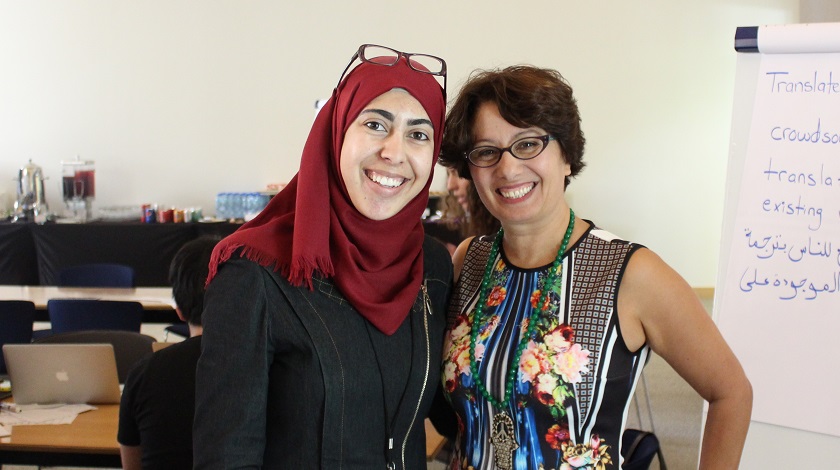
Sana Odeh - Hackathon
Sana Odeh (R)

‘We’re not coming from the West dictating what the problem is and what the solution should be,’ said Sana Odeh, the NYU professor and organizing force. ‘These must come from the students. The power of a hackathon is to unleash students’ skills and connect them to the world.’

And though the younger generation is different, there is a significant gap to overcome.

‘We always want to hide our problems, we don’t want to talk about them,’ Demaidi said. ‘But the information collected will be good for the workers, good for the companies, and good for the government.’

According to the Pew Research Center, the Arabian Gulf is home to fifteen million migrant workers, the majority from India, Pakistan, and Bangladesh.

In the UAE they make up 84 per cent of the population, the highest rate in the world. Qatar, Kuwait, and Bahrain follow next on the list.

Thompson
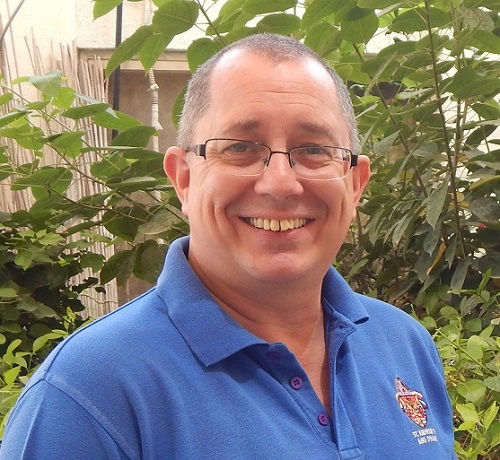
Revd Andrew Thompson

One link between these workers, the Hackathon, and the government is Anglican priest Revd Andrew Thompson of St Andrew’s Church, Abu Dhabi.

‘The nation has good laws,’ the British vicar who has served in the region for the past 27 years, told Lapido. ‘We just want to assist the government in letting the workers know what they are.’

UAE labour law demands payment of a salary every month. Employers must provide health care, vacation, and sick leave, within a working week of 48 hours. Passports may not be confiscated.

Unfortunately, each of these provisions is regularly violated.

Given the vast expanse of labour camps, oversight is difficult, Thompson told the UAE-based National. And companies that encounter problems simply shut up shop and open elsewhere.

But ignorance and illiteracy keep many migrants from knowing their rights in the first place.

St Andrew’s Church compound is part of the Anglican Diocese of Cyprus and the Gulf.  Thompson hosts and oversees an international community of more than ten thousand weekly worshippers, in 45 congregations with 17 language groups.

Thanks to those like Thompson and his teams of volunteers, they now have the law translated into twelve different languages.

Instead of lambasting local negligence, as much of the media do – even Migrants’ Rights complain this is counter-productive – Thompson believes in supplementing it.

‘Once you shame an Arab you lose him for life,’ said Thompson. ‘We want to honour all that is right and good, and fill in the gaps where the government isn’t working.’

As a priest, Thompson recognizes the religious roots of identifying corruption in society, but he has chosen a different way. Both are necessary, but he is making a practical difference.

‘Some say there should be a prophetic voice,’ he said. ‘We want to be prophetic hands.’