Categories
History Middle East

Why an Early American Missionary Family Was Beloved in Lebanon

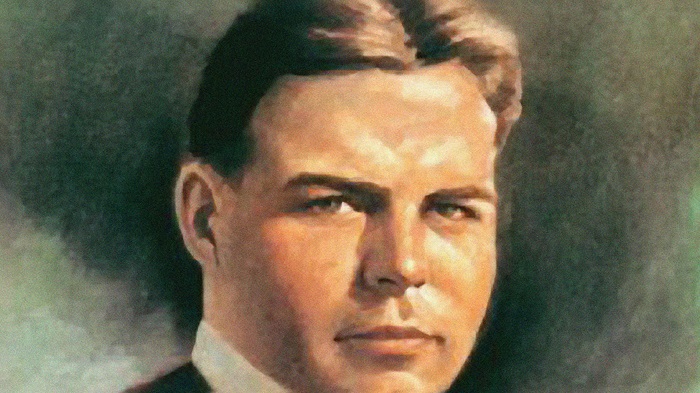
William King Eddy
Illustration by Christianity Today / Source Images: Courtesy of Nick Eddy

Pastor Michael Sbeit stood pensively in front of the marble gravestone in the evangelical cemetery of Sidon, a Lebanese city 25 miles south of Beirut. Mediterranean Cypress trees offered shade from the sweltering summer heat, while their fallen brown needles covered the ground and obscured the inscription engraved in both English and Arabic:

William King Eddy
Born March 13, 1854
Died Nov. 4, 1906
Served the Lord in Syria 28 years

Next to the grave of William King Eddy (hereafter “King”), is the grave of his wife, Elizabeth Nelson Eddy. Her tombstone honors her 49 years of service. Several feet away lies the body of their son, William “Bill” Alfred Eddy, who died in 1962.

The Eddys were an American family who originally came as Protestant missionaries to late 19th-century Lebanon, then part of the Syrian region of the Ottoman Empire. Several family members, including King’s sister Mary Pierson Eddy, and their father William Woodbridge Eddy (hereafter “Woodbridge”) are buried in Beirut.

“They were pioneers of our church,” said Sbeit, who leads the Presbyterian congregation the Eddys’ missionary colleagues founded in Sidon. “We don’t have many like them anymore.”

Two generations of Eddys shared the gospel, built schools, and offered healthcare. The last of their line in Lebanon left a more colorful legacy. William Alfred Eddy’s gravestone notes nothing about service to the Lord and instead displays his rank of colonel in the US Marine Corps.

“Bill loved this city,” said Sbeit. “But he was different.”

This two-part story chronicles the Eddy family’s multigenerational commitment to Lebanon. The family’s modern biographer is Muslim: Sheikh Muhammad Abu Zaid, president of the Sunni Sharia Law Court in Sidon. In Forgotten Pages from the Ancient History of Sidon, he expresses his deep appreciation for their foreign service.

“It is not how we look at the Eddys,” he said. “But how they looked at us.”

Abu Zaid’s sympathetic portrayal of Protestant missionaries contrasts with the more conflicted views that many Lebanese Muslims and Christians have held. Some view them as “sheep stealers” trying to convert the original Catholic, Orthodox, Sunni, Shiite, or Druze populations. Others see them as Western agents advancing America’s political agenda. Still others defend them, citing their years of devoted social service. The Eddys offer evidence each narrative could note.

The family’s story began when Chauncey Eddy, a Presbyterian pastor from New York joined the American Board of Commissioners for Foreign Missions in 1823. But when poor health impeded a potential missionary career, he prayed that God would call his children in his stead. His son Woodbridge and his daughter-in-law Hannah moved to the Levant in 1851, a year after the Ottoman sultan issued a decree to include the Protestant faith among the empire’s legally recognized sects.

The couple’s ministry started in Aleppo by learning Arabic before moving to the Lebanese mountain village of Kfarshima. In 1857, Woodbridge and Hannah moved south to Sidon, where they served in an evangelical church planted two years earlier. They replaced missionary Cornelius van Dyke, who left to complete a translation of Arabic Bible still cherished by many Middle Eastern Christians today.

Chauncey visited his son a year later, delighted at the fulfillment of his prayers. He even…

This article was originally published at Christianity Today on September 4, 2025. Please click here to read the full text.

Categories
Christianity Today History Published Articles

How Sunday School Sparked Revival in Egypt’s Oldest Church


Habib Girgis
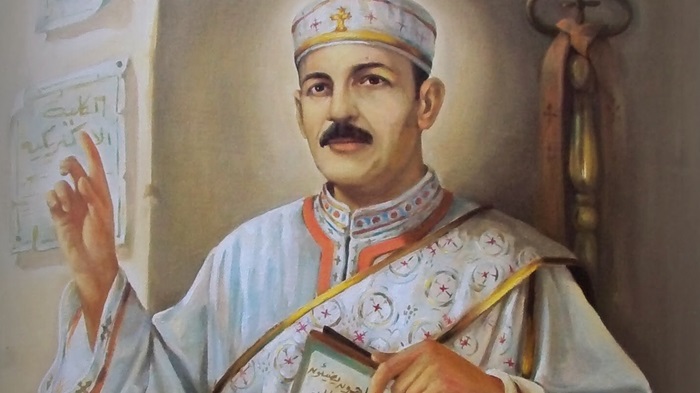
Habib Girgis, memorialized on the curtain separating the altar from the sanctuary of a Coptic Orthodox Church

This article was first published at Christianity Today on June 19, 2018.

My wife had just dropped off our kids at the local Coptic Orthodox Church we attend in Cairo and sat down with her Egyptian friend at the adjacent church-owned cafe. After initial pleasantries, she spoke of this current article I was then researching.

“Oh, do Americans have Sunday School also?” inquired the mother. “I never knew.”

My wife and I have lived in Egypt for nearly nine years and consider ourselves of evangelical faith. But we wish also to learn about ancient Christianity and, to the degree possible, worship within the Coptic Orthodox Church, which many Protestants here respectfully call “the mother church.”

We have been impressed by their biblical fluency. We have marveled at their forgiveness after martyrdom. But to entrust our own children to them?

We have been blown away by their care for the next generation. It takes two years of training to even teach a kindergartener.

It was not always so, and they have the Americans to thank—sort of.

This article is about Habib Girgis, the recently canonized Coptic saint who doubled as a humble educator. This past month the Coptic Orthodox Church celebrated the 100th anniversary of what he set in motion: the Sunday School Movement.

Girgis lamented the situation of his time, when Western missionaries were making inroads among the Copts.

But then again, they left fallow their own fields:

“Is there among us anyone who is capable of responding to those who ask him about his religion and why he is a Christian?” Girgis asked in a student lecture four years later.

“I am sure that most of us do not have an answer, except to say that we were born from Christian parents and hence we are Christians.”

Please read the article to see how Girgis sparked the solution, but spark it he did. Today the Coptic Church is among the most devout in the world. Here is testimony from one of Girgis’ disciples, who carried forward his teacher’s reforms once he reached the highest levels of the church:

Looking backward eight decades, the beloved Pope Shenouda III, known as “the teacher of generations,” described the solution with primordial imagery.

“Our teacher … started his life in an age that was almost void of religious education and knowledge,” said the patriarch, who died in 2012.

“Then, God said, ‘Let there be light,’ and there was light. And the light was Habib Girgis.”

Please click here to read the full article at Christianity Today.

And if you are interested in an earlier post, excerpting a book review on Habib Girgis, please click here.

Habib Girgis Sunday School

Categories
Christianity Today History Published Articles

The Forgotten Final Resting Place of William Borden

william-borden
Courtesy of Bethany House

This article was first published at Christianity Today on February 24, 2017.

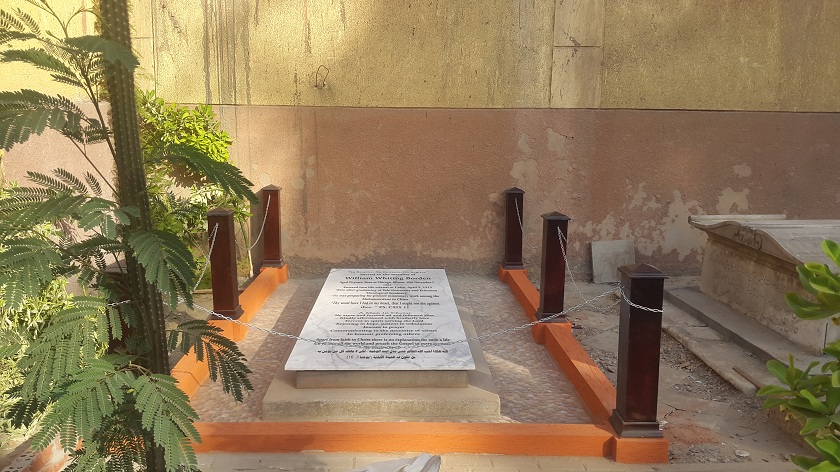
Tucked away in the northwest corner of the American cemetery in Cairo lies the neglected grave of William Borden, one of the most celebrated missionaries of the 20th century Student Volunteer Movement. Heir to a family fortune, the Yale graduate instead devoted his life to Christ, pledged in service to the Muslims of China.

But at age 25 Borden died in Egypt, having contracted spinal meningitis while studying Arabic in preparation. His will distributed nearly everything to mission groups and Christian ministries, leaving him only a cement slab as a gravestone. Engraved at the bottom were words uttered in memorium, “Apart from Christ, there is no explanation for such a life.”

That is, if anyone could read them. A recently erected wall in the poorly tended cemetery pressed square up against his plot. This meant that the gravestone now faced the wrong direction, requiring the rare pilgrim to slither in between the wall and the grave to read the inscription. It was an ill testament for one whose death was mourned from Chicago to New York to Cairo to China.

Even stranger is the fact that what Borden is perhaps most known for—the inspirational quote that he is reputed to have written into his personal Bible, “No reserves. No Retreats. No Regrets”—has not been found by historians or biographers.

Is the central anecdote of Borden’s life a case of hagiography? That it has not been found does not mean it is not true. But as with many Christian heroes, the reality is more inspiring than any potential fiction.

Please click here to read the full article at Christianity Today.

william-borden-grave

Categories
Christianity Today History Published Articles

Before We Conquer, Have We Tried Love and Tears?

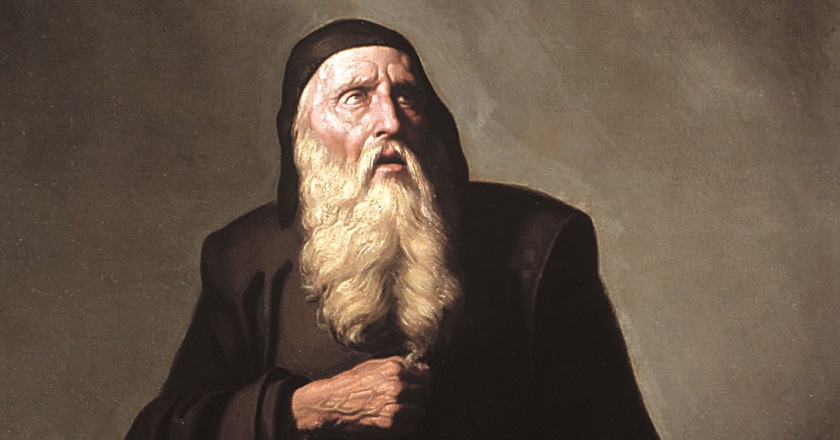
Ramon Llull (image frombalearidesdigital.com)
Ramon Llull (image from balearidesdigital.com)

From my article at The Behemoth on the 13th century Spanish missionary, Ramon Llull. This year marks the 700th anniversary of his death.

Most missionary careers are not launched by a suicide. Neither do most end with deliberate martyrdom. What Ramon Llull did in between rebuked a Christian Europe fighting jihad with its own crusades.

The Mediterranean world in the 13th century witnessed a conflict in transition. The 1212 Battle of Toloso signaled the decisive decline of Muslim civilization in Spain. But in 1291, the crusader city of Acre fell, the last major outpost of Christian power in the Holy Land. Merchants from Genoa and Venice established control of seafaring trade routes. But Arabic philosophy governed the discourse of European intellectual circles.

Born around 1235 in Majorca (a Spanish island near Barcelona his father helped to liberate), Llull was a product of this time. King James I of Aragon granted the family land, and Llull served in the court of his son. A troubadour in the classic sense, he was an accomplished musician and poet, also authoring treatises on horsemanship and warfare. Palma, the family home, was a center of shipbuilding. And Llull was a devotee of courtly love, a palace and literary tradition that germinated in Andalucía.

Here, arresting his licentiousness, God got his attention.

Deep in flirtation with a married woman of the court, Llull’s wooing poem was interrupted by a vision of the crucified Christ. Blood dripping from head and hands, Jesus looked at him reproachfully. Llull immediately retired to his chambers, but was not yet converted. The married father of two tried to resume his poem a week later.

God intervened again, later giving the vision a third time. Now around 30 years old, Llull surrendered to the compassion of Christ, abandoning the king’s court in Aragon.

Back in Majorca, …

The Behemoth is an ad-free, subscription-based sister publication of Christianity Today. The article is behind a paywall, but for those interested a free 30-day trial is available.